
RaeRae Reacts · S3E5 · 1992 Animated Series
Heroes
Atlantica welcomes a celebrated hero whose reputation asks Ariel to distinguish public legend from the choices a person makes when nobody is applauding.
The episode receipt
Series: The Little Mermaid (1992). Episode: S3E5 “Heroes.” Broadcast-order position: 28 of 31.
What happened
Atlantica welcomes a celebrated hero whose reputation asks Ariel to distinguish public legend from the choices a person makes when nobody is applauding.
What the episode is really testing
Where to watch
Disney+ currently lists this episode. Regional catalogs and numbering can differ because the pilot is omitted from the service.
First reaction: Apollo becomes a hero because history mistakes luck for courage and nobody checks
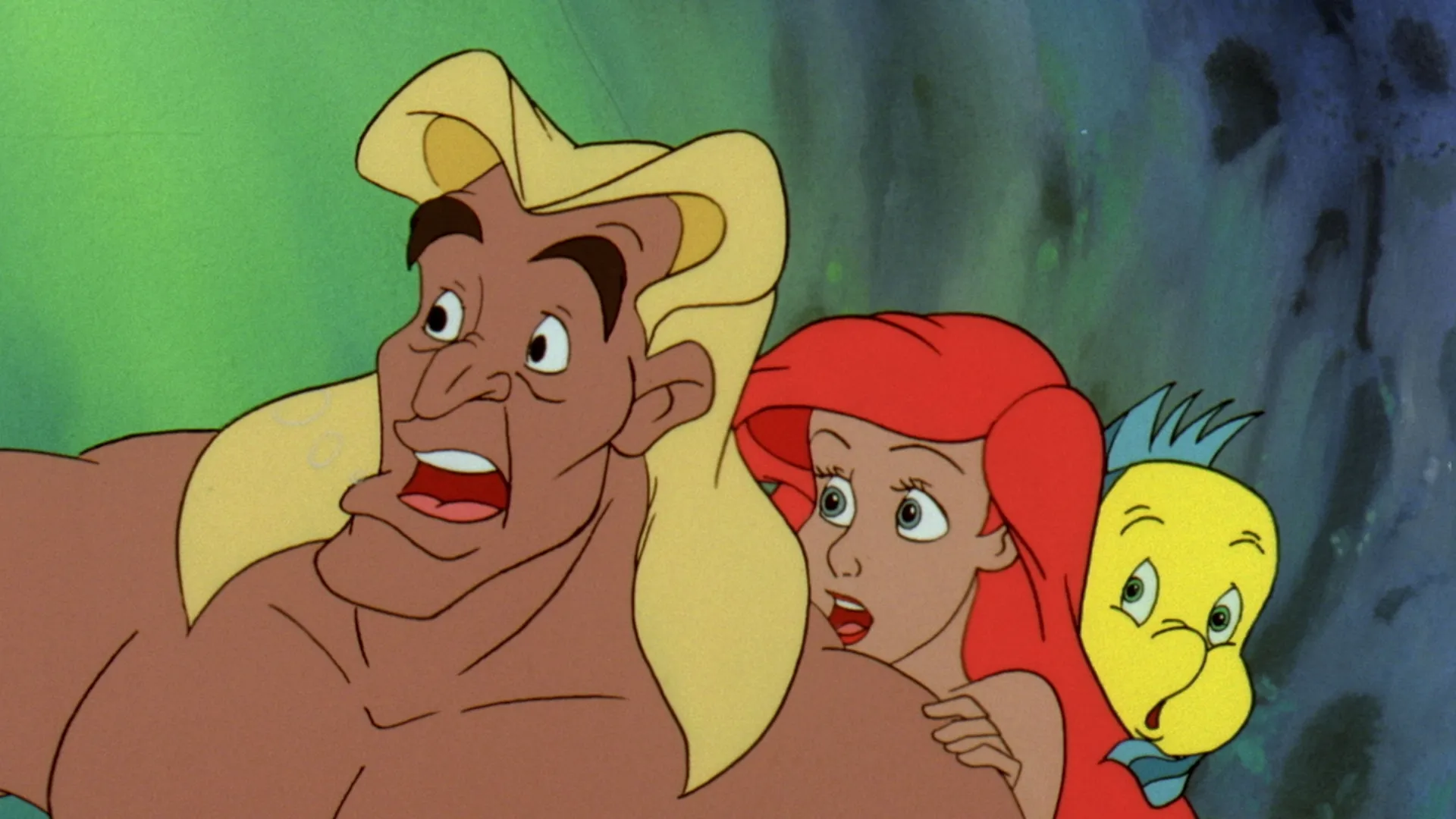
Atlantica welcomes Apollo as the legendary figure who saved the kingdom during the Sargasso War twenty years earlier. Ariel wants an adventure with him. In private, he admits he hid like a coward in weeds beneath the Sargasso Sea and received credit through dumb luck.
“Heroes” is about the terrifying durability of a flattering story. One accidental victory becomes reputation, ceremony, authority, and a young princess willing to follow a man whose résumé was written by everybody except the truth.
The Sargasso War has become public mythology
A past conflict with the Octopans is remembered through one heroic figure rather than strategy, casualties, collective labor, and political causes. Apollo gives Atlantica a face simple enough to celebrate.
Hero stories make history emotionally portable and institutionally incomplete.
Twenty years of repetition turns uncertainty into fact
Every retelling removes the confusion of battle and strengthens the clean sequence: danger arrived, Apollo acted, Atlantica survived. Time does not verify the account. It launders it through familiarity.
A story can become sacred because nobody living wants to disturb what it helped them endure.
Children inherit the emotional function before they inherit the evidence
Ariel may have heard Apollo’s name in lessons, ceremonies, songs, family stories, and warnings about the Octopans. By the time she is old enough to ask how the victory actually happened, admiration is already attached to safety, citizenship, and childhood imagination.
Correcting the record therefore feels larger than changing one fact. It can threaten the story a whole generation used to believe Atlantica survives because good people rise at the decisive moment. Historical honesty must make room for that grief without protecting the lie.
Apollo benefits even if he did not invent the first version
Perhaps frightened witnesses misunderstood what happened. Perhaps leaders needed a symbol. Once Apollo accepts praise, access, and authority without correction, passive benefit becomes participation.
Fraud does not require writing the original lie when someone keeps cashing its checks.
Hiding in fear does not make Apollo morally worthless
Battle can overwhelm bodies. Freezing, fleeing, or seeking cover is not proof that a person lacks all courage forever. Apollo’s shame grows because the public myth leaves no room for ordinary fear.
The ethical failure is not that he was afraid. It is allowing fear to be rewritten as deliberate heroism while others disappear.
The title is plural because heroism is distributed
Ariel, Flounder, and others create conditions for Apollo to act during the new crisis. Ordinary citizens, soldiers, and unnamed participants likely carried the earlier victory too.
“Heroes” corrects the singular pedestal by showing courage moving between people rather than residing permanently in one body.
Ariel’s fandom becomes a risk-assessment failure
She knows stories about Apollo before she knows him. Admiration fills every missing detail with competence, courage, and moral wisdom. The celebrity arrives pre-approved.
Fandom can inspire while making boundaries feel disrespectful.
Triton endorses the legend and increases its power
The king joins Atlantica’s welcome and treats Apollo as a national hero. Royal recognition converts cultural memory into institutional credibility.
If the story is wrong, the palace helped make skepticism politically difficult.
Sebastian organizes honor before verifying history
As court official and cultural producer, he helps stage the celebration. Ceremony does not merely reflect reputation. It manufactures the public’s experience of certainty.
The person arranging applause has a responsibility to know what the applause claims.
Apollo’s charisma can survive the facts
Ron Perlman gives him the weight of a traditional action hero. The voice sounds capable before any present evidence arrives, which helps viewers understand Ariel’s attraction to the legend.
Casting becomes part of reputation: authority enters through tone.
A confession made only in private still protects the public lie
Apollo tells Ariel and Flounder he hid during the famous battle. That honesty may be difficult, but it transfers moral pressure to children who must decide what to do with the truth.
Confession is not accountability when the audience harmed by the deception remains uninformed.
Ariel should not become Apollo’s reputation manager
She may feel compassion for his fear and worry that exposing him will destroy a beloved national story. None of that makes a teenager responsible for preserving his career.
Adults should carry the consequences of their own correction.
The Octopans are reduced to a returning enemy category
The episode describes them through war, a stronger trident, and renewed attack. Their society, motives, and internal differences receive little room because the hero narrative requires an identifiable threat.
Understanding an adversary does not excuse aggression. It prevents propaganda from replacing strategy.
A more powerful trident changes the war’s stakes
If the Octopans possessed magic exceeding Triton’s weapon, Atlantica faced more than a conventional invasion. Victory would depend on intelligence, coalition, timing, sabotage, and luck, not one fighter’s strength.
The artifact makes singular-credit history even less plausible.
The old victory by luck should have triggered investigation
When a powerful enemy withdraws unexpectedly, leaders need to understand why. Calling the nearest survivor a hero may comfort the public while leaving the actual mechanism unknown.
Unstudied luck cannot be reproduced during the next attack.
Military institutions often reward the story they need after chaos
A clean hero stabilizes morale, gives grieving families a name to thank, and lets leadership announce that courage defeated danger. A messy account of panic, accident, communication failure, and collective improvisation may feel politically unusable.
That incentive explains why Apollo’s legend could grow without a single mastermind inventing it. Institutional convenience can manufacture false certainty through hundreds of small choices about what enters speeches, medals, lessons, and archives.
The new crisis functions as a terrible audit
Atlantica assumes Apollo can solve another Octopan threat because it believes he solved the first. Reputation becomes an emergency plan.
Institutions fail when they substitute celebrity for tested capability.
Apollo initially performs the role rather than the work
He has spent years learning how a hero is greeted, described, and expected to stand. None of that prepares him to confront danger he avoided the first time.
Performance skills can protect a reputation while allowing operational skill to atrophy.
Ariel and Flounder see the close-up the pedestal hid
Travel removes ceremony and exposes hesitation, fear, excuses, and dependence. Their disappointment comes partly from Apollo being a person instead of the flawless structure they needed him to be.
Disillusionment is painful and can be intellectually freeing.
Flounder already understands courage with fear inside it
He is often described as timid and still accompanies Ariel into dangerous places. His bravery is visible precisely because fear remains audible.
Apollo could learn more from Flounder’s ordinary courage than from the legend attached to his own name.
Ariel’s heroism is also vulnerable to mythology
She repeatedly saves creatures and kingdoms. Future retellings could remove her mistakes, team, privilege, and luck until only a fearless princess remains.
Learning the truth about Apollo should make her suspicious of stories that flatter her too.
The Sea Dragon provides a present test, not moral purification
Apollo eventually finds courage to battle a Sea Dragon and help stop the Octopan attack. One real act matters. It does not retroactively transform hiding during the old war into heroism.
Redemption adds truth. It should not rewrite the earlier lie.
Courage can be late and still count
Apollo acts after fear, exposure, and encouragement. The delay does not make the new choice meaningless. Moral growth often begins after the ideal moment has passed.
Accountability and hope can coexist without granting retroactive innocence.
Ariel and Flounder help create the courage they were seeking
Their friendship, expectations, and participation give Apollo a reason and structure to act. The children he was supposed to lead become part of the leadership he needs.
Heroism becomes relational rather than self-generated.
The real rescue labor should be credited specifically
Who identifies the threat, carries messages, distracts enemies, confronts the dragon, protects civilians, and repairs damage? A collective account prevents Apollo’s final act from swallowing everyone else’s work again.
Names matter because myth erases by compression.
Invisible labor often looks too ordinary for heroic history
Scouts who deliver warnings, healers who keep survivors alive, workers who clear routes, families who shelter displaced residents, and frightened people who follow evacuation instructions may save more lives than the person fighting the visible creature.
Their work lacks the single dramatic image a statue requires. That is a limitation of memorial design, not of their courage. Atlantica should broaden the category before it decides who deserves remembrance.
A successful final battle can repeat the original reputation error
If Atlantica sees Apollo at the climax and assumes he controlled the entire event, history will once again turn distributed effort into one man’s legend.
The ending needs transparent debriefing, not only applause with better evidence.
Apollo should correct the Sargasso record publicly
He can state that he hid, explain what he knows about the accidental victory, name missing contributors, and describe what helped him act differently now.
Public correction may reduce status and increase credibility.
Atlantica should preserve the original myth as an artifact, not a fact
Songs, statues, stories, and ceremonies can remain in archives with explanation of how the belief formed and changed. Erasing them would hide the kingdom’s role in producing false memory.
A corrected culture remembers its mistakes without continuing to teach them as truth.
Triton should apologize for institutional endorsement
The king may not have known Apollo’s private reality. He still amplified the account without review and allowed one reputation to become a defense assumption.
Leaders owe correction when their authority hardened uncertain history.
Hero worship makes abuse easier even when Apollo is not abusive
A celebrated figure receives access to children, influence over policy, and protection from disbelief. This Apollo primarily hides cowardice, but the structure could conceal far worse behavior.
Safeguards should not depend on the hero remaining basically decent.
Access to Ariel should never be a ceremonial reward
Apollo’s reputation gives him proximity to a teenage princess who wants his approval and adventure. That power imbalance exists before either character behaves badly. The palace should provide supervision, clear plans, route information, and a way for Ariel to leave without feeling she failed her hero.
Protective boundaries do not accuse every admired adult of predation. They recognize that fame makes young fans easier to influence and makes institutions slower to question what happens out of public view.
Young fans need permission to leave the fandom
Ariel can value what Apollo’s story once gave her and still reject the false account. She does not owe continued admiration because posters, songs, or childhood dreams were meaningful.
Disappointment is not betrayal of the self who believed.
Fans also need permission to keep complicated affection
Apollo’s later courage and human fear may matter to Ariel after the pedestal breaks. She can care about the person without restoring the flawless legend.
Mature admiration includes boundaries, evidence, and room for criticism.
Valhalla language expands the episode’s mythic vocabulary
Dialogue references Valhalla as a land of heroes and brings Viking imagery into an underwater fantasy already drawing names from Greek mythology. The blend is playful rather than a coherent single pantheon.
The Easter egg is the mythological collage, not proof that every referenced afterlife shares one franchise canon.
The name Apollo arrives with borrowed mythic authority
Apollo is a major Greek divine name associated with music, prophecy, healing, and more, while Disney’s character is a merman war hero. The name signals greatness before the plot supplies evidence.
The episode uses cultural recognition as part of the reputation machine.
Ursula’s appearance creates another continuity strain
Cast and episode records include Ursula during a series period already difficult to reconcile with Ariel’s film meeting. The weekly story treats her as an available antagonist inside pre-film adventures.
The contradiction should be noted rather than solved through invented memory loss.
The Princess Collection pairing adds a useful contrast
“Heroes” later appeared with “Eel-Ectric City” on a home-video volume. Pearl’s party world and Apollo’s hero world both attract Ariel through glamorous reputation before close contact reveals risk.
The pairing accidentally becomes a lesson about status environments that market themselves well.
Ron Perlman is perfect casting for deconstructed strength
His voice carries physical authority and weary texture. Apollo sounds like the man a kingdom would place on a monument, which makes the confession feel like the statue speaking back.
The performance allows fear to complicate masculinity without making the character weightless.
Jodi Benson lets admiration become moral disappointment
Ariel’s excitement is sincere, not foolish shorthand. When the truth appears, Benson gives the hurt of someone realizing the story helped shape her own ambitions.
The reaction matters because disillusionment can feel like losing part of one’s history.
A war memorial should name the collective
Atlantica could honor civilians, soldiers, healers, scouts, strategists, and unknown participants rather than centering one accidental survivor. Collective memorials are less marketable and more honest.
History should show how survival was built.
The kingdom needs after-action review rather than legend
Document decisions, failures, enemy capability, luck, communications, civilian effects, and recommendations after every major crisis. Separate public morale work from operational records.
The next generation deserves more than a heroic bedtime story when the Octopans return.
What Apollo should do after the episode
Correct the record, share any honors, support veterans and victims, train honestly, accept reduced status, and participate in defense only within demonstrated competence.
A real heroic life can begin after the legend ends.
What Ariel should carry forward
Admire actions, not branding. Ask who else did the work. Notice institutional endorsement without treating it as proof. Keep enough humility to examine the stories people will tell about her.
Heroism becomes safer when it remains accountable to evidence.
Where this sits in broadcast order
“Heroes” is S3E5 and episode twenty-eight in the complete thirty-one-episode inventory. It aired October 15, 1994. Tedd Anasti and Patsy Cameron are credited as writers, Ron Perlman voices Apollo, and Clancy Brown voices the Octopan leader.
After Ariel revives dinosaurs because the image of discovery overwhelms method, she follows Apollo because the image of heroism overwhelms evidence.
Final reaction
“Heroes” works because it does not decide cowardice is a permanent identity. Apollo hid during the Sargasso War, accepted a legend he did not earn, and failed every honest standard of public accountability. He can still choose courage when the Octopans return.
The new act should not be used to polish the old lie. Episode grade: A, with Ariel’s poster removed from the ceiling, the Sargasso memorial rewritten to name the collective, and Apollo invited back only after he gives Atlantica the public correction it has been owed for twenty years.