
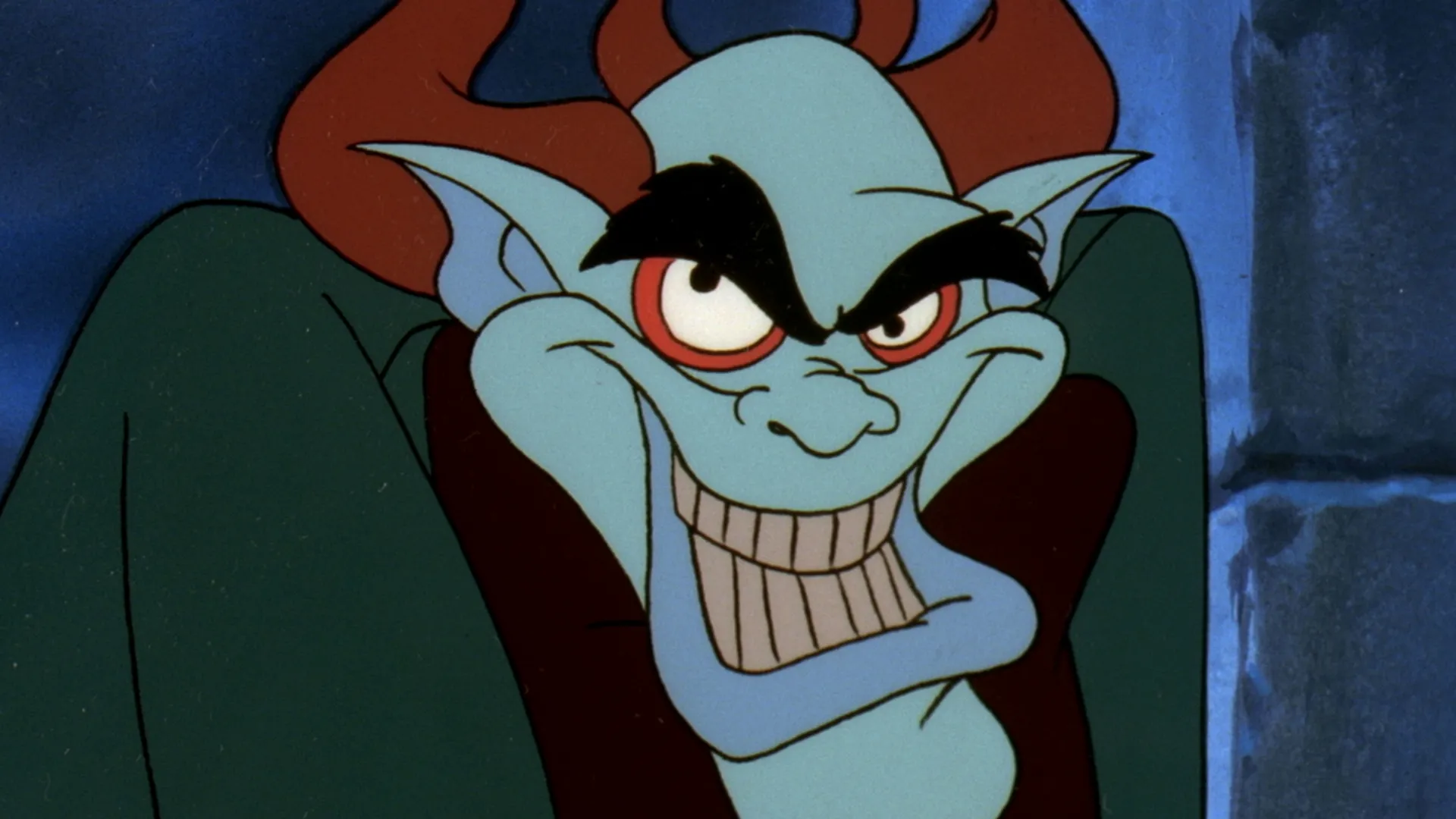
RaeRae Reacts · S3E3 · 1992 Animated Series
Island of Fear
Pollution threatens Atlantica, connecting surface-world harm to underwater communities that did not consent to becoming somebody else’s disposal site.
The episode receipt
Series: The Little Mermaid (1992). Episode: S3E3 “Island of Fear.” Broadcast-order position: 26 of 31.
What happened
Pollution threatens Atlantica, connecting surface-world harm to underwater communities that did not consent to becoming somebody else’s disposal site.
What the episode is really testing
Where to watch
Disney+ currently lists this episode. Regional catalogs and numbering can differ because the pilot is omitted from the service.
First reaction: the pollution is not a mysterious tide, it is somebody’s experiment drain
A stream of toxic waste moves toward Atlantica. Ariel, Sebastian, Scuttle, and the Crabscouts trace it to an island laboratory where Dr. Vile captures Sebastian for experiments intended to create the ultimate mutant crab. Failed crab subjects already live inside the lab.
“Island of Fear” is horror because every monster has a budget line. Vile produces pollution, bodies, secrecy, and fear as routine costs of his ambition, then treats the ocean as the place where consequences disappear.
The stream makes hidden harm visible
Pollution often spreads without a face, signature, or dramatic source. The colored stream gives Ariel a direction to follow and the audience a clear causal line from laboratory to kingdom.
That clarity is useful for children and should not teach that contamination is always obvious before exposure.
Atlantica is downstream from a decision it never participated in
Dr. Vile chooses the experiment, materials, disposal process, and acceptable risk. Sea residents receive the waste without consent or benefit.
Environmental injustice begins when one group controls production while another group absorbs contamination.
The island boundary creates moral distance
Vile works on land and flushes waste into water, where it leaves his immediate view. Geography helps him imagine disposal as disappearance.
The ocean is not away. It is somebody’s neighborhood, food system, route, and body.
Pollution threatens more than the palace
Atlantica may be the named destination, but the stream crosses habitats before reaching Triton. Small organisms, plants, migratory species, reefs, and communities outside royal attention encounter it first.
A kingdom-centered response can miss the people harmed before the crisis becomes politically important.
Food-chain exposure makes the harm travel after the visible stream passes
Contaminants can enter small organisms, move through predators, settle into sediment, and return through feeding long after the surface plume looks diluted. Atlantica may stop seeing the waste while residents continue ingesting its residue.
That possibility changes cleanup from “push the bad water away” into long-term ecological investigation. Fishers, families, healers, and neighboring communities need clear guidance about what is safe to eat, where exposure occurred, and how uncertainty will be monitored.
The Crabscouts are witnesses before they are heroes
Young scouts encounter evidence adults failed to detect. Their training and mobility make them useful, but children should not carry responsibility for investigating toxic discharge.
The correct task is rapid reporting and safe withdrawal, not proving courage through exposure.
Sending the Crabscouts to warn Triton is the right division of labor
Ariel’s group keeps tracking the source while the scouts carry information back. Separating notification from investigation prevents the entire response from disappearing if the team is captured.
Redundancy is a safety practice, not lack of bravery.
The investigation still lacks protective equipment
Nobody knows what the stream contains, how it enters bodies, whether exposure accumulates, or what distance is safe. Swimming near it to follow the source may create the very harm they want to stop.
Environmental courage needs sampling tools, barriers, medical observation, and trained responders.
Dr. Vile treats living crabs as raw material
Sebastian is selected because his species matches the scientist’s desired result. Individual history, intelligence, relationships, and refusal are irrelevant to a process that sees “crab” as an experimental category.
Dehumanization can be literal across species and still follow familiar research abuse.
The ultimate mutant crab is a prestige project
Vile imagines recognition through scale, novelty, and control. The creature’s welfare matters less than admission to his imagined Mad Scientist Hall of Fame.
Research becomes grotesque when career identity requires an extraordinary result at any bodily cost.
Failed experiments are not failures because the subjects survived
Large monstrous crab-like beings remain in the laboratory as evidence of prior attempts. Vile calls them failures based on whether they match his goal, not whether they can live without pain or fear.
A subject’s ongoing life cannot be reduced to a disappointing data point.
The lab should be read as a site of captivity, not a monster gallery
The altered crabs may look frightening, and the episode uses them for atmosphere. Their bodies were produced through coercion. Fear should travel toward the scientist who made and confined them.
Appearance is evidence of what happened to them, not what they deserve.
The failed subjects may also have knowledge nobody else possesses
They have survived Vile’s methods, learned the laboratory’s routines, and adapted to bodies the scientist refuses to understand. Communication may be difficult after trauma and alteration, but their testimony could reveal procedures, pain, escape routes, and what Daniel was ordered to do.
Investigators should not approach them only as medical specimens. They are witnesses and experts in their own survival. Support must come before demands for useful information.
Sebastian’s fear is accurate information
He has been captured by someone announcing sinister crab experiments in a room full of altered predecessors. Panic is not cowardice. It is an appropriate nervous-system response to credible danger.
Bravery can include fear while acting to survive.
The episode title risks locating fear in the island rather than the man
An island can feel cursed, isolated, and unknowable. The actual danger is organized labor, equipment, waste, cages, and decisions inside Vile’s facility.
Calling a place fearful can obscure the person producing the conditions.
Daniel is a child inside an abusive institution
The young apprentice lives or works under Dr. Vile and initially belongs to the laboratory system. His age limits power even if he participates in tasks that support the experiments.
Accountability should distinguish indoctrination, coercion, survival, and freely chosen harm.
Sebastian bonds with Daniel because both are small under Vile’s authority
One is a captive research subject and the other is an apprentice controlled by an adult scientist. Their positions are not identical, but both experience what Vile does when somebody else’s body or future becomes material for his ambition.
Solidarity begins when Daniel recognizes Sebastian as a person rather than a project.
Daniel’s moral choice needs support beyond one escape
Helping Sebastian may expose him to retaliation, homelessness, isolation, or the collapse of whatever structure the laboratory provided. Telling a child to “do the right thing” without planning safety transfers the cost of adult abuse onto him.
Rescue should include a future for the whistleblower.
Whistleblowing from inside the lab carries unique evidence
Daniel may know disposal routes, containment failures, prior subjects, schedules, materials, and Vile’s plans. That information can stop ongoing harm and guide treatment.
The kingdom should preserve his testimony without turning him into a permanent witness who must relive the lab to be believed.
Kenneth Mars voicing both Triton and Vile creates an accidental authority echo
Mars performs the king and the scientist in this episode’s cast records. The two roles represent opposite uses of power: one responsible for a kingdom, the other treating life as experimental property.
The shared actor is an interesting production detail, not evidence the characters are secretly linked.
Vile’s science lacks every ethical safeguard
There is no consent, independent review, humane endpoint, environmental containment, subject advocacy, transparent method, or obligation to publish harm. “Mad” becomes shorthand for a system designed around one person’s desire.
The problem is not knowledge itself. It is knowledge production without accountability.
Calling him mad can hide deliberate choices
The genre label invites us to treat Vile as irrational and therefore outside ordinary institutions. He plans, maintains equipment, recruits an apprentice, captures subjects, and manages waste. Those are organized actions.
Cruelty does not become less accountable because the villain laughs theatrically.
The toxic waste is evidence of failed containment before the plot begins
Even if the mutant-crab procedure had produced Vile’s desired result, discharging waste toward a civilization would make the research unacceptable. Scientific success cannot be separated from its environmental process.
A breakthrough that poisons the neighborhood is a failure.
Stopping the experiment does not clean the ocean
Rescuing Sebastian and defeating Vile address immediate threats. Existing contamination remains in water, sediment, bodies, and food chains unless the story establishes removal and monitoring.
Narrative closure should not be confused with ecological recovery.
Pollution cleanup should follow the polluter-pays principle
Vile created the waste in pursuit of personal prestige, so his assets, laboratory resources, records, and any profits should fund containment, treatment, restoration, and long-term monitoring. Atlantica’s residents should not finance recovery from harm imposed on them.
The principle is not only punitive. It prevents a business or researcher from counting environmental damage as a free external cost while keeping every benefit private.
Atlantica needs baseline environmental monitoring
If residents only notice pollution when a visible stream approaches, they cannot compare water quality before and after exposure or detect less obvious discharge.
Routine sampling turns environmental protection from emergency reaction into governance.
The kingdom needs medical follow-up for exposed residents
Ariel, Sebastian, Scuttle, scouts, altered crabs, and ecosystems near the stream may face delayed effects. Absence of immediate mutation does not prove safety.
Exposure records and long-term observation are part of rescue.
The altered crabs need sanctuary and care, not disposal
Their bodies may require specialized habitat, pain management, nutrition, communication support, and protection from people who see them as monsters or valuable specimens.
Liberation creates obligations when captivity changed what survival requires.
Sebastian should not be praised for being a “successful” normal crab
The contrast between him and Vile’s failed subjects can accidentally suggest ordinary appearance equals intact personhood. The altered crabs remain individuals regardless of how far their bodies moved from the scientist’s target or species norm.
The villain’s classification should not become the audience’s.
Ariel’s curiosity is finally pointed toward human harm with a named source
She often romanticizes human artifacts and invention. The laboratory demonstrates technology organized around domination and externalized waste.
Her view of humanity becomes more credible when curiosity includes institutions that produce suffering as well as beautiful objects.
Scuttle’s surface access matters again
A flying ally can observe the island, locate entrances, track human movement, and connect marine evidence to a land source. His usefulness is domain-specific and real.
After “Scuttle,” the series keeps showing why Ariel values him even when his anthropology remains nonsense.
Triton’s response should cross the air-water boundary
The polluter operates on land while victims live below. Triton needs diplomacy, enforcement, surveillance, or alliances capable of addressing sources outside his physical jurisdiction.
Borders do not stop waste, and sovereignty does not clean upstream discharge.
Destroying the lab may release more toxins
An action climax can make demolition feel like justice. Chemicals, altered organisms, equipment, and unstable materials require controlled shutdown rather than indiscriminate explosion.
Environmental response has to plan for what escapes when the villain’s walls break.
Evidence should be preserved before cleanup
Samples, records, cages, instruments, and Daniel’s knowledge can establish causation, identify treatments, and prevent another scientist from reproducing the work.
Cleanup and accountability support each other when evidence collection does not delay urgent containment.
Vile’s laboratory requires a network the episode barely shows
Equipment, materials, food, construction, and waste handling do not appear from nowhere. Suppliers or local communities may have ignored signs, been deceived, or benefited.
One villain can organize harm, but systems allow it to continue unseen.
The episode was reportedly skipped in some children’s rotation for being scary
Episode references note that Disney Jr. omitted it, with the horror imagery often cited as an obvious reason. The lab, mutant crabs, capture, and experimentation are unusually intense for the series.
That broadcast history is a programming detail, not proof of one universally documented policy rationale unless the network states it directly.
Horror gives environmental harm a body children remember
Toxic discharge can feel abstract. Mutant crabs, cages, a table, and a scientist reaching for Sebastian make consequence immediate.
The genre is effective when fear points back toward disposal and coercion rather than teaching viewers to fear altered victims.
Daniel needs adults who model ethical science
Removing Vile without providing mentors leaves a curious child to conclude that science itself is corrupt or that he failed because he chose the wrong master.
A responsible laboratory could teach observation, care, consent, containment, and the excitement of discovery without victims.
Daniel may need permission to grieve the mentor he chose to resist
A child can understand that an adult caused terrible harm and still miss the moments when that adult offered attention, identity, training, food, or a sense of being special. Leaving an abusive apprenticeship does not make every attachment vanish on command.
Support should not shame that ambivalence. Daniel can condemn Vile’s actions, assist the survivors, and mourn the relationship he hoped they had. Recovery becomes safer when mixed feelings are expected instead of treated as proof he might betray everyone.
What Sebastian should carry home
His fear helped him detect danger, his relationship with Daniel helped create an ally, and his survival does not obligate him to joke away what happened. He may need time before laboratories, restraints, or experiments feel neutral again.
Recovery is not completed by a cheerful goodbye.
What Atlantica should build
Water monitoring, upstream alerts, trained response teams, medical registries, habitat restoration, cross-border enforcement, and sanctuary for altered subjects. Crabscouts should learn reporting without direct exposure.
The system should make the next stream less surprising and less dangerous.
What accountability for Vile requires
Stop the experiments, secure materials, care for subjects, document harms, clean the pollution, protect Daniel, and prevent reuse of the facility. Punishment alone does not restore damaged bodies or water.
Justice is measured partly by what happens after the villain is removed.
Where this sits in broadcast order
“Island of Fear” is S3E3 and episode twenty-six in the complete thirty-one-episode inventory. It aired October 1, 1994. Tedd Anasti and Patsy Cameron are credited as writers, with Jamie Mitchell credited as director.
After two stories about false expertise and false authority, Season 3 turns to a scientist whose title and equipment conceal cruelty rather than competence.
Final reaction
“Island of Fear” is one of the series’ darkest episodes because the monster is not waiting in an ancient cave. Dr. Vile manufactures monsters, calls the survivors failures, sends toxic waste toward Atlantica, and recruits a child into the machinery. Sebastian’s body is next because the scientist sees a crab before he sees a person.
Daniel’s bond with Sebastian gives the horror a route toward conscience. Episode grade: A, with every altered crab granted sanctuary, every drain traced, and the Mad Scientist Hall of Fame replaced by an independent ethics board with actual enforcement power.