
RaeRae Reacts · S2E9 · 1992 Animated Series
T'ank You for Dat Ariel
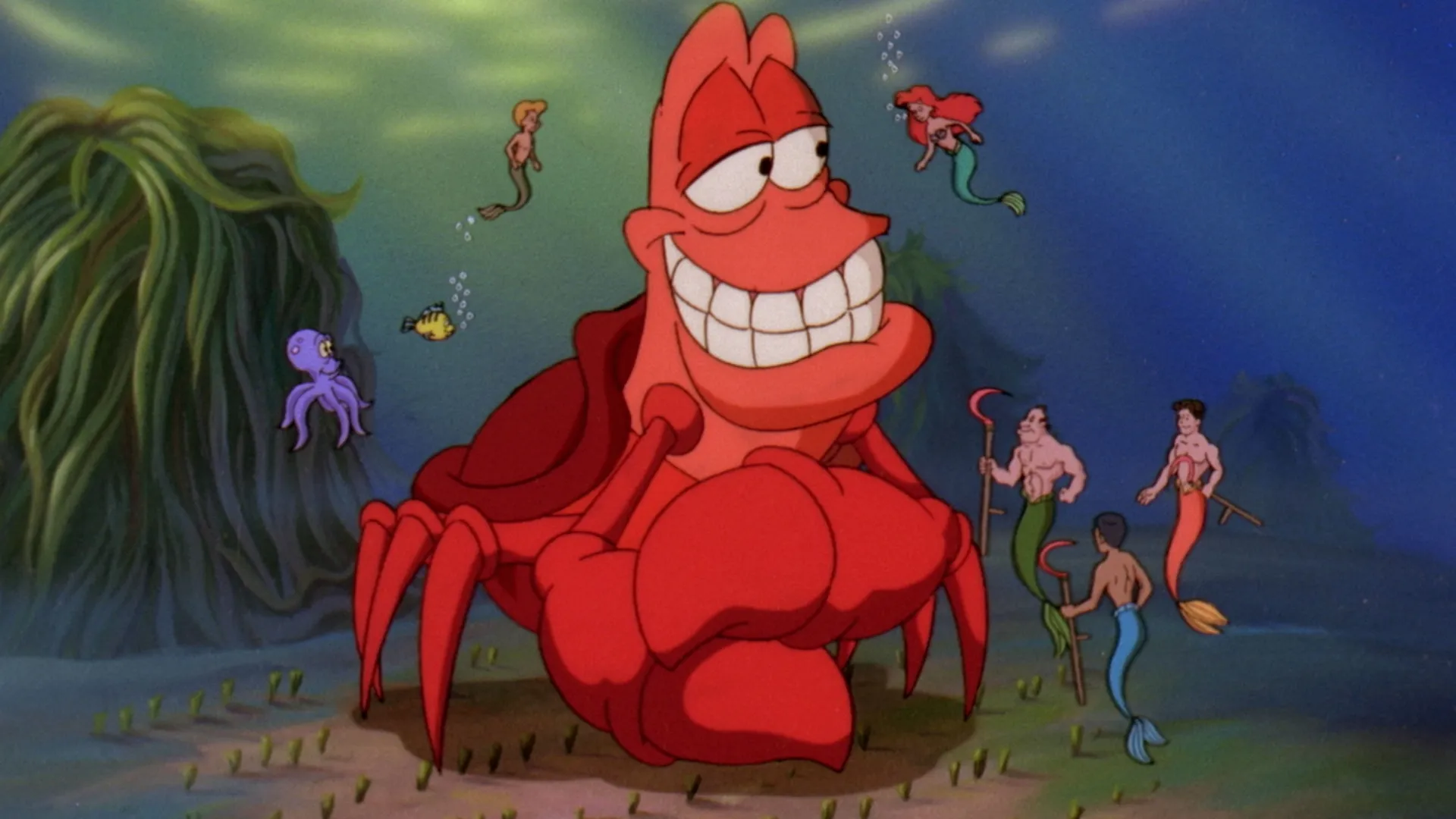
Ariel enters a magical cave to become a sea witch and learns that possessing power does not teach the judgment needed to use it.
The episode receipt
Series: The Little Mermaid (1992). Episode: S2E9 “T'ank You for Dat Ariel.” Broadcast-order position: 23 of 31.
What happened
Ariel enters a magical cave to become a sea witch and learns that possessing power does not teach the judgment needed to use it.
What the episode is really testing
Where to watch
Disney+ currently lists this episode. Regional catalogs and numbering can differ because the pilot is omitted from the service.
First reaction: Ariel hears “I feel small” and immediately reaches for unauthorized body modification
Sebastian is unhappy about being a little crab. Ariel finds a map to a Magic Cave, becomes a sea witch, and wishes him big. Her sympathy is real. Her process is a regulatory nightmare.
“T’ank You for Dat, Ariel” understands a problem that survives every new technology: good intentions do not compensate for vague requirements, missing consent, no rollback plan, and enormous power acquired five minutes before deployment.
Sebastian’s sadness is not automatically a request for transformation
He may be expressing frustration, comparison, physical inconvenience, or the residue of Zeus making size feel like status. Listening should come before solution design.
A friend saying “I hate being small” does not grant permission to alter his body.
Ariel confuses empathy with immediate action
She wants to relieve pain quickly, which can feel loving and heroic. Speed also protects her from sitting beside a feeling she cannot fix.
Sometimes support means asking what the person wants, what has been tried, and whether the goal is acceptance, access, protection, or actual physical change.
The episode follows the Zeus rivalry for a reason
Sebastian has just been humiliated by an old rival who appears stronger and more impressive. Even if this story stands alone, the broadcast sequence makes his size insecurity feel less random.
Comparison leaves residue after the rival goes home. Ariel treats the symptom without examining the social wound.
A magic map purchased from an unreliable source is not informed access
The children trade for directions to the cave despite remembering that an earlier map led to capture by a giant octopus, Evil Manta’s chains, and a cave-in. The seller’s record is not merely imperfect. It is dangerous.
Curiosity should not erase vendor history.
Urchin trades away a game for the map
The exchange feels small, but it shows how magical-risk markets reach children through informal barter. No adult reviews the source, destination, price, or claims.
Atlantica needs more than warnings. It needs safe ways for young residents to verify maps and report predatory sellers.
The Magic Cave gives power without instruction
Ariel enters and becomes a sea witch, apparently gaining reality-altering ability without apprenticeship, ethics training, scope limits, or a clear explanation of duration.
Power that is easy to activate and difficult to understand is not a gift. It is an incident waiting for a target.
The instrumental Little Mermaid theme makes the cave feel fated
Episode notes identify the film theme playing instrumentally as Ariel enters. The music connects this experimental cave to her later encounter with Ursula and the franchise’s central transformation bargain.
The Easter egg produces dramatic recognition while worsening continuity. Ariel should not approach future sea-witch magic as though the category were entirely unfamiliar.
Becoming a sea witch does not make Ariel Ursula
Magic is a capacity, not a moral identity. Ariel’s desire is benevolent, and she does not build contracts around desperation or collect victims as polyps.
The episode’s more useful question is whether untrained benevolence can still create Ursula-sized consequences. It can.
The wish fails because “big” is not a specification
Ariel asks for Sebastian to become big without defining target size, growth rate, duration, environmental limits, health effects, or reversal conditions. Magic follows the broad instruction past the intended outcome.
Ambiguity becomes physical because the system has no shared understanding of “enough.”
Nothing happening immediately is not evidence the spell failed
Delayed effects should trigger monitoring, not repeated experimentation. Ariel initially sees no result, which can encourage false confidence while the transformation has already begun.
Every intervention needs an observation window appropriate to its risk.
Continuous growth turns one wish into an ecological crisis
Sebastian becomes so large that there is less room for everybody else in the sea. His altered body displaces communities, changes currents, and creates danger without his consent.
The episode literalizes scale externalities: a benefit defined around one person can consume the environment when nobody sets a boundary.
Sebastian carries the blame on his body for Ariel’s decision
Other residents see the giant crab, not the vague spell wording or the cave that granted power. He becomes the visible problem even though he did not design the intervention.
People often blame the transformed person because the decision-making system is harder to see.
Bigger does not resolve the emotional reason Sebastian felt small
Physical scale may briefly deliver attention or strength. It cannot guarantee respect, security, musical confidence, or freedom from comparison. As growth becomes dangerous, it creates new shame.
A body cannot permanently solve a hierarchy that keeps changing the standard.
Consent must be specific, not inferred from a complaint
Even if Sebastian said he wished he were bigger, he would need to understand the method, risks, alternatives, duration, and reversal before agreeing to magical treatment.
Desire for an outcome is not consent to every pathway toward it.
Ariel experiments on a friend rather than herself
The spell’s uncertainty is carried by Sebastian’s body. Ariel gains experience while he absorbs growth, fear, public disruption, and potential injury.
Ethical experimentation requires the person at risk to control participation. Friendship does not create an exemption.
Flounder and Urchin are witnesses, not safeguards
Children asking whether the plan is wise cannot substitute for expertise. Their presence may make Ariel feel the choice was discussed even though nobody can assess the cave’s magic.
Group enthusiasm is not peer review.
Sebastian’s body should not become a public engineering problem
Once growth begins, the priority is his safety and the surrounding environment. Residents may need evacuation and containment, but language should avoid treating him as a monster to defeat.
The patient remains a person during emergency response.
A rollback plan should exist before casting
Ariel needs to know how to reverse the spell, whether returning to the cave is required, what happens if access closes, and which conditions make reversal dangerous.
“We will figure it out if something goes wrong” is not a plan when magic changes anatomy.
The cave should have built-in limits
A responsible magical system could cap changes, require confirmation, display a preview, time out automatically, and reject requests that target another person without consent.
If a child can become a sea witch and resize a court official through one vague sentence, the cave itself is badly designed.
A preview would expose the difference between intention and execution
If the cave showed Ariel a projected result before applying the spell, she could see whether “big” means slightly taller, palace-sized, or continuously expanding. A confirmation step would force her to confront what the magic heard rather than what she assumed she communicated.
Preview systems do not replace consent, expertise, or accountability. They create one more chance to catch ambiguity before another person’s body becomes the test environment.
Magic interprets language and therefore inherits language risk
Words such as big, better, strong, beautiful, normal, and fixed carry subjective meanings. A spell that literalizes them without clarification turns cultural assumptions into anatomy.
Precision is not bureaucratic fuss when language executes directly on a body.
Ariel needs requirements gathering before enchantment
What difficulty does Sebastian want changed? Reaching objects, being heard, feeling respected, or protecting others? Each need suggests different responses, many of which do not alter his body.
Solving the stated adjective instead of the underlying problem is how a giant crab happens.
Accessibility could address size without erasing Sebastian
Tools, platforms, amplification, adjusted furniture, shared lifting, and respect for his authority might reduce disadvantages associated with scale. Social design can change when bodies differ.
Transformation should not be the default because the environment refuses accommodation.
The episode turns assistive intent into a caution about normalization
Ariel wants Sebastian closer to an imagined ideal of largeness. The spell does not ask whether his small body also enables speed, access, musical movement, and a life he values.
Help becomes normalization when it assumes one body is the correct endpoint.
Sebastian is allowed to want change anyway
Rejecting compulsory transformation does not require romanticizing every frustration of being small. He can desire different access, temporary enhancement, or physical change if the decision is genuinely his.
Autonomy includes choices other people find unnecessary.
The crisis exposes Atlantica’s missing magical oversight
Caves, stones, tridents, witches, and cursed objects repeatedly threaten the kingdom. Yet children continue finding reality-altering systems through maps and rumors.
Triton’s approach appears reactive and personal. The kingdom needs trained magical safety, artifact registries, restricted sites, and transparent reporting.
Emergency response must account for panic around a giant body
Residents may flee, attack, or try to restrain Sebastian without understanding that growth is involuntary. Responders need a clear public message, protected routes, medical observation, and a way for Sebastian to communicate as his scale changes.
The goal is reducing harm, not producing a dramatic battle against the most visible victim. A frightened population still needs leadership that distinguishes hazard from blame.
Banning every cave would repeat Triton’s usual mistake
Total prohibition drives curiosity underground and prevents study. The cave may hold knowledge that can be used responsibly under expert supervision.
Governance should make safe access possible, not pretend danger disappears when the king says no.
Ariel’s curiosity needs apprenticeship
She learns quickly, asks bold questions, and notices possibilities adults ignore. Those traits could make her an excellent scholar of magic and human culture.
Talent becomes trustworthy when paired with method, ethics, mentorship, and the humility to delay action.
The film will later place Ariel on the patient side of a sea-witch bargain
In 1989’s story, Ursula alters Ariel’s body under a contract with hidden strategic intent. This episode places Ariel in the caster role and should give her direct knowledge of how transformation can escape the user’s imagined limits.
The continuity cannot fully absorb that lesson, but the thematic echo is valuable.
Ariel should recognize how desperation narrows consent
Sebastian’s insecurity makes rapid change attractive. Later, Ariel’s grief and conflict with Triton make Ursula’s offer feel like the only route to Eric and the human world.
Having once acted from the helper side should make her more suspicious of any provider who rushes a vulnerable person toward irreversible terms.
The title uses Sebastian’s accent as the punch line
“T’ank You for Dat, Ariel” turns “thank you for that” into the episode title through Sebastian’s established Caribbean-inflected speech. The wording connects gratitude with the disastrous consequence of her help.
The joke works as character voice, though the franchise’s use of accent for comic flavor always deserves awareness of how cultural speech is packaged.
Gratitude should never be required for unwanted help
Ariel sacrifices effort and takes risk because she cares. Sebastian still does not owe thanks for a body modification he did not request under informed conditions.
Intent can be appreciated separately from outcome and accountability.
Ariel’s apology should name the consent failure
“I wanted you to feel better” explains motive. A full apology adds: “I changed your body without permission, used power I did not understand, failed to define limits, and placed you and others in danger.”
Specificity turns remorse into learning.
Repair includes restoring Sebastian’s trust
Returning him to ordinary size addresses anatomy. He may still fear Ariel’s impulsive solutions or wonder whether friends see his body as a problem waiting for correction.
Trust requires changed behavior after the magical glow fades.
The friends need a no-spell agreement
No body changes, curses, wishes, personality adjustments, or memory magic involving another member without explicit consent and qualified oversight. Emergency exceptions should be narrow and documented.
A friendship boundary can be simple even when the magic system is not.
The seller of dangerous maps belongs in the incident report
The group already knows this source led them into prior catastrophe. Continuing to sell access to minors suggests a broader pattern, not one unfortunate transaction.
Accountability should travel upstream instead of ending with Ariel’s mistake.
The cave’s existence complicates Ursula’s uniqueness
Sea-witch power can apparently be granted through a place, which means Ursula may be one practitioner inside a larger magical ecology rather than the only possible source. The series expands lore even when it does not explain the institution.
That ambiguity deserves a guide, not an invented certainty.
The instrumental theme is also a warning from the audience’s future
Viewers know Ariel will later enter another cave seeking transformation. The melody lets us feel that future while the character cannot. Dramatic irony turns a playful experiment into rehearsal.
She is learning the wrong lesson if the only conclusion is “be more specific next time.”
What Sebastian should ask for instead
He can ask Ariel to listen, challenge comparisons, help modify inaccessible spaces, and remind Triton that authority does not depend on body size. If he still wants transformation, he can pursue it through informed consultation.
The goal is choice, not compulsory self-acceptance.
What Ariel should study before casting again
Consent, spell syntax, delayed effects, boundaries, reversibility, testing, environmental impact, and the history of sea-witch practice. She should also learn when not to intervene.
Curiosity becomes wisdom partly through restraint.
What Triton should do with the Magic Cave
Secure it temporarily, document its behavior, invite qualified researchers, establish ethical access, and investigate how the map seller obtained directions. Do not destroy evidence in anger.
A ruler who responds only with prohibition guarantees the next discovery will also be secret.
Where this sits in broadcast order
“T’ank You for Dat, Ariel” is S2E9 and episode twenty-three in the complete thirty-one-episode inventory. Reliable current records place its broadcast on December 11, 1993. Tedd Anasti and Patsy Cameron are credited as writers, with Jamie Mitchell directing.
It closes Season 2 by making Ariel briefly resemble the kind of magical authority who will later exploit her, but without equating careless help with Ursula’s deliberate predation.
Final reaction
“T’ank You for Dat, Ariel” is funny because “make Sebastian big” sounds simple until one crab begins consuming the available ocean. It is sharp because Ariel’s mistake starts with love. She listens just long enough to identify pain and not long enough to learn what Sebastian actually wants.
The Magic Cave turns vague kindness into continuous growth, then leaves everybody else to define “enough” during the emergency. Episode grade: B plus, with the cave placed under ethical review, the map seller’s license revoked, and Ariel required to complete consent training before wishing so much as one extra inch onto anybody.