
RaeRae Reacts · S2E2 · 1992 Animated Series
Calliope Dreams
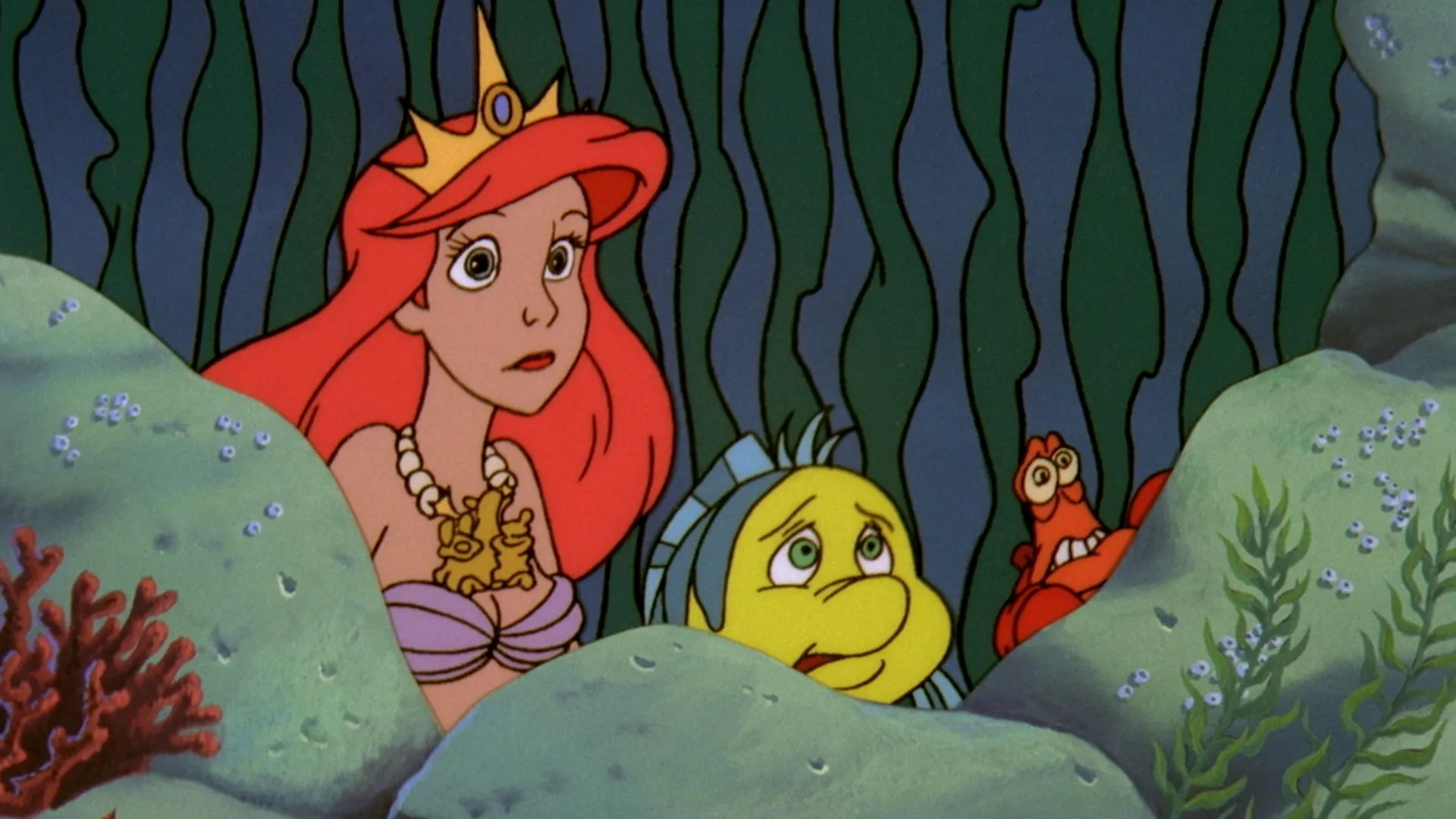
Triton wants Ariel to master the sea calliope, turning musical talent into another conflict between the future assigned to her and the sound she wants to make.
The episode receipt
Series: The Little Mermaid (1992). Episode: S2E2 “Calliope Dreams.” Broadcast-order position: 16 of 31.
What happened
Triton wants Ariel to master the sea calliope, turning musical talent into another conflict between the future assigned to her and the sound she wants to make.
What the episode is really testing
Where to watch
Disney+ currently lists this episode. Regional catalogs and numbering can differ because the pilot is omitted from the service.
First reaction: Triton calls it Ariel’s future because admitting it is his dream would make the pressure obvious
Ariel finds a human harp, calls it a Stringamajigger, and discovers an instrument that fits her ear and body almost immediately. Triton responds with a giant sea calliope linked to his grandfather Neptune. He presents inheritance as destiny.
The conflict is not music versus rebellion. Ariel wants to make music. She does not want to carry somebody else’s nostalgia in an instrument that resists her.
Natural affinity is information, not proof that practice never matters
Ariel’s ease with the harp suggests genuine interest and aptitude. That does not mean every difficult instrument is wrong for her or that talent removes the need for lessons. It means her motivation and response differ in ways a teacher should notice.
Education fails when struggle is treated as virtue and joy as unserious.
The sea calliope arrives as a gift with an assignment attached
Triton buys an enormous instrument and describes the future he imagines around it. Refusing can now look ungrateful because money, effort, family history, and paternal excitement are already invested.
A gift stops being freely given when the recipient must become a particular person to justify it.
Grandfather Neptune becomes authority through memory
Triton’s fond memories of Neptune give the calliope emotional legitimacy. A family tradition can connect generations and can also turn ancestors into silent voters against the living child’s preference.
Ariel cannot argue with a beloved grandfather’s symbolic importance. She can only appear to reject family.
Triton is trying to preserve himself through Ariel
If Ariel plays the instrument Neptune played, Triton can imagine a line of continuity passing through his daughter. Her performance reassures him that family culture will survive change.
That desire is human and unfair when the child becomes storage for an adult’s fear of loss.
Intergenerational projection can feel like intimacy to the parent
Triton sees the calliope as a shared thread connecting Neptune, himself, and Ariel. Because the memory feels loving, he may interpret Ariel’s participation as closeness. Her reluctance then feels like refusal of the relationship rather than information about the instrument.
Projection becomes difficult to challenge when the parent experiences it as knowing the child. The correction is curiosity: ask what part of the tradition she wants to carry and what part belongs in his own hands.
Ariel is not responsible for completing Triton’s unfinished childhood
If Triton once wished he could play like Neptune, buying Ariel the instrument may offer a second route toward the dream. Her achievement would soothe an old disappointment while appearing to celebrate her talent.
Children should not become alternate timelines where parents repair every abandoned ambition. Triton can grieve what he missed and begin now.
Ariel’s sour notes are a mismatch, not a moral failure
The calliope may require technique she has not developed, teaching she has not received, and desire she does not possess. Poor early sound cannot prove laziness or incapacity. It does show the plan is not working as easily as Triton imagined.
The episode literalizes the consequence by waking an ancient Sea Cyclops, which is dramatic feedback even for this family.
Instrument-body fit changes what early learning feels like
The giant calliope may demand reach, force, timing, and posture poorly matched to Ariel’s body. A harp engages different movement and gives immediate tactile feedback through strings. Physical interface shapes confidence before abstract musical ability can be judged.
Accessible design is not lowering standards. It allows the learner’s actual skill to appear without unnecessary barriers from scale or mechanism.
Public bad notes create shame faster than private practice
A huge royal instrument makes every mistake audible and socially visible. Ariel is not only learning. She is failing inside a performance Triton already imagined proudly. Anxiety can tighten the body and make the next note worse.
Beginners need spaces where error is expected, feedback is specific, and family prestige is not listening from the doorway.
A giant instrument makes paternal expectation physically enormous
The calliope dominates space before Ariel plays it. Its scale communicates the weight of inheritance and the absurdity of expecting one teenager to inhabit a grandparent’s legacy on command.
The later smaller calliope is not only practical. It is a visual correction. Triton finally sizes the dream to the person who actually wants it.
The Sea Cyclops is awakened by noise nobody intended
Ariel does not set out to disturb an ancient creature. Triton does not expect his gift to become a public hazard. Intent does not prevent consequence when adults install enormous instruments without researching the environment.
The monster is another victim of a family projection nobody thought could reach beyond the palace.
The creature’s response is communication before it is villainy
It wakes after harsh sound and moves toward the source. Calling it evil would ignore the disturbance that begins the encounter. Its size creates danger, but the story resolves through sound rather than punishment.
Ariel succeeds when she asks what the creature responds to instead of treating force as the only language available.
Environmental acoustics are part of musical responsibility
Sound travels through water differently from air, and a giant calliope near a dormant creature carries consequences beyond the practice room. Atlantica should know which frequencies, volumes, and locations disturb surrounding habitats.
The Sea Cyclops crisis is partly an arts-venue planning failure. Expression matters, and so does where the sound goes after the performer produces it.
Soothing the Sea Cyclops should not turn wildlife into Ariel’s recital audience
The harp works because its sound changes the creature’s state. That response does not mean the animal exists to validate Ariel’s talent. The ethical goal is reducing distress and restoring safe distance.
Ariel’s music matters most when she listens for effect rather than admiring herself as the special musician who tamed a monster.
The harp soothes because Ariel is playing rather than complying
Her attention, confidence, and musical sensitivity appear when she uses the instrument she chose. The same person who produced sour calliope notes can regulate a giant creature through the harp.
Competence changes with context. A child who looks unmotivated under one assignment may become disciplined when the work connects to an authentic interest.
The rescue proves value and should not be required to earn choice
Ariel’s harp playing saves the situation, giving Triton undeniable evidence that her preferred instrument matters. She should not have to rescue Atlantica before her musical preference becomes legitimate.
Children deserve a voice in their development before talent produces public utility.
Intrinsic motivation produces the practice nobody has to police
Ariel returns to the harp because sound, touch, and discovery reward her immediately. Triton’s calliope plan relies on approval, duty, and inherited prestige. Those external rewards may start behavior and rarely sustain a lifetime of artistic work by themselves.
The easiest student to describe as disciplined is often the one whose internal motivation has been allowed to attach to the task.
External pressure can corrupt an interest the child originally shared
Ariel already loves music. By insisting on one instrument, Triton risks making music itself feel like another royal obligation. A child may withdraw from an entire field to escape the narrow version adults keep enforcing.
Protecting the larger love sometimes means letting go of the preferred pathway.
Music is relational rather than merely technical
Ariel listens to the Sea Cyclops and changes the emotional environment. The success depends on response, timing, and empathy, not only correct notes.
Triton’s calliope dream begins with performance and lineage. Ariel’s harp practice becomes communication. The episode favors music that meets a living need over music that reproduces prestige.
Sebastian should have recognized the assignment problem
As royal composer and musician, Sebastian understands instruments, practice, and the difference between desire and obligation. He is positioned to translate between Triton’s nostalgia and Ariel’s emerging voice.
If he supports the calliope without questioning fit, his palace loyalty outruns his artistic judgment.
A teacher would test fit before purchasing the giant instrument
Good instruction begins with goals, physical comfort, access, sound preference, and willingness to practice. A smaller trial instrument could reveal whether Ariel wants to continue without making rejection financially or emotionally explosive.
Triton buys the ending before Ariel has begun the lesson.
Arts education should provide exploration before specialization
Ariel would benefit from trying percussion, voice, strings, keyboards, and ensemble roles before being assigned a signature instrument. Exposure helps learners discover preference and understand how different parts cooperate.
Royal wealth can support that exploration. Using resources to predetermine one prestigious outcome wastes the access the family actually has.
Access to a human harp is also unequal cultural capital
Ariel finds an instrument most Atlanticans may never encounter because she explores shipwrecks and forbidden spaces. Her talent emerges through access as well as nature. Another child could possess similar musical sensitivity without ever touching strings.
Calling Ariel uniquely gifted should not hide the material opportunity that allowed the gift to become visible.
The harp is another human artifact Ariel understands through use
Unlike the boot in “Thinga-Ma-Jigger,” the harp gives functional feedback. Plucking strings produces patterned sound, and Ariel can test relationships between movement and music. Observation replaces Scuttle’s guesswork.
She still lacks provenance. The instrument fell from a ship and once belonged to a human musician whose story remains absent.
The Stringamajigger name preserves uncertainty without stopping discovery
Ariel does not know the human word “harp,” yet she can learn the instrument’s behavior. Correct vocabulary and practical knowledge develop on different timelines.
The episode shows a healthier thinga-ma-jigger process: experiment carefully, listen to evidence, and let function emerge.
Family tradition should be offered as access, not obligation
Triton can tell Ariel about Neptune, demonstrate the calliope, and invite her to try. Tradition becomes generous when the child can decline without losing love or status.
A living culture survives through reinterpretation. Forced repetition produces performance without attachment.
Ariel may still choose to learn some calliope later
Rejecting a prescribed identity does not require permanent hostility toward the instrument. Once the pressure is removed, she may explore it from curiosity or use it to connect with Triton.
Choice can restore interest that coercion destroyed.
Triton’s final smaller calliope is the correct ownership of desire
He gets an instrument for himself and plays the dream he had assigned to Ariel. That ending validates his love for Neptune without requiring his daughter to become a memorial.
Parents are allowed ambitions. They should pursue those ambitions in their own bodies whenever possible.
The ending models repair through changed behavior
Triton does more than say he understands. He changes who owns the calliope project. Material change is stronger evidence than a sentimental apology followed by the same lessons tomorrow.
The smaller instrument shows he revised scale, recipient, and expectation.
Jodi Benson makes the harp feel like self-recognition
Ariel’s pleasure has a different texture from her excitement over a collectible object. Playing lets her create rather than merely possess. Benson gives the discovery agency and calm.
That sound explains why the calliope assignment feels like interruption instead of opportunity.
Kenneth Mars gives Triton nostalgia enough warmth to complicate blame
The king is not manufacturing a career solely to control Ariel. He remembers Neptune and wants to share something meaningful. Mars lets affection sit inside the pressure.
Warm intention makes boundary mistakes harder to identify, not less consequential.
The Mozart cameo is a playful production Easter egg
Episode references record a cameo by Wolfgang Amadeus Mozart. The appearance belongs to the story’s music-centered humor and connects a human composer to an underwater argument about inheritance and talent.
The cameo should be noted without inflating it into proof of a larger canon the episode does not establish.
The episode creates a continuity wrinkle with Ariel’s Beginning
The later prequel film depicts Triton banning music after Athena’s death before eventually restoring it. This series episode assumes a culture where Triton enthusiastically promotes music and family instruments.
The franchise chronology does not align perfectly. Treating both works honestly means noting the tension rather than inventing certainty.
The Sea Cyclops should not be put back to sleep without considering habitat
Triton relocates and returns the creature to long sleep. That resolves danger and may avoid asking whether permanent dormancy is the creature’s natural state or a convenience for Atlantica.
A better ecological response would study what woke it, where it can live safely, and whether soothing is care or containment.
The calliope’s destruction is expensive feedback
The creature smashes the giant instrument, physically ending the future Triton purchased. Destruction forces the choice conversation that a smaller trial and honest listening could have handled earlier.
Families often wait for a visible failure because preference alone is not treated as evidence.
What Triton should learn about mentoring
Ask what Ariel wants to learn. Share the family story without assigning it. Provide instruction matched to her starting point. Treat poor early performance as information. Let the goal change.
Mentoring develops a person. It does not reproduce the mentor’s favorite ancestor.
What Ariel should learn about difficult practice
The calliope mismatch does not mean every frustrating task violates identity. She still needs patience, technique, and the ability to tolerate sounding bad while learning something she genuinely values.
Choice and discipline support each other when the goal is authentic.
What Sebastian should learn as music leader
He can protect artistic development by translating between royal ambition and individual aptitude. His job is not only producing the performance Triton requested. It is building musicians who can hear themselves.
That responsibility may require telling the king his beautiful idea belongs to him.
Where this sits in broadcast order
“Calliope Dreams” is S2E2 and episode sixteen in the complete thirty-one-episode inventory. It originally aired September 25, 1993. CVM Sekai preserves broadcast order and the official season division.
After Sebastian reclaims his professional identity, Ariel has to reclaim her musical identity from another role Triton assigned through love.
Final reaction
“Calliope Dreams” understands how loving parents hand children inherited dreams and call the package opportunity. Triton remembers Neptune. Ariel hears a harp. The giant calliope becomes dangerous because nobody paused to separate those desires.
Ariel’s chosen instrument saves the Sea Cyclops, but the deeper victory is Triton buying the smaller calliope for himself. Episode grade: A minus, with the Stringamajigger enrolled in the archive and every parent reminded they are still allowed to take their own music lessons.