
RaeRae Reacts · S1E9 · 1992 Animated Series
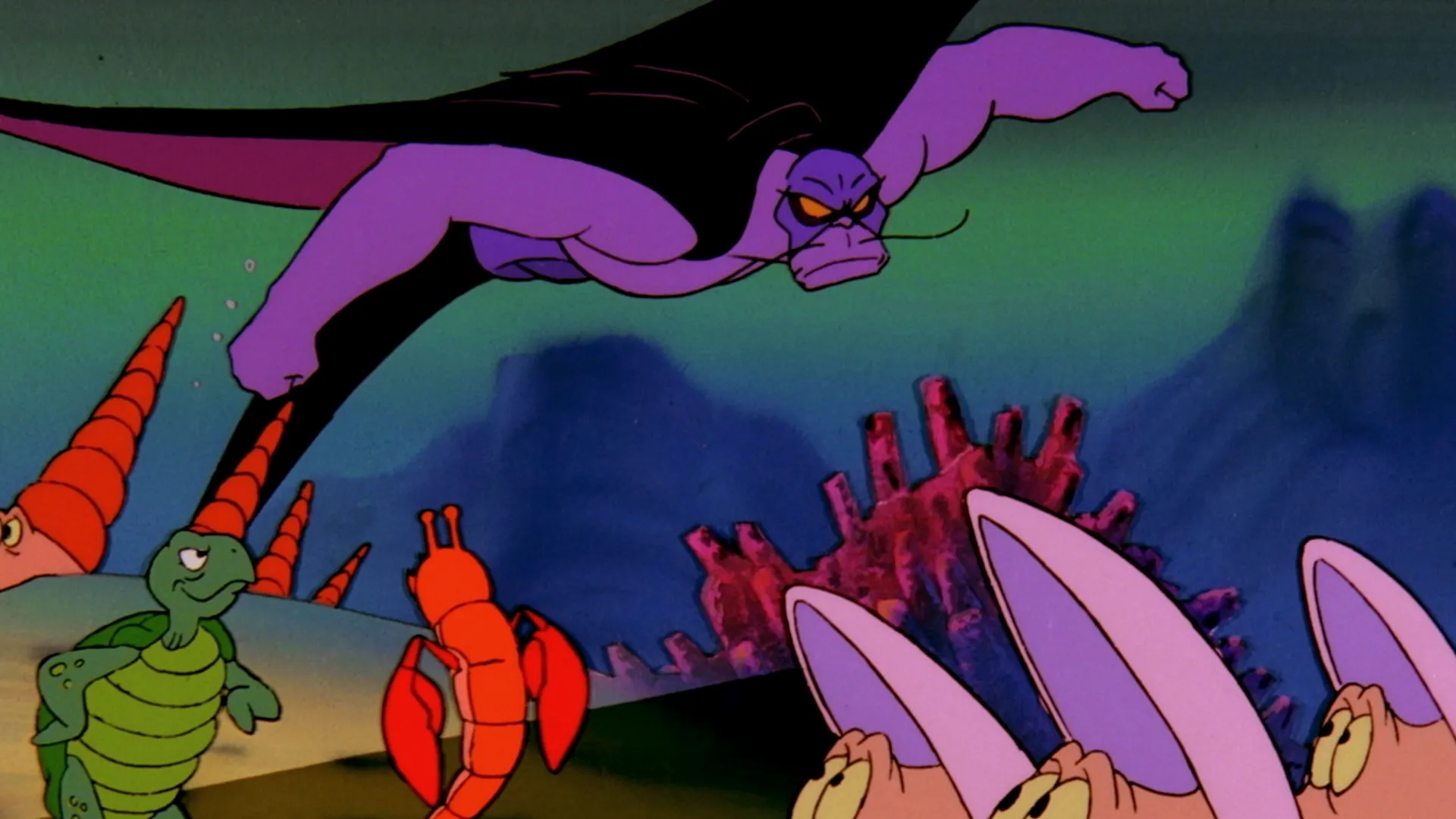
The Evil Manta
Ariel and Flounder enter a dormant volcano and encounter a villain who understands that prejudice grows faster when communities can be made afraid of one another.
The episode receipt
Series: The Little Mermaid (1992). Episode: S1E9 “The Evil Manta.” Broadcast-order position: 9 of 31.
What happened
Ariel and Flounder enter a dormant volcano and encounter a villain who understands that prejudice grows faster when communities can be made afraid of one another.
What the episode is really testing
Where to watch
Disney+ currently lists this episode. Regional catalogs and numbering can differ because the pilot is omitted from the service.
First reaction: the Evil Manta does not create prejudice, he gives existing prejudice permission
Ariel accidentally releases a villain who understands Atlantica better than its leaders do. He does not need to invent every grievance or difference. He identifies lines already present between merpeople and other sea creatures, feeds suspicion into them, and lets neighbors perform the destruction for him.
That is why the episode remains disturbing. Hatred does not arrive only as an outside monster. The outsider supplies stories that ordinary people choose to repeat because those stories make fear feel righteous.
The dormant volcano is a prison and a buried political memory
Atlantica has contained the Evil Manta physically without necessarily teaching younger citizens who he is, what he did, or why the prison exists. Ariel enters a dangerous site through curiosity and incomplete historical knowledge.
Suppressing a threat is not the same as preserving public memory. When history becomes taboo, a new generation can mistake the seal for an arbitrary boundary and release what adults refused to explain.
Ariel is responsible for the release and not for every hateful choice that follows
Her trespass creates the opportunity. She owes repair for ignoring danger and freeing a known threat. The citizens who turn on one another still possess agency. Blaming Ariel for all prejudice would let participants describe themselves as passive victims of magic or manipulation.
Responsibility should follow the chain accurately: Ariel opens the prison, Manta engineers division, and individuals decide whether to believe and act.
Manta weaponizes difference by changing its meaning
Atlantica already contains bodies with different sizes, abilities, diets, habitats, and forms of movement. Diversity can be ordinary. Manta teaches citizens to interpret difference as competition, contamination, or evidence that another group receives unfair advantage.
The material fact remains the same while the political story changes. Propaganda often works by reclassifying a neighbor’s ordinary trait as a public threat.
Fear spreads faster when it offers a clear villain
Complex problems demand patience and shared responsibility. A rumor that identifies one group as the cause provides emotional relief. People can direct anger outward instead of examining scarcity, governance, or their own behavior.
Manta’s genius is not factual persuasion. It is narrative efficiency. He turns anxiety into a target before anyone can ask a slower question.
Scapegoating converts a shared problem into somebody else’s identity
If food, territory, safety, or recognition feels uncertain, Manta can claim one group is taking more than its share. The explanation replaces a difficult distribution question with a visible target. Removing the target begins to sound easier than changing the system.
Scapegoating survives weak evidence because it offers moral innocence to the in-group. Our hardship becomes something they did to us, so any retaliation can be narrated as restoration instead of aggression.
Prejudice promises belonging to the person who participates
Joining the hostility gives uncertain citizens a team. Repeating the approved insult signals loyalty to the in-group and reduces the risk of becoming the next target. Hate becomes social insurance.
That mechanism explains why people who gain little materially may still defend a divisive movement. The reward is identity, attention, and temporary safety inside the crowd.
The villain uses lies that feel emotionally true to his audience
Effective propaganda rarely depends on claims nobody recognizes. It attaches fabrication to a real frustration, old insult, unequal encounter, or visible difference. The lie succeeds because it gives existing emotion a total explanation.
Fact checking matters and cannot work alone. People also need a better account of the feeling the lie recruited.
Atlantica’s harmony was more fragile than its songs admitted
The kingdom presents diverse species living together as natural community. Manta reveals how quickly the image can fracture. If one manipulator can produce open hostility within hours, the prior harmony may have depended on avoidance rather than durable trust.
Peace is not merely the absence of conflict. It requires institutions and relationships capable of surviving deliberate attempts to create conflict.
Triton’s government appears reactive instead of prepared
A ruler who once imprisoned Manta should anticipate the strategy he used and preserve a response plan. Instead, the kingdom seems surprised when deception spreads. Security focused on containing one body while neglecting the social conditions that made his method effective.
You cannot trident your way out of every propaganda campaign. Governance needs trusted communication, fair procedures, and leaders across communities who can correct rumors before violence becomes self-sustaining.
Ariel fights the lie through relationships the lie cannot fully explain
Her friendships cross the categories Manta wants citizens to treat as enemies. Personal knowledge gives her evidence that a group label cannot describe the individual in front of her. Relationship becomes a counterarchive.
Contact is not a magic cure. People can maintain prejudice while making exceptions for friends. The relationships work here because Ariel uses them to challenge the rule, not merely declare her friends different from the rest.
Flounder’s friendship matters because fear targets the easiest fracture
Manta can pressure friends to reinterpret ordinary differences as betrayal. Once suspicion enters, past misunderstandings become evidence and loyalty becomes conditional on choosing a side.
Flounder and Ariel resist when they remember a history longer than the rumor. Durable friendship gives them context propaganda cannot rewrite in one sentence.
Sebastian understands community performance through music
Sebastian knows harmony is not sameness. Different parts maintain distinct sounds while listening, timing, and adjusting to one another. The musical metaphor is obvious and useful when it avoids turning social conflict into a problem solved by pleasant vibes.
Harmony requires structure. Somebody writes arrangements, rehearses conflict, and ensures one voice does not drown out every other part. The kingdom needs the civic equivalent.
Manta benefits when every group believes it is only defending itself
He does not need citizens to think they are cruel. He needs each group to believe aggression is preemptive protection against what the other group will do. Mutual fear can generate the evidence it predicts.
Once retaliation starts, every injury becomes proof the original warning was correct. The villain can step back while the cycle produces its own fuel.
Bystanders help the campaign when silence looks neutral
Citizens who do not repeat the lie may still watch targeted neighbors lose access, safety, or reputation without intervening. Silence avoids immediate conflict and allows the loudest group to present hostility as consensus.
Bystanders face real risk when challenging a crowd. Moral judgment should recognize that risk without pretending inaction has no effect. Collective defense becomes possible when enough people act together before the isolated dissenter has to absorb the entire cost.
Leaders across communities matter before the crisis peaks
Trusted figures can compare information, correct rumors, and keep lines of communication open when Manta tries to isolate groups. Those relationships need to exist before the emergency. A network built during panic will be slower and easier to discredit.
Atlantica appears to rely on Triton’s central authority, which makes the kingdom vulnerable when citizens distrust or cannot reach the palace. Distributed trust is not a threat to good governance. It is resilience.
The episode understands that language can change material reality
A lie begins as sound and ends as segregation, conflict, damaged trust, and physical danger. Words do not remain symbolic when institutions and crowds act on them.
Calling propaganda “just talk” ignores the chain between description and permission. Manta narrates neighbors as enemies until violence feels like common sense.
Not every conflict between groups is fabricated
A responsible reading should not imply all grievances are tricks planted by one villain. Communities can have real resource disputes, historical harm, or unequal power. Manta’s manipulation succeeds partly because those issues lack trusted forums.
Unity cannot require silence about real injustice. It must separate evidence-based demands from stories designed to make coexistence impossible.
The title places evil inside one character and the episode distributes the danger
Manta is deliberately malicious, theatrical, and easy to identify. The broader threat appears in ordinary citizens who accept his framing. Naming one Evil Manta can hide the smaller choices that make his campaign operational.
The episode’s moral weight depends on seeing both levels. Remove the organizer and the habits he activated may remain.
The villain’s appearance creates an uncomfortable contradiction
A story opposing prejudice gives its evil character a dark, frightening, unfamiliar body. Visual shorthand helps children recognize danger and risks associating difference with moral corruption while dialogue argues the opposite.
The series partly complicates that problem later through Manta’s son and eventual change. In this first appearance, behavior must remain the reason for judgment, not species or silhouette.
Tim Curry makes manipulation sound like pleasure
Curry’s Manta does not merely want power. He enjoys finding the phrase that makes trust collapse. The performance gives hatred theatrical charm, showing why a destructive messenger can attract attention even when listeners recognize cruelty.
Charisma is not evidence of truth. It is a delivery system capable of making an emotionally satisfying lie feel smarter than a complicated fact.
Jodi Benson keeps Ariel’s guilt from becoming self-centered
Ariel knows she released the threat, but the crisis requires action rather than endless confession. Benson lets remorse motivate repair without making every harmed citizen responsible for comforting the princess.
That balance matters. Accountability should increase attention to others, not turn guilt into another demand for attention.
The episode’s conflict is larger than its television runtime
Prejudice spreads and recedes with the compressed rhythm of a children’s adventure. Real social division does not disappear when the liar is exposed. Relationships, institutions, and memories remain damaged.
The quick repair can teach hope and should not be mistaken for a model of how long reconciliation takes.
Exposing the liar does not automatically undo the lie
People may keep a false belief because it now protects pride, excuses harm, or anchors group identity. Admitting deception would require admitting what they did while believing it. Some will prefer a revised conspiracy over accountability.
Atlantica needs public correction plus repair, restitution, and repeated evidence that cooperation is possible.
Friendship is necessary and insufficient
The episode celebrates personal bonds across difference, and those bonds interrupt Manta’s campaign. Friendship cannot replace laws, fair access, education, or leadership that protects targeted groups when popular feeling turns hostile.
A society that survives prejudice only because the princess has diverse friends remains dangerously dependent on royal personality.
Calls for unity can silence the people who were targeted
After Manta is defeated, leaders may urge everyone to forget division and return to harmony. That request sounds generous to people whose safety was never directly threatened. Those attacked are asked to surrender anger before the harm has been named.
Real unity is not enforced pleasantness. It makes room for testimony, consequence, and changed practice. Otherwise the kingdom restores the image Manta disrupted while leaving targeted citizens to carry the memory alone.
Children can understand propaganda when stories respect them
The episode does not need academic vocabulary to show the mechanism. A villain lies, isolates groups, amplifies fear, and benefits from their conflict. Viewers can recognize how manipulation works before they can name every stage.
That clarity is one reason the story should not be reduced to “be nice.” Niceness does not explain organized deception. Media literacy, courage, and collective defense do.
The Halloween airdate gives the monster story another layer
The episode originally aired on October 31, 1992, making its volcano prison and shadowy villain appropriate seasonal imagery. The real horror is social: familiar neighbors become willing to hate one another.
The airdate is a production fact, not proof of authorial metaphor, but the pairing makes the episode’s fear more memorable than a conventional creature attack.
The Chuck Menville dedication belongs in the record
The episode was dedicated to writer Chuck Menville, who died before it aired. Remembering that credit matters because animation history is made by people whose names can disappear behind franchise branding.
The dedication does not change the plot’s meaning. It does make the episode a piece of labor and memory as well as entertainment.
This episode prepares Manta’s later story with his son
Manta returns in “A Little Evil,” where his son complicates the idea that hatred is inherited destiny. The child’s friendship with Ariel creates pressure Manta’s ideology cannot easily absorb.
That later development strengthens this episode’s argument. Evil is taught, performed, and chosen. Species does not determine the ending.
What Ariel should learn about forbidden history
Curiosity remains valuable, but a sealed prison is not an artifact to activate before learning why it was sealed. She needs sources beyond rumor, including records of harm and people who remember the earlier conflict.
Questioning authority and studying history are compatible. Reckless release is not the only alternative to obedient ignorance.
What Triton should learn about public trust
Citizens need information they believe before a manipulator arrives. Trust grows through transparency, fair treatment, and leaders who correct their own side as readily as an opponent. Royal command cannot substitute for credibility.
If Atlantica returns to ceremonial harmony without examining why Manta succeeded, the next liar will find the same openings.
What repair should look like after the finale
Groups that attacked or excluded one another need more than a shared celebration. They need acknowledgment of specific harms, restitution where possible, and structures for resolving the grievances Manta exploited.
Forgiveness cannot be demanded from targeted citizens for the sake of restoring a pleasant image of unity. Peace without truth is another dormant volcano.
Where this sits in broadcast order
“The Evil Manta” is S1E9 in the complete thirty-one-episode inventory. Disney+ shows it one number earlier because the service omits “Whale of a Tale.” CVM Sekai preserves broadcast order so the episode art, React, and directory remain stable.
The placement follows two episodes about misinformation and raises the stakes. A wrong story no longer threatens one bracelet or one diplomatic visit. It threatens the social fabric of Atlantica.
Final reaction
“The Evil Manta” is one of the first season’s most ambitious episodes because it knows prejudice is not a private bad feeling. It is a political technology. Manta identifies difference, supplies fear, and teaches neighbors to harm each other while calling the harm defense.
Ariel helps stop him through relationships, courage, and accountability for releasing him. Atlantica still needs the harder work after the credits: honest history, trusted institutions, repair, and a public that recognizes manipulation before hate starts feeling like belonging. Episode grade: A, with the warning that friendship can defeat one villain and still leave a kingdom responsible for its fractures.