
RaeRae Reacts · S1E13 · 1992 Animated Series
Trident True
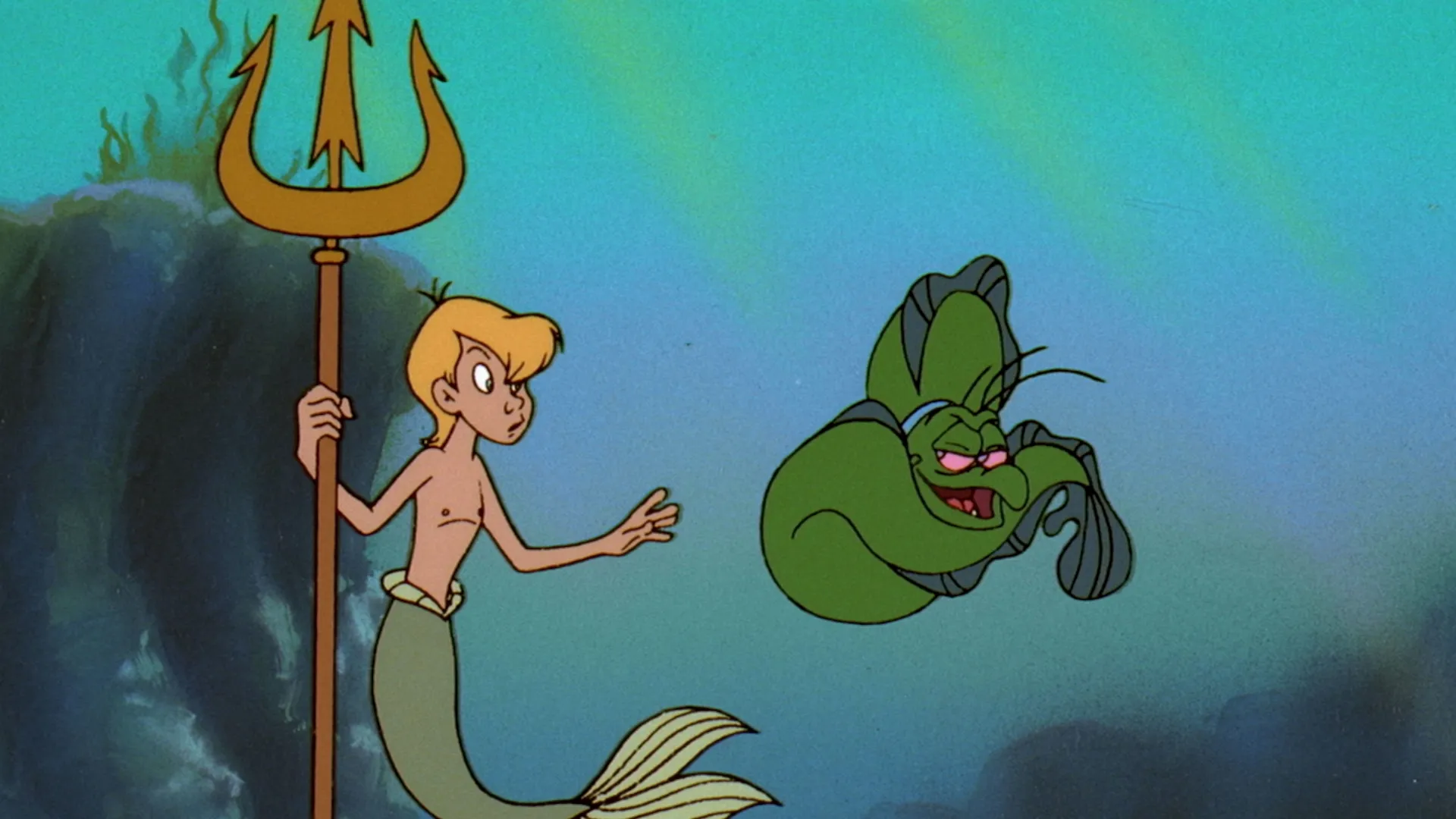
Ariel tries to make Father’s Day unforgettable and learns that impressing Triton is not the same thing as understanding what he needs from her.
The episode receipt
Series: The Little Mermaid (1992). Episode: S1E13 “Trident True.” Broadcast-order position: 13 of 31.
What happened
Ariel tries to make Father’s Day unforgettable and learns that impressing Triton is not the same thing as understanding what he needs from her.
What the episode is really testing
Where to watch
Disney+ currently lists this episode. Regional catalogs and numbering can differ because the pilot is omitted from the service.
First reaction: Father’s Day turns love into a competition nobody officially announced
Ariel wants the perfect gift for Triton, and “perfect” immediately means rare, difficult, and impressive. The holiday invites children to translate a relationship into an object while comparing what everybody else can provide.
Love becomes performance. Ariel risks herself not because Triton needs a glow shell, but because an ordinary gift feels too small to prove the size of her feeling.
The rare glow shell is valuable because the search is dangerous
A map points Ariel toward Shark Canyon, where scarcity and risk make the shell seem worthy of a king. The object’s emotional value becomes entangled with the danger required to obtain it.
That logic rewards escalation. If love must be proven through sacrifice, safer choices begin to look less sincere even when the recipient would prefer the giver remain safe.
Ariel is trying to impress the father whose approval feels conditional
Triton loves Ariel, yet many of their interactions center on rules, disappointment, and crisis. A spectacular gift offers a chance to produce uncomplicated pride. She can become the daughter who knows exactly what pleases him.
The expedition is not only generosity. It is an attempt to secure a feeling their ordinary communication does not reliably provide.
Urchin experiences the holiday as proof of an absence
For an orphaned child, Father’s Day does not begin as a shopping problem. It highlights the relationship everyone assumes a child has. Public celebration turns private loss into a schedule he cannot avoid.
Urchin’s sadness deserves more than being redirected toward a substitute gift. He needs room to grieve the father he does not have and define what family means now.
Chosen fatherhood should not require Urchin to erase his first father
Inviting Urchin to celebrate Triton can honor the relationship growing in Atlantica. It should not imply that a new bond replaces the unknown, absent, or dead parent whose loss still shapes him. Children can hold attachment, grief, curiosity, and new love at once.
A healthy found family does not demand amnesia as proof of loyalty. Triton can become important without requiring Urchin to pretend the holiday never hurts.
Adoption into a royal family changes power as well as affection
If Urchin is treated like a little brother and son, he gains protection, status, and access unavailable when he lived alone. Those benefits can create pressure to appear grateful, harmless, and useful. One mistake may feel politically larger because outsiders already question whether he belongs.
The family must protect his right to ordinary childhood, including failure that does not become a referendum on every orphan Atlantica might welcome.
Ariel invites Urchin into the royal family through action
Encouraging him to buy Triton a gift tells Urchin that his affection has a legitimate place. The gesture can widen Father’s Day beyond biology and recognize the bond growing between him and the king.
It can also pressure him to perform gratitude toward the family that helped him. Inclusion should remain an invitation, not a debt collected through holiday ritual.
Triton’s target practice with Urchin matters
Episode records describe the king and boy sharing friendly trident target practice. That scene gives their relationship substance before the crisis. Triton is not merely a symbolic father Urchin chooses from a distance.
The activity also normalizes the trident as something the child watches, admires, and associates with protection. Later borrowing grows from observed access rather than sudden criminal ambition.
The trident is a weapon, governing instrument, and family symbol
Triton uses it to protect, punish, transform, and rule. Urchin sees the object as the one tool powerful enough to rescue Ariel. The palace sees unauthorized possession as theft and existential danger.
Every meaning is true. That concentration is exactly why security cannot rely only on Triton’s personal control.
Urchin takes the trident to rescue, not to rule
Intent matters. He does not seek the throne, wealth, or revenge. Ariel and Flounder are trapped by a giant octopus, and the adults with authority are unavailable or too slow. The child chooses the tool he knows can work.
Good intent reduces moral blame and cannot erase the catastrophic risk of taking an object capable of controlling the sea.
Calling it borrowing does not create permission
Urchin plans to return the trident after the rescue, which distinguishes his act from permanent theft. Ownership and authorization still exist during temporary use. A person cannot privately redefine access because the intended duration is short.
Emergency necessity can justify rule-breaking under narrow conditions. The harder question is whether safer alternatives were realistically available in time.
Necessity is a defense with limits, not a magic word
Urchin faces imminent danger to Ariel and Flounder, uses a tool capable of rescue, and intends to return it. Those facts support an emergency justification. The justification weakens if safer help was available, if use exceeded the rescue, or if he ignored foreseeable risks without reason.
The episode should ask those questions openly. Otherwise children hear either “rules never matter when you feel heroic” or “rules matter more than trapped friends.” Neither is responsible.
Watching target practice normalizes weapon access without teaching custody
Triton introduces Urchin to the trident through a friendly activity. That can build trust and skill, but it also makes the weapon feel familiar and personally connected to their bond. Familiarity lowers the psychological barrier to taking it during crisis.
Training should include access rules, emergency procedures, safe storage, and what to do when the authorized user is unavailable. Skill without governance is incomplete education.
The emergency exposes the palace response gap
Ariel and Flounder are trapped while Triton is off duty. Urchin apparently cannot activate a rescue system capable of reaching them quickly. He turns to the trident because institutional help is not accessible at the speed the danger requires.
A child should not have to choose between watching friends die and stealing the kingdom’s most powerful object.
A king being off duty cannot mean the kingdom is off duty
Triton deserves rest, holidays, and time away from constant command. Atlantica still needs authorized responders, rescue tools, and temporary decision-makers during those hours. Otherwise every emergency waits for one exhausted ruler to return.
The problem is not that Triton stops working. The problem is that the institution has confused his personal availability with public capacity.
The giant octopus is consequence, not moral judge
The creature traps Ariel and Flounder because the gift expedition enters danger. It does not exist to prove that wanting a meaningful gift was selfish. The mistake lies in planning, risk assessment, and secrecy.
Adventure stories often let a monster deliver the lesson adults failed to teach clearly. The result can confuse survival with moral deservingness.
Ariel’s danger drafts Urchin into adult responsibility again
He is still a child with a recent history of neglect and criminal exploitation. Now he must assess an emergency, access royal power, fight a giant creature, and manage consequences if the trident is lost.
Belonging should not require heroism. The family must value Urchin on days when he saves nobody.
Losing the trident makes the private rescue a public crisis
Once the object leaves his control, every citizen becomes exposed to whoever finds it. Urchin’s calculation included the immediate octopus and underestimated what losing the weapon could mean.
Emergency ethics require considering downstream risk, especially when the tool has power far beyond the original problem.
Triton built a single point of failure
The kingdom’s defensive, magical, and political authority is concentrated in one portable object. The owner can be distracted, transformed, coerced, or absent, as “Red” already proved one episode earlier.
Repeated trident crises are not random bad luck. They are architecture. Atlantica needs layered authority and custody controls.
The consecutive episodes make the security failure impossible to ignore
“Red” uses age magic to separate Triton from full capacity and target the trident. “Trident True” lets a child take it during an emergency. Two different motives reach the same vulnerability.
The first is malicious infiltration. The second is loving desperation. A good security system must account for both without treating every family member as an enemy.
Urchin expects punishment because belonging still feels conditional
A child with a history of abandonment may believe one serious mistake will prove the new family was temporary. Losing the trident can feel like losing the right to remain near Ariel and Triton.
The adults’ response will teach whether family means accountability inside continued care or acceptance that disappears when gratitude stops being perfect.
Accountability should match intent, capacity, and harm
Urchin knowingly takes the trident, uses it for rescue, and loses it. He should participate in recovery, explain his reasoning, and learn safer emergency steps. He should not be judged as though he sought to overthrow the king.
Proportion is how justice distinguishes a frightened child from a villain carrying the same object.
Ariel owes responsibility for starting the chain
Her pursuit of the perfect gift places herself and Flounder in the cave. Urchin’s unauthorized rescue does not erase the expedition’s role. She needs to own the secrecy and risk without converting guilt into a demand that everyone comfort her.
Shared responsibility does not mean equal responsibility. Each person made a different choice at a different point in the chain.
Flounder follows another plan whose stakes expand after agreement
He joins Ariel’s search out of loyalty and becomes trapped by danger attached to her gift standard. His participation matters, but Ariel’s confidence and royal status shape the plan.
Friends should be able to question whether a gesture for somebody else is worth the risk they are being asked to share.
The shell cannot be worth more than the children
Once danger appears, obtaining the gift should stop mattering. Adventure logic can tempt Ariel to complete the mission because turning back would make earlier risk feel wasted.
Sunk-cost thinking is not devotion. Triton’s actual interest should be their safe return, not proof they survived enough danger to deserve a shell.
Gift culture can make children responsible for adult emotion
Ariel behaves as though Triton’s Father’s Day happiness depends on her producing the right object. That transfers emotional management onto the child. A parent can appreciate effort while making clear that love and stability do not depend on performance.
The perfect-gift standard becomes especially cruel beside Urchin, who may believe not having a biological father means he also lacks the knowledge required to participate correctly.
Triton’s reaction can either secure or fracture the family
He has reason for fury: the trident was taken and lost. If anger becomes the entire response, Urchin learns to hide future emergencies and Ariel learns that explaining context does not matter.
A strong response can protect the kingdom, name the violation, and keep both children inside the relationship.
Fatherhood is shown through what Triton does after failure
Receiving a gift is the ceremonial part of Father’s Day. Caring for a child who has made a dangerous mistake is the actual work of fatherhood. Urchin’s presence turns the holiday from sentiment into practice.
Triton can prove the boy belongs by holding him accountable without threatening abandonment.
Ariel’s sisters treating Urchin like a little brother broadens the family
Character records note that the sisters come to regard Urchin as a younger brother. That recognition matters because adoption into family culture requires more than the protagonist’s friendship.
Found family becomes durable when multiple relationships support it and no single conflict can remove the child from every bond at once.
The title asks whether loyalty to the trident or truth defines belonging
“Trident True” can describe faithfulness to the king’s symbol and the courage to tell the truth after misusing it. Urchin fails the access rule and remains true to the protective purpose he associates with Triton.
The episode works best when loyalty is judged through values, not blind obedience to an object.
The rescue should not prove children need access to weapons
Urchin’s success against immediate danger can romanticize unauthorized use. The correct lesson is that emergency systems failed him, not that brave children should independently arm themselves.
Adults must build a route where help arrives quickly enough that rule-breaking does not become the only moral option.
Jodi Benson makes perfection sound like anxiety
Ariel’s enthusiasm for the gift carries the need to get the relationship right. Benson lets affection and pressure coexist, which explains why a rare shell feels necessary before the adventure begins.
The performance keeps Ariel sympathetic while allowing the standard she sets to be questioned.
Danny Cooksey gives Urchin’s bravery a frightened edge
The rescue requires courage and comes from a child who knows power can determine whether he belongs. The voice can hold urgency, pride, and fear of consequences in the same action.
That combination prevents the trident choice from becoming either pure heroism or simple delinquency.
The glow shell is less important than the gift Urchin already offers
Urchin’s trust, affection, and willingness to act for Ariel are relational gifts no marketplace can price. The holiday’s object economy makes those forms of love harder to display, even though Triton needs them more than another treasure.
A meaningful ending should let presence outrank rarity.
What Atlantica should change after recovery
The palace needs secure trident custody, an emergency rescue channel children can activate, clear rules for temporary authority, and education about why the object cannot be casually borrowed.
Security should make the safe action easier than the forbidden action. Merely increasing punishment will make the next crisis quieter, not safer.
What the family should change after Father’s Day
Triton should tell Ariel what kinds of gifts actually matter, acknowledge Urchin’s grief, and make clear the boy belongs without having to earn the role through service. Ariel should stop measuring love through escalating danger.
The holiday can become relationship instead of audition.
Where this sits in broadcast order
“Trident True” is S1E13 in the complete thirty-one-episode inventory and originally aired November 28, 1992. Disney+ displays it one position earlier because “Whale of a Tale” is absent. CVM Sekai preserves broadcast order.
Its placement directly after “Red” turns one trident vulnerability into a pattern and deepens Urchin’s movement from orphaned outsider toward royal-family belonging.
Final reaction
“Trident True” begins as a gift story and becomes an emergency ethics test. Ariel confuses danger with devotion. Urchin confuses rescue necessity with unrestricted access. Triton’s kingdom confuses one king holding one weapon with a security system.
The emotional victory is not recovering a shell or even the trident. It is showing Urchin that a serious mistake does not cancel family. Episode grade: A minus, with Father’s Day declared object-optional and the trident placed under something stronger than “Triton usually knows where it is.”