
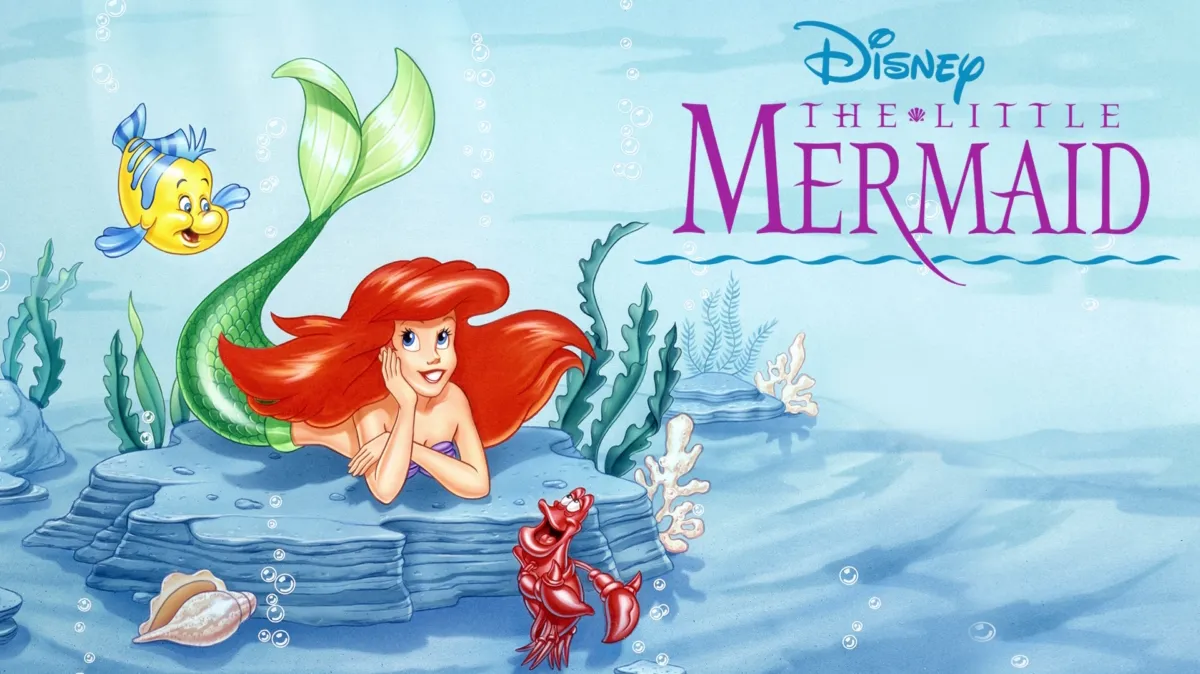
RaeRae Reacts · S1E1 · 1992 Animated Series
Whale of a Tale
Ariel adopts Spot, a young killer whale separated from his family by human poachers, and learns that loving a wild animal cannot mean keeping him forever.
The episode receipt
Series: The Little Mermaid (1992). Episode: S1E1 “Whale of a Tale.” Broadcast-order position: 1 of 31.
What happened
Ariel adopts Spot, a young killer whale separated from his family by human poachers, and learns that loving a wild animal cannot mean keeping him forever.
What the episode is really testing
Where to watch
Disney+ currently omits the pilot “Whale of a Tale.” D23 still counts the series as 31 episodes, so CVM Sekai preserves it in broadcast order and does not pretend the streaming gap changed the series.
First reaction: Disney+ missing this one is not a small catalog problem
This is the pilot. It introduces Spot, establishes the show’s protection-versus-possession argument, and tells us which version of Ariel will carry thirty more stories. Starting the streaming shelf with “The Great Sebastian” does not merely remove a random adventure. It removes the episode that teaches viewers how this series plans to question Ariel and Triton at the same time.
D23 still counts thirty-one episodes. The current Disney+ page shows thirty. Until Disney restores a legitimate route, the responsible guide preserves the title, order, and analysis without pointing readers toward unauthorized copies. An archive gap should be named. It should not be allowed to rewrite season one.
The episode begins with human harm already inside the sea
Spot is separated from his pod because of human poachers. Ariel’s fascination with the surface therefore begins inside a world where human action is capable of violence she cannot romanticize away. The pilot does not ask her to choose between curiosity and evidence. It asks whether curiosity can survive after innocence does not.
That matters for the entire franchise. Triton’s fear of humans has material support. Ariel’s desire for contact is still legitimate. The moral conflict becomes more useful once neither position depends on pretending the other side has no evidence.
Ariel hears a vulnerable animal and moves before asking permission
Her first response is care. She does not conduct a policy meeting, estimate whether the palace will approve, or decide that a whale is too large to become her concern. She hears distress and enters the situation. That immediacy is one of her strengths and one of the habits that repeatedly creates danger.
The pilot refuses to treat compassion as self-executing wisdom. Wanting to help does not mean knowing what help requires. Ariel can be morally right about Spot deserving protection and practically wrong about whether protection should become permanent keeping.
Spot is a baby and not a collectible
Ariel’s grotto archive makes collecting part of her character, but Spot forces a boundary between object and being. He is fascinating, affectionate, vulnerable, and available for attachment. None of those qualities make him hers. His own species, skills, family, and future remain relevant even when the immediate bond is real.
The distinction becomes a quiet correction to the franchise’s language of wanting another world. Worlds are not collections waiting for a curious princess. Relationship requires the other side to remain capable of refusal, departure, and return.
Triton is right about release and wrong about how authority sounds
The king insists Spot must learn to survive and return to his own kind. That conclusion respects the whale more than keeping him as a palace-adjacent friend. Triton sees a responsibility Ariel’s attachment makes difficult to accept.
He delivers the insight through command. Even when he is correct, authority arrives as certainty rather than shared reasoning. Ariel hears the loss before she can hear the ethics. The series will spend three seasons showing that Triton’s problem is not always the rule. It is the belief that being right about risk ends the need for relationship.
Sebastian becomes the worker assigned to everybody’s feelings
Ariel finds the whale. Triton sets the policy. Sebastian inherits implementation, supervision, worry, and likely blame if the animal disrupts the palace. The pilot already understands the court’s labor structure. Royal family conflict becomes a crab’s expanded job description.
His panic is funny because his stakes are concrete. Spot is enormous, curious, and not trained for ceremonial space. Sebastian’s task is impossible in the way competent workers’ tasks often become impossible: every person with more authority assumes he will convert intention into logistics.
Flounder recognizes the friendship cost first
Flounder shares Ariel’s affection for Spot and the anxiety created by hiding him. A new friend changes the existing group. Space, attention, risk, and loyalty all have to be renegotiated. The episode does not turn Flounder into a jealous obstacle, but his caution makes the practical cost visible.
This is why he matters beyond sidekick comedy. Ariel’s courage needs a witness who can say the situation feels dangerous without abandoning her. Flounder’s fear often provides information the heroine is too emotionally committed to notice.
Teaching Spot to look aggressive is the episode’s funniest bad plan
Ariel and her friends attempt to make Spot perform the qualities Triton associates with wild survival. The plan confuses appearance with competence. If Spot can look fierce, perhaps the king will believe he is ready. The training becomes theater designed for the evaluator rather than preparation designed for the animal.
The comedy reveals a larger institutional habit. When authority controls access, people learn to perform the evidence authority expects. Spot does not need to become a caricature of danger. He needs skills, confidence, and reunion with a pod capable of teaching what Ariel cannot.
The shark attack gives courage context instead of costume
Spot acts when Ariel and the others face real danger. His courage emerges through relationship and urgency, not through the aggressive performance they rehearsed. The episode separates bravery from looking intimidating.
That is the better lesson for Ariel too. Courage is not always entering the forbidden place first. Sometimes it is accepting that somebody you love has capacities and obligations outside your care. Spot saves his friends and proves readiness without becoming the creature the training tried to manufacture.
Reunion is the ending, not abandonment
Spot returns to his pod. Ariel loses daily proximity and gains evidence that release worked. The farewell hurts because the relationship was real. The pain does not prove the decision was wrong.
Children’s stories often reward care with permanent possession. This pilot chooses a more difficult reward: the cared-for being leaves safely. Ariel must measure success through Spot’s future rather than her own access. That emotional skill will be necessary when the franchise eventually asks Triton to let her leave Atlantica.
The pilot quietly predicts Triton’s final movie decision
Triton tells Ariel that Spot belongs with his own kind and must develop a life appropriate to who he is. In the feature, Triton will face the inverse problem. Ariel’s chosen life belongs partly outside the sea, and keeping her close cannot substitute for helping her enter it safely.
The parallel does not make the situations identical. Ariel is a thinking adolescent making a life decision, not a wild animal needing reunification. It does expose a principle Triton can recognize when it asks Ariel to surrender somebody else and resists when it asks him to surrender control.
The episode’s environmental politics are clearer than its vocabulary
Human poachers create the separation, yet the story spends more time on rescue and readiness than on the system producing the harm. That is normal for a short children’s episode and still worth naming. Saving one whale does not stop the practice that endangered the pod.
The series returns to captivity and pollution later, which allows the pilot’s event to become part of a pattern. Human harm travels through the ocean whether Atlantica has diplomatic relations with humans or not. The border is politically rigid and ecologically imaginary.
What the animation can and cannot carry
The television production needs Spot to feel large, affectionate, dangerous to conceal, and capable of action within a weekly schedule. Scale is communicated through framing, reaction, and the way smaller characters reorganize around his movement. The animation cannot deliver the feature’s fluid spectacle in every shot.
The episode succeeds when relationship carries the image. Ariel’s attention, Sebastian’s panic, Flounder’s caution, and Spot’s responses create size emotionally. Action is less convincing when the scene asks for theatrical force the budget cannot sustain. Voice and staging do most of the rescue.
Jodi Benson establishes the weekly Ariel immediately
Benson keeps the warmth of the feature while giving Ariel a rhythm suited to shorter adventures. Curiosity moves quickly into commitment. Affection becomes a plan before caution finishes speaking. The voice makes impulsiveness feel like thought accelerating rather than intelligence disappearing.
That performance is essential to the series. A different voice could make television Ariel feel like a simplified copy. Benson carries continuity in breath, irritation, wonder, and the way determination hardens after somebody says no.
Kenneth Mars lets Triton be more than the prohibition machine
Mars gives the king weight without making every sentence a roar. Triton can recognize responsibility, worry about consequences, and remain emotionally attached to Ariel while enforcing separation. The performance creates a father whose judgment is sometimes better than his method.
That complexity will make later regression frustrating. The pilot proves he can explain an ethical reason and participate in a farewell. The franchise already has a version of Triton capable of doing more than destroying what scares him.
Samuel E. Wright makes management sound like a crisis genre
Sebastian’s reactions convert logistics into comedy without erasing affection. He knows Ariel’s plan is impossible, knows Triton will hold him responsible, and helps anyway because the relationship has already outrun the assignment.
Wright can place professional dignity, fear, irritation, and care inside one line. The pilot needs that compression because Sebastian represents the institution and the friend at once. His divided loyalty is not a later feature-film invention. It is the show’s operating system.
The episode title is a real Disney callback
“Whale of a Tale” echoes the title of a song from Disney’s 20,000 Leagues Under the Sea. That is a documented title connection, not a theory based on a similar shell in the background. It fits a pilot eager to place a whale story inside Disney’s larger ocean-adventure memory.
The callback should not be allowed to overshadow the episode’s own work. Trivia is useful when it leads back into interpretation. The title promises scale and story. The actual episode uses that scale to ask whether care can release what it rescued.
Where to watch is part of the React
As of this audit, the official Disney+ series page does not list the pilot. It begins with “The Great Sebastian” and shifts the visible first-season numbering. D23 still states that the program contains thirty-one episodes. CVM Sekai therefore marks the gap and preserves original order.
I am not linking an unauthorized upload to make the page look complete. Availability is not the same thing as existence, and archival frustration does not create permission to send readers toward risky copies. Disney should restore the episode it continues to count.
The pod matters because family is more than the person who rescued you
Ariel becomes Spot’s immediate safe relationship, but the pod represents knowledge, identity, and collective survival she cannot replace. The episode does not insult their bond by acknowledging that limit. It respects the bond enough to prevent it from becoming a claim of ownership.
This is a lesson the royal family needs repeatedly. Love can be real and insufficient for every need. Triton cannot replace Ariel’s access to another world. Ariel cannot replace Spot’s whale community. Sebastian cannot replace a parent, diplomat, teacher, and entire support system merely because he is the most competent person available.
Ariel’s secrecy increases the danger she is trying to solve
Hiding Spot protects him from immediate removal and prevents the group from accessing resources that might help. Secrecy is rational inside a punitive system and risky inside a rescue. The episode does not have to choose one description.
This pattern will define the franchise. When authority treats disclosure as surrender, Ariel withholds information until crisis makes collaboration unavoidable. Adults then use the crisis as proof she should have disclosed earlier. Both sides reproduce the conditions they complain about. The way out is a process where telling the truth does not automatically end the conversation.
The pilot gives children a grief the happy ending does not erase
Spot’s reunion is joyful, and Ariel still has to say goodbye. The episode does not replace loss with the claim that she should only feel grateful. A correct outcome can hurt. A young viewer is allowed to understand that grief is not evidence somebody made the wrong decision.
That emotional permission matters in stories about animals, friendship, migration, school, family change, and every relationship whose health requires distance. The episode gives Ariel sadness without punishing her for attachment. She can miss Spot and know he belongs with the pod. Maturity is holding both.
Why this pilot belongs before every other episode
The story establishes the show’s method: Ariel finds a being outside palace attention, acts before receiving approval, clashes with Triton, learns that compassion needs better judgment, and changes through a relationship that authority initially sees only as a problem. Later episodes vary the creature, object, outsider, or institution. The method remains.
Watching it first also makes Spot’s later return meaningful. Without the pilot, he appears as history the platform never supplied. Broadcast order is not sacred in every anthology, but here the first episode gives emotional and ethical context that the current streaming shelf assumes viewers already possess.
Final reaction
This is a smart pilot because Ariel and Triton are both right about different parts of the problem. She is right that Spot deserves immediate care and relationship. Triton is right that care must prepare him to return to his own life. The conflict comes from attachment, authority, and timing rather than one character owning morality.
The ending establishes the series’ best version of Ariel: she crosses the rule because somebody vulnerable needs attention, learns that empathy does not automatically provide expertise, and accepts a painful release without deciding the love was wasted. The episode trusts children with the difference between saving, keeping, teaching, and letting go. That is more emotional intelligence than the missing-first-episode treatment suggests. It also gives every later Spot appearance a relationship with history instead of a random returning animal. The history matters. Episode grade: A minus. Restore it to the official shelf.