
THE LION KING REACT · THE STAMPEDE · SHAME ARRIVES BEFORE THE CHILD CAN NAME GRIEF
The Lion King Stampede React: Scar Builds a Lie Inside Simba’s Grief
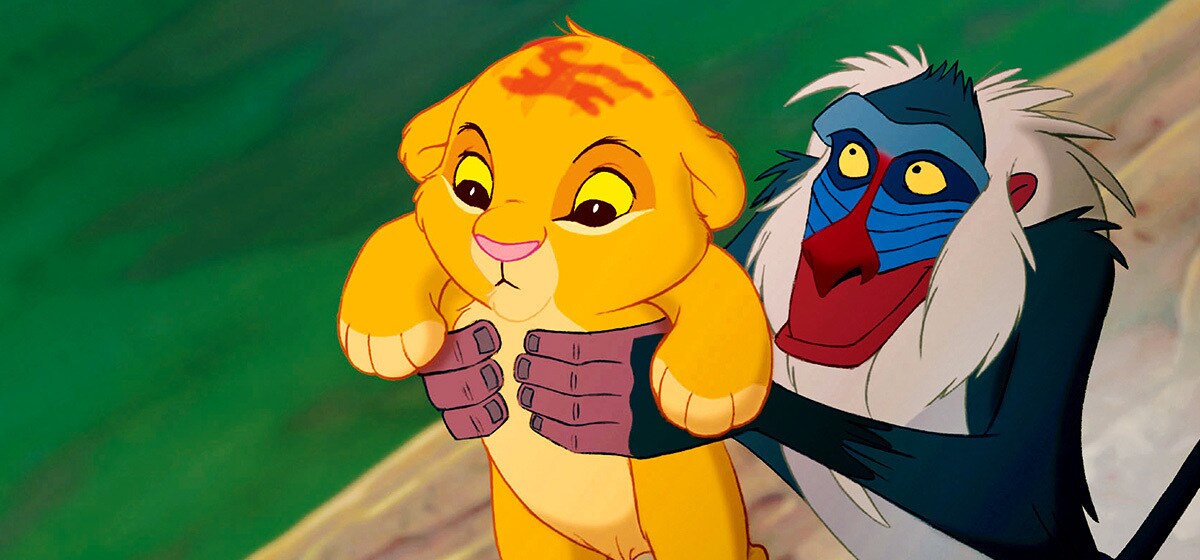
Mufasa dies saving his son. Scar reaches Simba before truth, comfort, or another adult can arrive, then turns a frightened child’s love into evidence against him. The murder is brutal. The lie afterward is the part that keeps working.
The gorge is a murder weapon disguised as an accident
Scar does not attack Mufasa in public because public violence creates witnesses and resistance. He engineers distance, noise, dust, and panic, then places Simba where paternal instinct will override caution. The plan turns Mufasa’s best quality into an opening. A father who would never abandon his child enters the gorge without time to ask who arranged the danger. Scar weaponizes love because he understands it without respecting it.
The stampede also gives Scar plausible confusion. Hundreds of bodies erase tracks, drown out calls, and make the catastrophe look natural from far away. Political violence often wants the appearance of inevitability. If the death looks like fate, nobody has to investigate the beneficiary. The gorge becomes more than spectacle. It is the perfect crime scene for a ruler who plans to inherit by controlling the story before anybody else sees the evidence.
Mufasa saves Simba and still cannot save him from the next sentence
The rescue is physically complete. Simba survives. Emotionally, the danger is only changing shape. Mufasa can lift his child out of the stampede, but he cannot protect him from the interpretation Scar will place over the death. That is the cruelty of the sequence. The heroic act succeeds, yet the surviving child becomes available to a predator who understands that grief without guidance can be rewritten as guilt.
Simba crawls beneath Mufasa’s paw because his body still expects safety from the parent who cannot answer. The image is devastating without needing elaborate dialogue. He does not understand death as permanence. He understands silence as a problem he might fix by calling louder. The audience knows the rescue will not come, and Scar enters precisely when the child is most desperate for an adult to tell him what reality means.
Scar’s most violent line is spoken softly
Scar does not need to shout that Simba caused the death. He asks a sequence of questions that allows Simba to build the accusation himself. What have you done? What will your mother think? The manipulation works because Simba already believes responsibility means protecting the people you love. Scar takes a moral lesson Mufasa taught with care and twists it into a verdict no child could survive alone.
The softness creates false intimacy. Scar sounds like the only adult willing to face the terrible truth with him. He offers no comfort, no investigation, and no distinction between being present during harm and causing it. Shame collapses those differences. Once Simba accepts the emotional premise, exile feels like accountability rather than abandonment, and Scar can appear almost merciful for suggesting escape.
Run away is an execution order with emotional camouflage
Scar tells Simba to flee, then sends the hyenas to kill him. That double action reveals the purpose of the advice. Exile is not protection. It removes the witness, prevents the rightful heir from speaking, and allows Scar to claim the child died in the same tragedy. The assassins are insurance in case guilt is not enough to make Simba disappear permanently.
Simba survives because the landscape creates an opening, not because Scar leaves room for mercy. The escape matters psychologically too. He runs while believing the chase is deserved. Survival does not immediately feel like innocence. It feels like a guilty person avoiding consequence. That misunderstanding will shape every relationship he forms until somebody helps him separate grief from responsibility.
The hyenas are accomplices and expendable labor
Shenzi, Banzai, and Ed perform the direct pursuit while Scar preserves distance from the attempted murder. He promises access to the Pride Lands, food, and status, but his alliance never grants them equal power. They become the visible threat while he remains the polished strategist. The arrangement mirrors the future kingdom: Scar concentrates authority and pushes risk onto followers he considers beneath him.
Their humor does not make the violence harmless. It shows how people can normalize terrible work through banter, routine, and group performance. They can laugh while chasing a child because the system has converted murder into a task attached to promised security. The film simplifies their ecology, yet it clearly understands the political use of a hungry population recruited by a leader who offers belonging through cruelty.
Scar wins the kingdom by controlling the first draft
Back at Pride Rock, Scar will narrate the deaths as a shared tragedy. Simba cannot contradict him. Mufasa cannot contradict him. The gorge has destroyed the two voices with the strongest claim, and the pride receives grief packaged as succession. Scar does not need everyone to love him. He needs them to lack an alternative account while shock makes organized resistance difficult.
The scene is a lesson in how authority forms around information. Witnesses, timing, and repetition matter as much as physical force. Scar’s lie becomes official because it reaches the community through the person assuming power. Truth still exists, but it has been stranded in a child who believes speaking would expose him as the killer. Propaganda succeeds by making the witness police his own silence.
Simba’s guilt is love with nowhere safe to go
He believes he killed Mufasa because he loved him enough to imagine he should have prevented the impossible. Children often treat adult catastrophe as evidence of personal failure because personal failure feels more controllable than a world where parents can die and trusted relatives can murder them. If Simba caused it, perhaps a better Simba could have saved everyone. The belief is unbearable, but it preserves the illusion of control.
Scar exploits that developmental vulnerability with precision. He does not invent Simba’s love, fear, or desire to be worthy. He rearranges them until love becomes prosecution, fear becomes flight, and worthiness becomes silence. The later healing cannot rely on a motivational speech alone. Simba needs evidence, community, and a new understanding of responsibility strong enough to survive the shame Scar installed.
I am reacting to the choice, not reciting the scene
A useful React stays close enough to the moment that we can feel the timing, the faces, and the terrible little decisions as they happen. It also has to notice what the scene teaches the audience to accept. I am not here to turn a movie into a plot receipt. I want the emotional mechanics, the character logic, the performance choices, and the part that followed me out of the room long after the music stopped.
The Lion King earns that attention because its clean storybook surface carries grief, inheritance, political violence, ecological collapse, and the question of who benefits when a child misunderstands responsibility. The movie moves quickly, but it does not feel small. Every major turn changes how the earlier scenes read, which means a React should be willing to look backward while the character is still trying to survive forward.
The animation knows what the dialogue is trying to hide
Watch the bodies before trusting the words. Ears flatten, shoulders lower, eyes search for an exit, and physical distance becomes an argument before anybody names it. The animators understand that animals cannot copy human gestures literally, so emotion arrives through weight, rhythm, silhouette, and the direction of a gaze. That restraint keeps the characters recognizable as animals while giving every pause psychological purpose.
Color also does narrative work. Warm gold belongs to connection and inherited memory. Acid green and hard shadow enter when manipulation takes control. Dust turns the world into confusion. Blue night can offer safety or isolation depending on who shares it. The palette does not replace character development, but it lets the film announce a moral temperature before the youngest viewers have language for what is wrong.
The score does not ask permission before entering the body
Hans Zimmer and Lebo M build emotional scale without making Africa a decorative sound effect pasted behind a European fairy tale. The vocal textures, percussion, orchestral force, and moments of silence keep changing who seems larger than the frame. Music can make the land feel communal, then remove that community in a breath. The best cues do not explain the feeling. They create the physical conditions for it.
That power deserves attention because music can also push an audience past questions the story has not fully answered. I can feel the intended catharsis and still ask what was repaired, who did the repairing, and whose labor remains outside the triumphant image. A strong score opens the door to emotion. It should not lock the door behind us once critical thought walks in.
The voice performances refuse to treat animation as smaller acting
The cast gives the characters thought between sentences. James Earl Jones can make authority feel protective without raising his voice. Jeremy Irons makes contempt sound amused until amusement becomes a weapon. Matthew Broderick lets adult Simba sound socially functional and emotionally unfinished. Nathan Lane, Ernie Sabella, Moira Kelly, Robert Guillaume, and the younger performers create different kinds of survival rather than one shared cartoon register.
Vocal acting matters most when the script is simple. A line about the past can become accusation, invitation, defense, or confession depending on breath and emphasis. The performers keep the movie from collapsing into moral labels. Heroes can be frightened. Comic characters can understand grief. Villains can sound reasonable for exactly long enough to expose what the listener wants to believe.
What the scene gives children and what adults finally notice
A child may receive the event as danger, sadness, courage, or relief. An adult is more likely to notice the systems surrounding it: succession, propaganda, food scarcity, shame, chosen family, and the cost of leaving a community without information. Neither reading cancels the other. The movie survives because its emotional line is clear enough for a young viewer while its consequences become stranger with age.
Growing older does not mean graduating from the feeling. It means realizing why the feeling had so much force. The film placed political and psychological ideas inside images a child could carry. Rewatching opens those images and reveals the machinery. Nostalgia may bring me back, but analysis is what lets the scene remain alive instead of becoming a protected object I am afraid to question.
The movie earns emotion by leaving an argument behind
I do not need every scene to resolve the question it raises. I need the question to be specific enough that the emotion has somewhere to go after the credits. Who gets believed, what duty survives grief, when refuge becomes avoidance, and whether inherited power can become communal responsibility are not decorative themes. They change how I judge the choices happening inside the frame and what I expect from the characters afterward.
That unfinished argument is the reason a React belongs beside a review instead of becoming a smaller version of one. A review can measure the whole film. A React can stay with the pressure point, replay the exact turn, and admit where affection complicates judgment. I can love the craft, laugh at the joke, feel the score, and still refuse to let the scene leave before it answers for what it placed in my head.
The joke and the wound are allowed in the same room
The Lion King moves from pain to comedy without treating either register as fake. Humor can create breathing space, reveal a relationship, or show how a character keeps functioning before the danger has passed. I pay attention to who gets to make the joke, who becomes its target, and whether laughter opens a route back to connection or closes the conversation before somebody can name what hurts.
That tonal range feels closer to actual survival than a film that assigns grief and joy separate appointments. People laugh at funerals, panic during celebrations, and find absurd details inside terrible days. Animation exaggerates the transitions, but the emotional combination is recognizable. The scene becomes deeper when comedy carries character information and when sorrow does not demand that every trace of pleasure disappear before the story permits healing.
What I keep after the dust settles
I keep Simba beneath the paw, the silence after the score falls away, and the sick recognition that Scar arrives as family before revealing himself as executioner. I keep Mufasa’s rescue as proof that love succeeded even though the story immediately turns that love against the survivor. The scene hurts because the relationship was real, not because the movie enjoys cruelty for its own sake.
The deepest horror is not the fall. It is a child leaving the gorge convinced that grief is a confession. Scar steals a kingdom, but he first steals Simba’s ability to interpret his own memory. The rest of the film has to return that memory to him without pretending the years of avoidance were empty. Healing begins when the survivor can say what happened in a sentence that no longer uses Scar’s voice.
The gorge remains inside the return
Simba does not leave the stampede behind when he grows up. Scar’s accusation shapes posture, memory, avoidance, and the belief that love must be earned through impossible rescue. The later confession matters because it returns responsibility to the adult who engineered the danger. Grief can finally remain grief instead of serving as evidence in a trial the child never understood was staged.
The React keeps the gorge connected to every later choice without pretending trauma explains everything forever. Simba still decides how to respond when truth arrives. Healing becomes visible when the old memory no longer speaks only in Scar’s voice and when returning home can mean carrying the lost relationship forward rather than reenacting the moment that broke it.