
THE LION KING REACT · HAKUNA MATATA · SURVIVAL IS REAL EVEN WHEN THE COPING MECHANISM HAS AN EXPIRATION DATE
The Lion King Hakuna Matata React: The Family That Keeps Simba Alive Cannot Finish His Grief
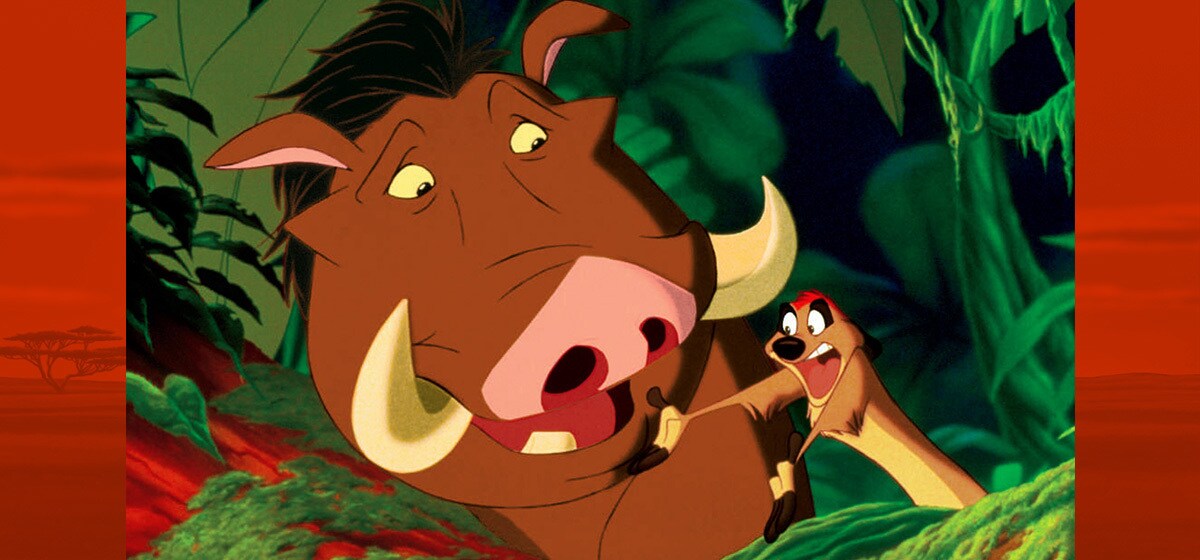
Timon and Pumbaa save a child they do not know, feed him, make room for him, and give him years he might not have survived alone. Their philosophy becomes shelter first and avoidance later. Both truths belong in the song.
Before the philosophy, there is water
Timon and Pumbaa find Simba collapsed in a landscape that has already begun killing him. Their first contribution is not a song. It is rescue, shade, water, food, and company. They interrupt the physical consequence of Scar’s exile before they know Simba is royal, useful, or connected to a larger story. Chosen family begins through care that is not waiting for a résumé.
That matters when we evaluate everything that follows. Hakuna Matata will become an incomplete emotional rule, but the people offering it are not frauds. Their way of living kept them alive in a world that rejected or mocked them. They extend the same protection to Simba. A coping strategy can save a life at one stage and limit it at another without turning the original rescue into a mistake.
Timon recognizes an opportunity and Pumbaa recognizes a child
Timon initially imagines practical benefits. A lion could become protection. Pumbaa responds with immediate tenderness and far less calculation. The difference gives the pair dimension. They are both compassionate, but Pumbaa reaches compassion without needing to convert the stranger into a plan. Timon catches up by making room inside the life they already built.
Their debate is comic because the stakes are visible to the audience and partly hidden from them. Simba is dangerous by species, vulnerable by age, and emotionally absent from the conversation. The adults decide whether he belongs while he cannot advocate for himself. Unlike Scar, they use that power to include rather than isolate. The family forms through an imperfect but life-preserving yes.
Hakuna Matata is a trauma response with excellent choreography
The song turns a survival rule into something the body can practice. Walk forward, eat, laugh, repeat. Simba cannot process the gorge, so rhythm gives him a route through the next hour. The philosophy reduces the scale of life until immediate needs become manageable. For a child drowning in shame, that reduction is mercy. He is allowed to exist without explaining why he deserves food or affection.
The problem arrives when temporary shelter becomes permanent identity. No worries can mean do not carry every burden alone. It can also mean do not examine any feeling that might require change. Simba adopts the second version because avoidance protects Scar’s lie from scrutiny. The song does not create his denial. It gives denial a cheerful home where nobody knows enough to challenge it.
The growth montage is funny and quietly alarming
Simba walks across the log and becomes an adult while the song continues as if time were weightless. The visual joke is efficient, but it also shows how years can disappear inside functioning avoidance. He grows, eats, laughs, and belongs. He does not return to the memory that organized his exile. Survival produces a healthy body around an untreated wound.
The montage refuses to make that life look miserable. Simba has joy. He loves Timon and Pumbaa. He is loved by them. Trauma narratives become dishonest when every moment after harm is presented as fake until the hero confronts the past. His happiness is genuine, and his unfinished grief is genuine. Adulthood can hold both without one exposing the other as a lie.
Eating bugs is adaptation, not humiliation
The film plays Simba’s diet for comedy because the future king has moved far from the expected lion menu. Yet learning to eat what his new environment provides is evidence of flexibility. He accepts knowledge from smaller animals and survives without dominating the ecosystem around him. The practice is strange to him, then ordinary. That change deserves more respect than the gross-out joke receives.
His new diet also separates power from appetite. Scar’s rule will produce extraction and hunger in the Pride Lands. Simba learns a form of living that does not place him at the top of every food relationship. The film does not fully explore that ecological contradiction when he returns, but the jungle years should influence how we understand the ruler he could become.
Pumbaa’s shame is treated with a kindness Simba cannot yet give himself
When Pumbaa tells the story of social rejection, Timon interrupts the cruel ending before the song turns him into the target again. Their comedy can be sharp, but the friendship has rules. Pumbaa’s body may be the source of jokes, yet his pain is not dismissed as imaginary. He is allowed to name what exclusion did to him and remain beloved.
Simba hears a story of shame that ends in companionship rather than exile. He does not apply the lesson to himself because his secret feels morally different, but the model is already present. Pumbaa believes something about his body made him unacceptable. Timon’s continued presence contradicts the verdict. Later, Simba will need relationships capable of contradicting the verdict Scar placed over his memory.
Chosen family does not have to know the whole biography to be real
Timon and Pumbaa love the Simba available to them. They know his habits, humor, appetite, moods, and the life they share. They do not know his name carries political consequence or that a kingdom believes he is dead. Missing history does not make their bond superficial. It shows how a person can be deeply known in the present while keeping the origin of pain sealed away.
The later conflict begins when the sealed history requires action. Timon experiences Simba’s return as abandonment because he cannot see the community obligation behind it. That hurt is understandable. Chosen family should not demand permanent disconnection from every earlier relationship, but fear of losing someone can make a protective home become possessive. The movie lets Timon grow without treating his fear as proof that the family was false.
What I keep after the last hakuna
I keep the water, the first meal, Pumbaa’s uncomplicated welcome, Timon’s practical affection, and the log that turns a child into an adult before the song ends. I keep the relief of watching Simba laugh again. The scene gives him years that Scar intended to erase, and no later critique of avoidance should make that gift smaller.
I also keep the limit. A life without worry cannot become a life without memory. Timon and Pumbaa save Simba from death, loneliness, and immediate shame. Nala, Rafiki, and Simba’s own courage will help him return to the history he buried. Healing needs both kinds of family: the people who kept you alive before you could speak and the people who refuse to let survival become the ceiling of your life.
The joke begins with care the royal system never offered
Timon and Pumbaa find Simba without knowing his title, feed him without demanding a lineage, and let him remain without proving usefulness first. That sequence quietly challenges every ceremony at Pride Rock. The exiles build belonging through behavior while the kingdom built status through birth.
Their household is imperfect, but its first rule is material: the child gets water, food, shade, and company. Simba survives because strangers decide his life matters before biography arrives. The React keeps that rescue visible when later arguments criticize avoidance. A coping philosophy can become limiting without making the people who used it to save him frauds.
The log montage hides years inside one excellent transition
Simba grows while crossing a log, and the gag makes time feel light enough to sing through. His body changes while the emotional story remains paused at the gorge. That contrast is the point I cannot unsee. Functioning can look like recovery from the outside because appetite, laughter, routine, and friendship have returned.
The montage does not show a false life. Simba’s joy is real. It shows a life built around one sealed room. The longer the song continues, the easier it becomes to mistake the absence of visible crisis for the end of grief. Adulthood arrives anyway. Trauma does not wait for a person to finish processing before changing the calendar.
Pumbaa offers a shame story with a different ending
Pumbaa names the rejection attached to his body and smell, and Timon interrupts before humiliation takes control of the performance. The song turns pain into comedy without removing the history that made companionship necessary. Simba hears somebody disclose shame and remain loved.
He cannot yet apply the model to himself because he believes his shame records a moral crime rather than social cruelty. The emotional blueprint is present anyway. Pumbaa’s life contradicts the verdict that one humiliating fact makes a person unworthy of family. Later, Simba will need people capable of contradicting Scar’s verdict with the same stubborn affection.
Eating bugs is the first time Simba lives outside royal appetite
The future king learns a food practice from smaller animals and adapts to their ecosystem. He does not demand the jungle reorganize itself around a lion’s expected diet. The scene is played for disgust, then acceptance, but the adaptation carries political weight.
Scar’s Pride Lands become an image of extraction and hunger. Simba’s jungle survival depends on reducing the harm his appetite could impose. The film never builds a policy from that experience, yet it should matter when he returns. A ruler who has lived lower in the food chain than his title promised has evidence Mufasa’s education could not provide.
Timon’s philosophy protects him too
Hakuna Matata is not a neutral lesson Timon invented for Simba. It is the home Timon built after rejection in later franchise versions and the defense he uses when attachment becomes risky. Helping Simba lets him feel generous without immediately reopening every old wound.
His resistance to Nala and the return journey grows from fear that history will take away the family he chose. That fear is selfish and understandable. Timon has to learn that loving Simba cannot require permanent disconnection from everybody who knew him before. Chosen family becomes stronger when it survives a wider relationship map.
Nala interrupts the philosophy with current evidence
Nala does not arrive to insult the jungle years. She arrives carrying news that the Pride Lands are dying. Her presence forces a difference between worries created by rumination and responsibilities created by ongoing harm. Simba has been taught to drop the first category and uses the rule to avoid the second.
The conflict works because both sides hold truth. Timon and Pumbaa gave Simba a life. Nala reveals that another community has continued paying for Scar’s lie. Healing cannot be reduced to staying or returning. Simba needs the safety learned in one home to face the responsibility named by the other.
Chosen family does not become temporary when the plot returns home
Timon and Pumbaa travel to the Pride Lands and join a fight that was never originally theirs. They complain, improvise, distract hyenas, and remain. Their decision proves the jungle relationship was not a detour before the royal family became real again.
The franchise sometimes frames them as comic accessories after the return, but the emotional record says otherwise. They parented, protected, and knew Simba across the missing years. A restored Pride Lands should make room for that family without forcing it into palace hierarchy. Love does not need blood certification after surviving exile.
The song needs an expiration date, not a guilty verdict
A survival rule is useful when it makes the next hour possible. It becomes dangerous when applied to every problem forever. Hakuna Matata gives Simba relief from impossible childhood blame. It cannot decide how an adult responds to verified suffering.
I refuse the easy reading that Timon and Pumbaa taught him something foolish. They taught the lesson available from their own histories. Growth requires revision, not contempt. Simba can keep humor, appetite, friendship, and the ability to rest while adding memory, grief, and chosen responsibility.
What remains after the final chorus
The sequence leaves me with a family created through food and repetition rather than ceremony. It also leaves a warning about how quickly a refuge can become an identity nobody is allowed to outgrow.
Simba does not need to reject the jungle to return home. He needs to carry its gifts honestly: humility, interdependence, life without rank, and proof that strangers can choose one another. The best version of his return makes Hakuna Matata part of his leadership education, including the lesson that no philosophy should be asked to solve every season of a life.
The laugh that stays in the recovery plan
Simba does not need to become solemn to prove he has faced the past. Timon and Pumbaa taught him that laughter, appetite, play, and rest can coexist with survival. Those gifts should travel home with him instead of being treated as childish habits discarded when royal duty resumes.
The healthier lesson combines both lives. Grief receives language. Responsibility receives action. Joy remains available without serving as a locked door against memory. Hakuna Matata is not the final philosophy, but it remains one of the tools that kept Simba alive long enough to choose another.