
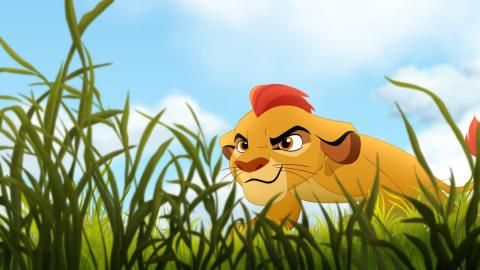
THE LION GUARD SERIES REVIEW · THREE SEASONS · POWER, ECOLOGY, TRADITION, AND WHO GETS TO DEFEND THE CIRCLE
The Lion Guard Series Review: The Circle Needs More Than a Roar
Kion builds a team that breaks tradition, then inherits enough supernatural force to expose every weakness inside tradition. The preschool adventure grows into a three-season argument about leadership, ecology, injury, prejudice, and whether a good heir can make concentrated power safe.
The verdict before Kion opens his mouth
The Lion Guard begins with a dangerous franchise assignment: make royal duty understandable to preschool viewers without shrinking The Lion King into a weekly police lesson. Across three seasons, the series becomes more ambitious than its opening formula suggests. It builds a team, questions inherited rules, complicates the hyenas, sends Kion outside the Pride Lands, and lets leadership become something learned through damage instead of announced by birth.
It also carries the original franchise’s central political problem. The Circle of Life can sound like ecological interdependence and behave like a border policy enforced by the ruling family. The show is strongest when Kion notices the difference. It is weakest when predators become villains for eating, royal command becomes environmental science, or diversity means everybody may serve the kingdom while only lions inherit its highest authority.
Return of the Roar gives a second-born child a public function
Kion enters a family structure where Kiara will rule and he needs a future that does not compete with her inheritance. The Lion Guard gives him authority, community, and a moral problem distinct from succession. That is smart franchise architecture. A younger child receives importance without the story manufacturing resentment toward the older daughter.
The Roar of the Elders complicates that independence because extraordinary power arrives through ancestry. Kion challenges tradition when he selects the best friends rather than an all-lion team, yet his own eligibility still comes from blood and supernatural approval. The series keeps placing innovation inside a monarchy that decides how much innovation is permitted.
The team rejects an all-lion tradition
Disney’s production announcement explicitly framed Kion’s choice as a challenge to tradition. Bunga brings courage, Fuli speed, Beshte strength, and Ono sight. The structure teaches that leadership begins by recognizing different forms of competence rather than recruiting people who resemble the leader.
The lesson lands because the differences affect action. A cheetah cannot solve the same terrain problem as a hippo. An egret sees threats other bodies cannot reach. A honey badger enters danger through nerve, while Kion has to decide when power is appropriate. Diversity becomes functional collaboration instead of a poster assembled after the story.
Kion is learning authority while already holding it
Most children learn through mistakes without those mistakes moving herds, threatening habitats, or unleashing ancestral force. Kion has to practice judgment after receiving a title. The arrangement mirrors real institutions that grant young heirs legitimacy before competence and then ask everybody nearby to survive the education.
His better leadership comes from consultation. He listens to the team, revises an assumption, accepts a species expert, or recognizes that the Roar cannot replace relationship. His worst moments arrive when fear turns command into certainty. The show understands that good intentions do not make concentrated power safe.
Bunga makes courage look useful and exhausting
Bunga is introduced as the bravest, which can mean he enters danger before anybody has decided whether entry helps. His confidence gives the team momentum and provides young viewers a character who treats impossible situations as invitations. It also forces everyone else to manage the consequences of courage separated from judgment.
His relationship with Timon and Pumbaa extends chosen family into another generation. Their care is comic, anxious, and real. Bunga’s fearlessness does not emerge from lacking attachment. It grows inside a household secure enough that he expects somebody will still love him after the crash.
Fuli refuses to turn independence into loneliness
Fuli’s speed makes her valuable and physically capable of leaving almost any conversation. Her character work asks whether competence requires solitude. She resists being managed, underestimated, or folded into a sentimental group identity before trust has earned the language.
The team becomes family without requiring her to perform dependence. That distinction matters. A girl can value privacy, excellence, and autonomy while still choosing loyalty. The show works when friendship expands her options instead of treating independence as the flaw a group must cure.
Beshte makes strength gentle without making it passive
Beshte’s physical power could have reduced him to transport and impact. The series gives him warmth, curiosity, family ties, and a way of meeting strangers that does not begin from suspicion. Gentleness becomes an active use of strength.
He still deserves stories where kindness does not mean unlimited availability. Strong, agreeable characters easily become infrastructure for everybody else. The better episodes let Beshte make judgments, pursue interests, and misunderstand situations through his own perspective rather than waiting to carry the solution.
Ono turns observation into responsibility
Ono’s sight gives the Guard information, but information does not decide what should happen. He reports distance, movement, danger, and pattern. Kion has to interpret. The separation between seeing and governing is one of the team’s quiet strengths.
When Ono’s vision is threatened or changed, the story can address disability without pretending usefulness equals worth. A team member should not have to reproduce the exact skill that earned his original title before belonging. Adaptation, new expertise, and shared access matter more than restoring the old hierarchy.
The series was designed for children ages two through seven
The Walt Disney Company announced the movie and series for children ages two through seven and their families. That audience explains repeated catchphrases, clear role labels, songs, direct problem solving, and lessons made visible through action. Simplicity is part of the form, not evidence that criticism should stop.
Young children understand fairness, fear, exclusion, family pressure, apology, and the difference between a rule and a good reason. The strongest episodes trust that intelligence. They make the ecological or social conflict concrete, let choices cause harm, and allow repair to require more than repeating the day’s lesson.
Animal Kingdom consultants give the ecology a research spine
Disney identified wildlife education experts from Animal Kingdom as consultants on animal behavior, characteristics, and habitats. That support helps the series introduce species beyond the franchise’s most familiar lions, hyenas, warthogs, and meerkats.
Scientific detail still enters a moral universe shaped by monarchy. Knowing how an animal moves or feeds does not automatically solve how the story frames predation, territory, migration, or resource conflict. Research supplies better material. Writers still decide whose survival becomes legitimate.
Swahili language requires more than decorative sound
Disney also named author and Swahili expert Sarah Mirza as language and cultural advisor. The series incorporates Swahili words, phrases, names, and songs into its identity. That credit matters because language is labor, history, and meaning rather than an anonymous atmosphere attached to Africa.
Consultation does not remove every power imbalance. An American corporate production still chooses which words become catchphrases, how pronunciation is taught, and whether linguistic specificity receives the same attention as franchise familiarity. Credit should remain visible wherever the cultural texture is praised.
Jasiri breaks the inherited hyena equation
“Never Judge a Hyena by Its Spots” gives Kion evidence that species does not determine morality. Jasiri is not good because she behaves like a lion. She has her own community, knowledge, humor, and understanding of the Circle. Her existence exposes how much anti-hyena certainty the original kingdom treated as common sense.
The episode does not solve the franchise’s politics, but it opens a door the 1994 film left nearly sealed. Once one hyena can be ally, leader, and moral witness, “hyenas are the threat” stops functioning as ecology. Individual choices, conditions, territory, and political relationships have to enter the analysis.
Janja begins as a repeatable enemy and grows beyond it
Janja initially gives the Guard a recognizable antagonist whose plans can organize action quickly. Hunger, resentment, territorial exclusion, pride, and the need to lead his clan sit under the villain role. The series gains depth when those pressures become choices instead of proof that a hyena naturally opposes order.
His changing relationship to Scar and Jasiri allows alignment to become political rather than biological. Redemption should not mean becoming harmless or obedient to lions. It becomes meaningful when Janja recognizes manipulation, accepts responsibility, and chooses what kind of leader he will be after the old grievance stops writing every decision.
Scar returns as ideology before he returns as threat
Bringing Scar back risks shrinking death and recycling the most famous villain because the franchise recognizes him. The more useful reading treats him as an ideology Kion can inherit: power justified by grievance, superiority presented as order, and fear recruited as leadership.
Scar’s influence gains force because Kion fears resemblance. The Roar can protect the Pride Lands and can become violence backed by ancestry. The question is not whether Kion possesses a villain gene. It is whether injury, isolation, anger, and authority can convince him that control is the same thing as safety.
The Roar is a child-friendly power fantasy with constitutional problems
A supernatural voice capable of moving landscapes gives action immediate scale. It also concentrates enforcement inside one royal body. The team may advise, but Kion holds the final force. The Pride Lands possess no visible process for consent, review, or removal if he uses it badly.
The series gradually makes mastery ethical rather than merely technical. Kion must understand motive, restraint, patience, and consequence. That helps. It does not erase the constitutional question. A good person learning control is safer than a bad person with power, but a system depending on permanent goodness remains fragile.
Simba becomes the parent who survived and still overcontrols
The adult Simba carries childhood murder, exile, false guilt, return, and kingship into parenting. His caution around Kion and Kiara can be loving and suffocating at the same time. Trauma explains why risk feels intolerable. It does not make every restriction wise.
The series is strongest when Kion disagrees without turning Simba into a fool. A child can need autonomy while a parent recognizes danger accurately. Growth occurs when authority listens, not when the younger hero proves adults unnecessary. The family has to learn how survival history should inform the future without governing it completely.
Kiara’s future queenship should remain more than background continuity
Kion’s branch works partly because Kiara remains the heir. The franchise avoids replacing a daughter’s political future with a younger son’s supernatural power. Yet the Guard’s weekly action can make Kion appear more publicly necessary while Kiara’s preparation happens offscreen.
Her episodes matter because governance is not the same as combat response. Diplomacy, resource planning, listening to communities, and understanding inherited harm are leadership too. If the series values only the person who arrives during danger, it reproduces the visibility bias that makes maintenance disappear.
Season one builds the team through contained problems
The first season uses floods, migrations, territorial conflicts, mistaken judgments, family duties, predators, and environmental disruptions to establish each member’s role. Repetition teaches young viewers how the Guard works while variations test whether a labeled strength can become a weakness.
Contained episodes also make moral logic visible. A decision produces an immediate consequence, the team gathers information, and repair follows. The danger is turning every community into a problem waiting for official intervention. Sometimes the Guard should facilitate rather than solve.
Season two lets recurring politics become a campaign
The rise of Scar changes the series from mostly episodic protection to sustained organized threat. Alliances, secrets, grievances, and strategy accumulate. Kion’s choices matter beyond one afternoon, and recurring antagonists become participants in a political landscape rather than obstacles generated by the schedule.
Serialization gives consequences room to breathe and raises the age of the emotional material without abandoning younger viewers. Songs and repeated explanations keep entry points open. The larger arc asks whether the Guard can defend a community without becoming defined by permanent war.
Season three leaves home so healing can become the plot
Kion’s injury and journey to the Tree of Life move the Guard outside its familiar authority. The team enters territories where its title carries no automatic legitimacy. That displacement is necessary. A leader cannot learn humility while every stranger has already been told to salute.
The final season broadens species, cultures, landscapes, and governing systems. It also creates new representation risks because travel can repeat the tourist shorthand seen elsewhere in Disney television. The better episodes let local characters define the rules and force the Guard to become guests before helpers.
Rani gives Kion a partner with her own crown problem
Rani is not simply a romantic reward waiting at the Tree of Life. She carries responsibility, grief, family structure, and uncertainty about becoming queen. Her caution toward outsiders has institutional stakes. The relationship works when mutual leadership develops from conflict and observation rather than destiny spotting another royal bloodline.
Their pairing still consolidates power between lion rulers. The franchise imagines cross-community partnership and returns to monarchy as the final grammar. Love can humanize authority. It cannot replace questions about who gets represented, who can refuse, and why governance remains hereditary.
Songs teach, brand, and sometimes interrupt
D23 notes that every episode incorporates original songs. Music helps children remember vocabulary, role, emotion, and plot. A chorus can turn a complicated ecological relationship into a pattern a young viewer carries after the episode ends.
Songs become weaker when they announce a lesson the story already made clear or press excitement onto a scene that needed doubt. The best numbers belong to character. They reveal what Kion fears, what Bunga believes, how a community sees itself, or why an antagonist’s grievance feels persuasive before it becomes harmful.
The voice cast gives the team different temperatures
Max Charles, Joshua Rush, Atticus Shaffer, Diamond White, and Dusan Brown lead the central team in Disney’s official listings. Their performances separate authority, impulsiveness, precision, independence, and warmth before a viewer can name every character.
Legacy voices and replacements carry additional pressure. Simba, Nala, Mufasa, Rafiki, Zazu, Timon, and Pumbaa arrive with decades of audience memory. The series succeeds when performers preserve relationship and intention rather than chasing a perfect acoustic copy of the feature.
The first-pass verdict
The Lion Guard earns its place by refusing to become only Junior Simba with a louder superpower. Kion’s team challenges species tradition, Jasiri complicates the hyenas, the later seasons allow injury and politics to accumulate, and the journey makes authority travel outside its own jurisdiction.
The series still needs a hard editorial eye on monarchy disguised as ecology, predator morality, inherited power, cultural borrowing, and the way a preschool mission can simplify communities into people waiting for rescue. Affection does not cancel those questions. It gives them somewhere worth asking.
The Circle of Life keeps switching between ecology and law
The series frequently invokes the Circle as a natural principle governing interdependence, food, water, migration, and habitat. Then characters use the same phrase to authorize borders, punish outsiders, or decide which predation is legitimate. Nature and policy become difficult to separate because the royal family presents its rules as the voice of the land.
That confusion gives the show its richest recurring problem. A drought is ecological. Denying another group water is political. A predator eating prey is biological. Organizing violence for territorial control is political. When the story calls both threats to the Circle, Kion can enforce a moral slogan without identifying what kind of conflict he is actually solving.
The better episodes make him gather evidence from affected communities, species experts, and the Guard. The weaker ones let the Roar settle an argument that needed negotiation. Power can stop immediate harm. It cannot explain why the harm began or build an arrangement capable of surviving after the hero leaves.
Predators are asked to survive without looking predatory
The franchise wants young viewers to respect animals and also needs recurring danger. Predators therefore become a moral problem the scripts do not always solve. Hunting inside a vaguely approved pattern can be presented as natural, while hungry outsiders become villains when they cross a line drawn by lions.
Jasiri helps because she can explain hyena life from inside it. Her goodness does not require vegetarianism or submission. Janja’s choices reveal that organized aggression and species need are different questions. Once the show grants both hyenas agency, hunger stops functioning as sufficient evidence of evil.
The series still protects the Pride Lands’ perspective. Residents deserve safety, and outsiders also need water, territory, and food. Conservation storytelling becomes honest when it names scarcity and shared dependence. It becomes propaganda when one kingdom’s comfort is mistaken for the complete ecosystem.
Makuu turns succession into a test of political recognition
Makuu’s rise among the crocodiles creates conflict because a new leader does not accept established deference. Simba and the Guard interpret instability through the risk he poses. Makuu interprets the old arrangement through the respect and resources his group believes it deserves. Both frames contain information.
Kion cannot solve leadership transition by defeating the difficult leader every week. He has to learn when strength is negotiation, when enforcement protects somebody vulnerable, and when inherited agreements need revision. Makuu becomes more interesting when the series allows competence and community responsibility to coexist with pride.
The crocodile episodes also expose how the kingdom relates to semi-autonomous groups. If every species leader answers ultimately to Simba, the Pride Lands resemble centralized rule wearing ecological language. If agreements are negotiated among communities, the Circle begins to look more like interdependence than command.
Kiara’s leadership uses a different kind of visibility
Kiara prepares for queenship through diplomacy, judgment, listening, and public responsibility. Kion’s work arrives with alarms, rescue formations, and supernatural force. Children can easily read the visible emergency role as more important, even though governance depends on decisions made before danger becomes spectacular.
Episodes that place Kiara in charge reveal the pressure of being evaluated as an heir rather than allowed to learn as a child. Simba’s fear can turn every mistake into evidence about the kingdom’s future. Her growth requires room to fail without having her legitimacy withdrawn.
Kion and Kiara work best as parallel leaders rather than competitors. He protects immediate ecological and community safety. She learns how relationships, resources, memory, and policy hold a kingdom together. The family fails them when it treats either route as a consolation prize beside the other.
Simba mistakes protection for control because he has receipts
Simba knows that trusted relatives can murder, a child can disappear in one afternoon, and a kingdom can collapse while its residents remain trapped inside it. His caution is not imaginary anxiety manufactured to make the younger hero look brave. It is survival knowledge acquired at catastrophic cost.
The problem begins when his history becomes everybody else’s boundary. Kiara and Kion inherit dangers they did not choose and restrictions shaped by an event they did not witness. Parenting requires translating trauma into useful warning without turning children into permanent evidence that the past might return.
Rob Lowe’s Simba can sound formal, loving, irritated, and afraid within the same command. The performance helps authority remain human even when the policy deserves criticism. A parent can be emotionally understandable and politically wrong at once.
Nala remains the family’s most underused political witness
Nala survived Scar’s reign, left the Pride Lands to seek help, confronted Simba in exile, and returned to rebuild. She possesses direct knowledge of failed rule, scarcity, lioness labor, and the danger of treating one male lion as the kingdom’s only possible answer.
The series uses her as mother and queen but rarely gives that history the sustained political force it deserves. She could challenge Simba’s overprotection with evidence no other adult carries. She could help Kion distinguish duty from inherited guilt and help Kiara understand leadership beyond ceremonial succession.
Her relative quiet repeats a franchise habit: lionesses perform survival while male lions narrate legitimacy. Family warmth is welcome. It should not substitute for letting Nala’s memory shape policy, conflict, and the children’s understanding of how the kingdom actually endured.
Bunga’s bravery is useful until it becomes everyone’s emergency
Bunga enters danger because hesitation feels less tolerable than impact. That instinct can save lives when a response must begin immediately. It can also remove other team members’ ability to assess risk, forcing them to rescue the rescuer while the original problem continues.
His confidence often comes from secure attachment. Timon and Pumbaa love him loudly enough that failure does not threaten belonging. The series can honor that foundation without presenting fearlessness as the highest courage. Fuli’s calculation, Ono’s observation, Beshte’s patience, and Kion’s restraint are forms of bravery too.
The most mature Bunga stories allow consequences without withdrawing affection. He needs correction from people who do not mock his identity. Bravery becomes leadership material only after it learns consent, timing, and the difference between accepting personal risk and assigning risk to the entire team.
Fuli becomes the team member most willing to name nonsense
Fuli’s skepticism protects the Guard from group enthusiasm. She does not automatically accept Bunga’s confidence, Kion’s first interpretation, or a stranger’s demand for trust. That resistance can be framed as impatience, yet it often supplies the question the team needed before acting.
Her independence becomes more meaningful during travel. Speed makes her the likely scout, messenger, or person separated from the group. Competence can create isolation when everybody assumes the capable person needs less care. The show is strongest when the team notices without treating her as fragile.
Diamond White gives Fuli precision and emotional restraint. Warmth registers because it is chosen, not because the character suddenly abandons her boundaries. A girl does not have to become softer for connection to become visible.
Beshte understands community before the mission briefing
Beshte often knows residents, waterways, family networks, and the practical texture of Pride Lands life. His social ease produces information authority cannot obtain through an announcement. People speak differently to somebody who arrives as neighbor instead of enforcement.
His strength is therefore relational as well as physical. A rescue may require moving weight, but preventing the rescue may require noticing how a community uses land and water. The series occasionally remembers this and becomes a better conservation story immediately.
Dusan Brown’s warmth keeps optimism from feeling empty. Beshte can be delighted by the world without being ignorant of danger. Joy becomes attention, a reason to protect what exists rather than proof that nothing serious is happening.
Ono’s vision loss tests whether roles can change
Ono begins as the keenest of sight, a title tied directly to sensory capacity. When injury affects vision, the team confronts a question many ability-based stories avoid: does belonging survive when the trait used to justify membership changes?
The ethical answer must be yes before a replacement skill is discovered. Ono’s knowledge, memory, loyalty, judgment, and relationships existed beside sight all along. Giving him new forms of perception can support growth, but it should not function as a receipt proving disabled people remain valuable only through exceptional compensation.
Atticus Shaffer’s performance gives precision a comic edge without stripping vulnerability. Ono likes being correct because accuracy is how he serves the group. Losing certainty therefore affects identity, not only task assignment. Healing includes learning that contribution can be negotiated rather than permanently labeled.
Jasiri builds leadership outside royal permission
Jasiri’s clan organizes survival in the Outlands without waiting for Simba to validate its existence. Her alliance with Kion matters because she chooses it from her own ethics and strategic judgment. She is not a friendly hyena admitted into lion society as a reward.
Her repeated insistence that different species can share the Circle directly challenges inherited prejudice. The argument becomes stronger when it includes material needs. Respect without access to territory, food, and water remains a speech delivered across a border.
Jasiri eventually represents a political future in which hyenas are participants rather than the permanent negative image of lion order. The franchise needed that correction. It also needs to resist making her legitimacy depend on how closely her leadership comforts the Pride Lands.
Janja’s redemption requires more than changing teams
Janja spends substantial time organizing threats, exploiting fear, and aligning with Scar. A last-minute side change would be strategy rather than redemption. The series gives him a longer process of recognizing manipulation and seeing alternatives embodied by Jasiri.
Responsibility remains necessary. Scar’s influence does not erase Janja’s choices, and species prejudice does not excuse harm to vulnerable residents. A meaningful turn acknowledges both context and agency. He can have legitimate grievances and harmful methods at the same time.
The change becomes politically useful when Janja supports a different community arrangement instead of seeking individual approval from lions. Redemption should create new responsibility toward the people he led, not merely grant access to the heroes’ side of the final battle.
Scar weaponizes Kion’s fear of becoming him
Scar understands that resemblance can function as a trap. Kion has the Roar, anger, royal blood, and growing isolation. Suggesting that these traits guarantee corruption encourages the young leader to monitor himself through panic rather than ethics. Fear of becoming evil can make control feel like the only defense.
The scar and venom intensify that fear by placing visible injury beside behavioral change. The series risks suggesting that pain physically manufactures moral corruption. Its better moments show pain narrowing patience and increasing anger without eliminating choice. Injury affects behavior. It does not reveal a hidden villain identity.
Healing therefore requires more than removing venom. Kion needs relationships that refuse Scar’s interpretation, practices that help him regulate power, and a future not organized around proving permanent innocence. Nobody heals by treating every difficult feeling as evidence for the prosecution.
The Roar grows more powerful as Kion becomes less certain
Early stories treat the Roar as an overwhelming solution Kion must learn not to misuse. Later stories expand its possibilities while increasing his awareness of consequence. This inversion is healthy. Maturity should make power feel heavier, not easier.
The risk is escalation for its own sake. A larger visual effect can make each season appear more important while pushing teamwork into the background. If the Roar can move every obstacle, the writers must create moral, relational, and environmental problems force cannot solve.
Kion’s strongest victories involve choosing whether, when, and why to use power. Restraint is not passivity when the person restraining himself could end the argument physically. It is recognition that winning the immediate scene may damage the community afterward.
The Night Pride controls access to another protected world
At the Tree of Life, Kion meets protectors who do not recognize his title and have reasons to distrust an armed group arriving with unfamiliar power. The reversal matters. The Lion Guard has spent years deciding who may enter, remain, hunt, or move inside the Pride Lands. Now they stand outside somebody else’s boundary.
The Night Pride can appear obstructive because viewers follow Kion’s need for healing. From its own perspective, caution is duty. The conflict exposes how protagonist access often disguises entitlement. Needing help does not automatically authorize entry into another community.
Trust grows through evidence, accountability, and relationship. That process gives the travel arc moral weight. Kion cannot roar his way into legitimate belonging. He has to become knowable to people who do not owe his family the benefit of history.
Rani is learning to rule while grieving
Rani carries anxiety about queenship, family loss, responsibility, and the safety of the Tree of Life. Her initial distrust of Kion is not romantic resistance waiting to be overcome. It is leadership pressure shaped by a community whose survival she must consider.
The relationship gains credibility when each recognizes the other as a leader with limits. Kion needs healing and does not arrive as an expert on her home. Rani possesses local authority and still needs counsel. Mutual correction is more interesting than destiny pairing two lions because a franchise prefers crowns beside crowns.
Her coronation repeats monarchy while expanding the emotional route into it. The show treats readiness as something practiced in relationship, not a feeling that arrives before responsibility. Doubt can accompany competence. A queen does not become legitimate by never being afraid.
The Tree of Life widens the map and complicates Africa
The journey introduces Asian species, new environments, and communities beyond the Pride Lands. The expansion tells children that one savanna kingdom is not the complete natural world. It also moves an African-coded franchise into a global animal geography that can blur cultural specificity if every location becomes exotic scenery.
Red pandas, Komodo dragons, binturongs, and other species bring real behavioral and habitat opportunities. Consultation and research matter even more when the team leaves the environment the production originally studied. A species should not become a costume attached to one personality trait.
The travel arc works when the Guard becomes curious instead of automatically corrective. Protecting life in an unfamiliar place begins with listening to the people already protecting it. Conservation without local knowledge is another form of arrival pretending to be authority.
The series lets villains organize
Scar’s coalition changes threat from isolated bad behavior into political coordination. Different groups can share grievances without sharing identical goals. Scar offers unity, recognition, and a story explaining why the existing order deserves destruction.
That persuasion matters because villains become more dangerous when they supply belonging. Kion cannot defeat the argument by roaring louder. The Pride Lands must become an arrangement communities prefer to Scar’s promise, which requires addressing exclusion rather than calling every complaint manipulation.
The show sometimes retreats to clean sides during action. Its better political moments preserve why a character joined, what cost changed allegiance, and how trust should be rebuilt afterward. Peace is not the moment the villain disappears. It is the work that prevents the same coalition from becoming necessary again.
Conservation education works best when animals stay animals
Species facts, habitat needs, migration patterns, weather, food systems, and physical abilities provide story material children can remember. The Guard’s different bodies make ecological knowledge visible through action rather than stopping for a classroom lecture.
Anthropomorphism remains necessary because characters speak, govern, joke, and make moral decisions. Problems arise when human political categories are presented as animal nature. Monarchy is not an ecological fact because the rulers are lions. Exclusion is not conservation because a slogan mentions balance.
A strong episode distinguishes observation from metaphor. It can teach how a species behaves and still acknowledge that the conflict about borders, obedience, prejudice, or succession belongs to human storytelling. Children can hold both levels when adults stop pretending metaphor is invisible.
The show’s youngest audience makes accountability more important
Preschool viewers are learning how groups decide who belongs, what leaders may demand, and whether a frightening body means a bad person. Repetition gives those lessons force. A single inclusive episode cannot cancel a season of visual coding that repeatedly makes the same species suspicious.
The series often improves its own starting assumptions. Jasiri changes hyena framing. The multi-species Guard challenges lion tradition. Ono’s injury changes ability roles. Kion learns that power needs patience. Those arcs matter because correction is modeled rather than hidden.
Accountability does not require a joyless show. Songs, catchphrases, action, and comic relief can carry difficult ideas precisely because children return willingly. Entertainment becomes educational whether producers announce a lesson or not. The question is what behavior the pleasure makes normal.
Continuity becomes a family argument
The series sits between major franchise events and inherits details that were never designed as one perfectly measured timeline. Kiara’s age, Kion’s role, Scar’s return, television logic, and later film continuity create questions fans will reasonably test.
Continuity is useful when it protects cause, relationship, and character memory. It becomes sterile when every visual difference is treated as a crime. The show should answer what Kion’s existence changes about Simba’s family and what the Guard changes about governance. It does not need to explain every day never shown in a feature.
The larger emotional continuity works: Simba remains protective, Nala remains steady, Kiara remains the future queen, Timon and Pumbaa remain chosen family, and the next generation inherits unfinished assumptions about outsiders and rule. The series earns connection by developing those pressures.
The middle-pass verdict
The Lion Guard becomes substantial when it stops treating defense as a weekly formation and asks what the team is defending, who defined the Circle, and whether inherited power can learn from people outside its border. Jasiri, Janja, Ono’s injury, Kion’s scar, and the Tree of Life give that question consequence.
It remains compromised by the monarchy at its center and by predator stories that sometimes mistake hunger for criminal intent. The answer is not to dismiss the preschool audience or praise every good intention. It is to read the series at the level children already do: who gets heard, who gets blamed, and what repair looks like after the roar.
The visual design has to bridge feature memory and preschool clarity
The series keeps recognizable silhouettes, facial relationships, and Pride Lands landmarks while simplifying shape and movement for television production. Kion must look like Simba’s child without becoming a smaller duplicate. The Guard must read instantly as a unit while every body communicates a different ability.
Bright color and clean staging serve the young audience, but clarity does not require emotional flatness. Kion’s ears, eyes, shoulders, and tail can reveal fear before dialogue names it. Fuli’s distance from a group and Ono’s change in posture can carry relationship information a catchphrase would only repeat.
The strongest compositions use scale ethically. Beshte’s size can create shelter rather than threat. Ono can remain visually important while occupying little screen space. A lion does not automatically own the center merely because franchise hierarchy expects the eye to follow him.
Television movement succeeds through intention rather than frame count
The series cannot reproduce the feature film’s theatrical animation density across dozens of episodes. The fair comparison asks whether movement communicates weight, species, thought, and geography. A limited run cycle with a clear objective serves story better than elaborate motion whose emotional target is missing.
Fuli accelerates through extended lines and quick direction changes. Beshte gathers mass. Bunga launches before caution enters. Ono’s flight creates an information layer above the ground team. Kion has to look decisive and young at once, a leader whose body occasionally announces uncertainty after his voice has issued the command.
Action becomes generic when every animal dodges, leaps, and recovers through the same rhythm. Species research matters because movement can preserve difference without assigning moral rank. A crocodile’s force, hyena’s endurance, egret’s sightline, and hippo’s relationship to water are story possibilities.
Backgrounds make ecology visible before the lesson arrives
Water holes, dry grass, flood routes, cliffs, caves, mud, forests, and seasonal color changes establish what communities can do. The environment should not wait for dialogue to announce danger. A shrinking resource, blocked passage, or altered sky can place the conflict before the Guard understands it.
The series gains credibility when background continuity carries consequence across scenes. A herd cannot be moved into space the previous shot established as depleted. A river’s flow should shape routes. Environmental storytelling becomes weak when land rearranges itself only to make the rescue formation convenient.
At the Tree of Life, new habitats refresh the palette and force the Guard to read unfamiliar terrain. Beauty can become tourist display unless local species use the space with specificity. A landscape becomes home through routines, constraints, memory, and knowledge, not merely through a prettier establishing shot.
Songs function as emotional subtitles and community memory
Original songs give each episode a portable center. A young viewer may forget the exact chain of events and retain a phrase about teamwork, patience, fear, or responsibility. Music turns an abstract lesson into rhythm that can be repeated outside the screen.
That power deserves scrutiny. A catchy chorus can make a political claim feel natural before the story proves it. If the song equates royal order with ecological balance, repetition may close the question rather than help children examine it. Music teaches even when it claims only to entertain.
Character songs work better because desire creates tension. A villain can reveal grievance, Kion can admit fear, Rani can confront doubt, and a community can define itself in its own terms. The song should disclose what speech was protecting, not recap the moral after everybody already learned it.
The Roar sound design turns ancestry into weather
The Roar has to feel larger than Kion without making his voice disappear. Layered animal force, wind, impact, and environmental response transform a child’s decision into public consequence. Sound tells everyone in the scene that private emotion has become landscape.
That scale makes restraint audible. A moment before the Roar matters because viewers know what may follow. When Kion uses less force or stops himself, silence becomes evidence of leadership. Spectacle is not only the explosion. It is the capacity to refuse one.
Scar’s use of sound reverses ancestral comfort. Familiar franchise memory becomes threat, whisper, and coercion. The series understands that inheritance is not automatically benevolent. The dead can provide guidance, and stories about the dead can also govern the living through fear.
Mufasa appears as guidance and an impossible standard
Kion’s conversations with Mufasa offer reassurance, memory, and moral language. They also place a legendary dead king inside the child’s decision process. Advice from a revered ancestor can help and make independent judgment feel like disobedience to history.
Gary Anthony Williams gives Mufasa steadiness without simply reproducing James Earl Jones. The performance supports continuity through intention rather than acoustic impersonation. This Mufasa speaks to a different grandchild in a different format, and the relationship should have its own temperature.
The series rarely asks who else deserves ancestral authority. Royal lions possess visible spiritual access while other communities carry memory through different practices. The imbalance reinforces the idea that one family’s dead become universal wisdom. Kion needs guidance and the world needs more than one archive.
Rafiki and Makini turn knowledge into apprenticeship
Rafiki’s role expands beyond appearing with the answer. Through Makini, knowledge becomes something learned, practiced, misunderstood, and carried forward. Apprenticeship lets tradition change hands without pretending transmission is automatic.
Makini’s enthusiasm makes sacred or technical work accessible and occasionally chaotic. Her mistakes should not be proof that youth or excitement disqualifies her. They reveal where institutions rely on mystery instead of teaching clearly, and where a learner must develop judgment beyond memorized procedure.
The mandrill tradition also raises cultural-source questions. Spiritual objects, markings, words, and rituals gain narrative importance within a Western corporate franchise. Advisor credit, specificity, and restraint matter because generalized “African wisdom” is not a harmless empty category.
Zazu represents administration without supernatural force
Zazu carries messages, schedules, observations, protocol, and the exhausting continuity of government. The Guard receives songs and action. Administration receives jokes about fussiness. Yet kingdoms collapse faster when information and routine disappear than when one patrol misses a dramatic entrance.
His rigidity can deserve comedy, especially when protocol blocks practical help. The joke should not erase labor. Somebody keeps records, knows agreements, remembers which leader expects what, and notices the ordinary signs of a changing season before the emergency earns music.
Kion’s leadership improves when he respects administrative knowledge without surrendering judgment. Rules contain history. They can preserve safety and preserve prejudice. The task is to learn why a procedure exists before obeying or breaking it for applause.
Timon and Pumbaa become parents inside a royal franchise
Bunga’s relationship with Timon and Pumbaa confirms that their chosen-family life did not end after raising Simba. They remain comic, unconventional, and emotionally invested caregivers. Parenting extends their importance beyond serving the royal hero’s childhood.
Their fear for Bunga can collide with his identity as the bravest. Protection should not require making him smaller, while bravery should not require pretending caregivers have no reason to worry. The family becomes believable when affection includes argument about acceptable risk.
The branch also lets two male-coded friends occupy domestic space without treating care itself as the joke. Humor comes from style, panic, food, and personality. Feeding, teaching, worrying, and welcoming a child remain real labor even when nobody gives the household an official name.
The series handles prejudice best through relationship and resources
A lesson that says “do not judge” can remain abstract if the communities still compete for territory and food. Jasiri’s friendship with Kion matters because it produces repeated knowledge, risk, and political consequence. They have to decide what each owes people who do not automatically trust the other side.
Resource questions prevent tolerance from becoming manners. Hyenas do not need only nicer language. They need a viable place in the ecosystem. Pride Landers deserve protection from raids and also need to examine whether border arrangements make conflict predictable.
The series occasionally reaches that depth and occasionally retreats to good individuals defeating bad individuals. Children can understand systems when systems become concrete: who drinks, who hunts, who crosses, who decides, and what happens when the dry season removes the comfortable answer.
Villain songs can make grievance legible without endorsing harm
Scar and allied antagonists become more persuasive when music gives their anger structure. Rhythm creates community, certainty, and a version of history in which their suffering has one cause and one solution. That is how political manipulation often feels from inside it.
The ethical challenge is avoiding charisma as absolution. A strong song can explain why characters join while the plot preserves the people harmed by their plan. Understanding motive is not agreement. Refusing motive is not moral clarity.
Kion needs to answer the grievance with more than heroic force. If the Pride Lands cannot offer a better material and social future, victory merely restores the conditions Scar exploited. A finale should defeat the campaign and begin the work its existence exposed.
Season pacing changes the intended audience without abandoning it
Early episodes repeat roles and procedures because young viewers are learning the team. Later serialization assumes memory, tracks wounds, and allows political alliances to accumulate. The show grows with children who may have entered during Return of the Roar.
That growth is not a betrayal of preschool clarity. Repetition can remain while consequences deepen. A familiar song or call gives orientation before a more complicated choice. The series demonstrates that age-appropriate storytelling does not require emotional stasis.
Binge viewing compresses the evolution and makes formulas more visible. Weekly spacing originally allowed catchphrases to feel ritualistic. Streaming can make them relentless. Criticism should distinguish a production flaw from a viewing rhythm the original schedule did not create.
The dry season is a political stress test
Scarcity reduces the distance between ecological management and governance. Water, grazing, migration, and territory become urgent. Leaders can no longer pretend every group receives what it needs through natural harmony. Somebody makes decisions about priority and access.
Simba’s summit and the Guard’s work reveal the value of relationships established before crisis. Trust is infrastructure. Communities negotiate more effectively when their first conversation is not happening beside the last available water.
The dry season also exposes monarchy’s convenience. A king can present allocation as stewardship while affected groups possess unequal power to refuse. Conservation requires shared knowledge and limits. Justice requires representation in deciding those limits.
Kion’s scar should not become visual evidence of moral contamination
The scar connects him physically to Scar and makes resemblance impossible to ignore. Combined with venom and anger, it creates a frightening story for a child who believes visible damage may reveal internal corruption. The metaphor is powerful and dangerous.
Disfigurement has a long history of being used as villain shorthand. The series can resist that history by showing Kion remain loved, accountable, capable, and recognizable while injured. Healing does not need to erase the mark before he deserves trust.
His fear of becoming Scar belongs to behavior and choice, not appearance. A body records what happened. It does not announce what the survivor will do next. The distinction is essential for children who already notice which faces stories teach them to fear.
Tuliza is help, not a moral shortcut
The healing journey introduces tuliza as part of Kion’s physical and emotional recovery. The plant can support calm and pain management without carrying the entire burden of character change. Medicine does not replace accountability, relationships, rest, or learning how injury altered his responses.
The story risks exoticizing healing if a culturally coded plant and distant community exist only to repair the royal visitor. Local knowledge needs practitioners, context, limits, and value beyond Kion’s need. A remedy is not mystical scenery.
Kion’s willingness to receive help matters because power often trains leaders to hide vulnerability. Accepting care does not weaken command. It interrupts the dangerous belief that a person with public responsibility must solve his own nervous system through private will.
The Night Pride teaches protection without possession
The Night Pride guards the Tree of Life, but its legitimacy comes from relationship to the community rather than a supernatural monopoly. Members know the land, residents, threats, and history. Their authority is still contestable, yet it is not automatically exported from Pride Rock.
Kion has to join rather than absorb them. That difference protects Rani and her family from becoming supporting staff in his healing story. The relationship can create shared leadership only if the existing institution remains visible after the famous visitor arrives.
The eventual romantic and political union carries risk because franchise gravity favors Kion. Rani’s title, community, grief, and decisions must continue to matter independently. Partnership is not equality when one character’s history becomes the default explanation for the other’s future.
The finale gives Kion a choice beyond returning home
A conventional ending would restore Kion to the Pride Lands, place him beside his family, and treat homecoming as proof that growth is complete. The series instead lets his future connect to the Tree of Life and Rani. Leaving can be commitment rather than rejection.
That choice acknowledges that the role assigned in childhood does not have to govern adulthood forever. Kion fulfilled duties, survived injury, encountered another community, and discovered work that fits the person he became. Family continuity survives without physical sameness.
The transition still deserves scrutiny because another monarchy receives him. The series expands geography and emotional possibility while retaining hereditary rule as the preferred endpoint. Personal freedom and political tradition arrive together without resolving their contradiction.
Return to the Pride Lands closes one circle and opens another
The final return allows the Guard to see how home changed without them. Communities continued, relationships shifted, and another Guard formed. Absence proves the Pride Lands did not freeze while Kion completed his personal arc.
A rival or successor Guard challenges ownership. Protecting the community should not be a permanent identity controlled by one childhood team. Kion’s maturity includes recognizing that being needed once does not guarantee the same role forever.
The homecoming also reconnects Kiara’s future and the broader film continuity. The series must leave space for Simba’s Pride without reducing its own characters to explanation. Continuity works when stories meet without one becoming footnotes for the more prestigious release.
Easter eggs work when they reward attention instead of replacing story
Legacy characters, familiar phrases, Pride Rock compositions, musical echoes, and visual references invite older viewers into a show aimed at their children. Recognition can create shared pleasure across generations. It can also become a shortcut that assumes memory is the same as meaning.
The best Easter egg changes how a current scene reads. A pose may reveal Kion repeating and revising Simba. A line may expose how Timon and Pumbaa’s philosophy moved into Bunga’s upbringing. A familiar musical shape can make Scar’s return feel like history becoming active.
The weakest reference pauses for applause and leaves no consequence. A franchise should not need viewers to congratulate it for remembering its own movie. New characters deserve scenes that will become somebody else’s future recognition.
Return of the Roar has to function as movie and beginning
The introductory television movie establishes Kion, the team, the Roar, family relationships, Janja, and the central break with all-lion tradition. It must provide a satisfying crisis while leaving enough unresolved structure for a series.
That burden creates exposition, songs, and role announcements that may feel obvious on rewatch. For the intended first-time audience, clarity is necessary. The question is whether the characters remain people after the labels land. Fuli cannot stay “fastest,” and Ono cannot stay “sight.”
The movie succeeds because team selection is an ethical act, not only a collection sequence. Kion evaluates who his friends are rather than what tradition says a Guard should look like. The series then has to prove that choice through collaboration rather than treating inclusion as completed during recruitment.
The appisode and educational shorts belong to the branch record
D23 records an interactive “Bunga the Wise” appisode and the short-form It’s UnBungalievable!, which paired Bunga and Ono with live-action wildlife footage. These formats extend the franchise beyond standard episodes and show how entertainment, interactivity, and animal education were designed to reinforce each other.
They should not be quietly counted as ordinary episodes or ignored because the main streaming page foregrounds the series. A complete hub labels television movie, episodes, shorts, interactive material, music, and related educational work by format.
Preservation becomes harder when an app closes or a platform changes. An interactive release can remain part of canon history while becoming inaccessible. The directory should record verified existence, date, and official description without pretending an unavailable experience was watched.
The episode directory must respect scale
Three seasons create enough entries that a static wall becomes hostile. The directory needs season filters, search, A-Z or title controls, and reasonable pagination. Every row or card should show the official episode image, season and episode number, actual title, a useful summary, current legal route, and direct React only when one exists.
Newest-first belongs on editorial receipts, not on a narrative episode path. Episode listings should preserve the platform’s current sequence while explaining historical premiere information where it changes understanding. Users should not have to reverse-engineer chronology from publication dates.
The official still belongs on the episode listing. A distinct fan-art or editorial image may belong to a completed React when it can be created responsibly. No post should stand alone as text, and no card should recycle another post’s featured identity.
A complete React requires watching the complete episode
A Disney+ sentence can identify the premise and cannot supply reaction, pacing, performance, scene order, or emotional surprise. Writing from summaries creates counterfeit receipts. The future React project must proceed from watched material, one episode at a time.
The review can evaluate the whole series through sustained research and known arcs. Episode Reacts make a different promise: knowledge available at that point, attention to the exact scene, and a response shaped by what the episode actually did rather than what a catalog says happened.
That distinction protects trust. A fandom site may be funny, opinionated, and messy. It cannot pretend to have experienced material it only indexed. RaeRae’s voice matters because a person is present in the encounter, not because a template says “I screamed.”
The series review cannot become a character directory
Kion, Bunga, Fuli, Beshte, Ono, Jasiri, Janja, Rani, Makini, Scar, Simba, Nala, and Kiara each deserve more space than one review can provide. The review follows how their arcs serve the series argument. Dedicated profiles should carry complete biographies, relationships, performance histories, images, and continuity.
That separation prevents shallow duplication. A paragraph here can analyze Ono’s changed role. His profile should trace every major stage, voice work, abilities, injury, friendships, and fandom questions. The hub then lets readers choose depth without turning one page into an unsearchable encyclopedia.
At least the core Guard, major hyena leaders, Rani, Makini, and primary legacy family need visible image cards when profiles exist. Text-only links fail a visual fandom site. The card is an invitation, not decoration.
The production’s public intentions deserve comparison with the result
Disney announced conservation, family, community, problem solving, creative thinking, diversity, wildlife consultation, and Swahili advising. Those goals provide useful evidence about what the creators wanted the series to do. They do not prove every episode achieved it.
Criticism compares intention, structure, and effect. A diverse team can challenge lion tradition while the monarchy remains unquestioned. Wildlife research can improve species detail while predator morality stays inconsistent. Cultural advising can add accuracy while American corporate ownership controls the frame.
The gaps do not make the stated work meaningless. They show where future coverage should look closely. Credit the consultants and performers. Celebrate the episodes that follow through. Name the moments where a mission statement becomes cover for an older franchise habit.
The late-pass verdict
The Lion Guard grows from an accessible team adventure into a legitimate next-generation branch. Its best choices are structural: Kiara remains heir, Kion builds a multi-species Guard, Jasiri interrupts anti-hyena certainty, injury changes leadership, and the Tree of Life makes the hero enter another jurisdiction as a guest.
Its central weakness is the ease with which royal policy becomes ecological truth. The Circle of Life deserves more than being the slogan spoken by whoever already controls the Roar. The series improves whenever communities, resources, and lived knowledge push back.
The final review can love the songs, team chemistry, voice work, bright visual clarity, and ambitious later arcs while refusing the preschool excuse. Young viewers are precisely why the politics matter. They are learning which bodies look dangerous, which leaders deserve obedience, and whether power knows how to listen.
The Guard is an institution before the members understand institutions
Kion’s team begins as friendship converted into public office. The members know and trust one another, but residents experience them as an institution with patrol authority, access to information, and the power to intervene. Personal goodness cannot answer every question created by that public role.
Who requests help, who can refuse it, who reviews mistakes, and what happens when communities disagree with the Guard remain mostly informal. The series uses relationship to make authority approachable. A deeper political reading notices that approachability can hide how much power still rests with one royal child and his selected friends.
Teamwork is not automatically democracy
The Guard discusses plans and distributes tasks according to skill. That collaboration is healthier than Kion acting alone, yet final authority remains uneven. Kion commands, holds the Roar, and receives ancestral counsel. The others can influence power without possessing an equal mechanism to stop it.
The distinction matters because children are often taught that a friendly group equals fair decision making. Fairness depends on whose knowledge changes the plan, whose objection can delay action, and whether the person most affected gets a voice. Teamwork becomes democratic only when listening has consequence.
Protection can become surveillance when danger defines the schedule
Ono’s sight and the Guard’s constant patrols help identify floods, predators, missing animals, and boundary violations. The same structure can normalize the idea that safety requires watching everybody. The series rarely treats observation as a privacy question because the monitored world is framed as public ecology.
Information still creates power. Seeing a group cross land does not reveal intention. A leader who interprets movement through inherited suspicion can turn useful observation into preemptive punishment. Ono’s accuracy must remain separate from Kion’s judgment, and residents deserve more than being visible to authority.
The Circle belongs to prey and predators or it belongs to nobody
The show’s conservation language reaches its ethical limit whenever predators must apologize for appetite while royal lions remain the unexamined top of the food system. Balance cannot mean one ruling family eats naturally while less favored species become criminal for seeking resources.
Jasiri’s presence, Janja’s changes, and the varied communities let the series challenge that contradiction. The next step would be material: shared territory agreements, water access, migration routes, and recognition that conflict often emerges from scarcity shaped by policy. A slogan cannot feed a clan.
Leadership after injury requires a different measure of strength
Kion spends much of the final season trying to regulate anger, pain, power, and fear of resemblance to Scar. Recovery is not a return to the exact child who began the Guard. Injury changes what his body needs and what certainty costs.
The series honors growth when patience, asking for help, and relinquishing an old role count as strength. It weakens recovery when healing appears to prove he was morally safe all along. A wounded leader remains accountable and worthy before the wound disappears.
The finale chooses relationship over restoration
Kion does not simply resume his childhood position and declare the journey complete. He recognizes another community, another leader, and another form of responsibility. The decision lets maturation change destination rather than merely improve performance in the role assigned at birth.
The ending remains politically conservative because royal partnership provides the new future. Emotionally, however, it understands that home can multiply. Loving the Pride Lands does not require occupying the same job forever. Family can survive distance when belonging stops behaving like ownership.
What parents may notice beside their children
Children may follow animal facts, songs, jokes, rescues, and team identities. Adults can notice Simba’s trauma, the labor Nala performs quietly, the politics of borders, the danger of concentrated force, and the corporate effort to introduce a heritage property to another generation. The show supports both rooms often enough to reward shared viewing.
Shared viewing should not become an adult correction track running over the episode. Questions work better. Why did Kion assume danger? What did Jasiri know that he did not? Who needed water? Did the Roar solve the cause or only stop the moment? Children already analyze fairness when given space.
RaeRae’s final verdict
The Lion Guard earns a real franchise branch, not a footnote under “kids stuff.” It builds a multi-species team, preserves Kiara’s inheritance, corrects anti-hyena certainty through Jasiri, gives Kion a sustained injury and healing arc, and lets three seasons expand from local rescues into politics, travel, and changed adulthood.
Its most persistent weakness is the monarchy hidden inside its ecology. The Circle of Life sounds universal while royal lions define its borders and one child holds supernatural enforcement. Predator morality, cultural borrowing, disability, and who gets heard require scrutiny precisely because the songs make the framework easy to remember.
My verdict is strong affection with open receipts. The voice work, team chemistry, music, readable animation, animal research, and later serialization hold up. The best episodes teach that leadership listens before it roars. The whole series becomes more honest whenever somebody outside the royal family gets to explain what protection feels like from the other side.
The branch deserves to remain visible
The Lion Guard should not disappear beneath the movie shelf simply because its first audience was young. It introduces characters, territories, alliances, injuries, songs, and political corrections that change how the wider franchise can be read. Kion’s story makes Simba a parent, Kiara a sister and future queen, Timon and Pumbaa continuing caregivers, and the hyenas a people capable of more than inherited villainy.
Visibility also creates responsibility. The hub needs a direct image card, complete review, future episode directory, and character routes substantial enough that a reader can follow the branch without digging through unrelated movie reviews. The series earned that structure by doing more than borrowing Pride Rock. It built a generation that has to decide which parts of the inheritance deserve protection and which parts need to be changed.
That generation matters because the franchise cannot keep retelling one cub’s return forever. Kion and his friends inherit the beauty, grief, prejudice, power, and unfinished political work of the Pride Lands. Their story asks whether love for an older film means protecting every assumption inside it. The answer is no. Love can preserve the emotional home while opening windows the first story never knew it needed.
Sources and receipts
Production intent, target audience, consultants, language advising, premise, original team roles, and announced legacy characters were checked against The Walt Disney Company’s June 2014 production announcement and January 2016 Disney Junior interview. Premiere history, cast credits, original songs, and educational consultation were checked against D23. Current three-season organization, episode titles, summaries, dates, and availability were checked against Disney+.