
JIN PROFILE FORMAT · Character Biography · Full Franchise Chronology
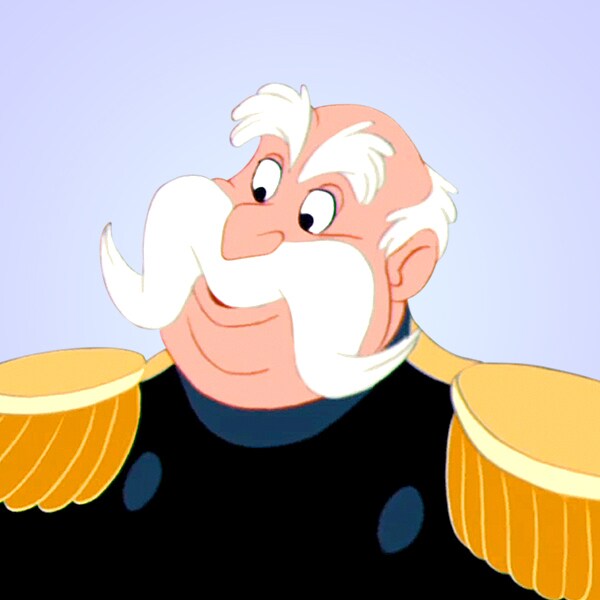
The King Character Profile: Cinderella’s Matchmaker, Father, and Succession Problem
He wants his son happy, his kingdom secure, his palace full, and the whole future delivered before the Grand Duke can finish explaining why love has no administrative deadline.
Before the shouting grandfather joke
The King is remembered as a tiny royal man bouncing across an enormous bed because his son has not produced grandchildren. The comedy is loud enough to hide the governing premise. He treats the Prince’s marriage as a family desire, a succession requirement, and a national project. Love may arrive during the ball, but the invitation begins as state policy wearing party clothes.
A full profile has to keep his warmth beside his coercion. He loves his son, misses a future family he has already imagined, and appears lonely inside the palace. He also commands a kingdom where one parent’s impatience can summon every eligible woman to an audition. Affection does not become harmless merely because the person applying pressure is funny.
Profile at a glance
The King is the Prince’s father, the ruler who orders the royal ball, the Grand Duke’s employer, and the impatient architect of the kingdom-wide bride search. Luis Van Rooten voices him in the 1950 film. Derek Jacobi plays the related but substantially expanded father figure in the 2015 adaptation, where the role receives illness, political responsibility, grief, and a more developed relationship with Kit.
His strengths include affection, decisiveness, emotional transparency, institutional authority, and eventual willingness to accept his son’s chosen partner. His failures include pressuring marriage, projecting his desires onto the Prince, terrifying the Grand Duke, reducing women to a selection pool, and treating grandchildren as something another person should deliver on schedule.
A palace built around absence
The animated King has no visible spouse, and the film does not explain when or how the Prince’s mother disappeared from the family. That absence leaves father and son as the emotional center of the royal household, with the Grand Duke absorbing administrative strain around them. The King’s fixation on grandchildren may grow partly from a palace that feels too large for the family remaining inside.
Missing history should remain missing rather than becoming invented canon. Still, the set design and dialogue allow interpretation. He dreams aloud about small children running through halls because the present halls feel empty. His future fantasy carries joy, loneliness, mortality, and dynastic anxiety in the same breath.
Why he orders the ball
The ball is commonly remembered as the location where Cinderella and the Prince happen to meet. The King deliberately creates the event to place his son among eligible women and accelerate marriage. Romance emerges inside a structure designed to produce a royal match. The private spark cannot erase the public machinery surrounding the encounter.
Every household in the kingdom receives the invitation because royal need temporarily opens palace access. Cinderella recognizes that promise and insists the invitation includes her. Lady Tremaine later tries to privatize a public opportunity. The King unintentionally creates the opening, while Cinderella’s community performs the work required to reach the door.
The eligible-maiden problem
Ordering every eligible maiden to attend sounds egalitarian until the category is examined. Women become a population to be screened for one man’s future. Their families invest clothing, time, labor, and ambition into a chance of selection. The Prince’s preference matters, but the women’s individual desires barely enter the royal plan.
Cinderella finds freedom within that opening because she wants one evening beyond the manor. The ball means more to her than a marriage market. That difference helps explain why she connects with the Prince. She arrives for experience after nearly losing hope, while many others arrive performing candidacy under family pressure.
The King and the Prince
The King speaks about his son with love, frustration, pride, and possessiveness. He wants happiness for the Prince but defines the shape and schedule of that happiness in advance. The Prince becomes heir, unmarried problem, future father, and beloved child at once. Those roles pull in different directions.
The animated film gives them little direct conversation, so the relationship is largely reported through the King and managed through the Grand Duke. That absence is revealing. The King can order a ball more easily than ask his adult son what kind of life he wants. Institutional power often replaces vulnerable conversation when a parent is also a ruler.
Grandchildren as emotional shorthand
The King’s fantasy of grandchildren is sincere and specific. He imagines noise, closeness, play, and continuity. The longing gives him softness beneath the temper. He is not seeking only an heir on paper. He wants a family experience the palace currently lacks.
The fantasy still places reproductive expectation onto people who have not consented to the plan. The Prince must marry, the unknown bride must become a mother, and the imagined children must heal an older man’s loneliness. A desire can be tender and unfair at the same time. That tension is the character.
Succession under the comedy
A hereditary monarchy depends on continuity, even when the screenplay translates succession into a grandfather joke. The King’s age and impatience suggest awareness that time is limited. If the Prince remains unmarried, political uncertainty may follow his eventual death. The ball therefore serves family feeling and state stability.
The film does not explore rival claims, councils, or constitutional rules, so elaborate political theories would exceed the evidence. The basic pressure remains visible. Royal romance is never purely private when a marriage affects inheritance. Cinderella enters a relationship and a public institution simultaneously.
The Grand Duke as pressure valve
The King directs frustration toward the Grand Duke because the official stands close enough to receive orders and far enough below to absorb the temper. The Duke must arrange the ball, monitor the Prince, report the mysterious woman’s escape, preserve the slipper, and conduct the kingdom-wide search. Every emotional emergency becomes administrative labor.
Their scenes are funny because the size difference, pacing, and explosions are exquisitely timed. Their scenes are also a workplace. The King’s affection for his son turns into yelling at an employee who cannot control romantic chemistry. The Grand Duke performs emotional regulation for the crown while pretending the crown is perfectly regulated.
The bedchamber conversation
The King’s bedroom scene stages fantasy against exhaustion. He imagines grandchildren while the Duke tries to communicate practical limits. The giant bed, tiny ruler, and visual chaos turn royal authority into domestic absurdity. He may command the kingdom, but he cannot command the future to arrive before breakfast.
His excitement gives the film needed energy and establishes that the ball has stakes beyond spectacle. The King wants a result. Once Cinderella disappears, the evening becomes a failed state project as well as a lost romantic encounter. That failure powers the slipper search.
Temper as a governing style
The King’s anger is theatrical, brief, and softened by comedy, but everybody around him reacts as though consequences are real. The Grand Duke ducks, stammers, improvises, and protects information. Authority does not need to issue punishment every time when the possibility has trained the room.
His temper contrasts with Lady Tremaine’s quiet control. She lowers her voice while tightening a trap. He raises his voice while revealing every feeling. The styles differ, yet both households teach subordinates to anticipate moods. Cinderella and the Grand Duke become experts in somebody else’s emotional weather.
The shattered window
When the Duke reports that the mysterious woman escaped, the King’s reaction escalates into physical comedy and palace damage. Broken objects make disappointment visible. The scene grants his feelings enormous space while the employee delivering bad news tries to survive the blast.
The response also exposes how quickly romantic hope becomes blame. Nobody at court understands Cinderella’s midnight deadline. The Duke cannot stop magic from expiring, yet the King treats the outcome as administrative failure. Power assumes somebody should have prevented uncertainty.
The glass slipper as royal evidence
The King accepts the slipper search because the Prince’s emotional certainty gives the object political force. A shoe becomes an identification system backed by royal command. Every eligible woman must submit a foot while the Grand Duke carries fragile evidence across the kingdom.
The absurd method works only because Cinderella retains the second slipper after Lady Tremaine destroys the first. Royal evidence is vulnerable to sabotage, bad measurement, and a household controlling access. The King’s decree opens doors, but Cinderella’s own proof completes the claim.
Does he care who she is?
The King initially cares that his son has chosen somebody. Social rank appears less important than securing the relationship, which gives the character a surprising openness within a royal setting. The search reaches ordinary households rather than narrowing immediately to aristocratic families.
That openness has limits. The candidate remains defined through her connection to the Prince and the slipper. Her labor history, legal status, education, and wishes do not shape the search. The King welcomes Cinderella after selection without first knowing the person whose life will be absorbed into the palace.
Cinderella as daughter-in-law
The original film moves rapidly from identification to wedding, leaving the King’s direct relationship with Cinderella mostly outside the frame. His stated desire for family suggests delight, and later franchise material treats her as established within palace life. The emotional bridge happens between endings rather than through a developed scene.
That missing relationship could carry considerable weight. Cinderella arrives after living under a controlling parent figure and enters a palace led by an affectionate but volatile father. Kindness alone would not erase the need for boundaries. Cinderella II begins to address the institutional pressures surrounding her new role.
Cinderella II and palace tradition
The anthology sequel explores Cinderella learning ceremonial expectations and challenging rules that make royal life stiff, inefficient, or disconnected from ordinary people. The King represents a palace whose customs precede her, even when individual scenes keep him warmer than Lady Tremaine. Acceptance requires more than giving her rooms and clothes.
Cinderella changes the institution through hospitality, food, access, and attention to people excluded by formal procedure. The King’s ability to tolerate or embrace those changes becomes a test of whether his family dream included a real daughter-in-law or only a decorative solution to succession anxiety.
The King and Anastasia
Cinderella II places Anastasia’s ordinary romance against family and class expectations. The King is not the direct antagonist, yet the palace world helps define which relationships count as respectable. Cinderella’s support for the Baker pushes the franchise toward love chosen outside status performance.
That subplot indirectly answers the original ball. Royal selection created Cinderella’s opening, but genuine connection cannot be reduced to rank or presentation. The King’s desire for his son’s happiness works best when separated from the belief that authority should design another person’s match.
Cinderella III and the altered engagement
Lady Tremaine uses the wand to make the slipper fit Anastasia and alter the Prince’s memory. The King then accepts the apparent bride because the system he authorized treats fit and his son’s recognition as sufficient evidence. Magic exploits a procedure already too eager for closure.
His happiness about the wedding remains sincere, which makes the manipulation more disturbing. He believes the family future has arrived. Tremaine turns his longing into leverage. A person does not need malicious motives to help a false story advance when desire makes verification inconvenient.
The seashell and the King’s emotional intuition
A Twist in Time gives the King a tender scene with Anastasia involving a seashell associated with his late wife. He recognizes nervousness and offers an intimate family object. The moment expands him beyond temper and grandchildren. He carries grief, remembers love, and tries to welcome the woman he believes his son chose.
Anastasia receives genuine care inside a fraudulent arrangement, which complicates her later refusal. The King’s kindness does not make the engagement real, but the kindness is real. She must surrender a crown and a family connection that briefly treated her as worthy. His warmth raises the cost of telling the truth.
The absent Queen
The seashell gives the late Queen presence without rewriting the original film. The King’s marriage becomes a remembered relationship rather than a dynastic abstraction. He can speak to Anastasia from experience because he once loved, lost, and continued ruling through the absence.
That history reframes his obsession with the Prince’s marriage. He may want his son to know companionship before time removes the chance. He may also want the palace to feel inhabited again. Grief explains urgency while leaving coercion open to criticism.
Accepting the corrected ending
Once Anastasia refuses the false marriage and the spell unravels, the King does not punish her for embarrassing the crown. The sequel allows compassion around a public disaster Lady Tremaine created. His earlier kindness can survive the loss of the outcome he wanted.
That response is important because authority often protects appearances after fraud is exposed. The King’s acceptance makes space for Anastasia to choose honesty. He still benefits from the restored Cinderella and Prince relationship, but he does not need to crush the wrong bride to validate the right one.
Luis Van Rooten and vocal scale
Luis Van Rooten voices the King with explosive shifts between wistful softness and combustible command. The performance makes a small animated figure fill enormous rooms. His diction can sound courtly, childish, paternal, and terrifying within the same conversation.
The vocal rhythm supports the Grand Duke’s reactions. Every pause becomes a chance for the subordinate to hope the storm has passed, and every renewed outburst proves otherwise. Comedy depends on relationship rather than volume alone. The King is funny because the Duke knows exactly how unfunny royal displeasure could become.
The 2015 King
The live-action adaptation transforms the role into Kit’s ailing father, a ruler considering political marriage while confronting death. Derek Jacobi gives him restraint, fatigue, love, and awareness of national responsibility. The character no longer orders a comic bride audition for grandchildren. Marriage becomes part of governance and succession in a more explicit way.
Kit and his father speak directly, which repairs the emotional absence in the animated version. Their disagreements involve love, duty, alliances, and what kind of ruler Kit will become. The King may pressure his son, but the film lets both men articulate what they fear losing.
Kit, duty, and the political match
The 2015 King expects Kit to marry advantageously because a future monarch’s spouse affects the kingdom. Kit argues from personal connection after meeting Ella. Neither position is treated as entirely foolish. The father carries institutional memory; the son sees how institution can consume a life.
Their conflict becomes an apprenticeship in rule. Kit must decide whether leadership means inheriting every calculation or knowing when a calculation destroys the values leadership is supposed to protect. The King’s final movement toward acceptance gives his son permission to govern differently.
Illness and the deadline
The 2015 adaptation makes mortality visible. The King’s body weakens while plans for succession accelerate. Pressure no longer comes from abstract age or comic impatience alone. Kit may inherit before feeling ready, and the father knows time for guidance is disappearing.
Illness can make coercion feel sympathetic without making every demand correct. The film earns emotion by allowing the King to recognize his son as a person before death. He loosens control rather than using mortality as the final argument for obedience.
The deathbed conversation
Kit’s final conversation with his father gives the remake an emotional center separate from the romance. The King acknowledges love, duty, and the son who must continue without him. Jacobi and Richard Madden play grief through restraint rather than royal spectacle.
The scene also changes how the wedding ending lands. Kit is not simply escaping paternal control to marry Ella. He carries a complicated inheritance from a father who could change. The new reign begins with grief and permission rather than triumph over a villainous parent.
Animated King versus live-action King
The animated King externalizes desire through shouting, schemes, and physical comedy. The live-action King internalizes pressure through illness, private conversation, and political responsibility. Both want continuity and both risk treating the Prince’s marriage as an instrument. The tone determines which part becomes visible.
Consolidating them into one profile should preserve difference rather than pretend the same events occurred. The 1950 version creates the ball and slipper search. The 2015 version shapes Kit’s final education as heir. One is a comic engine with tender glimpses. The other is a dramatic father whose death reorganizes the kingdom.
Royal parenting
Parenting an heir collapses family and state. Advice becomes policy, marriage becomes succession, and disagreement becomes a potential crisis. The King’s failures grow from that overlap. He cannot easily distinguish wanting his child happy from wanting the kingdom secured through the child’s life.
The character becomes most humane when he recognizes a boundary between guidance and ownership. Animated warmth toward Anastasia and live-action acceptance of Kit’s choice both suggest that he can release an outcome. Love improves when control loosens.
A man surrounded by workers
The King’s wishes activate cooks, musicians, guards, messengers, dressmakers, cleaners, footmen, and the Grand Duke, though most remain outside named narrative attention. Royal emotion creates labor at a scale the film treats as scenery. One desire fills a ballroom.
Cinderella arrives from the opposite end of that labor structure. She knows what a polished room costs because she has cleaned one. The marriage joins a woman exploited through domestic work to a family whose comfort depends on institutional work. That collision deserves more sequel attention than another gown.
Comedy without innocence
The King is funny. His physical animation, impossible bed, shortened temper, and relationship with the Duke remain some of the film’s sharpest comedy. Critical reading does not require pretending laughter was a mistake. Comedy and power can occupy the same scene.
The useful question is what the laughter allows viewers to notice safely. A ruler cannot schedule intimacy, an employee cannot manufacture love, and a parent cannot demand grandchildren without turning another person’s body into a plan. The joke survives the analysis because the joke already knows control is absurd.
What the King symbolizes
The King symbolizes dynastic urgency, affectionate coercion, the emptiness of ceremonial wealth, grief translated into future planning, and institutions that turn private longing into public work. He also symbolizes the parent who genuinely wants happiness while struggling to accept that happiness cannot be ordered.
Across versions, he becomes a measure of whether authority can change before mortality closes the conversation. His best moments come when welcome matters more than procedure. His worst moments come when procedure is forced to deliver the family picture already living in his head.
The RaeRae verdict
Sir, you cannot throw a kingdom-wide ball because you want babies and then act shocked when the night becomes messy. That is not matchmaking. That is event planning with a succession crisis hidden under the flowers. The Grand Duke needed hazard pay, a therapist, and one uninterrupted meal.
I still understand the lonely-palace part. The seashell scene gets me because the shouting man suddenly becomes a widower holding a memory and trying to welcome somebody. That softness was always there. Somebody simply should have told him softness works better before the window breaks.
Profile receipt
The animated King orders the ball, pressures the Prince to marry, directs the Grand Duke, authorizes the slipper search, welcomes the apparent bride, and later shares a memory of his wife with Anastasia during the altered timeline. Luis Van Rooten performs the original character.
The 2015 version is Kit’s ill father, played by Derek Jacobi. He balances political marriage, succession, parental love, and approaching death before accepting Kit’s chosen future. Both versions connect royal romance to governance, but the remake gives father and son direct emotional closure.
The final character reading
The King is loving, lonely, coercive, funny, grief-struck, institutionally powerful, emotionally transparent, and capable of releasing control. Reducing him to comic anger loses the succession pressure. Treating him as a wise father loses the workers and young people forced to carry his urgency.
His place in Cinderella matters because the palace is not a neutral reward waiting beyond abuse. The palace has rules, moods, labor, grief, and another parent with expectations. Cinderella’s happy ending becomes richer when the royal family is allowed to remain a family requiring boundaries, change, and honest conversation.
The animated sequels begin that conversation without finishing every branch. The live-action adaptation deepens the father and son while leaving Cinderella’s relationship with the dying King comparatively brief. Across both continuities, his best legacy is not the ball or the decree. His best legacy is learning that the next generation cannot be loved as a royal timetable. Love needs room.
Sources and credits
Film chronology and credited performances are checked against official D23 entries for Cinderella (1950), Cinderella II, Cinderella III, and Cinderella (2015).
Keep exploring
Return to the Cinderella hub for reviews, profiles, rants, and guides.
The crown is not only a punch line
The King’s obsession with grandchildren plays as broad comedy, but succession pressure explains why he treats marriage as state administration. His son’s private future becomes a public timetable, and the ball becomes a mass audition designed by someone who never has to stand in the line. The comedy softens the coercion without removing it. Cinderella benefits from the search because the glass slipper becomes evidence that can cross the locked door, yet the same system reduces every eligible woman to a possible solution for the King’s anxiety. Reading him carefully means holding affection for his son beside his willingness to organize that son’s intimacy. The question is not whether he means well. The question is how easily love becomes policy when one person controls the palace.