
CHARACTER PROFILE · DESIGNED VIOLENCE · CHOSEN FAMILY · JIN FROM BTS FORMAT
Stitch Character Profile: Experiment 626 Was Built to Destroy, but Lilo Made Staying a Choice With Receipts
The laboratory gave him strength, compulsion, and a number. Lilo gave him a name, boundaries, and a reason to come back after the destruction.
The profile receipt
Character: Stitch, originally designated Experiment 626. Creator: Dr. Jumba Jookiba. Family: Lilo and Nani Pelekai, Jumba, Pleakley, and the experiment cousins. Primary voice: Chris Sanders across the core animated continuity. Core conflict: Stitch was designed around destruction and has to learn choice, accountability, and attachment without pretending the design never shaped his body.
This profile follows the 2002 film, Stitch! The Movie, Lilo & Stitch: The Series, Lilo & Stitch 2, and Leroy & Stitch. The analysis treats destructive programming as context rather than moral destiny and keeps the harm Stitch causes visible beside the care that changes his future.
626 is an inventory label before Stitch becomes a relationship
Jumba’s number locates his creation inside a sequence. The label describes order, scientific ownership, and an experiment system that values function over interior life. Galactic officials repeat the number because institutions understand classification more easily than personhood.
Lilo’s name does not erase the origin. Stitch remains connected to the experiments who came before him. The name creates another route through the history. A number says what the laboratory catalogued. Stitch becomes the sound attached to meals, arguments, rescue, jealousy, records, and a place at the family photograph.
Designed for destruction does not mean innocent of every destructive choice
Stitch begins with impulses and capacities Jumba deliberately engineered. That fact reduces the fairness of treating his first behavior as evidence of inherent evil. The design explains why violence arrives quickly and why ordinary environments feel like opportunities for disruption.
Explanation cannot become permission. Stitch learns enough to choose, anticipate consequence, and recognize pain. Accountability grows with agency. The family’s compassion works because they do not demand moral perfection before belonging, while belonging never means every harmful action becomes excusable.
His body carries the history even after his choices change
Strength, agility, intelligence, sensory ability, extra limbs, and destructive reflexes remain part of Stitch. Rehabilitation does not transform him into a conventional child or pet. His physicality can protect family and frighten family. The same body holds both possibilities.
The franchise is strongest when growth expands his responses rather than sanding away difference. Stitch can bite, crash, lift, hide, dance, grieve, and comfort. Respectability is not the goal. Choice inside a body shaped by somebody else’s purpose is the goal.
The crash into Hawaiʻi begins as escape, not destiny
Stitch reaches Earth while fleeing custody. Lilo’s home is not a spiritually preassigned destination waiting to rehabilitate an outsider. The arrival is accidental, dangerous, and shaped by his effort to avoid capture.
The story turns accident into relationship through repeated decisions. Hawaiʻi should not be reduced to a healing backdrop for alien redemption. Residents and the Pelekai household absorb risks created elsewhere. Stitch’s belonging creates reciprocal obligations to place and people, not a claim that beauty cured him automatically.
Lilo adopts him before she understands the risk
At the shelter, Lilo believes she is choosing an unusual dog. Stitch uses the adoption as protection because pursuers cannot attack him near a human. Their first bond therefore contains deception and sincere need at once.
Lilo’s commitment becomes more informed over time. She sees danger and maintains relationship while setting expectations. Consent cannot be perfect when crucial facts were hidden. The family becomes real because truth eventually changes the terms and everybody continues choosing, not because the first adoption paper solved the ethics.
He recognizes Lilo as cover before recognizing her as family
Stitch initially calculates. Proximity to Lilo makes capture difficult. Household routines are obstacles or tools. Her affection provides shelter he has not earned and does not yet understand.
Instrumental attachment slowly becomes emotional attachment because Lilo keeps treating him as somebody. The change is not one speech. Shared time, conflict, music, rescue, and the fear of losing the household accumulate. The cover becomes the person whose safety matters more than escape.
The ugly duckling book gives him an image for loneliness
Stitch encounters a story about separation and family search at the moment his own lack of connection becomes legible. The book does not magically create conscience. The image supplies language for a feeling his design never prepared him to name.
His declaration that he is lost carries enormous weight because a manufactured being recognizes absence rather than only threat. Wanting family is not the same as knowing how to participate in family. The rest of the franchise lives inside that gap.
The family photograph creates a place no laboratory blueprint contained
A blueprint can record strength, weakness, and intended function. A family photograph records presence. Stitch entering the image represents a change in social status that no physical modification could produce.
Photographs also connect the living household to Lilo and Nani’s parents. Stitch joins a family already shaped by absence. His inclusion does not replace anybody. The image expands while preserving memory, which makes belonging different from the laboratory habit of replacing one experiment with a supposedly improved model.
His bond with Nani requires more than Lilo’s approval
Lilo chooses Stitch, but Nani carries legal and material responsibility for the household. Stitch’s chaos threatens work, safety, and custody. Nani’s hesitation is not lack of heart. She has receipts Lilo cannot afford to count.
A full family relationship requires Stitch to recognize Nani as a person rather than an obstacle between him and Lilo. Nani protects him eventually, and he must reduce the burden his presence creates. Lilo’s love opens the door. Shared accountability keeps the door from becoming another crisis Nani manages alone.
Jumba is creator, captor, father figure, and unfinished accountability
Jumba made Stitch without consent, designed destructive drives, and initially described him through scientific pride. Later affection complicates that history without canceling the power imbalance.
Stitch can love Jumba and remain entitled to answers. Why was he created? What controls exist? What care was planned? Who owned his future? Jumba’s role becomes ethical only when knowledge serves Stitch’s autonomy rather than preserving creator authority.
Pleakley helps turn shelter into domestic life
Pleakley’s household participation gives Stitch another form of adult care. Meals, cleaning, rituals, panic, and argument create ordinary repetition around extraordinary danger.
Stitch learns family through those routines as much as through rescues. Domestic labor is not background softness. Domestic labor builds the stable environment in which a creature trained for chaos can practice staying.
The cousins turn Stitch from exception into precedent
Before the experiment archive opens, Stitch can understand his redemption as singular. Hundreds of cousins prove Jumba created a population. Stitch becomes somebody with shared origin and uncommon experience of living beyond design.
Mentorship gives his growth social consequence. He can protect, translate, and model another future. The role also exposes jealousy and competition because Lilo’s attention is no longer his alone. Becoming family does not end insecurity.
Jealousy is fear wearing claws
Stitch reacts when another experiment appears cuter, stronger, more admired, or more central to Lilo’s plan. The jealousy can become comic aggression and real sabotage. Underneath, attachment still feels fragile.
Understanding the fear does not excuse harm toward cousins. Stitch must learn that family can expand without replacing him. Lilo’s care is not a scarce prize distributed to the most useful creature. The lesson directly opposes laboratory ranking.
Angel tests whether romance can survive programmed influence
Angel’s song can reverse rehabilitation and reactivate destructive behavior in earlier experiments. The relationship introduces attraction beside manipulation, loyalty, and competing design.
Stitch’s response cannot reduce Angel to love interest or villain device. She has her own coercive history and choices. Their bond becomes meaningful when each recognizes the other as more than function. Romance does not cure programming, and affection does not remove the need for consent.
Sparky gives him the first clear sibling mission
Experiment 221 proves that Stitch is neither the only experiment nor the final moral case. Sparky’s electrical power creates danger and eventually finds a lighthouse context.
Stitch participates in the rescue while learning that another creation can receive the patience he received. The placement becomes a model for the series and an early warning that useful work may become the franchise’s shortcut for full belonging.
Reuben refuses the heroic standard Stitch appears to fulfill
Experiment 625 shares much of Stitch’s power and spends years making sandwiches. The contrast challenges the assumption that capacity creates duty to perform heroism.
Stitch chooses action because relationships matter to him. Reuben must retain the right to choose ordinary pleasure. Their difference makes both characters more human: one turns strength toward family, and the other refuses to let a creator determine what strength must mean.
The glitch is a bodily crisis, not proof that goodness failed
Lilo & Stitch 2 reveals an incomplete charging process that destabilizes Stitch’s behavior and threatens his life. Lilo first interprets renewed destruction through morality because their shared framework emphasizes good and bad choices.
The crisis exposes the limits of that language. A neurological or physiological malfunction cannot be disciplined away through love. Stitch needs accurate information and care. Jumba’s delayed disclosure turns creator secrecy into family danger.
His fear during the glitch reveals how much moral identity matters to him
Stitch is terrified that harmful behavior means he has become bad again. The fear shows growth and creates shame. He cares about consequences, yet the available language makes illness feel like character failure.
Lilo also experiences betrayal because she cannot see the malfunction. Their conflict is painful precisely because both rely on incomplete knowledge. The repair requires medical truth, emotional reassurance, and accountability from the adult who knew the history.
Music helps him practice culture without granting automatic cultural belonging
Elvis becomes part of the bond between Lilo and Stitch. Performance, records, and shared listening give him a route into her private world.
Hawaiian culture cannot be reduced to the soundtrack around his adoption. Stitch belongs through relationships and responsibility, not by consuming symbols. The franchise needs Native Hawaiian voices to define cultural meaning beyond the alien’s affectionate participation.
His speech develops without becoming fully humanized
Stitch’s language mixes alien vocalization, short phrases, repetition, and growing comprehension. Chris Sanders preserves physical sound and comic rhythm while allowing emotion to become increasingly legible.
Fluency is not the measure of personhood. The family learns his communication as he learns theirs. A humane relationship meets difference in both directions rather than demanding perfect assimilation before listening.
Gantu sees an asset, enemy, and reminder of professional failure
Gantu’s pursuit positions Stitch as illegal property and tactical threat. Stitch becomes the being whose escape damaged Gantu’s rank, which personalizes institutional conflict.
Their clashes can be funny, but the power history remains serious. Gantu represents a system that responds to designed violence through capture without asking what created the violence. Stitch’s eventual place in the Federation complicates whether the system changed or merely recruited a useful former target.
Hämsterviel values him as a specification without recognizing a life
To Hämsterviel, 626 represents power, ownership, and proof of Jumba’s productive genius. Stitch’s attachments look like defects because relationships interfere with command.
That valuation explains the villain’s obsession and the franchise’s central resistance. Lilo loves Stitch before utility becomes socially acceptable. Hämsterviel values utility while refusing autonomy. The two forms of attention are not remotely equivalent.
Leroy is the duplicate denied Stitch’s developmental time
Leroy shares destructive design and receives immediate command under Hämsterviel. Stitch confronts a version of his beginning without Lilo, Nani, ordinary routines, or permission to develop another loyalty.
Defeating Leroy protects the family. Treating Leroy as permanently disposable weakens everything Stitch’s story proved. Stitch should understand that containment and rehabilitation can coexist because he once needed both.
Leadership arrives through relationship before the Federation supplies a uniform
Stitch coordinates rescues, protects cousins, and takes risks long before receiving formal command. His best leadership comes from knowing specific people rather than issuing generic orders.
A captaincy can recognize growth and tempt him back into hierarchy. The Federation values his power after criminalizing the same power. Stitch must decide whether official status expands responsibility or converts him into a tool with better clothing.
His humor protects wildness from becoming pathology
Stitch is funny because appetite, confidence, physicality, jealousy, and timing resist polite expectations. The humor lets viewers enjoy traits that also cause trouble.
Comedy should not erase consequence, and consequence should not erase delight. The character works because family does not require him to become quiet, pretty, or conventional. Accountability changes behavior without demanding the death of personality.
His most important power is the ability to return
Physical powers make action possible. Returning after failure makes relationship possible. Stitch leaves, hides, lashes out, and fears rejection. Growth appears when he comes back, admits need, or chooses somebody else’s safety over escape.
Return does not guarantee forgiveness. Return creates the opportunity for repair. The family’s willingness to receive him depends on trust rebuilt through action rather than one dramatic declaration.
The JIN-format verdict
Stitch is a created being whose body carries somebody else’s violent intention and whose life becomes larger through relationships he was never designed to understand. His arc refuses the idea that origin fixes destiny.
The strongest reading keeps three truths together: Jumba caused the conditions, Stitch causes real harm, and belonging makes accountable choice possible. He does not become worthy by becoming harmless. He becomes family by learning that staying has obligations, and the family becomes worthy by refusing to reduce him to either weapon or mascot.
His intelligence makes manipulation more complicated, not less real
Stitch calculates rapidly, learns languages, pilots machines, reads danger, and improvises under pressure. High intelligence does not erase the effects of design, coercion, or emotional inexperience. A brilliant person can understand tactics before understanding trust.
The franchise sometimes uses cleverness as proof that he should know better in every situation. Moral knowledge develops through relationship and consequence, not processing speed alone. Intelligence increases agency over time while leaving the origin of his compulsions relevant.
Destruction once regulated feeling because nobody taught him another method
Breaking objects and overpowering opponents give Stitch immediate control when fear, boredom, jealousy, or shame become difficult. The behavior fits his design and becomes a learned regulation strategy.
Lilo introduces alternatives through music, play, words, ritual, and repair. The shift is uneven because emotional regulation is practice. One loving speech cannot replace a response built into body and reinforced by survival.
He experiences belonging through sensory routine
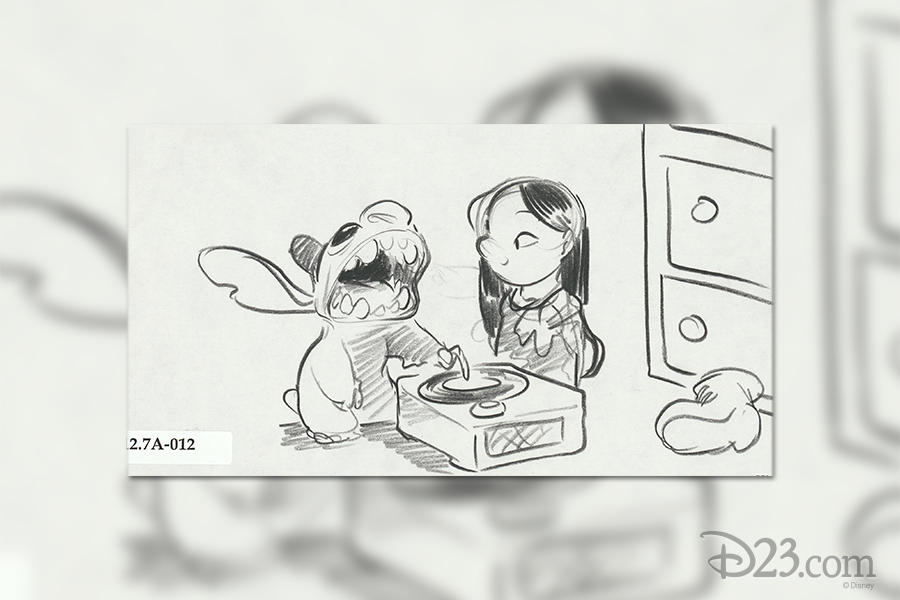
Home becomes recognizable through sounds, food, touch, objects, and repeated people. The record player, kitchen, beach, photographs, and Lilo’s voice create a sensory map opposite the sterile laboratory and prison ship.
Those routines matter when crisis destabilizes him. Family is not only an abstract promise. Family is the place where daily sensations stop signaling capture. The body learns safety through repetition before language can explain the change.
Repairing harm is more important than proving he is good
Stitch often fears the category of bad because bad once justified imprisonment and abandonment. The fear can make him hide mistakes or seek quick proof of goodness.
Repair asks a different question. Who was harmed, what needs restoration, and what choice comes next? A person can perform one good act without addressing damage. Stitch’s strongest growth appears when he returns to the relationship and participates in consequences.
The franchise markets cuteness while the story depends on discomfort
Large eyes, compact shape, expressive ears, and comic appetite make Stitch marketable. The narrative works because cuteness coexists with aggression, deception, and bodily strangeness.
A profile should resist turning every difficult trait into adorable mischief. Some actions frighten Lilo, endanger Nani, or harm cousins. Respecting the character means keeping those stakes visible rather than protecting merchandise appeal from moral texture.
He should not become the permanent therapist for every cousin
Shared origin gives Stitch insight, and his successful rehabilitation creates pressure to mentor. Expertise from lived experience is valuable. That expertise does not create unlimited obligation.
Stitch needs rest, boundaries, and the right to struggle without becoming a failed role model. The Federation and Jumba must support the cousins. Peer care works best when institutions stop using peers as free replacement staff.
His future should include choice beyond captain, mascot, or family pet
The franchise offers recognizable roles: loyal companion, experiment mentor, galactic captain, and visual icon. Stitch may want parts of each without being contained by any one.
A self-directed future could include travel, community protection, music, cousin advocacy, technical work, or ordinary time at home. The point is not selecting the perfect productive role. The point is preserving the ability to revise what belonging looks like as he changes.
The profile image translates the arc without copying the character
The artwork uses an original ocean-blue stitched star creature between a numbered workshop blueprint and an open island doorway full of varied companions. A taped photograph, record player, notebook, and handmade doll carry the domestic history.
The symbolic design avoids an official still while preserving the editorial contrast. Cold specification sits behind him. Warm relationship waits ahead. Visible seams keep the difficult beginning present rather than airbrushing growth into perfection.
Lilo’s anger matters because love without anger would feel dishonest
Lilo becomes furious when Stitch lies, destroys, withdraws, or appears to reject the family. Her anger shows that his choices have consequences inside a relationship with needs on both sides.
The story should never make her endlessly patient to prove goodness. Stitch learns respect because Lilo can love him and object to him. A boundary is part of staying, not evidence that the family promise was false.
Nani’s fear gives his redemption a material standard
Stitch may experience a disaster as one emotional mistake. Nani experiences property damage, job risk, bodily danger, and another possible reason officials could remove Lilo.
Winning Nani’s trust therefore requires more than making Lilo happy. He must become somebody who notices household cost. The standard can feel less romantic than rescue and is more meaningful because family life happens after the spectacular scene.
The cousins keep him accountable to a community larger than one attachment
If Stitch only behaves for Lilo, growth remains dependent on one relationship. The experiment cousins require him to generalize care toward people who compete, irritate, resemble, or challenge him.
Community expands his moral world. He cannot remain the singular rescued exception while others are treated as inventory. Mentorship becomes credible when he defends their autonomy rather than only proving his own goodness.
Why fans keep returning to him
Stitch offers the fantasy that somebody can know the ugliest design notes and still make room for a future. The fantasy works because the future includes repair, not instant absolution.
He remains funny, physical, needy, and strange. The character never asks viewers to choose between tenderness and teeth. That combination makes affection feel earned rather than focus-grouped, which is why a blue silhouette can carry decades of branding without fully swallowing the difficult story underneath.
The last word should belong to choice rather than design
Jumba’s laboratory can explain the strength, reflexes, and compulsions Stitch begins with. The Federation can explain the laws used to contain him. Hämsterviel can explain why power attracts ownership. None of those systems gets to write the ending alone.
Stitch’s choices gain meaning because design remains present. Every return to Lilo, every protected cousin, every repaired relationship, and every refusal of command pushes against an origin he did not consent to. Freedom is not forgetting the blueprint. Freedom is living a life the blueprint cannot fully predict.
The small ordinary ending matters
The most radical future is not another battle. The most radical future is Stitch at the family table after nothing exploded, listening while somebody else speaks, helping because help was needed, and remaining loved without performing spectacle. A manufactured weapon choosing ordinary responsibility may be quieter than the chase. The quiet choice proves the life became his.
The final receipt
Stitch’s popularity can flatten him into cute chaos. The full character is more demanding. He is an intelligent created person shaped by coercive design, capable of terrifying harm, hungry for attachment, jealous when attachment expands, frightened by bodily failure, and increasingly willing to accept responsibility. He does not need the audience to forget the broken furniture or endangered people. He needs the audience to understand why accountability without belonging becomes disposal and belonging without accountability becomes another kind of neglect.
Lilo changes his future because she refuses both extremes. She protects him from institutions that see property and challenges him when his choices hurt family. Nani supplies material reality. Jumba supplies knowledge and owes answers. Pleakley supplies ordinary care. The cousins supply community beyond singular exception. Stitch remains lovable because the story lets him stay strange while learning that love is not a hiding place from consequences.
Keep exploring
Return to the Lilo & Stitch hub for the character directory, film and series reviews, episode reactions, rants, and guides.
Staying is a behavior, not a slogan
Stitch does not become family because the adoption paper magically rewrites his programming. He becomes family through repeated decisions after escape is possible. He returns, protects, confesses, repairs, and eventually recognizes the other experiments as people rather than inventory. Relapse does not erase that growth, but it creates obligations. The franchise is strongest when belonging includes restitution and weakest when cuteness becomes immunity. Lilo gives him a home, then asks him to participate in keeping it livable. That second part is what turns possession into relationship.