
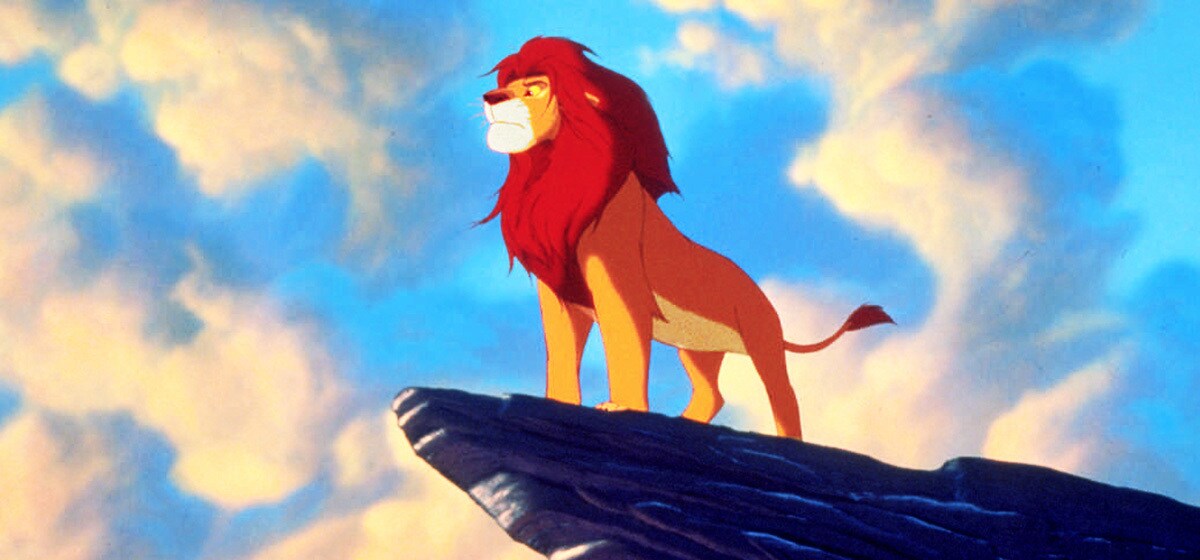
LION KING CHARACTER · SON, SURVIVOR, EXILE, KING, AND FATHER STILL LEARNING WHAT PROTECTION MEANS
Simba: The Cub Who Survived Scar’s Lie and Grew into a King Still Carrying It
Simba inherits Mufasa’s kingdom after Scar makes him inherit the murder. His life becomes a fight to separate responsibility from false guilt without turning survival into another cage for his children.
The quick file
Simba is the son of Mufasa and Sarabi, childhood friend and eventual partner of Nala, nephew of Scar, and central heir of Disney’s 1994 The Lion King. He begins as a confident cub who mistakes proximity to power for readiness. Scar engineers Mufasa’s death, convinces Simba that the cub caused it, and sends him into exile. Simba survives, builds a chosen family, returns as an adult, confronts the lie, and becomes king.
Later animation makes him father to Kiara in The Lion King II: Simba’s Pride and father to Kion in The Lion Guard. The Lion King 1½ retells his first story from Timon and Pumbaa’s perspective. The 2019 photoreal film creates a separate version voiced by JD McCrary and Donald Glover, while Mufasa: The Lion King places his family inside another continuity’s account of Mufasa and Taka.
Name, title, and family
Simba’s name is commonly glossed as “lion” in Swahili. Within the story he is presented as prince, Mufasa’s heir, exile, returning claimant, king, mate to Nala, and father. Those titles describe public position. They do not explain the child who survives manipulation or the adult who learned family outside the royal line.
His biological family includes Mufasa, Sarabi, Scar, Kiara, and Kion in the branches where those children exist. Nala becomes partner, queen, and co-parent. Timon and Pumbaa are adoptive caregivers and chosen family. Rafiki serves as ritual guide and truth-teller. The profile becomes accurate when blood, partnership, mentorship, and chosen kinship remain visible instead of treating monarchy as the only relationship that counts.
A cub raised inside public expectation
Simba’s birth is a state event. Animals gather, Rafiki performs ritual, Mufasa and Sarabi present him, and the landscape appears to bless succession. He cannot remember choosing that role because the role arrives before memory. Childhood confidence grows inside a world repeatedly telling him that adulthood will place everything the light touches under his responsibility.
“I Just Can’t Wait to Be King” expresses delight, entitlement, imagination, and a child’s misunderstanding of rule. Simba hears freedom from supervision where Mufasa describes obligation. The number is charming because his arrogance remains playful. It becomes tragic because Scar knows how to convert the same impatience into risk.
Relationship with Mufasa
Mufasa is father, teacher, king, safety, and the standard Simba expects adulthood to meet. He plays with the cub, corrects him after the elephant graveyard, explains the Circle of Life, and rescues him from the stampede. Love and authority are fused so completely that losing Mufasa destroys both family security and the model through which Simba understands himself.
The relationship is idealized but not empty. Mufasa frightens Simba during discipline, then explains courage and fear without humiliating him. He names his own fear, which gives the cub a version of masculinity that includes vulnerability. The lesson does not protect Simba from later shame because Scar’s accusation arrives when the trusted teacher can no longer answer.
Relationship with Sarabi
Sarabi is Simba’s mother, Mufasa’s mate, queen, and a leader among the lionesses. The first film gives their bond less time than the father-son relationship, yet her presence frames home, care, discipline, and the community Simba abandons without knowing she survived. His exile removes him from a mother who believes her child dead.
The reunion occurs inside political crisis rather than private repair. Simba sees Sarabi confront Scar, hears the lie about Mufasa repeated, and finally learns Scar caused the death. A fuller story would allow mother and son time to name the years stolen from both. The film uses their recognition to intensify the return while leaving maternal grief largely between scenes.
Relationship with Nala
Nala begins as Simba’s friend, equal playmate, challenger, co-conspirator, and the cub capable of pinning him despite his royal confidence. Their childhood bond contains competition and trust before romance enters. As an adult, Nala becomes the person who carries news of the Pride Lands into exile and refuses to treat his avoidance as harmless.
She does not simply wait for a king. She survives Scar’s rule, leaves to seek help, confronts Simba, returns for the final fight, and later shares leadership and parenting. “Can You Feel the Love Tonight” matters because affection returns before the political conflict is solved. Their relationship survives when Simba finally allows her evidence to matter.
Scar identifies the wound before creating it
Scar understands that Simba wants recognition and has not yet learned to distinguish courage from reckless performance. He flatters curiosity, supplies forbidden knowledge, stages danger, and makes the cub feel responsible for proving maturity. The manipulation works because it uses ordinary childhood desires rather than inventing a completely different personality.
After Mufasa dies, Scar isolates Simba at the body and turns confusion into confession. He asks what Simba has done, confirms the worst interpretation, and frames running away as protection for everyone else. This is grooming followed by blame transfer. Scar does not merely lie about an event. He teaches Simba to become the keeper of the lie.
The elephant graveyard is the rehearsal
Simba takes Nala beyond the border because Scar presents danger as proof of bravery. The hyena encounter provides a smaller version of the later trap: disobedience, threat, rescue by Mufasa, and shame. Scar learns that the cub can be moved through pride and that Mufasa will risk himself without hesitation.
Mufasa’s correction is compassionate, but Simba leaves with the knowledge that his choices can endanger people he loves. Scar later weaponizes that accurate lesson with a false cause. Trauma often attaches itself to something partly true. Simba did take a risk. He did not cause the stampede, murder his father, or deserve exile.
The stampede
Simba is placed in the gorge and told Mufasa has a surprise. The wildebeest turn anticipation into mass panic. He is physically too small to control the danger and emotionally prepared to believe adults planned the situation. Mufasa reaches him, places him on safety, and dies after Scar refuses the rescue he appears to offer.
The sequence gives Simba no complete view. He sees movement, his father’s effort, a fall, and a body. Scar supplies the interpretation before the cub can gather evidence. That limited perspective matters. Simba’s guilt is not foolishness. It is a child’s attempt to organize catastrophe using the explanation provided by the only adult still present.
Exile begins as a survival command
Scar tells Simba to run away and never return, then sends hyenas to kill him. The cub survives the pursuit, crosses hostile terrain, and collapses. Exile is therefore not a carefree refusal of duty. It begins as escape from a murderer who controls the kingdom and has already convinced the survivor that discovery would harm everyone.
Simba’s later avoidance grows from this emergency response. Running saved his life. The body remembers that success even after the immediate chase ends. Asking him simply to stop running misses why the strategy became believable. Healing requires new evidence, safety, and relationships strong enough to challenge the rule without repeating Scar’s contempt.
Timon and Pumbaa become family through ordinary care
Timon and Pumbaa find Simba dehydrated, vulnerable, and alone. They bring him to water, feed him, teach him their way of life, and remain through growth. Their care does not depend on royal identity. They choose a dangerous young carnivore because Pumbaa’s empathy and Timon’s improvisation create room for somebody who has nowhere else.
The relationship contains jokes and genuine parenting. They establish food, routine, belonging, language, and safety. Later, they follow Simba back toward danger despite having no stake in his throne. Chosen family does the daily work biological legacy cannot perform during exile. The crown returns after the person has already been kept alive by a different household.
Hakuna Matata saves him and limits him
The philosophy removes immediate blame and gives Simba a life not organized around Scar’s accusation. He needs that relief. A child cannot process grief while dying in a desert. Eating bugs, singing, growing, and laughing restore body and connection. Avoidance becomes medicine before it becomes a ceiling.
The problem appears when present responsibility reaches him through Nala and he treats all pain as a demand to return to the original shame. Hakuna Matata cannot distinguish responsibility from false guilt for him. The next stage requires keeping the right to live while releasing the rule that no difficult past can be faced.
Adult Simba is still carrying the cub
Matthew Broderick’s adult performance retains uncertainty beneath physical growth. Simba can hunt, joke, love, and move confidently in Timon and Pumbaa’s world. The mention of the Pride Lands contracts him back toward the frightened child at Mufasa’s body. Age changed his body without supplying missing evidence.
That continuity prevents the return from becoming a simple masculinity test. Simba is not weak because grief remains. He has been living inside a manufactured confession. Courage means allowing the story to be examined when examination could destroy the identity that made survival possible.
Rafiki does not give him new blood
Rafiki finds Simba, refuses the exile identity as complete, and leads him toward Mufasa’s reflection and spirit. The scene is often summarized as royal destiny calling. Its emotional work is more personal. Simba sees himself where he expected only absence. Mufasa’s memory exists inside relationship, teaching, resemblance, and the values he can choose to carry.
“Remember who you are” does not biologically install leadership. It interrupts Scar’s ownership of the past. Simba has remembered himself primarily as the cub who killed his father. Rafiki restores an earlier and wider record. The return becomes possible when identity is no longer reduced to the accusation.
Returning does not mean the exile years were wasted
Simba brings humor, chosen family, survival knowledge, and a life outside palace hierarchy back with him. Timon and Pumbaa help in the battle. His capacity to love beyond blood and species was formed away from Pride Rock. The years contain avoidance and growth at once.
A story focused only on destiny might treat exile as a detour. The character profile should not. The adult who returns is not the king Mufasa would have raised in a straight line. He is somebody shaped by loss, alternative family, food insecurity, play, and the knowledge that belonging can be chosen.
The confrontation with Scar
Simba initially accepts Scar’s demand for a public confession because the old story still controls him. Scar pushes him backward toward the edge and reveals the murder privately. The new evidence breaks shame’s isolation. Simba moves from defending himself against guilt to demanding truth from the person who manufactured it.
The fight is physical, but the decisive change is narrative. Scar can no longer define the event. Simba forces a confession before the pride and restores collective knowledge. His refusal to execute Scar directly distinguishes justice from the uncle’s methods, though exile creates another dangerous border and the hyenas deliver the final consequence.
Becoming king happens in rain, not in policy
Simba ascends Pride Rock, roars, and receives the pride’s answer while rain begins restoration. The montage later shows green land and a new cub. Mythic imagery completes the emotional promise. The film does not show the administrative work required after famine, violence, displacement, and years of failed governance.
That gap matters in later characterization. A returning hero may know how to defeat a usurper and still need to learn how to govern. Simba inherits Mufasa’s image, Scar’s damage, depleted resources, traumatized family, and unresolved exclusion. The crown is the start of accountability rather than a receipt proving the work is complete.
Simba’s Pride and the frightened father
In Simba’s Pride, Simba’s trauma becomes protection that can harden into control. He loves Kiara, fears losing her, distrusts the Outsiders, and treats Kovu as Scar’s return before the young lion has completed the choices defining him. The former child manipulated by Scar becomes a father organizing the future around Scar’s shadow.
This development is uncomfortable and credible. Survival does not automatically make a person wise about another person’s freedom. Simba repeats part of Mufasa’s border logic and part of Scar’s inherited guilt when he judges Kovu through origin. Kiara’s refusal forces him to see that fear can preserve the division it claims to prevent.
Relationship with Kiara
Kiara is Simba and Nala’s daughter, heir, and the child most directly challenging his attempt to make safety predictable. He watches, assigns Timon and Pumbaa as guards, interrupts risk, and struggles to trust her judgment. Love is never in doubt. Autonomy is.
Kiara inherits his curiosity and his experience of a parent’s shadow, but she refuses to build identity entirely through succession. Her relationship with Kovu becomes emotional and political evidence. Simba grows when he allows her actions to revise the story fear has been telling him.
Relationship with Kovu
Kovu is raised by Zira as an instrument against Simba and enters the Pride Lands through a plan he has not fully chosen. Simba sees Scar’s resemblance and threat. The suspicion is supported by real danger and extended beyond available evidence. Kovu must prove change under conditions where the king controls whether proof can count.
The ambush makes Simba interpret every uncertainty as betrayal. Banishment repeats the franchise’s favorite punishment and risks producing the same outsider politics that helped Scar. Accepting Kovu later does not erase the harm. It marks Simba’s willingness to stop using lineage as a permanent sentence.
The Lion Guard and fathering Kion
The Lion Guard introduces Kion, Simba and Nala’s son, leader of a cross-species team, and bearer of the Roar of the Elders. Simba becomes father, king, mentor, and occasional obstacle within a series that distributes ecological responsibility beyond one royal body.
He must allow Kion to make decisions involving danger, borders, Scar’s return, and territories Simba does not fully control. The relationship can repair patterns visible with Kiara by turning protection into guidance rather than surveillance. It can also reproduce royal hierarchy when Simba’s approval becomes the measure of every independent judgment.
The Lion King 1½ changes the camera around him
The retelling makes Simba a major event in somebody else’s life rather than the unquestioned center. Timon and Pumbaa rescue, raise, accompany, distract enemies, and participate in scenes the original film framed around royal destiny. Simba remains important while losing ownership of narrative importance.
That shift is healthy for the franchise. A king’s story can eclipse the labor surrounding him. The comedy restores ordinary perspective and reminds viewers that history always has people outside the ceremonial frame. Simba’s survival was never a solo hero achievement.
Voice and song performance history
Jonathan Taylor Thomas voices young Simba’s dialogue in the 1994 film, while Jason Weaver performs the cub’s principal singing. Matthew Broderick voices adult Simba, with Joseph Williams carrying adult singing. Cam Clarke voices Simba in several animated and game contexts, and Matthew Broderick returns for major sequel films. Rob Lowe voices adult Simba in The Lion Guard.
The 2019 film casts JD McCrary as young Simba and Donald Glover as adult Simba. Different performers change confidence, grief, humor, vocal age, and the relationship between speech and song. Credits should remain branch-specific rather than collapsing every version into the most famous actor.
The 2019 photoreal Simba
The 2019 film asks a digitally animated lion designed around naturalistic anatomy to carry nearly the same emotional events. Facial range, body exaggeration, pacing, vocal performance, editing, and music must compensate for a realism contract that limits the 1994 design’s elastic expression.
Donald Glover’s adult Simba brings a different vulnerability, while JD McCrary’s cub performance carries early ambition and panic. The story remains recognizable, but the body changes how quickly emotion can be read. Photoreal detail does not automatically create psychological depth. It creates another set of tools and constraints.
Mufasa: The Lion King and inherited history
The 2024 film belongs to the photoreal branch and frames Rafiki telling Kiara about Mufasa’s youth, Taka, and the journey toward Milele. Simba is more listener and descendant than central actor. His father’s history expands after Simba has already built an identity around the earlier legend.
This branch asks what happens when a child learns the parent’s public greatness was not the whole biography. The answer should deepen Mufasa without making Simba responsible for resolving a history that occurred before him. Inheritance can include context without becoming another debt.
Design across cub and adult forms
Young Simba uses rounded shapes, large eyes, oversized paws, flexible ears, and quick posture changes to communicate confidence and vulnerability. Adult Simba gains mane, mass, longer proportions, and visual resemblance to Mufasa while retaining softer expressions that distinguish him from the father.
Color connects him to the Pride Lands and separates him from Scar’s darker angular design. The adult silhouette makes succession instantly readable, which supports the ending and risks treating bodily resemblance as proof of rightful rule. Design can carry story efficiently while also carrying ideology.
Grief, guilt, and the continuing bond
Simba does not stop loving Mufasa by leaving. He organizes life around a false explanation for the death. Avoidance keeps the bond frozen at the moment of failure, preventing memory from containing play, teaching, rescue, or mutual love. Rafiki’s intervention reopens the full relationship.
The profile should distinguish guilt from grief. Grief responds to loss. False guilt claims causal responsibility. Scar fuses them so every memory becomes evidence against Simba. Healing does not require forgetting Mufasa or finishing grief. It requires returning causation to the murderer and allowing love to exist without permanent self-punishment.
Monarchy and the problem of naturalized rule
Simba’s return is emotionally justified and politically presented as ecological correction. The land greens after the royal line is restored. That symbolism makes good rule visible and turns hereditary succession into nature’s preference. The film offers little space for other species to participate in power.
Later stories can complicate the arrangement through Kiara, Kion, the Lion Guard, the Outsiders, other kingdoms, and shared protection. Simba becomes more interesting when kingship is treated as work requiring consent, listening, and repair rather than an identity his blood makes automatically wise.
Common fandom misconceptions
Simba did not cause the stampede or Mufasa’s death. Disobedience placed him in the gorge, but Scar designed the event, ordered the hyenas, murdered Mufasa, lied to the survivor, and attempted to have him killed. Responsibility belongs to the person who engineered harm, not the child used as bait.
Hakuna Matata is not simply laziness. It is rescue, culture, coping, and later avoidance. Simba is not required to become Mufasa in order to honor him. Nala does more than retrieve a king. Timon and Pumbaa are not temporary comic babysitters discarded when blood family returns.
What future stories owe Simba
A mature continuation should show governance after restoration, listening to Nala and the lionesses, relationships with Kiara and Kion as adults, accountability for banishment, changing border policy, ecological work beyond royal symbolism, and a life where Mufasa’s memory no longer decides every response to risk.
Simba deserves stories where healing produces flexibility rather than a permanently solemn crown. Let him be funny with Timon and Pumbaa, uncertain with Nala, challenged by his children, honest about Scar, and capable of changing policy before another disaster proves the old arrangement failed.
Profile conclusion
Simba is a survivor of grooming, bereaved son, chosen-family child, reluctant returner, partner, king, and father whose greatest challenge is separating responsibility from inherited fear. His arc works because the triumphant roar comes after years when silence kept him alive.
Return to The Lion King hub for films, series, guides, reviews, Reacts, rants, and the complete character directory as each profile is finished. Every branch stays connected there without asking one royal timeline to erase the others.
The character receipt Pride Rock cannot flatten
Simba cannot be reduced to a place in the royal family tree. The profile’s central problem is shame taught by Scar, grief postponed in exile, and the difference between returning home and becoming qualified to govern. That argument becomes visible through decisions, not biography labels. The story tells us who belongs near Pride Rock, but the character receipt asks who has information, who controls movement, whose fear is believed, and who performs the work after a public decision becomes a private emergency.
The relationship map includes Mufasa, Nala, Timon, Pumbaa, Rafiki, Sarabi, Scar, and the Pride Lands community. Each connection places a different demand on Simba. Love may require truth, friendship may require interruption, leadership may require listening, and family may require a boundary that ceremony cannot override. A complete profile follows what changes between two people after conflict. Repeating the word family is not evidence that repair occurred.
The performance matters at the same level as plot: Matthew Broderick gives adult Simba guarded warmth while Jonathan Taylor Thomas voices the cub’s eagerness; Joseph Williams carries the adult singing voice. Breath, tempo, silence, posture, and distance frequently carry what the screenplay leaves unspoken. The Lion King uses animals with highly readable human emotion while preserving movement drawn from observation. That balance lets a lowered head or delayed step become moral evidence without translating every feeling into dialogue.
The 1994 film also places Simba inside an African-inspired world assembled by an American studio through research, music, language, landscape photography, theatrical tradition, and fairy-tale structure. The result is culturally meaningful to many viewers without becoming a documentary map of one country or people. The profile names specific influences where evidence supports them and does not use “Africa” as a decorative adjective that ends the inquiry.
Later films, television series, stage productions, photoreal remakes, and the Mufasa branch revise Simba through different continuities. More screen time can expose a missing motive, but it can also tidy a contradiction that made the original performance interesting. The comparison asks what each version permits Simba to know, choose, refuse, remember, and repair. Visual realism alone does not make a characterization more truthful.
The final JIN test is whether Simba leaves behind a person rather than a symbol. Symbols can carry grief, monarchy, exile, ecology, parenthood, or chosen family, but people contradict the role assigned to them. The best future scene would let Simba make an ordinary choice with no ceremony watching, then allow that choice to matter later. Continuity begins when the franchise remembers what the character already paid to learn.