SHINee: Members, Music, History and Current Group Guide
Group profile and current lineup
| Active members | Onew, Key, Minho and Taemin |
|---|---|
| Five-member history | Onew, Jonghyun, Key, Minho and Taemin |
| Group company | SM Entertainment |
| Debut | May 25, 2008 |
| Current status | Active four-member performing lineup with Jonghyun preserved in the complete historical record |
| Fandom | SHINee World (Shawol) |
Five-member history, four-member present: Onew, Jonghyun, Key, Minho and Taemin, without erasing either grief or current work.
Bottom line
SHINee debuted on May 25, 2008 as Onew, Jonghyun, Key, Minho and Taemin. The active performing lineup is Onew, Key, Minho and Taemin; Jonghyun’s death in 2017 is stated directly and his work remains inseparable from the group’s history.
This hub refuses two bad shortcuts: speaking of Jonghyun as if he is currently available for a stage, or deleting him from a group he helped build. Accuracy can hold past and present at the same time.
Replay and the “contemporary band” premise
“Replay” introduced a group sold through contemporary style, close harmony and choreography clean enough to make ease look natural. The debut’s polish mattered, but the members’ different tones prevented polish from becoming anonymity.
The song also established a habit SHINee kept: familiar pop forms become laboratories for texture, rhythm and bodily detail. Innovation does not require pretending influence arrived from nowhere.
Five voices, five kinds of labor
Onew’s rounded stability, Jonghyun’s elastic intensity, Key’s bright articulation, Minho’s lower rhythmic grounding and Taemin’s developing clarity created contrast inside unity.
Roles changed over time. A debut line distribution should not be treated as a permanent ranking, and later solo stature cannot be projected backward to steal another member’s historical labor.
Lucifer, Sherlock and choreography as architecture
“Lucifer” makes synchronization visible without turning five people into copies. “Sherlock” combines songs and detective imagery while choreography treats pathways, level and accumulation as structural clues.
The useful replay follows members before center. Preparation and recovery reveal how a famous focal moment depends on bodies already building its next room.
Everybody, View and genre translation
“Everybody” pushes mechanical scale; “View” lets deep-house spaciousness breathe. The difference shows why SHINee should not be reduced to one experimental adjective.
Their strength is translation: a production language enters idol-pop structure, then vocal color and choreography make it feel inhabited rather than displayed.
1 of 1 and retro without costume worship
“1 of 1” uses new-jack-swing reference with warmth and precision. The era succeeds because the members perform relationships and rhythmic ease rather than treating old technology as automatic personality.
Retro becomes useful when it changes phrasing, arrangement and movement. A cassette alone cannot do archival work.
Jonghyun: person, artist and member
Jonghyun wrote, composed, sang, hosted radio and built a solo catalog with emotional and technical range. He died on December 18, 2017. This site does not turn the cause of his death into clickbait or make every song a retrospective warning.
His member profile preserves work, dates and credited participation in current-tense descriptions of the recordings themselves. Human biography uses the past tense where life ended; art remains available to hear now.
Good Evening and grief without spectacle
“Good Evening” allowed four members to return through negative space, restraint and choreography that did not pretend continuity was simple. The work can be read through grief without demanding that every image disclose private feeling.
Respect means analyzing what the public artifact does and leaving unshared interior experience with the people who lived it.
Don’t Call Me, HARD and mature group identity
Later releases use sharper rhythmic attack and assertive styling, but the group’s identity still depends on contrast. “HARD” places old-school hip-hop references beside vocal arrangement and performance detail.
A veteran group does not prove relevance by imitating the newest debut. It proves range by making new production answer to accumulated skill.
Solo careers belong beside the hub
Onew, Jonghyun, Key, Minho and Taemin each have solo work with distinct priorities. Those catalogs route to one canonical person page per member.
Different agencies for individual activity do not manufacture former members. Group notices and official SHINee releases establish group participation; solo companies establish individual schedules.
The active four-member line
Official 2025 and 2026 SHINee materials document Onew, Key, Minho and Taemin together. The current active lineup is therefore four, inside a five-member history.
That phrasing is neither euphemism nor erasure. It tells readers who can appear in new work and who shaped the archive they inherit.
Atmos and the 2026 chapter
The official “Atmos” material and 2026 concert route show ongoing group work rather than a memorial-only brand. Current activity must still be tracked release by release because individual schedules and temporary absences can change a stage.
Every exact video owns its participant list. A four-member group release never receives a false Jonghyun appearance, while a five-member historical video never loses him.
RaeRae take
SHINee’s importance lives in craft becoming permission. They made unusual clothes, close harmony, theatrical movement, house music, funk, electronic abrasion and emotional restraint look like parts of one career rather than separate credibility campaigns.
The members remained legible. That is harder than simply being versatile: change the system, keep the human signatures.
What international fans should follow
Start with official SHINee channels, Weverse and original label notices. Then separate Korean and Japanese releases, group and solo agencies, filmed participation and promotional participation.
Translation summaries are helpful, but the source hierarchy should stay visible. Fans deserve more than confident sentences built from cropped screenshots.
Member directory
- Onew — leader and vocalist whose rounded tone can stabilize a harmony without flattening its emotion.
- Jonghyun — vocalist, songwriter, producer and radio artist whose writing remains part of the group’s living musical vocabulary.
- Key — vocalist, rapper, dancer and concept-minded solo artist with unusually exact visual authorship.
- Minho — rapper, vocalist, performer and actor whose athletic control supports formation continuity.
- Taemin — vocalist, dancer and solo artist whose movement language changed the expectations placed on idol performance.
Five voices built the architecture
SHINee’s blend never depended on five voices sounding alike. Onew supplied roundness, Jonghyun brought force and emotional grain, Key cut through with a bright edge, Minho gave the stack a lower floor, and Taemin’s lighter early tone grew into a controlled, flexible color. Harmony worked because those differences remained audible.
That architecture explains why the old catalog cannot be summarized only through choreography or concept innovation. A strange transition becomes convincing when the vocal handoff carries it. An R&B B-side becomes group identity when listeners can follow five individual lines combining without losing their owners.
Four-member arrangements should not pretend to be five
Current performances of older songs require choices. Jonghyun’s lines can be redistributed, preserved through backing elements or rearranged around the active members, but no solution erases the original credit. The strongest staging acknowledges the song’s recognizable shape while allowing Onew, Key, Minho and Taemin to perform as the people present now.
Fans do not need to score every inherited line as proof of love or disrespect. A live arrangement must protect voices, movement and emotional coherence. The archive keeps the five-member recording beside the four-member current performance so neither is forced to impersonate the other.
Separate agencies make coordination visible
Onew, Key, Minho and Taemin now maintain different individual-management relationships, which means group activity requires adult coordination across calendars and companies. That friction can slow releases, but it can also make participation more intentional. A SHINee comeback is no longer merely the next slot in one label’s timetable.
The practical test is whether the group receives appropriate songs, rehearsal time, health protections and promotion—not whether every member’s solo contract uses the same logo. Four people returning with stronger individual taste can deepen the group if the system lets those tastes meet rather than asking them to reenact youth.
What Atmos must leave behind
The 2026 chapter should not be judged only by longevity. SHINee has already proved survival. The more interesting standard is curiosity: does Atmos give the four current members a sound they could not have made in 2013 or 2021? Does the performance use age as texture rather than hide it?
A veteran group earns the right to be playful, severe, sensual, awkward or experimental without every decision becoming a referendum on its legacy. The history is secure. The next record matters because Onew, Key, Minho and Taemin are still capable of surprising one another—and because Jonghyun’s real work remains present without being used to freeze them.
FLOAT — TAEMIN, 2026
TAEMIN’s English-language title track for PHASE 1 : Soft Violence belongs in the SHINee hub as current member work while remaining a distinct solo release.
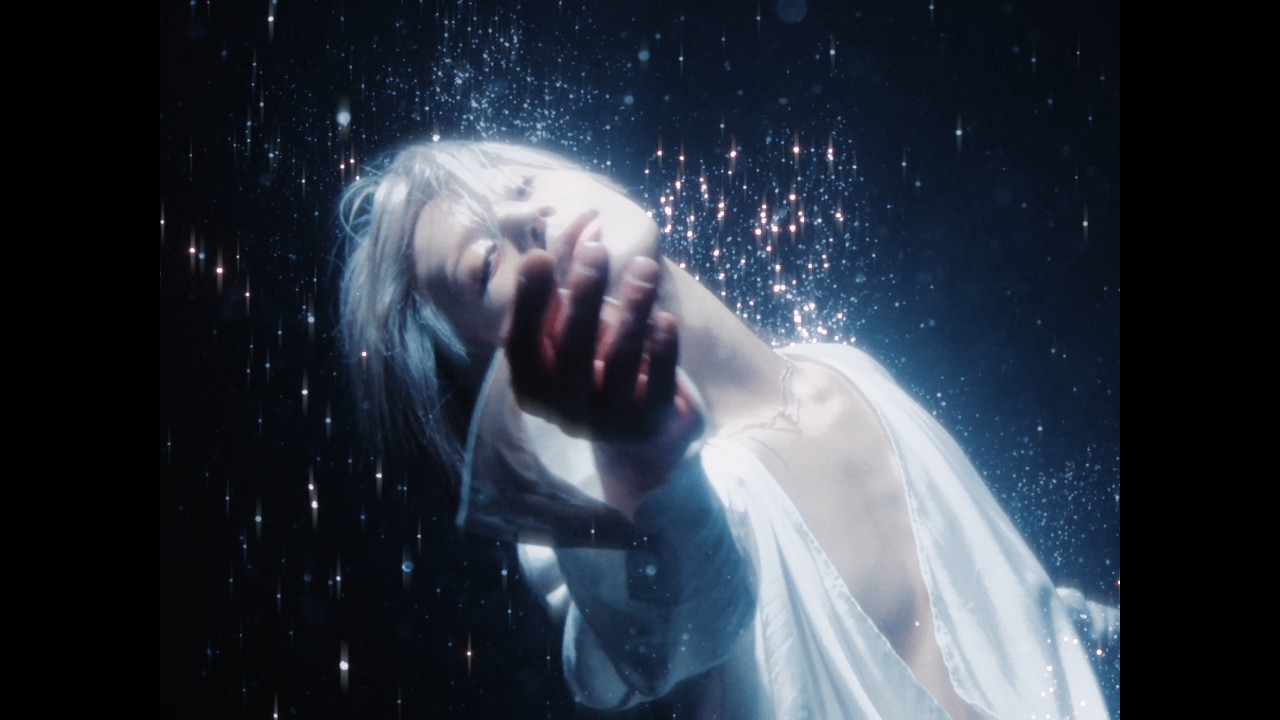
Read the complete React · Watch the exact official uploadDaily+6.2KTotal views5.6M. Exact video ID: q4TWrmwiufo.
Official video tracker
Every exact playlist upload receives its own React, unique local image and static card. Official MVs, performances, teasers and fan uploads never borrow one another’s evidence merely because their audio overlaps.
Sources and update standard
Core identity and dates are checked against the official SHINee Japan profile, SHINee and member official channels, Weverse, official releases and original agency notices. Release criticism is RaeRae analysis; it is not presented as a company statement.
Agency, group membership, visible participation and historical credit remain separate fields. The page changes when durable evidence changes, not when a rumor becomes louder.
Onew gives the group its center of gravity
Onew’s voice is one of those tones that makes a group identifiable before a listener names the song. The warmth is not softness without technique; it is resonance controlled well enough to make a difficult phrase feel conversational. As leader, he also carries SHINee’s continuity through military service, health pauses, separate agencies and a history no member should be asked to summarize neatly.
His solo career now operates through its own management route, while SHINee group activity remains a shared commitment. Those are two contractual files, not evidence that the group has become three people plus a guest. A schedule can omit Onew without removing him; an official four-member release can include him without requiring every solo company to merge.
Jonghyun is a member, an artist and a complete human record
Jonghyun’s death on December 18, 2017 is stated directly because euphemism does not create respect. He debuted with SHINee, shaped its vocal architecture, wrote for the group and other artists, and built a solo catalog that remains active cultural work. He is part of the five-member history without being turned into a sentimental device attached to every current comeback.
The archive does not erase him from credited releases, replace his images on old cards or use grief as clickbait. It also does not force every four-member performance into a public mourning ritual. “Good Evening” holds grief in its context, but Onew, Key, Minho and Taemin are allowed to continue making songs about other things. Remembering a person includes refusing to reduce his entire life to the way it ended.
Key treats concept as authorship
Key understands that styling, packaging, language and music are not separate promotional departments once an era reaches the audience. His eye for detail makes SHINee’s conceptual shifts feel intentional, while his voice can cut through dense harmony without needing the arrangement to clear a polite space.
His solo work demonstrates how visual authorship can reveal musical taste instead of decorating it. That branch belongs on Key’s artist tracker, connected to the group but never filed as SHINee. When his ideas influence group work, the credit should identify the contribution rather than use “fashion icon” as a substitute for creative labor.
Minho makes steadiness active
Minho’s role is often described through loyalty, athleticism and dependability, which can make steadiness sound passive. Onstage it is not. His lower register, physical scale and ability to commit without ironic distance give SHINee a floor while the others stretch melody, concept and movement in different directions.
Acting and solo music expand that file, but the group benefits most from his sense of proportion. Not every moment needs to announce itself. SHINee’s experimental choices land because somebody understands where the frame needs weight, and Minho repeatedly supplies it.
Taemin changed what a K-pop dancer could author
Taemin debuted as the youngest member and became one of the clearest examples of performance developing into authorship. His body does not merely execute choreography; it changes the emotional meaning of a song. Control, imbalance, restraint and gendered expectation become material he can manipulate.
His solo management now sits outside SM while SHINee activity remains connected to the group record. A Taemin comeback is not a SHINee release, and a separate agency is not a departure notice. The directory preserves one canonical human profile with artist and member routes rather than cloning him for each contract.
Replay did not sound young because it was simple
“Replay” made contemporary R&B feel immediate through restraint. The debut styling is now a period artifact, but the song survives because the voices and groove were not treated like temporary rookie material. It introduced five people whose tones already disagreed productively.
The “contemporary band” premise mattered when it described translation: take current fashion, dance and sound, then make the combination feel native to SHINee. It became less useful when coverage treated every new trend the group touched as something they single-handedly invented. Influence is strongest when the evidence stays specific.
Lucifer and Sherlock made choreography structural
“Lucifer” turned synchronization into more than cleanliness. Repeated shapes, small isolations and relentless forward energy made choreography part of the composition. “Sherlock” then fused two songs into one title track and asked the performance to make the seams feel like discovery rather than editing.
Those eras are why later groups inherit a standard they may never name. The point is not that SHINee invented synchronization. It is that five distinct performers used exactness without becoming visually interchangeable. Precision protected personality instead of sanding it away.
View, 1 of 1 and the refusal to fear pop pleasure
“View” brought deep house into a K-pop title-track frame with enough air to make the members responsible for atmosphere. “1 of 1” used a retro palette without turning the group into a costume museum. Both records understood that pleasure can be artistically serious without becoming heavy.
That willingness to commit to elegance, groove or bright color is part of SHINee’s longevity. Maturity did not require permanent darkness. The members could look backward, translate a genre and still sound curious about the present.
Good Evening, Don’t Call Me and HARD are different survival languages
“Good Evening” cannot be separated from the first group work after Jonghyun’s death, but its achievement is not public suffering performed on command. The song holds absence, motion and beauty without explaining grief to the audience. The choreography’s reaching and release remain powerful because the members do not force one readable emotion onto every frame.
“Don’t Call Me” and “HARD” later asserted sharper, more confrontational identities. That was not betrayal of tenderness. It was proof that continuing people can make aggressive, funny, stylish and imperfect choices after grief. A mature group should have access to the full emotional range.
Current status: four active members, five-member history
SHINee’s active performing lineup is Onew, Key, Minho and Taemin. Jonghyun remains a member of the five-person history and a credited participant across the work he made. Onew and Taemin use different agencies for solo management; Key and Minho remain with SM for individual work. Group activity is its own continuing file.
The 2026 Atmos chapter belongs to the active four. Earlier videos retain five-person credits. A portrait, card or tracker row uses the lineup appropriate to its date instead of forcing one image to represent eighteen years.
Fandom file: SHINee World and Shawol
SHINee World is the official fandom name, commonly shortened to Shawol. Pearl aqua became one of K-pop’s most recognizable audience colors, but the fandom record is more than a light-stick field. Shawols have held debut history, solo careers, military gaps, grief and current work in the same community.
That history does not grant permission to police how the members remember Jonghyun or how other fans grieve. The archive provides dates, credits and routes. Private emotion remains private, even when the public relationship has lasted nearly two decades.
Official links
RaeRae Reacts
Guilty: Taemin Put Desire on Trial and Made the Viewer Handle the Evidence — exact playlist upload pasRphQvEUE.
RaeRae Reacts
Sexy in the Air: Taemin Made Confidence Change Shape Before the Chorus Could Catch It — exact playlist upload ZDWNWKSP7UM.
RaeRae React image card
RaeRae React image card