
Frozen Character Profile · Northuldra · Reindeer Expert · The Horizon Beyond the Mist
Ryder
Reindeer expertise, generational confinement, Kristoff’s proposal, masculinity, freedom, and the character hiding beneath the joke.
Profile
| Name | Ryder |
|---|---|
| People | Northuldra |
| Home | Enchanted Forest |
| Family | Honeymaren, sister |
| English voice | Jason Ritter |
| First appearance | Frozen II (2019) |
| Expertise | Reindeer care and behavior |
| Central desire | To see the world beyond the mist |
Bottom line first
Ryder enters Frozen II as a joke delivery system and quietly reveals a more interesting person underneath it. He knows reindeer, wants to see the world beyond the mist, welcomes a stranger through shared expertise, and helps Kristoff build the proposal that finally works. His comedy comes from enthusiasm, not stupidity.
The film gives him warmth and specificity but very little consequence. He does not decide the political conflict, discover Runeard’s crime, or choose the dam’s fate. He represents a younger Northuldra generation ready for contact after inherited confinement. That premise deserves more than a song setup and a few friendly reactions.
Profile and identity
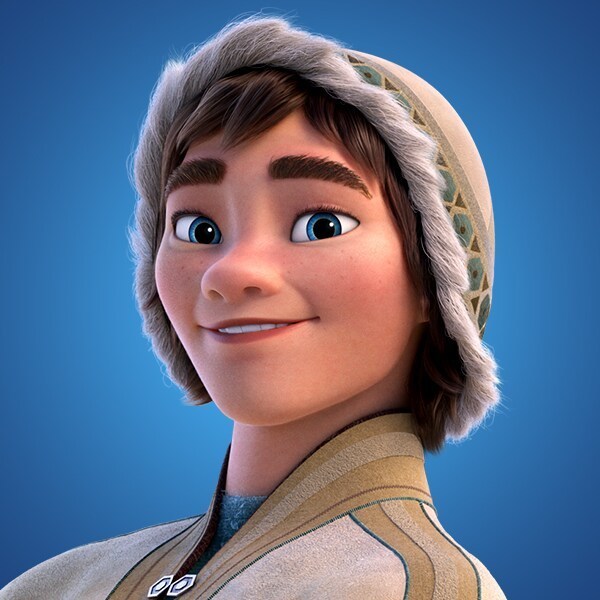
Ryder is a young Northuldra man living in the Enchanted Forest and Honeymaren’s brother. Official character descriptions emphasize his optimism, love of reindeer, and fascination with the world outside the mist. Jason Ritter voices him in English in Frozen II. The feature does not state his surname, age, parents, or formal occupation.
His credited name is Ryder. The spelling encourages an easy association with riding and travel, which fits his reindeer knowledge and desire to move beyond the forest, but the movie never explains an in-world naming origin. A thematic echo is useful analysis. It is not a hidden canon fact.
Dashboard: confirmed and unknown
Confirmed: Ryder is Northuldra, Honeymaren’s brother, deeply familiar with reindeer, curious about the outside world, friendly with Kristoff, involved in Kristoff’s successful proposal plan, and present after the dam falls and the mist opens. He has never seen the open sky beyond the forest during the trapped period.
Unknown in feature canon: exact age, parents, partner, leadership status, whether he was born inside the mist, whether reindeer work is his sole livelihood, and what he does after freedom returns. Licensed descriptions can add color, but they do not justify inventing a complete household or future marriage.

Born inside the mist or old enough to remember
Ryder speaks like somebody who has never experienced life beyond the barrier, yet the film never gives his age against the more than thirty-four trapped years. He may have been born after the battle, may have been a very young child, or may simply lack meaningful memory of the outside. The strongest claim is generational confinement, not an exact birthday.
That uncertainty changes the emotional read. A person born inside inherits loss through elders. A child trapped by the event carries fragments of before. Either way, Ryder’s optimism is not evidence that confinement was harmless. It is a way of building desire when the world has been narrowed by somebody else’s violence.
A young man raised beside enemy soldiers
Northuldra families and Arendellian soldiers remain trapped together for decades while preserving conflicting accounts of the battle. Ryder grows up with armed men nearby and no outside authority capable of correcting the historical lie. Daily life therefore requires boundaries, vigilance, and restraint even when the film shows only the renewed confrontation.
His quick friendliness toward Kristoff does not erase that context. He recognizes someone outside the royal-military conflict through a shared relationship with reindeer. Personal connection creates a temporary side door around inherited hostility. It cannot resolve the land dispute or substitute for truth.
The outside world as an idea
Ryder’s curiosity is one of the clearest signs that younger Northuldra people do not all experience the forest as sufficient simply because it is home. He wonders about life beyond the mist because an entire geography, population, and future have been withheld from him. Curiosity becomes a political fact.
The screenplay treats his interest lightly, but freedom creates difficult choices. Travel can offer education, relationships, trade, and adventure. It can also expose him to prejudice, exploitation, tourism, and Arendelle’s edited history. Wanting to see the world is not the same as trusting everything waiting outside.
Reindeer knowledge is expertise
Ryder understands reindeer behavior and forms an immediate bond with Kristoff through that knowledge. The joke is that both men treat reindeer as conversational partners. Underneath it sits real competence: herd movement, individual temperament, sound, weather, feeding, safety, and long-term care require close observation.
Calling him merely “the reindeer guy” repeats the movie’s compression. Reindeer-centered life is work, economy, ecology, cultural practice, and companionship. His expertise should affect more than comedy. A fuller story could make his knowledge essential when environmental change follows the dam’s destruction.
Relationship file: Honeymaren
Official materials identify Honeymaren as Ryder’s sister. They share community, generational perspective, and Northuldra knowledge while expressing curiosity differently. Honeymaren gives Elsa a quiet interpretation of the fifth spirit. Ryder throws himself into reindeer talk and romantic coaching with Kristoff.
The film never establishes which sibling is older, who raised them, or whether they share a household. Their relationship still matters because it prevents Northuldra youth from becoming one generic voice. One sibling can be reflective while the other is exuberant without assigning greater cultural authenticity to either personality.
Relationship file: Yelena
Yelena leads the Northuldra community and must prioritize collective safety when Arendellians enter the forest. Ryder’s curiosity operates within the boundary her caution protects. The film does not identify him as her son, grandson, deputy, or intended successor.
That missing blood link should remain missing unless a source establishes it. Communities contain elders and young adults connected through governance, teaching, labor, and kinship beyond the nuclear family. Inventing a neat family tree can make the Northuldra seem smaller and less socially complex than the kingdom beside them.
Relationship file: Kristoff
Ryder and Kristoff recognize each other through reindeer before they understand much else. Their connection gives Kristoff a male friendship not based on court status, competition, or military loyalty. Ryder accepts his emotional problem seriously and helps him communicate rather than mocking him for wanting marriage.
The friendship is quick because the film needs narrative efficiency, but it works because the shared interest is specific. They do not bond through generic masculinity. They bond through care work, animal knowledge, and the bizarre certainty that reindeer deserve a vocal part in human conversation.
The reindeer voice joke
Kristoff speaks for Sven in a gruff voice, and Ryder understands the practice immediately. The scene validates a behavior Anna finds strange without explaining it away. Two men who know reindeer treat imaginative translation as ordinary, letting Kristoff relax around somebody who shares his social language.
The joke also raises a boundary. Neither man literally receives confirmed dialogue from reindeer in the way Elsa communicates with elemental forces. Their voices are affectionate interpretation. The emotional truth is close observation, not a hidden magical ability the film forgot to announce.
Helping with the proposal
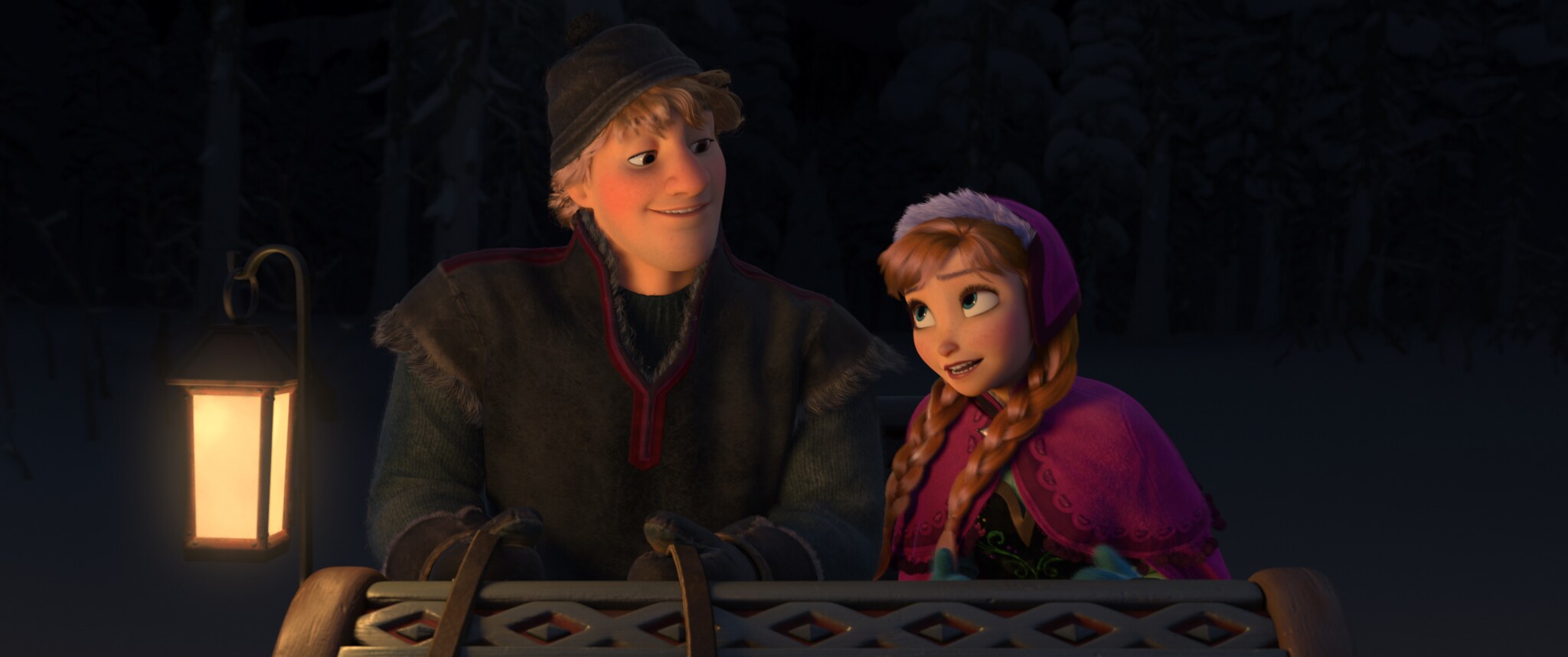
Kristoff’s earlier attempts fail because he rehearses lines, misreads timing, and accidentally sounds insulting. Ryder helps stage a direct proposal with reindeer, firelight, and a clear path to the question. The plan succeeds because it supports what Kristoff means instead of making him perform royal polish.
Ryder does not know Anna well enough to design the gesture around her detailed preferences. His contribution is creating conditions where Kristoff can speak plainly. The moment makes him an emotional collaborator, not a romantic authority. Anna’s yes belongs to the relationship she and Kristoff already built.
Masculinity without the usual contest
Ryder never challenges Kristoff to prove strength, status, sexual success, or dominance. He sees a nervous man and offers practical help. Their scenes model a version of masculinity built around enthusiasm, vulnerability, animals, and mutual encouragement rather than ridicule.
That choice looks simple because comedy keeps it light. It is still meaningful within Disney’s history of male side characters who compete, posture, or sabotage romance. Ryder’s kindness does not make him naive. It gives him a social confidence Kristoff lacks in that moment.
Comic relief without humiliation
Ryder’s excitement is funny, but the film does not punish him for caring too much. His body, culture, and speech are not the punchline. The comedy comes from finding another person whose reindeer obsession matches his own and from approaching an impossible proposal with total sincerity.
That distinction matters for an Indigenous-coded supporting character. Humor can humanize when the character participates in it. It dehumanizes when culture itself becomes exotic spectacle. Ryder gets enough agency to initiate jokes, though not enough screen time to show the full range behind them.
The campfire and temporary truce
Ryder’s friendship with Kristoff develops after Yelena and Mattias agree to stop immediate hostility while Elsa investigates. The social ease depends on political labor performed by community leaders. Personal warmth becomes possible because somebody first creates a safer procedure.
That sequence keeps the friendship from becoming a magical cure for history. Ryder can like Kristoff while distrusting Arendelle’s institutions. Kristoff can respect Northuldra knowledge without speaking for Anna’s kingdom. Their connection is one useful bridge among many, not a peace treaty disguised as a bromance.
Relationship file: Sven
Sven fits quickly among Northuldra reindeer, giving Ryder a living point of connection with Kristoff. Ryder’s attention to him feels knowledgeable rather than possessive. The feature does not show a special exclusive bond comparable to Sven and Kristoff’s lifelong relationship.
Sven remains an individual animal shaped by human companionship, while the larger herd reflects a different social and ecological setting. Ryder’s expertise can recognize both. A continuation could let the two men compare care practices without turning animals into props for their friendship.
Relationship file: Anna
Ryder mainly knows Anna as the woman Kristoff loves and later as the person whose action destroys the dam. He helps the proposal without developing an independent relationship with her. After the ending, she becomes Queen of Arendelle and therefore a political neighbor with responsibility for repair.
The gap offers more interesting material than another wedding joke. Ryder wants access to the wider world Anna governs. Travel rules, public history, trade, prejudice, and environmental agreements can shape whether that curiosity becomes freedom or a new form of controlled contact.
Relationship file: Elsa
Ryder witnesses Elsa’s magic and the upheaval surrounding the spirits but does not receive Honeymaren’s focused conversation with her. Elsa later stays connected to the forest, making continued contact likely. The movie does not define Ryder as her guide, employee, or close confidant.
A future relationship could be refreshingly practical. He can teach what she does not know about reindeer and daily community work, while she helps open travel and understand elemental change. Mutual learning would prevent fifth-spirit status from turning Elsa into instant expert over every life in the forest.
Relationship file: Olaf
Ryder and Olaf receive little direct development despite both being curious, verbal, and capable of turning serious information into strange comedy. The omission is understandable in a crowded sequel, but it leaves an obvious personality collision unused.
Their possible friendship should not make Ryder another sidekick orbiting the franchise mascot. Olaf’s questions could reveal how Ryder explains the outside world he has never seen, while Ryder’s grounded experience could challenge Olaf’s rapid collection of disconnected facts.
The truth about Runeard
Elsa learns that King Runeard murdered the Northuldra leader and built the dam to weaken the forest. Ryder does not witness Ahtohallan’s memory. He receives a truth his community already understood in consequence: Arendelle initiated the betrayal and concealed it within official history.
For a younger man raised inside that consequence, confirmation may bring vindication, anger, and grief. The film jumps to action before giving Northuldra individuals room to process. Ryder’s optimism should not be used to skip the emotional violence of learning exactly how his people were trapped.
When the dam falls
Anna leads the earth giants to destroy the structure, Mattias chooses truth over inherited orders, and Elsa saves Arendelle from the released water. The mist opens. Ryder finally gains the possibility he has imagined, but the film does not pause on his first view beyond the barrier.
That missing reaction is not trivial. A lifelong horizon changes in one day. Freedom arrives with ecological upheaval, proof of state violence, a new queen, and the return of a magical bridge. Wonder and disorientation can exist together without weakening the celebratory ending.
Post-mist travel
Official endings keep Ryder in the forest celebration rather than sending him immediately to Arendelle. That restraint makes sense. Open access does not require instant departure. He can choose when, why, and with whom to travel after receiving information his community was denied for decades.
The best continuation would avoid treating the city as automatic progress. Ryder may admire tools, music, buildings, or new people and still reject monarchy, crowding, prejudice, or environmental distance. Curiosity becomes character when it produces choices rather than a tourist montage.
Freedom does not require gratitude
Ryder can appreciate Anna’s decision and Elsa’s role without owing Arendelle uncomplicated gratitude. The kingdom destroyed a weapon its own king built after Northuldra people endured the consequences for decades. Repair is an obligation finally honored, not a favor that purchases affection or silence from the survivors.
That distinction protects his optimism from becoming political compliance. He may welcome individual Arendellians and still demand honest schools, open archives, safe travel, land protection, and accountability. A generous personality should never be used as proof that the harmed community has forgiven faster than the state has repaired.
Work after ecological repair
Destroying the dam changes water flow and restores the spirits, but recovery does not occur in one musical beat. Reindeer routes, vegetation, riverbanks, shelter, and seasonal patterns may shift. Ryder’s practical knowledge could make him central to observing what repair looks like on the ground.
That work would connect character and theme better than another detached comic subplot. A person who reads animals and landscape can identify consequences the royal heroes cannot see from a castle or a magical ride. Expertise becomes agency when it changes decisions.
Indigenous youth and modernity
Ryder complicates the stereotype that Indigenous-coded communities exist outside time. He wants contact and novelty without rejecting his people. His desire does not prove tradition is restrictive, and his reindeer expertise does not make him anti-modern. Those categories belong to an outsider’s false binary.
A responsible story can let him use new technology, travel, flirt, study, and return home while remaining Northuldra. Cultural continuity survives through choice and adaptation, not through freezing young people inside a picturesque past for the audience’s comfort.
Sámi inspiration and consultation
The Northuldra draw from Sámi inspiration, and Disney worked under a formal collaboration agreement with Sámi representatives for Frozen II. Production included consultation and musical participation. Ryder’s reindeer-centered identity therefore exists within a deliberate cultural reference framework rather than random fantasy decoration.
Northuldra are still fictional, and Ryder is not a documentary portrait of Sámi men. Coverage should name the living culture, avoid vague “tribal” language, and refuse the idea that one cheerful fantasy character can summarize political histories, livelihoods, or contemporary Sámi experience.
Reindeer herding and representation
Reindeer imagery offers recognizable cultural specificity, but it can also narrow representation if every Northuldra character is understood only through animals and nature. Ryder receives the strongest association, making it important to treat herding as skilled labor rather than a cute personality accessory.
Contemporary Indigenous life contains law, education, media, art, technology, politics, and urban experience alongside land-based practices. A fantasy community need not display every dimension, but editorial analysis should recognize what the film selects and what that selection teaches audiences to expect.

Jason Ritter’s performance
Jason Ritter gives Ryder openhearted speed, surprise, and emotional generosity. His voice makes the immediate reindeer bond feel like a discovery rather than a scripted convenience. The performance keeps enthusiasm from sliding into foolishness, which protects the character’s dignity while serving the comedy.
The script rarely asks for anger, grief, or conflict, so the performance’s range remains mostly hypothetical. A larger role could test what happens when the same optimistic person confronts Arendelle’s records, prejudice outside the forest, or disagreement within his own community.
Design and movement
Ryder’s layered clothing and Northuldra visual motifs place him within the community, while animated movement distinguishes him through quick attention and eager physicality. He leans into reindeer conversation and proposal planning rather than maintaining the composed silhouette assigned to Yelena or Honeymaren.
That movement helps individualize a small role. It also shows why visual consultation cannot substitute for story. Respectful costuming establishes a floor. Goals, contradictions, relationships, and decisions create the person wearing it.
What the film gets right
The film gives Ryder a specific interest, a sibling connection, a desire beyond the immediate plot, and a friendship that does not depend on superiority. He is welcoming without becoming submissive, funny without being culturally mocked, and knowledgeable without being framed as mystical.
Those are meaningful choices for a supporting character carrying Indigenous coding. The problem is not that the ingredients are bad. It is that the screenplay measures them in spoonfuls while giving the royal family the entire kitchen.
What the film leaves unfinished
Ryder never states what he will do when the mist opens, never directly confronts the historical truth, never speaks privately with Honeymaren, and never makes a decision that changes the central conflict. His longing points toward an arc the credits arrive too early to deliver.
The underdevelopment matters because the plot is about Northuldra harm. A Northuldra young man should experience more than hospitality toward outsiders who uncover his history. He deserves the authority to respond, disagree, choose, and carry repair into ordinary life.
Licensed books and franchise extensions
Official guides, retellings, and character pages repeat Ryder’s reindeer enthusiasm, optimism, relationship to Honeymaren, and interest in the world beyond the forest. Some material expands scene description or uses promotional adjectives to summarize his personality.
Those sources can clarify franchise intent, but every added detail needs attribution. Repetition across merchandise copy does not create an unseen childhood, leadership role, or romance. Licensed extension and feature-film canon belong in connected but labeled files.
Reception and fan response
Viewers often enjoy Ryder because his friendship with Kristoff feels immediate, kind, and free of rivalry. Reindeer jokes make him memorable, while his outside-world curiosity suggests a larger story. Criticism centers on how little Northuldra characters influence the resolution of a conflict about their own people.
Both readings can coexist. A character can work beautifully in every scene and still be structurally underused. Enjoyment should not turn crumbs into a feast. It should make the missing meal easier to describe.
What Wikipedia has that this page must exceed
The encyclopedic floor includes his Northuldra identity, Honeymaren sibling relationship, Jason Ritter credit, love of reindeer, friendship with Kristoff, help with the proposal, and curiosity about the outside world. Those facts are necessary and easy to verify.
CVM Sekai adds generational confinement, labor, masculinity, political repair, cultural consultation, environmental recovery, source boundaries, performance, representation criticism, and a post-mist future grounded in choices. Depth means explaining why facts matter without manufacturing certainty.
Future file
Ryder should get the first journey outside the forest from a Northuldra point of view. Let him encounter Arendelle’s beauty, misinformation, commerce, bureaucracy, and ordinary people. Let excitement survive without making him gullible, and let disappointment sharpen rather than erase curiosity.
He also needs life at home: work with the herd, disagreement with Honeymaren, responsibility to elders, friendship with Kristoff, and an opinion about Elsa’s new role. The strongest future does not turn him into Arendelle’s visitor. It lets him decide how two worlds meet.
Artwork responsibility
The featured artwork is original CVM Sekai fan art made for a wide hero and directory crop. It shows Ryder as a capable, contemporary-feeling young man among reindeer, with northern autumn atmosphere and the site’s purple undertones. It does not copy a film still or claim official status.
The generation prompt explicitly excluded ceremonial regalia, feathers, fringe, turquoise jewelry, Plains-coded motifs, and pan-Indigenous shorthand. The result remains editorial fantasy art, not ethnographic documentation. Its local metadata states the source, rights note, and lack of Disney endorsement.
Sources and certainty
Primary evidence includes Frozen II, published credits, Disney and D23 character material, production interviews, and the formal Sámi collaboration framework. Licensed guides and novels remain labeled when they add information beyond the feature.
Political, cultural, and masculinity analysis is interpretation. The profile does not turn that interpretation into quotations Ryder never speaks. Fan databases are useful indexes, but the film and attributable official sources remain the factual floor.
The final read
Ryder is not only the guy who helps Kristoff propose. He is a young man raised inside somebody else’s cover-up, skilled in a demanding way of life, eager for a horizon he has never been allowed to cross, and generous enough to welcome connection before history is fully repaired.
The movie makes that person visible, then rushes past him. A proper profile keeps the humor, credits the expertise, names the cultural stakes, and refuses to pretend a pleasant supporting role is the same as a completed character. Ryder has the beginnings of an arc. He still needs the rest.
Frozen coverage
Return to the Frozen hub for every character, review, React, rant, and guide.