
ROSÉ “On the Ground” React
ROSÉ got the solo debut everyone expected and used it to question the ladder everyone wanted her to celebrate.
First listen: pretty guitar, then the floor drops out
The opening fooled me in the best way. The guitar sounds close enough to touch, and ROSÉ enters without the usual BLACKPINK battle stance. She does not sound like she is arriving to conquer a stage. She sounds like she stayed awake after the celebration and finally asked herself the question nobody wants to ask after winning: was this supposed to fix me?
Then the chorus opens into that large electronic drop. In 2021, it made sense. Pop still loved turning a private confession into a festival-sized release. I understood the idea immediately. Her life got bigger, so the production gets bigger. Still, my first reaction was that the song stepped away from its strongest weapon. ROSÉ has a voice with texture, strain, air, bite, and personality. When the instrumental takes over, I miss the woman whose doubt created the tension.
Second listen: this is not an anti-ambition song
The easy reading says fame is empty and ordinary life is better. That is too neat. ROSÉ does not throw away the career, the awards, the stages, or BLACKPINK. She does not pretend the climb meant nothing. She recognizes that achievement is a job, a result, and sometimes a joy, but it cannot do the private work of identity. A trophy can confirm that millions of people watched. It cannot tell the person holding it why she matters when the room goes quiet.
That distinction is important because women in pop rarely get permission to admit ambition without being punished for it. If they want success, they are called calculated. If they question success, people act as if they are ungrateful. “On the Ground” refuses both traps. ROSÉ can be proud of the climb and still ask what she left below.
What changed every time I replayed it
Replay one
I heard the production contrast. The guitar belongs to the private self. The drop belongs to the scale of the public career.
Replay two
I stopped treating “ground” as a place. It became home, ordinary connection, the original reason for making music, and the self that existed before the scoreboard.
Replay three
The video turned into a fight between ROSÉ the star and Roseanne the person. The mirror scene stopped looking decorative.
Replay four
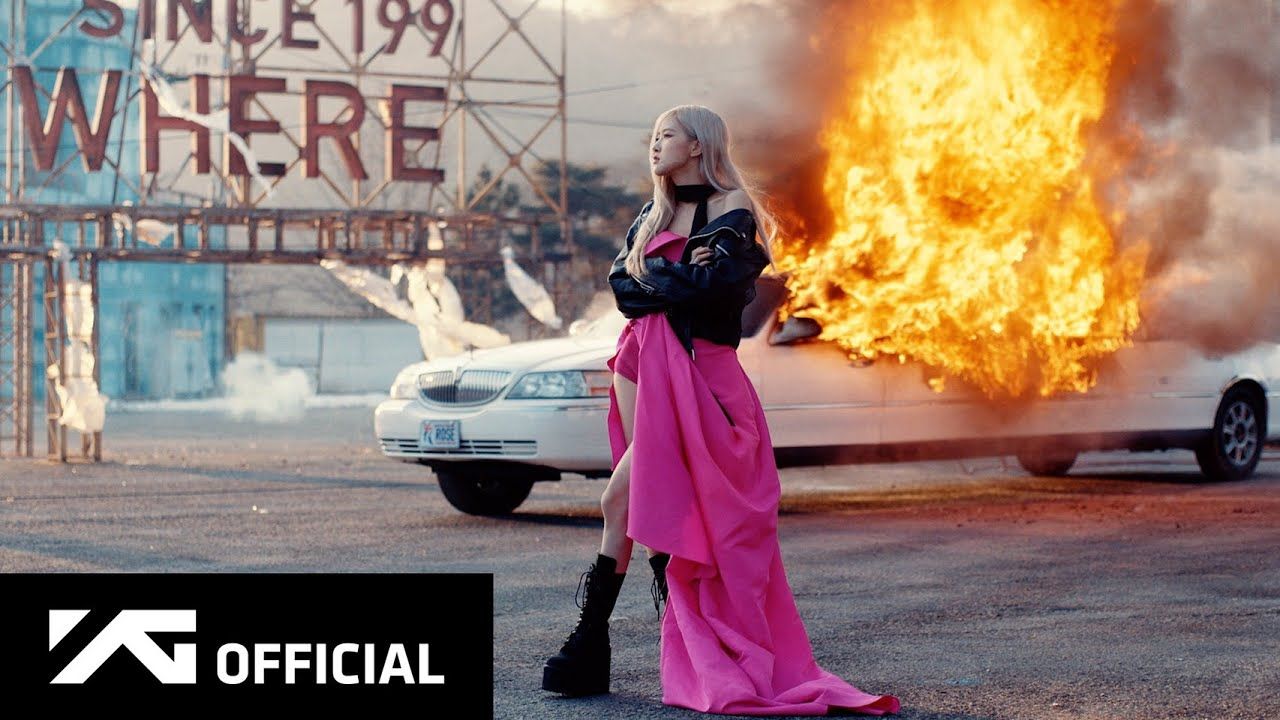
The burning limousine became funny in a dark way. Celebrity transportation explodes, and she still has to walk herself home emotionally.
The lyric keeps the idea simple because the life behind it is not
The main phrase works because it can survive translation. “Everything I need is on the ground” does not require a complicated metaphor. Ground can mean where she began, where family and old relationships live, where a guitar rests against a bedroom wall, or where a person lands after public fantasy stops holding her up. It can also mean humility, but I do not read this as ROSÉ begging to be seen as humble. She is checking whether the ladder replaced the reason she climbed.
ROSÉ said the line connected to her own journey from trainee life into global fame. That is why the song avoids sounding like a random motivational poster, even when some lines stay broad. She crossed countries, entered a brutal training system, debuted in one of the largest groups in the world, and waited years for an official solo release. The “magic” she chased was real. So was the cost of treating the next milestone as the answer to every internal question.
I do wish the lyric gave us one sharp memory that belonged only to her. A guitar, an audition room, a call home, a dorm, or one trainee-night detail would have made the climb impossible to confuse with anyone else’s. Universal language helps a pop song travel, but specificity is what makes a confession stick to the ribs.
Why English fits this particular confession
ROSÉ explained that each song has a language that suits it, and she chose English because it completed this one. That choice is more personal than a simple global-market decision. English is part of her Australian upbringing and part of the songwriter voice fans heard when she sat with a guitar. Korean is also part of her adult career and artistic life. A bilingual person does not have one “real” language and one marketing language. Different memories, rhythms, and emotional habits can surface through each.
The English lyric lets Roseanne stand beside ROSÉ without the song turning into a biography lecture. That does not make English more honest than Korean. It means the artist was allowed to choose the emotional tool that fit the idea. Pop companies often talk about language as market access. Artists live language as memory, family, education, embarrassment, humor, and identity. The song becomes more interesting when we remember that difference.
The beat: the idea is right, but I still want her lungs
The production begins with acoustic guitar, adds a firm rhythmic pulse, and then expands into a heavy electronic chorus. TEDDY, 24, Jorgen Odegard, Jon Bellion, Amy Allen, and ROSÉ are among the credited writers and producers connected to the track. That many hands could have flattened the personality, but the guitar and vocal tone keep a thread of ROSÉ inside the machinery.
The chorus drop represents scale. Her world became enormous, and the song turns enormous with it. I understand it. I just do not love it as much as the verses. Live and acoustic performances reveal how strong the song becomes when her voice carries the release instead of handing it to the instrumental. A fuller sung chorus might have aged better and made the emotional payoff feel earned by breath rather than software.
Still, the contrast creates a useful discomfort. The production gives us the giant pop moment while the lyric says the giant pop moment was never the whole answer. The song performs the contradiction it is criticizing. That may not be elegant, but it is honest about the product ROSÉ had to release while discussing the limits of the product.
The video is a luxury disaster with a very clear argument
Director Han Sa-min does not film “On the Ground” like a quiet diary entry. He builds a glamorous collapse. The limousine burns. The chandelier falls. The childhood space cannot stay untouched by the dream. Multiple versions of ROSÉ gather on the stairs under words that announce dead roses and fake love. The spectacle keeps destroying its own symbols.
| Visual | What it adds |
|---|---|
| Burning limousine | The vehicle of celebrity becomes wreckage. Status can move a person, but it cannot protect the self inside. |
| Childhood house | ROSÉ returns to the emotional architecture that existed before the public career. |
| Falling chandelier | Luxury stops hanging safely above her and crashes into the old room. |
| Mirror writing | The stage name confronts Roseanne. The solo debut becomes a negotiation between identities. |
| Multiple ROSÉs on the stairs | Public versions, ambitions, and timelines attend the same funeral for the fantasy. |
| Field of flowers | After the symbols burn, life remains close to the earth and visibly alive. |
The mirror is the center of the whole thing
The mirror sequence matters more than the explosion. ROSÉ writes the name the world knows, but the reflection points back to Roseanne. Fans often flatten stage names into proof that an idol has two completely separate selves. Real identity is messier. The performer is not fake, and the private person is not untouched by the career. They shape, protect, exhaust, and sometimes rescue each other.
This is where the video reaches beyond the usual “fame is lonely” story. The question is not whether ROSÉ should abandon the stage and return to a pure original self. There is no untouched Roseanne waiting in amber. The climb changed her. The healthier question is whether ROSÉ can remember that the public name is one part of a whole person, not the landlord of the whole body.
The roses are dead, but ROSÉ is still standing
The staircase message plays with the oldest romantic cliché. Roses symbolize love, beauty, and performance. Declaring them dead while several versions of ROSÉ remain visible separates the symbol from the person. An image can be exhausted. A brand can be overused. A fantasy can die. The woman does not disappear just because the public metaphor stops working.
That is also why the flower field feels less corny than it should. The video does not replace one glamorous crown with another. It returns abundance to the ground. Flowers grow low. They do not need a chandelier. The image is still polished, of course. This is a major-label music video, not a monastery retreat. But the visual answer understands the song’s scale: life can be beautiful without hovering above everyone else.
What I love
I love that ROSÉ did not use her first official solo title to prove she could manufacture a smaller BLACKPINK anthem alone. She chose a question. The song gives her guitar history, bilingual identity, ambition, and discomfort room to sit together. It also trusts viewers to understand that gratitude and dissatisfaction can occupy the same person.
I love the restraint in her performance. She does not oversell pain with constant tears or dramatic collapse. Her face often looks stunned, as if the realization arrived after the camera crew and the couture. That small distance fits someone learning that the expected reward did not produce the expected peace.
What I do not love
I still want a sung chorus. I still want one more verse. I still think a two-song single album was stingy for an artist whose musical identity had been discussed for years. “On the Ground” and “Gone” make a coherent pair, but coherence is not a substitute for a fuller body of work.
I also think some viewers use the song to make ROSÉ sound helpless inside her own career. That reading removes her authorship. She helped write and compose the track. Questioning the ladder is an act of agency. She is not simply confessing that fame happened to her. She is analyzing the bargain from inside it.
The industry layer: idols are trained to climb, not to land
K-pop training systems measure progress through evaluations, rankings, debut teams, sales, charts, awards, tours, and brand deals. Those measurements can build discipline and skill, but they also teach a person to translate worth into the next external result. Global pop does the same thing with streaming records and headlines. The scoreboard never runs out of numbers, which means it can never announce that a human being has finally done enough.
“On the Ground” arrived as ROSÉ broke solo records, which made the song’s argument almost comically timely. The industry celebrated how high she climbed while the lyric asked why height became the proof of value. That tension is not hypocrisy. It is the point. Artists can participate in a system, benefit from it, and still describe what the system cannot provide.
The cultural layer: humility is not self-erasure
East Asian public culture often praises humility, gratitude, family duty, and awareness of the group. Western celebrity culture often praises individual ambition, self-invention, and visible confidence. ROSÉ carries both sets of expectations. She can be told to remember where she came from while also being required to act like a singular global star.
The song works best when “ground” does not become an order for a successful woman to make herself smaller. Grounding should reconnect a person to values and relationships, not punish her for visibility. A Buddhist lens also fits here without turning the song into a sermon: attachment to status creates suffering when status is asked to prove a permanent self. The answer is not to hate success. It is to stop treating success as a soul.
The RaeRae verdict
Official links and receipts
 ROSÉ “On the Ground” official music videoDaily+22.6KTotal views393.8M
- Official “On the Ground” making filmDaily+119Total views8.5M
- YG Life official release context
- YG Life ROSÉ interview on the lyric and English language choice
- YG Life dance-performance credits
- CVM Sekai ROSÉ profile
- CVM Sekai BLACKPINK profile