
Remedy: Jay Park Built a Dystopian Love Story and Cast the Cure as the Problem
RAERAE REACTS
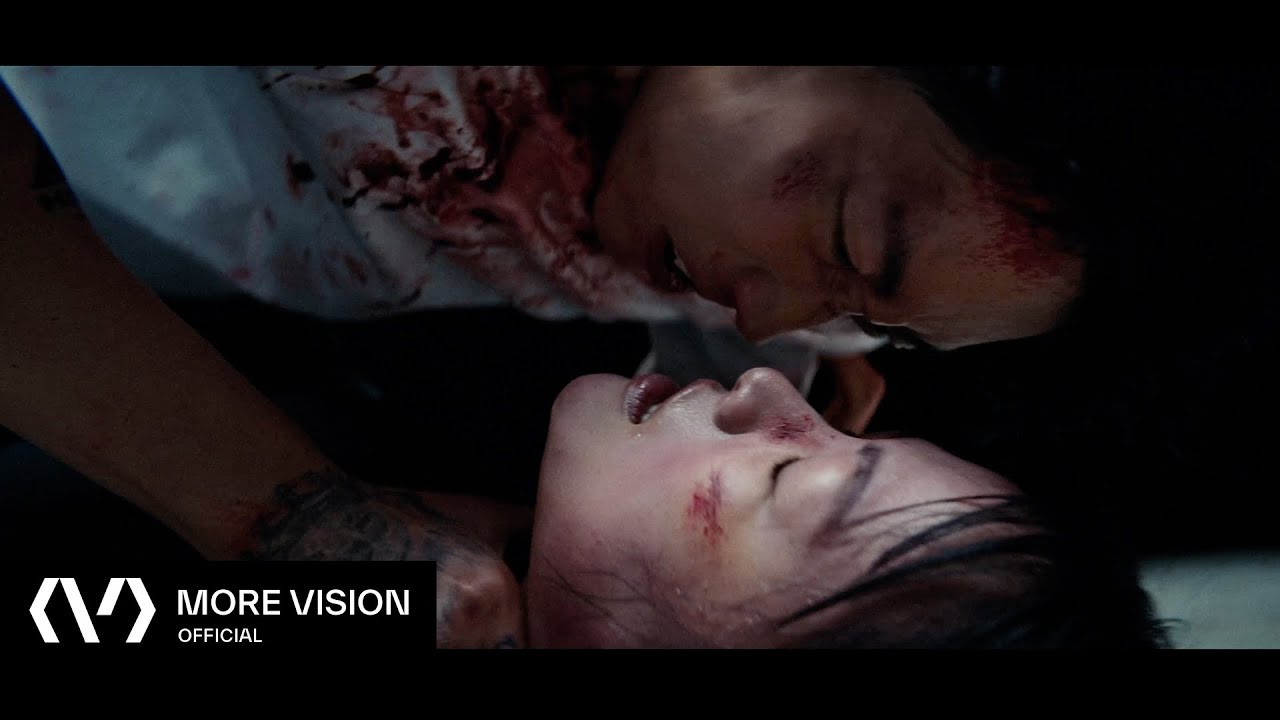
Jay Park hired Chun Woo-hee, built a dystopian action movie, and then made the cure look more dangerous than the disease.
This is what happens when a three-minute R&B single gets a movie budget, twenty-eight dancers, blood, guns, and an actress capable of making one empty stare feel like a full divorce settlement.
The quick file
- Artist: Jay Park
- Release: July 18, 2025
- Label: MORE VISION
- Language: English
- Producer: Brian Lee
- Music video co-star: Chun Woo-hee
- Sound: Moody synthwave R&B with a hook designed to feel like relapse
- RaeRae verdict: The video is doing expensive emotional labor, but the song is smooth enough to deserve it
Watch the music video
My actual first reaction
First thought: Why is Jay Park bleeding in a hallway and why does this look better than several streaming movies I have abandoned halfway through?
Sound check: Dreamy synths, a patient beat, soft vocals, and one of those hooks that knows repetition is cheaper than therapy.
The moment I leaned in: Chun Woo-hee arrives with that exhausted, dangerous face. Suddenly the whole video has consequences.
The side-eye: The movie is more complicated than the lyrics. The song says addictive love. The video says pharmaceutical dystopia, grief, violence, memory, dependency, and maybe the health-insurance system has collapsed.
Current status: Replaying. Mostly for the film. I am honest in this house.
What “Remedy” means
The title is the trap. A remedy should cure the wound. Jay sings to somebody who feels like relief, but the relationship behaves more like the thing creating the symptoms. Love becomes medicine, withdrawal, and relapse at the same time.
The lyrics are plain by design. Scars lose meaning. The other person becomes the answer. He keeps returning even when the cure clearly has side effects nobody listed on the bottle. There is no elaborate metaphor maze. It is addictive love explained by a man who already knows he will take another dose.
That simplicity helps the melody. It also means the video has to supply most of the specific emotional story. If I heard the audio without the visuals, I would call it sleek, moody, and familiar. After the video, the same hook feels like a warning transmitted from a ruined city.
The song: Jay Park in his actual useful lane
Jay Park is most convincing when he stops trying to win a rap-room argument and lets rhythm, breath, and tone do the work. “Remedy” sits in that lane. Brian Lee’s production uses soft synthwave color and a restrained pulse. Nothing crashes into the chorus. It glides there, which matches a narrator who is already too deep in the feeling to pretend he has control.
The all-English lyric makes the track immediately portable. That is probably part of the strategy, especially during a world tour. It also exposes every phrase. There is no translation layer to make a simple line feel mysterious. Fortunately, Jay’s delivery carries the repetition better than the words do on paper.
The hook is sticky without becoming obnoxious. The vocal is smooth, slightly bruised, and never oversung. I wanted a bridge with one sharper lyrical revelation. Tell me what the person did. Tell me why the cure became necessary. Give me one detail that could belong only to this relationship.
Instead, the production preserves the mood. That is enough for replay value, but the movie deserves a song with one more secret.
Chun Woo-hee was not hired to decorate the frame
This collaboration started with a small public moment. During the 2024 Blue Dragon Series Awards, Jay approached Chun Woo-hee during “All I Wanna Do.” She hid her face, danced, and went viral for looking like a real human being unexpectedly placed inside a Jay Park performance.
A year later, she is starring in his first music video role with blood on her face and absolutely no shy audience energy left. The casting works because she can communicate history without dialogue. When she looks at him, I believe these people have already survived and ruined several things together.
That matters because the video is packed. Guns, scars, empty institutional spaces, a 28-person dance crew, and a dystopian story can become expensive wallpaper very quickly. Chun Woo-hee gives the plot a center. Jay performs longing. She makes it look costly.
The music video: Thriller walked into a noir pharmacy
The visual language pulls from dystopian action films, noir romance, and a little Michael Jackson “Thriller” energy once the mass choreography arrives. The ruined environment suggests a world where the ordinary systems have already failed. Love is not happening around brunch reservations. It is happening while everybody looks hunted.
The scratches and blood in the promotional images were not fake drama for a poster. The video keeps bodies under threat. Jay and Chun Woo-hee appear connected by survival, damage, and an attachment that may be the only relief either person recognizes.
The dance crew changes the scale. Twenty-eight performers turn personal addiction into collective infection. The feeling spreads. Bodies move like a system responding to the same command. That is the video’s smartest translation of the hook. “You are my remedy” stops sounding private when an entire crowd looks controlled by it.
Some shots are clearly built to make Jay look like an action lead. Fine. The man financed a cinematic music video and would like to bleed attractively. I have no objection. The stronger choice is letting Chun Woo-hee remain equally dangerous instead of turning her into the girlfriend waiting at the edge of his hero story.
Easter eggs and surprises
- The casting has a prequel: Jay and Chun Woo-hee’s Blue Dragon Awards interaction went viral in 2024, so the music video turns a cute public moment into a violent fictional relationship.
- “Dearly Departed” appears in the campaign: Promotional text paired death language with “it seems like it just started,” reinforcing a relationship that begins and ends in the same breath.
- The remedy may be the threat: Medical and institutional imagery never gives us a clean cure. Relief and control look suspiciously similar.
- The dancers function like contagion: The 28-member crew makes obsession visible as something spreading beyond the couple.
- The world-tour timing was deliberate: “Remedy” arrived during the Serenades & Body Rolls tour, giving Jay a globally accessible English single with a large visual hook.
- This was Chun Woo-hee’s first music video appearance: The project treated her like a film actor entering music, not an idol cameo.
What the reactions got right
Early viewers praised the production scale and immediately compared the dance-horror imagery to “Thriller.” Others said the polished soloist framing could have belonged to somebody like Kai. I understand that comparison. The video uses the kind of controlled, cinematic masculinity K-pop soloists have refined into a genre.
What keeps it Jay Park is the vocal ease. He is not performing tortured grandeur. He sounds intimate even while the background is collapsing. That contrast works.
The video received more discussion than the song’s writing, which feels accurate. “Remedy” is a good mood track. The film is the reason the mood gets a passport, a scar, and a criminal record.
RaeRae’s final take
“Remedy” is Jay Park remembering that his smooth voice is more persuasive than any attempt to prove he belongs in the loudest room. Brian Lee gives him a clean synthwave frame. The hook sticks. The song knows when to stop pushing.
Then Chun Woo-hee walks into the video and steals emotional custody. She makes the dystopia feel personal. The mass choreography makes the obsession contagious. Jay bleeds attractively and keeps up.
I wanted one more lyrical detail and one bridge that cracked the relationship open. I still replayed it. Sometimes the remedy is a good three-minute song. Sometimes it is an actress looking at a man like she already read the autopsy.
Receipts
- Jay Park’s official “Remedy” release event and MV link
- Official CGV music-video preview event
- Production, cast, and 28-member dance crew details
- Chun Woo-hee casting history and release coverage
- K-hip-hop teaser discussion
- Official digital release listing
Watch the exact official video
Release file
Released: July 18, 2025
Runtime: 03:44
Label / channel trail: JAY PARK
Sound: Jay Park hired Chun Woo-hee, built a dystopian action movie, and then made the cure look more dangerous than the disease.
Sources: Exact official playlist uploadDaily+665Total views2.4M.
The cure is never emotionally neutral
“Remedy” uses medical language because treatment implies both need and authority. Someone identifies the illness, controls access, and decides what recovery should look like. The video turns that imbalance into romance, asking whether salvation is still love when the cure requires surrender. Jay Park’s performance works best when confidence and dependence occupy the same frame; the man who appears capable of escaping is also the person most willing to remain inside the system.
Chun Woo-hee changes the genre
Casting Chun Woo-hee gives the visual story an actor who can hold ambiguity without explaining it away. Her presence makes the relationship feel like a negotiation rather than a decorative reward waiting at the end of male suffering. A glance can read as care, surveillance, regret, or calculation depending on what the edit places beside it. That uncertainty is more useful than a twist that simply announces who was secretly evil.
The production keeps urgency under restraint
The track does not need nonstop maximalism to communicate danger. Percussion and low-end movement keep the body alert while the melody preserves enough space for longing to register. Jay Park’s phrasing slides between control and exposure, making the song persuasive when the image threatens to become too concept-heavy. The dystopia supplies stakes; vocal rhythm supplies the human reason to stay.
The reservation is the familiar suffering aesthetic
Beautiful ruins and clinical imagery can make pain look expensive without examining it. “Remedy” occasionally leans on that familiar luxury-dystopia grammar. The performances rescue the premise by keeping responsibility unstable: nobody becomes a pure victim, pure villain, or uncomplicated cure. I wanted one more visual consequence after the central choice, but the unresolved ending also fits a relationship built around dependency rather than repair.
What changed every time I replayed it
First replay, I followed the plot. Second replay, Chun Woo-hee’s smallest reactions made the cure look more dangerous than the machinery. Third replay, Jay Park’s restrained phrasing became the emotional engine. By the fourth, the title sounded less like an answer and more like the name of the problem both characters had agreed to protect.
Bottom line:
“Remedy” works because Jay Park turns a polished dystopian romance into a question about who gets to define healing. The production keeps tension moving, Chun Woo-hee refuses decorative simplicity, and the video leaves enough uncertainty for the cure to remain both comfort and threat.
Follow the canonical relationship
Jay Park’s canonical artist profile preserves the verified artist or group chronology, connected releases, and participation boundaries.