
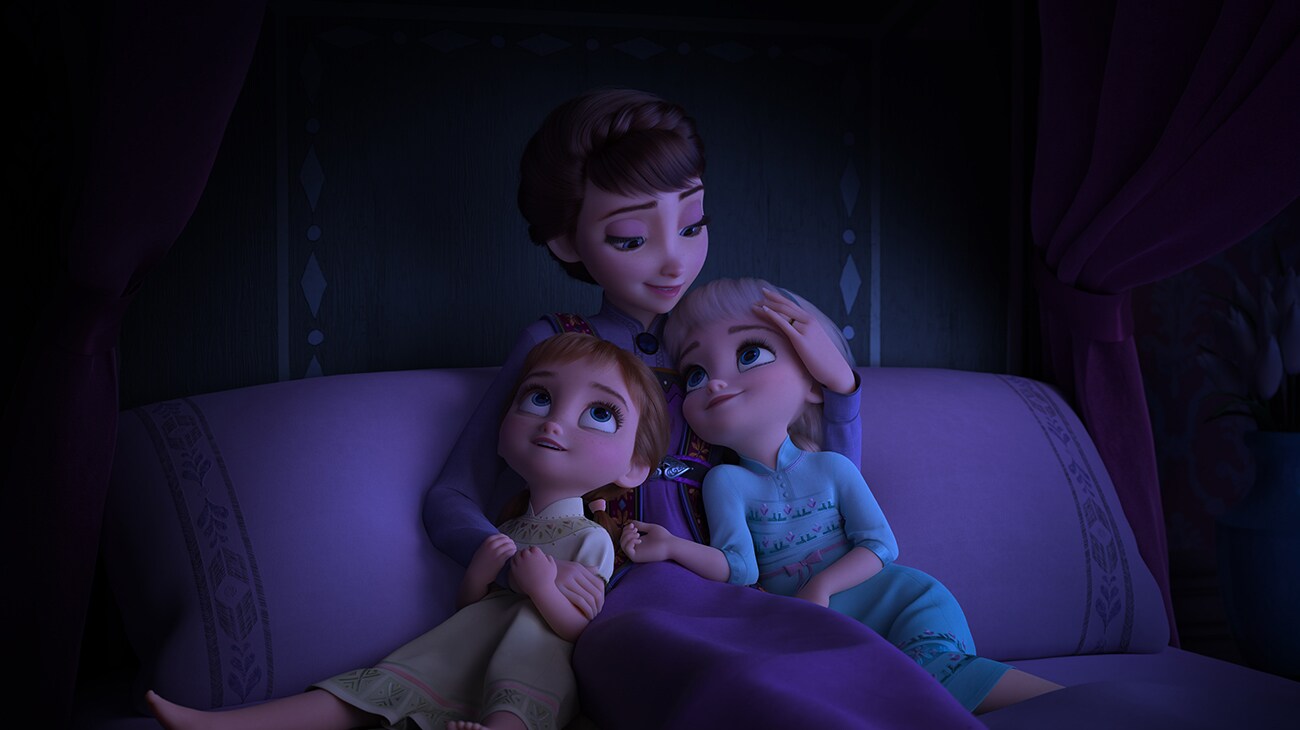
Frozen Character Profile · Northuldra Daughter · Queen of Arendelle · Keeper of the Family’s Oldest Secret
Queen Iduna
Motherhood, assimilation, magic, secrecy, Ahtohallan, and the woman whose hidden history changed both sides of the bridge.
Profile
| Name | Iduna |
|---|---|
| Title | Queen consort of Arendelle |
| Origin | Northuldra, Enchanted Forest |
| Spouse | King Agnarr |
| Children | Elsa and Anna |
| Adult voices | Jennifer Lee in Frozen; Evan Rachel Wood in Frozen II |
| Young voice | Delaney Rose Stein |
| Status | Deceased at sea before the events of Frozen |
How to read this file
The record remains open to future films, but every future addition must be identified by its actual source, date, and continuity.
Dashboard: confirmed facts and protected unknowns
Confirmed by the released features: Iduna is Northuldra, grows up around the Enchanted Forest spirits, saves young Agnarr with Gale’s help, leaves the sealed forest, becomes his wife and Arendelle’s queen, mothers Elsa and Anna, sings the Ahtohallan lullaby, participates in the isolation plan after Anna’s injury, and dies with Agnarr while traveling toward the source of Elsa’s power.
Not confirmed by the feature record: a precise birth year, named biological parents, the full path from displaced child to palace resident, the exact date Agnarr learns her origin, supernatural powers of her own, status as an earlier fifth spirit, survival of the shipwreck, or conscious speech from beyond death. Licensed books and fan theories explore several of these areas, but the profile labels them rather than converting them into film canon.
The politics of entering Agnarr’s household
Iduna does not merely marry somebody from another culture. She enters the ruling family created by Runeard, the king who ordered the dam, attacked a Northuldra leader under the cover of negotiation, and left both peoples trapped in the consequences. Even if Agnarr does not know his father’s crime, the palace carries material benefit from the false story.
Her marriage can be loving and politically dangerous at once. Disclosure might threaten her safety, Agnarr’s legitimacy, or the version of history Arendelle uses to understand its dead king. Silence might protect the household while allowing the injustice to remain institutional. The films do not show Iduna choosing between clean options because no clean option survives what Runeard did.
What the daughters inherit differently
Elsa inherits visible magic and becomes the daughter most directly connected to the spirits and Ahtohallan. Anna inherits no elemental power but becomes the person willing to destroy Arendelle’s dam after learning the truth. The bridge requires both forms of action.
Iduna’s legacy therefore does not belong more fully to Elsa because Elsa is magical. Anna carries Northuldra ancestry, the scarf, the lullaby, family grief, and political responsibility too. The sequel’s ending works only when one daughter reaches the memory and the other changes the kingdom. Treating Iduna solely as the explanation for Elsa’s powers would erase half of what her family history produces.
Bottom line first
Iduna changes the meaning of the entire franchise after her death. In the first film she appears as a loving mother participating in a disastrous system of secrecy. In the second, she becomes a Northuldra child who saved an Arendellian prince, crossed into the kingdom that had attacked her people, hid her origin, married that prince, and died searching for the source of their daughter’s magic.
That revision does not erase the harm caused by isolating Elsa and separating the sisters. It makes the decision more tragic and politically complicated. Iduna knew magic as part of a living forest before she helped teach Elsa to fear what made her different. Love, fear, assimilation, secrecy, and survival occupy the same maternal record.

Profile and identity
Queen Iduna is the mother of Elsa and Anna, wife of King Agnarr, a former Northuldra child from the Enchanted Forest, and queen consort of Arendelle. She saves young Agnarr during the battle that seals the forest, later builds a life with him, and dies with him at sea.
Jennifer Lee voices Iduna’s brief line in Frozen. Evan Rachel Wood performs the expanded adult role and sings “All Is Found” in Frozen II, while Delaney Rose Stein voices young Iduna. The call used by Ahtohallan incorporates the vocal performance of Norwegian singer Aurora as the Voice rather than functioning as ordinary Iduna dialogue.
Name, age, and canon limits
The feature films name her Iduna but do not supply an exact birth date, a surname, named biological parents, or a complete childhood chronology. Licensed novels add substantial history and age markers, but those details belong to a labeled publishing branch.
Her title is queen through marriage to Agnarr. The films do not show her coronation, wedding, political portfolio, or the exact point when she disclosed her Northuldra identity to her husband. A deep profile can map those gaps without filling them with fan certainty.
Childhood in the Enchanted Forest
Young Iduna lives among the Northuldra and knows a world where wind, fire, water, and earth are active relationships rather than abstract mythology. Gale plays with her before the battle, establishing personal familiarity with at least one spirit.
The film gives only fragments of that childhood. Her family, daily responsibilities, teachers, and place within the community remain largely outside the frame. The absence matters because later Arendelle knows her as queen while the audience is asked to recover the Indigenous childhood hidden beneath that title.
The dam celebration
Arendelle enters the forest under King Runeard’s claim that a dam is a gift. Iduna is present among the Northuldra when ceremony becomes violence.
She does not know the full sabotage at the time. The audience later learns that Runeard built the dam to weaken the forest because he feared magic and the Northuldra. Iduna survives the consequences of a colonial project whose official story will be carried into the household she joins.
Saving Agnarr
During the battle, Iduna finds the young prince unconscious and calls Gale for help. She uses the wind spirit to move him out of danger and leaves the forest as the mist closes.
The rescue becomes the moral opposite of Runeard’s violence. A Northuldra child saves the heir of the kingdom attacking her people. Agnarr grows up remembering a mysterious rescuer without recognizing the girl who later shares his life.
Leaving while the forest closes
The mist traps Northuldra and Arendellian soldiers inside the forest while Iduna escapes with Agnarr. Survival separates her from community, history, and any possibility of returning to ask what happened.
The film does not show how a displaced child enters Arendelle or who protects her before adulthood. Licensed material addresses the gap, but feature canon leaves the assimilation process largely invisible. That silence is one of the story’s largest emotional absences.
Northuldra identity in Arendelle
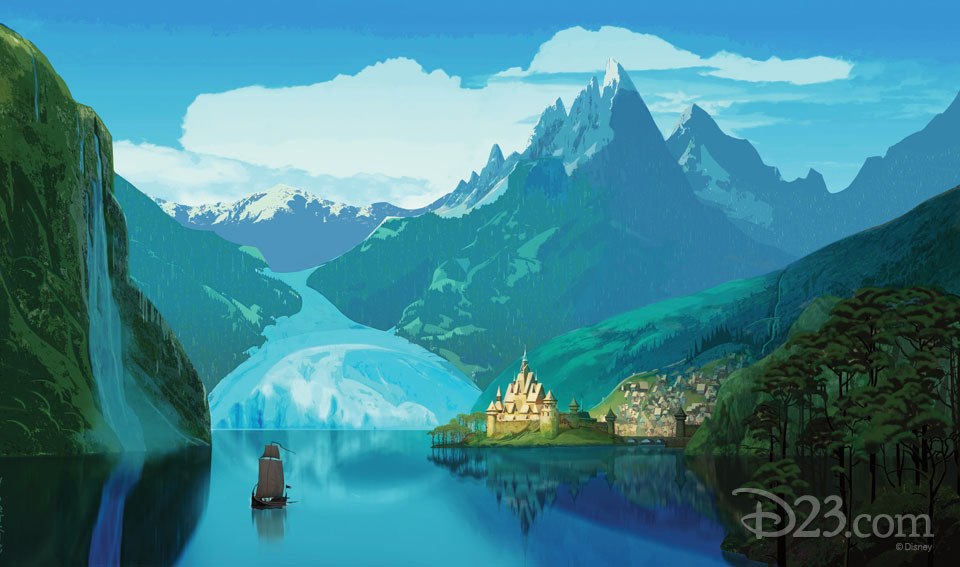
Iduna grows up inside a kingdom whose official understanding of the forest is shaped by loss, fear, and Runeard’s deception. Revealing her identity could expose her to prejudice or political danger. Concealment can therefore be read as survival.
Survival secrecy has a generational cost. Elsa and Anna grow up without knowing their mother’s people, the truth of Arendelle’s aggression, or why magic might be connected to family rather than curse. Iduna preserves safety by accepting isolation from her own history.
Relationship with Agnarr
Agnarr and Iduna move from the childhood rescue into friendship, love, marriage, and joint parenthood. The film shows fragments through Ahtohallan rather than a continuous romance.
Their bond contains an enormous asymmetry of information. He is heir to the kingdom whose ruler attacked her community. She is the rescuer he remembers as a voice and scarf but does not initially identify. The relationship becomes more meaningful, not less, when that political weight is acknowledged.
The scarf and recognition
Iduna’s scarf carries Northuldra symbolism and becomes evidence connecting the royal family to the forest. Agnarr remembers the cloth from his rescue, while Elsa and Anna later recognize its significance.
The object functions like portable heritage. Iduna can carry material memory into Arendelle even when she cannot openly narrate the entire history. The scarf outlives her and helps her daughters rebuild an identity that secrecy interrupted.
Becoming queen
Marriage makes Iduna queen consort of Arendelle, placing a displaced Northuldra survivor inside the institution responsible for the dam and false history.
The films do not show whether she influences policy, archives, education, or relations with neighboring peoples. Her position offers potential power and continuing danger. A queen can possess status while still remaining unable or unwilling to expose the story beneath the crown.
Motherhood before the accident
Iduna and Agnarr raise two daughters who play together, share stories, and participate in family traditions. Iduna sings the Ahtohallan lullaby, passing Northuldra knowledge into the nursery without identifying its source.
The household contains affection before fear reorganizes it. Remembering that warmth prevents the later isolation from becoming proof that the parents never loved their children. Love is present. Their method of protecting that love causes damage.
All Is Found
Iduna sings of Ahtohallan as a river of memory that holds answers and danger. The lullaby gives Elsa a route long before anyone consciously treats it as a map.
The song works as cultural inheritance, warning, maternal comfort, plot key, and delayed confession. Iduna tells the truth in a form safe enough to survive the room, while withholding the personal context that would let her daughters understand why she knows it.
The accident and the trolls
After Elsa strikes Anna with magic, Iduna and Agnarr rush both children to the trolls. Grand Pabbie heals Anna and removes memories of Elsa’s power.
The parents receive frightening advice under crisis conditions and then build a household around risk prevention. Iduna’s childhood with spirits should have supplied another framework, but displacement and secrecy may have made that knowledge feel inaccessible or dangerous.
Why the isolation fails
The gates close, staff is reduced, Anna loses knowledge, and Elsa is separated while trying to control fear. The plan protects Anna from another immediate incident but teaches Elsa that intimacy and power cannot safely coexist.
Iduna participates in a system that contradicts the relational magic of her childhood. Fear narrows options until concealment looks like care. The sequel cannot repair the years lost, but it allows viewers to see that parental fear was shaped by history rather than simple cruelty.
Conceal, don’t feel inside the family
Agnarr verbalizes the rule most clearly, but Iduna stands inside the parenting structure that enforces it. Her silence cannot be erased because the sequel makes her culturally positioned to know that magic is not automatically evil.
At the same time, knowing spirits is not the same as knowing Elsa’s unprecedented power. Iduna has no safe community consultation, cannot return to the forest, and has built adult survival around concealment. The mother repeats on Elsa the strategy that once kept her alive.
Relationship file: Elsa
Iduna loves Elsa, fears for her, and searches for answers to her magic. She passes down the lullaby and cultural connection that eventually guide Elsa to Ahtohallan.
She also helps isolate Elsa and leaves her without a language of pride for magical identity. The relationship should hold both truths. Later revelation explains intention and context. It does not retroactively turn years of fear into healthy parenting.
Relationship file: Anna
Iduna protects Anna after the accident, accepts the removal of magical memory, and allows her to grow up repeatedly asking why Elsa’s door remains closed.
Anna experiences the family decision as abandonment without explanation. Iduna’s death ends any chance for adult repair. When Anna later learns the Northuldra truth, she inherits both maternal heritage and responsibility for correcting the kingdom Iduna helped rule.
The Yule Bell and lost tradition
Olaf’s Frozen Adventure recalls the family ringing the Yule Bell before separation disrupted the household’s shared traditions.
The detail shows how one protective decision can erase more than direct contact. Ritual, seasonal memory, and the sisters’ ordinary sense of family continuity disappear alongside access to the room. Olaf later becomes proof that a new tradition formed despite the loss.
The decision to seek Ahtohallan
Iduna and Agnarr eventually travel toward Ahtohallan to find the source of Elsa’s magic. The sequel reveals that the voyage dismissed in the first film as diplomatic travel was connected to their daughter.
The decision confirms active love and research, but the timing raises painful questions. They seek an external answer after years of isolation rather than restoring community around Elsa first. The journey attempts repair through discovery and ends before they can bring anything home.
The ship and hidden map
Elsa, Anna, and Olaf find their parents’ wreck inside the Enchanted Forest region and discover a map pointing toward Ahtohallan. The evidence changes how the daughters understand the fatal voyage.
A map is not a guarantee that Iduna knew exactly what awaited them. It proves direction and intent. The film leaves the detailed planning, route knowledge, and final conversations partially reconstructed through water memory rather than complete diary.
Death at sea
The ship is overwhelmed in the Dark Sea. Iduna and Agnarr die before reaching Ahtohallan, leaving the kingdom and daughters without the answers they were trying to obtain.
The deaths shape both films. Anna and Elsa become isolated rulers without parents, grief compounds the earlier separation, and the truth remains buried until the next generation can confront it. Their love motivates the journey. Their secrecy makes the loss more difficult to interpret.
The Voice and memory distinction
The four-note call that reaches Elsa is associated with Iduna’s cry to the spirits when saving Agnarr, but the sequel presents it through Ahtohallan and the Voice performed by Aurora.
Calling every occurrence Iduna’s conscious ghost speaking would exceed what the film proves. Memory can reproduce a voice without establishing a continuing spirit-person. The emotional effect is maternal while the metaphysics remain intentionally open.
Ahtohallan’s memory gallery
Elsa finds preserved moments of Iduna and Agnarr, including courtship fragments, the rescue, and clues around the voyage. Water memory turns family history into an environment she can walk through.
The device gives Iduna posthumous agency only indirectly. She cannot explain or revise the record. Elsa interprets selected moments stored by magic, which is more evidence than a family myth and less than a living conversation.
The fifth-spirit reward
Elsa and Anna are described as the bridge between people and nature, with Elsa as the magical side and Anna as the human side. Their existence follows Iduna’s rescue of Agnarr.
The film frames Elsa’s power as a gift connected to that act. This can be emotionally satisfying while raising difficult questions about assigning extraordinary children as reward for a parent’s goodness. Iduna’s life should not be reduced to the precondition for Elsa’s destiny.
Assimilation and survival
Iduna’s adult life demonstrates how assimilation can provide safety, status, love, and family while requiring silence about origin. She becomes queen without making Northuldra history visible to the kingdom.
A shallow reading treats the reveal as a surprise ancestry badge. A deeper one asks what language, kinship, ritual, memory, and political truth she could not pass openly to her daughters, and what it cost to inhabit a crown tied to her community’s confinement.
Indigenous coding and responsibility
The Northuldra draw inspiration from Sámi culture, and Disney entered a consultation agreement with Sámi representatives during the sequel’s production. Iduna’s identity therefore carries real-world representational responsibility even though Northuldra are fictional.
The profile must avoid treating Sámi culture as mystical forest aesthetics. Living peoples have languages, territories, politics, histories, and modern lives. Film analysis can name inspiration and consultation without collapsing fiction into documentary equivalence.
Secrecy as an inherited survival strategy
Iduna hides origin in a hostile or uncertain kingdom. Later, the household teaches Elsa to hide magic. The pattern suggests survival logic moving across generations and changing targets.
What protects one person in one context can wound another in a different context. Iduna’s silence may have enabled safety and marriage. Applied to Elsa, concealment intensifies shame and loss of control. The franchise’s deepest family problem is not a lack of love. It is fear passed off as the only available form of care.
Motherhood and moral accountability
Iduna deserves empathy as a displaced child, loving mother, and woman trying to solve a danger nobody understands. She also shares responsibility for a parenting plan that harms both daughters.
Complexity does not require choosing between saint and monster. It requires keeping intention, knowledge, constraint, action, and consequence in the same frame. The sequel improves her character when it complicates accountability rather than erasing it.
Evan Rachel Wood and the expanded voice
Wood gives Iduna warmth with an undertone of withheld history. Jennifer Lee described the voice as carrying the sense that something remains hidden, which suits a mother telling a true story without revealing her place inside it.
The performance must work in lullaby, memory, maternal dialogue, and posthumous discovery. “All Is Found” makes singing part of characterization, allowing cultural knowledge to pass through tone before plot recognizes it as evidence.
Jennifer Lee and the first-film line
Writer and co-director Jennifer Lee voices Iduna’s brief first-film dialogue, including the urgent observation that Anna is ice cold.
The casting belongs in the factual record because the sequel changes performer as the role expands. It also marks how little interior space the first film gives Iduna before later development turns her into a central source of history.
Delaney Rose Stein and young Iduna
Delaney Rose Stein voices young Iduna in the sequel’s recovered past. The performance has to communicate curiosity, alarm, courage, and the call that will become part of Elsa’s future.
Young Iduna is not simply adult backstory at smaller scale. She makes the decisive rescue before marriage, motherhood, and queenship define her publicly. The child acts from relationship with the spirits and changes two peoples’ histories.
Design across identities
Adult Iduna’s royal clothing places her inside Arendelle, while the scarf and recovered childhood imagery connect her to Northuldra origin. Costume and hair carry the bridge between histories before the script explains it.
Design analysis must avoid claiming every leaf or braid is a coded confession. Some details support the later reveal; others belong to broad Nordic visual development. Production intention should be distinguished from attractive retrospective pattern.
Dangerous Secrets and publishing continuity
The novel Frozen II: Dangerous Secrets: The Story of Iduna and Agnarr expands childhood, courtship, secrecy, and the voyage. It gives readers a fuller emotional chronology than the films provide.
The book is an important licensed branch, not permission to silently merge every detail into feature canon. A useful profile tells readers where the expansion comes from so they can choose the version and understand apparent contradictions.
Broadway and stage Iduna
The stage adaptation gives Iduna and Agnarr different dramatic space, performers, and musical context. Ann Sanders originated Iduna on Broadway, with later productions recasting the role.
Live theater makes parental choices present through bodies and voices rather than short animated montage. Changes belong to the adaptation’s structure and should be analyzed without treating stage dialogue as lost film footage.
Books, comics, games, and alternate worlds
Iduna appears or is referenced across retellings, illustrated books, comics, games, and alternate-continuity stories including Conceal, Don’t Feel.
These branches may change survival, memory, family outcomes, or the consequences of magic. They enrich the character map when labeled. They create confusion when every version is presented as one seamless biography.
Reception after Frozen II
The sequel transformed Iduna from a brief tragic mother into one of the franchise’s most debated adults. Viewers respond to her Northuldra identity, lullaby, secrecy, parenting decisions, and lost chance to explain herself.
Some readings idealize her because the reveal is moving. Others condemn her without accounting for displacement or limited options. The character is most useful between those poles, where love and damage remain simultaneous.
Easter eggs and replay details
The scarf, the lullaby, Gale’s movement around young Iduna, the rescue call, the ship’s map, and Ahtohallan’s stored memories become major replay details once her origin is known.
An Easter egg is only as good as its label. These are textual clues and callbacks. Claims about hidden crowns, exact dates, or visual symbols need production evidence before being presented as intentional code.
What Wikipedia has that this page must exceed
The encyclopedic floor includes her royal role, marriage, children, accident response, isolation decision, death at sea, Enchanted Forest childhood, rescue of Agnarr, Northuldra identity, performers, lullaby, ship destination, and adaptation appearances.
CVM Sekai adds the analysis that a list cannot hold: assimilation, inherited secrecy, political marriage, maternal accountability, cultural consultation, memory metaphysics, performance changes, canon boundaries, and how the second film retroactively changes the first.
Future file
Iduna is dead in the feature chronology, but water memory and Ahtohallan allow her recorded presence to remain narratively available. A future appearance should respect the difference between memory, magical representation, and resurrection.
The richest unfinished material is not a surprise return. It is what Elsa and Anna do with her legacy: reconnecting to Northuldra kinship, correcting Arendelle’s history, revisiting parental harm, and deciding which family silences end with them.
Sources and certainty
Primary sources include both feature films, Olaf’s Frozen Adventure, official Disney and D23 character material, published credits, production interviews, the Into the Unknown documentary, and official sequel materials.
Licensed novels and stage works are labeled as branches. Encyclopedic and specialist references are used to catch omissions. Interpretation, production fact, released canon, and unknown information remain separate so depth never depends on pretending.
Frozen coverage
Return to the Frozen hub for every character, review, React, rant, and guide.