
CHARACTER PROFILE · DOMESTIC LABOR · CULTURAL LEARNING · JIN FROM BTS FORMAT
Pleakley Character Profile: The Earth Expert Who Learned More in Nani’s Kitchen Than the Galactic University Ever Taught Him
He brought the Earth files. The household made him cross out half the files, cook dinner, fold laundry, and learn that fascination is not the same as belonging.
The profile receipt
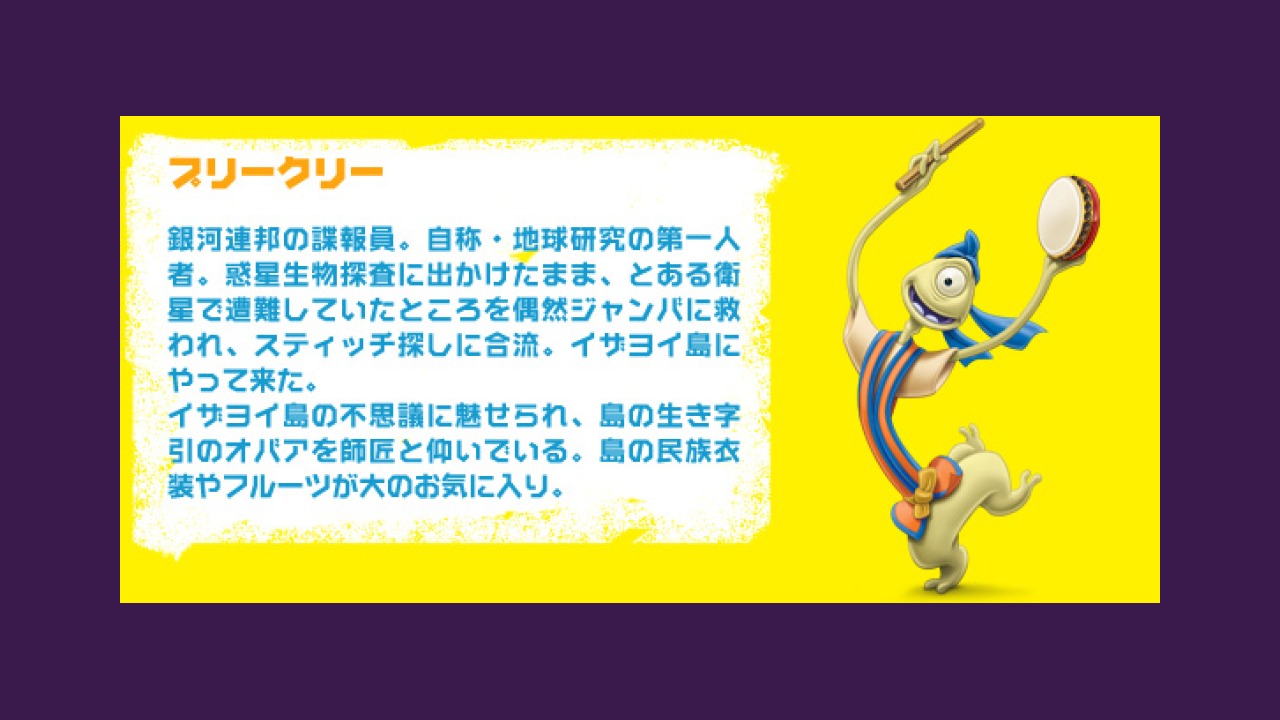
Character: Agent Wendy Pleakley. Role: Galactic Federation Earth specialist, reluctant field partner, household caregiver, experiment-mission participant, and eventual academic. Primary English voice: Kevin McDonald across the core animated continuity. Core conflict: Pleakley wants recognition for expertise while learning that fascination with Earth is not the same as accountability to people, place, and family.
This profile follows the core films and Lilo & Stitch: The Series. The analysis treats his gender play and domestic labor with respect, keeps cultural mistakes visible, and refuses to reduce an essential household member to comic panic.
Earth expert is a title built from books before lived relationship
Pleakley arrives convinced that academic knowledge gives him authority over Earth. His facts can be partial, misapplied, or filtered through galactic assumptions.
Field experience teaches what the books omitted. Expertise becomes credible when he revises publicly, listens to residents, and stops treating culture as a collection of charming observations.
The mission pairs nervous caution with Jumba’s reckless confidence
Pleakley initially exists to monitor Jumba and protect Earth. The assignment places an anxious bureaucratic specialist beside a scientist who treats danger as professional theater.
Their conflict creates comedy and balance. Pleakley notices risk. Jumba understands capability. Neither perspective is sufficient until the household forces both men to consider people rather than mission success.
Gender presentation becomes joy, camouflage, comedy, and a fandom argument
Pleakley wears dresses, wigs, floral clothing, and conventionally feminine Earth styles with visible pleasure. The franchise sometimes frames the image as disguise and sometimes lets expression become part of his ordinary self.
Respectful analysis avoids forcing a label the text does not settle. The important evidence is comfort and continuity. His presentation should not be treated as humiliation, deception, or a joke whose only meaning is that femininity looks unexpected on him.
The jokes can affirm freedom and reproduce mockery in the same scene
A scene may allow Pleakley exuberant self-expression while directing audience laughter toward the contrast between body and clothing. Reception depends on timing, character dignity, and whether other people treat him as less worthy.
Fandom can treasure the liberating possibility without pretending every joke aged perfectly. Affection becomes more honest when viewers distinguish laughter with his delight from laughter at gender nonconformity.
Domestic labor gives him a real place in the household
Pleakley cooks, cleans, organizes, worries, decorates, and participates in daily care. Those tasks help keep Nani’s overloaded home functioning.
The franchise frequently attaches comedy to the work because he performs with excess. The labor remains material. Meals and laundry create the stable repetition in which Lilo and Stitch can survive extraordinary crises.
Caregiving is expertise even when no galactic university recognizes the field
Pleakley learns schedules, preferences, household rhythms, and emotional warning signs. The knowledge grows through relationship rather than detached observation.
His eventual academic opportunity should value that fieldwork. If the university wants facts about Earth while dismissing care performed on Earth, the institution reproduces the same narrow hierarchy that once treated him as comic support.
Nani is not his cultural tour guide or unpaid host
Nani provides shelter inside a household already under custody and financial pressure. Pleakley’s presence can add help and expense at once.
Belonging requires contribution, honesty, and consent. He cannot interpret hospitality as automatic permission to expand the mission, invite danger, or treat the family as research material.
Lilo challenges his assumptions because she lives where he studies
Pleakley may possess broad information about Earth and remain wrong about Lilo’s community, grief, and culture. Lilo refuses respectful silence when the expert sounds ridiculous.
Their relationship becomes valuable when he treats correction as knowledge rather than insolence. A child should not carry the permanent job of fixing an outsider’s cultural framework, but her specific experience outranks his generalized file.
Stitch turns the preservation mission into a family question
Pleakley begins concerned with Earth’s survival and galactic orders. Stitch becomes a being whose capture, exile, or death would harm people Pleakley knows.
The shift from planet to person deepens his ethics. Protecting Earth is no longer an abstract assignment. Protection includes a dangerous created being who belongs to a household and can change through care.
His fear is information and sometimes an excuse to make somebody else act
Pleakley notices catastrophe quickly. Anxiety can identify danger Jumba dismisses and keep the group from charging into every machine.
Fear can also shift physical risk onto Lilo, Stitch, or Nani. Growth means using caution to plan rather than letting panic become a reason the smallest family member handles the emergency.
Jumba and Pleakley build intimacy through relentless irritation
They argue about science, culture, danger, housekeeping, and ego. The friction creates one of the franchise’s most durable adult relationships.
Whether viewers read friendship, partnership, or queer domestic coding, the bond includes shared history and mutual dependence. The text leaves room without requiring fandom to erase the domestic specificity.
He admires Earth and can still objectify the place he admires
Pleakley’s excitement treats Earth as precious, strange, and worthy of protection. The affection contrasts with Jumba’s initial indifference.
Fascination can flatten living cultures into curiosities. Hawaiʻi is not evidence inside his field guide. Residents are not illustrations for an expert lecture. Love of a place needs humility about who holds authority.
Hawaiian clothing cannot become proof that he belongs culturally
Floral fabrics and local visual cues help him participate in the household and animation palette. Clothing can express joy and relationship.
Wearing the style does not grant cultural ownership. Pleakley’s belonging comes through accountability to people who welcome him, while Native Hawaiian identity and authority remain beyond an alien outsider’s enthusiasm.
His mistakes deserve correction without demanding he become ashamed of curiosity
Curiosity creates learning and connection. Shame can make an outsider defensive or silent without improving understanding.
The better response is specific correction, changed behavior, and credit to the people who taught him. Pleakley can retain delight while giving up the fantasy that delight makes every interpretation accurate.
The television series turns him into household infrastructure and background comedy
Weekly adventure needs somebody to react, explain, cook, worry, and remain home while Lilo and Stitch chase a cousin. Pleakley fills multiple roles.
Because the tasks repeat, viewers may stop noticing the labor. A serious profile counts each function and asks why the mission has formal pursuers but no formal care staff.
He helps with experiments without owning the placement decision
Pleakley can research Earth contexts and notice community needs. Those skills may help Lilo imagine a placement.
Expertise should support experiment consent rather than decide a job for the cousin. His own experience of being underestimated should make him sensitive to people reduced to one assigned function.
Gantu represents the official competence Pleakley both fears and questions
Gantu carries military authority, size, and certainty. Pleakley’s nervousness makes sense around somebody empowered to capture Stitch.
Pleakley eventually learns that official confidence can be morally wrong. His bureaucratic background gives him language to challenge procedure from inside, even when the series prefers a physical rescue.
Cobra Bubbles exposes the gap between Earth expertise and Earth institutions
Pleakley can study culture while remaining unprepared for the social-service power affecting Lilo and Nani. Cobra’s decisions have immediate household consequences.
Understanding Earth requires understanding law, poverty, family surveillance, and race, not only customs. The franchise barely lets Pleakley make that intellectual transition explicit. A deeper profile keeps the gap visible.
David offers a model of local relationship without spectacle
David helps, waits, jokes, and participates without turning every interaction into a research opportunity. Pleakley can learn from that ordinary presence.
Outsider belonging is not achieved by performing the most knowledge. Belonging grows through reliable action, respect, and the willingness to remain uncentered in somebody else’s home.
The academic offer validates an old wound and ignores the household that healed the wound
A university position tells Pleakley that his knowledge matters. Recognition carries special force after years of ridicule from Jumba and galactic officials.
The offer arrives as an individual reward that separates him from the family. Institutions often recognize expertise by extracting the expert from the relationships that produced better knowledge.
Teaching should make his revised field notes public
Pleakley’s early claims about Earth contain errors. A responsible academic does not hide revision to preserve authority.
His best lecture would show crossed-out assumptions, name the people who corrected him, and explain how domestic life changed the method. Vulnerability can become scholarly rigor rather than embarrassment.
The university and family should never be framed as mutually exclusive
Pleakley can want professional life and household belonging. A galaxy with advanced transport should support visiting appointments, remote lectures, and shared schedules.
Forcing a choice turns family into sacrifice or career into abandonment. The better future redesigns work around a chosen family with real responsibilities.
His voice performance preserves dignity through panic
Kevin McDonald gives Pleakley speed, pitch, fussiness, vanity, and emotional transparency. Panic becomes specific rather than generic shrieking.
The performance also carries warmth in domestic scenes. Pleakley can move from theatrical distress to sincere care without becoming a different character. That continuity protects him from one-note sidekick status.
Vanity gives him pleasure and vulnerability
Pleakley cares about appearance, recognition, expertise, and presentation. Those desires make him funny and human without making them shallow by definition.
Vanity becomes harmful when image outranks truth or family need. The character grows by surviving correction without surrendering the joy of dressing, teaching, and being seen.
His body becomes a site of adaptation rather than shame
Pleakley changes clothing and social presentation to navigate Earth. The franchise does not require a human disguise that erases his alien body completely.
That visibility supports an outsider narrative where belonging does not demand physical assimilation. The jokes work best when the body remains worthy and the misunderstanding belongs to context.
He should receive credit for care and accountability for cultural error
Fandom often chooses one side: celebrate gender expression and domestic contribution, or criticize outsider naïveté. The full character contains both.
Credit does not cancel accountability. Accountability does not require contempt. Pleakley becomes richer when affection supports honest correction instead of protective simplification.
The experiment network needs his organizational skill
Hundreds of cousins require records, schedules, contacts, placement follow-up, and communication between Earth and galactic systems. Pleakley has bureaucratic and academic experience useful to the work.
Helping build the system would convert unpaid household knowledge into formal support. Lilo should not remain sole archivist while a trained adult accepts a lecture position elsewhere.
He can translate institutions without becoming their representative over the family
Pleakley understands Federation procedure and can help Nani navigate official power. The role could reduce risk and expose gaps in legal protection.
Translation must remain accountable to the household. He should not pressure the family into compliance because procedure feels familiar. His value lies in making institutions answerable, not making family easier to manage.
The family gives him a place where performance can become ordinary life
A dress worn for disguise becomes clothing. Earth study becomes conversation. Domestic competence becomes routine. The household lets identities first framed as jokes acquire continuity.
Belonging appears when nobody needs an explanation every morning. Pleakley can remain extravagant while the family treats extravagance as one person’s normal presence.
Domesticity should not become another unpaid destiny
Pleakley may enjoy cooking, decorating, and caretaking. Enjoyment does not make endless availability fair.
The household should distribute work and respect his professional ambition. Escaping one rigid galactic role should not trap him inside another role because he performs the role well.
His care for Lilo needs boundaries that protect both of them
Pleakley can comfort, supervise, and join Lilo’s plans. He also brings adult power and outsider assumptions into the relationship.
Healthy care means listening, saying no when safety requires, and refusing to make the child responsible for his feelings. Lilo can teach him without becoming his parent.
His care for Nani should reduce load instead of praising resilience
Pleakley sees Nani’s stress from inside the home. Compliments about strength mean little if the laundry and meal remain hers.
Contribution should be planned, reliable, and responsive to what Nani requests. Care is most useful before collapse and without demanding emotional gratitude.
His relationship with Stitch works because neither one fits polite expectation
Stitch is physical chaos. Pleakley is verbal and social anxiety. Their differences create irritation and unexpected solidarity.
Pleakley can fear Stitch’s power while defending his personhood. Stitch can mock Pleakley and still recognize him as family. Acceptance does not require pretending compatibility is effortless.
Leroy & Stitch makes professional recognition feel lonelier than expected
The academic role offers status, audience, and proof that his expertise matters. Distance reveals how much meaning came from the household rather than the title.
Returning should not invalidate the career. The emotional lesson is that prestige cannot replace relationship. The logistical lesson is that somebody designed the appointment without asking how the family could remain intact.
The profile image places the casserole beside the lecture folder
The artwork shows an original one-eyed alien balancing food, laundry, corrected field notes, and academic material between a warm family room and a cold podium.
The frame refuses to choose one identity. Caregiver, scholar, outsider, performer, and family member occupy the same body. The visual depth belongs to the profile rather than an official screenshot.
What Pleakley owes Hawaiʻi
He owes respect for local authority, correction of misinformation, restraint in claiming expertise, and material contribution to the community absorbing galactic danger.
Affection for the island is a beginning. Accountability determines whether affection becomes relationship or extraction. The difference must be taught in every lecture he gives about Earth.
What the Federation owes Pleakley
The institution uses his knowledge, exposes him to danger, and often treats him as comic or expendable. Professional support should include safety, authority, and recognition of field labor.
Recognition cannot arrive only after the household proves his value. The Federation should learn why its own expert grew more competent outside the hierarchy that hired him.
The JIN-format verdict
Pleakley is an anxious bureaucrat, enthusiastic outsider, gender-nonconforming delight, imperfect cultural learner, domestic worker, and scholar whose real education happens through relationship.
His profile works when comedy remains and dignity deepens. He should be corrected without humiliation, celebrated without sanitizing, and allowed a future where academic recognition and family care support each other.
The final RaeRae receipt
Pleakley did not cross a galaxy to become the unpaid person holding a casserole while everybody else gets a heroic title. Count the meals, laundry, research, translation, supervision, and emotional reaction that keep the mission legible.
Then count the mistakes, assumptions, costumes treated as culture, and times enthusiasm outran listening. The full person contains both ledgers. He belongs because relationship taught him to keep revising, not because fascination granted automatic membership.
His academic confidence needs citations from the household
Pleakley’s field experience comes from people who correct, host, feed, and protect him. Publishing that knowledge without credit would turn relationship into extraction.
A responsible scholar names collaborators according to their wishes, protects private information, and returns value to the community. Lilo’s notebook is not free source material for his promotion file.
Earth preservation becomes shallow if people remain specimens
Pleakley cares passionately about protecting the planet from destruction. The instinct is admirable and can still imagine Earth as an object under expert guardianship.
Protection becomes ethical when residents define needs and hold authority. Saving a place while silencing people reproduces control with a kinder vocabulary.
The bed-and-breakfast plot reveals his desire to turn home into performance
Hospitality, decoration, and Earth customs invite Pleakley to stage the household for guests. The project can be creative and disruptive.
Nani’s home cannot become a themed laboratory without consent. Business ideas require money, labor distribution, privacy, and respect for the residents whose daily life becomes somebody else’s experience.
He understands social rules and misses emotional context
Pleakley can memorize etiquette while misreading why a family reacts strongly. Rules appear stable. Grief, poverty, culture, and fear make behavior harder to catalogue.
His growth comes from asking what a rule protects and whom the rule burdens. Expertise matures when context outranks the satisfaction of being technically correct.
His wardrobe creates visual continuity across roles
Floral dresses, wigs, aprons, and professional clothing let Pleakley move among disguise, self-expression, care, and scholarship. The animation uses clothing as character language.
The clothes should not be read only through a binary joke. Repetition makes presentation part of identity. He appears most comfortable when nobody requires a justification for the outfit.
The family should ask what support he needs too
Caregivers can disappear inside usefulness. Pleakley’s anxiety, professional insecurity, and outsider status remain needs even when he performs domestic work well.
Reciprocity means the household listens without making Lilo responsible for adult reassurance. Jumba can share labor. Nani can set boundaries. Institutional support can reduce the pressure everybody currently handles privately.
Pleakley can become a better ally by speaking less strategically
Expert characters often prove value through explanation. An ally may create space, redirect institutional attention, or amplify a local voice rather than supplying another lecture.
The lesson does not silence him forever. The lesson makes speech accountable to context. He can use galactic status to open a door and then let the people affected enter first.
His panic around danger should lead to prevention policy
Pleakley anticipates disaster repeatedly. The insight could become evacuation plans, secure storage, contact trees, and household procedures.
Turning anxiety into preparation distributes safety. Leaving anxiety as a recurring gag forces the family to relive preventable emergencies while he receives no relief from expecting the next one.
The Federation should value care as planetary expertise
Pleakley learns how a household, neighborhood, and community absorb alien consequences. That knowledge belongs in any serious Earth-protection program.
If the institution values only facts, maps, and species categories, the university title remains narrow. Care tells the Federation what survival looks like after the fleet leaves.
His best future includes revision without self-erasure
Pleakley does not need to abandon excitement, fashion, teaching, anxiety, or dramatic reaction. Growth should refine how those traits affect other people.
He can become more accurate without becoming dull, more accountable without becoming ashamed, and more rooted without claiming cultural ownership. The character’s delight survives because revision expands rather than punishes him.
He and Jumba should formalize the work they already perform
The pair share technical knowledge, domestic routines, and years of experiment response. Informal teamwork keeps functioning because somebody improvises.
A formal care role could establish schedules, authority, compensation, and accountability. The goal is not bureaucratizing affection. The goal is preventing affection from hiding unpaid labor and unclear responsibility.
His lecture hall should include disagreement
An Earth course taught only from Pleakley’s conclusions would reproduce the expert fantasy he outgrew. Students need local voices, contested histories, and evidence that knowledge changes through challenge.
Disagreement should not be staged as decorative diversity. People whose communities are discussed must hold power over curriculum, access, and how their knowledge is represented.
He deserves a profile card that does not treat gender expression as the joke
A landing image should show his face, work, and multiple roles clearly. The floral clothing can remain joyful without becoming the only information.
The original art places domestic care and academic ambition in balance. Viewers meet a scholar carrying dinner, not a punchline carrying a costume.
The quiet proof of belonging is being expected at dinner
Grand gestures establish loyalty during danger. Ordinary expectation establishes family. Pleakley belongs when his absence changes the household rhythm and his return needs no ceremony.
The dinner table does not grant cultural ownership or erase mistakes. The table means relationship continues while correction, contribution, and affection remain active.
The final field note should admit the expert became the student
Pleakley arrived to explain Earth to Jumba and protect the planet through specialized knowledge. The household revealed how much the specialization excluded.
His growth becomes credible when he can teach that discovery without making humility another performance of superiority. The best expert is not the person who finished learning. The best expert builds a practice where revision remains ordinary.
The last RaeRae receipt is hiding under the laundry basket
Count every time Pleakley reacts while somebody else charges toward danger, and then count every task waiting when the danger ends. Fear is visible. Domestic recovery is easier to miss.
His profile belongs at full length because the household depends on work the franchise codes as funny, feminine, fussy, or secondary. Pleakley makes care theatrical, and the theater does not make care fake. The family becomes more stable when everybody stops assuming the person holding the casserole has nothing important to teach about survival. Somebody still has to feed the heroes after the heroic music ends. Pleakley has been standing there with the dish the entire time.
Keep exploring
Return to the Lilo & Stitch hub for the character directory, film and series reviews, episode reactions, rants, and guides.
Expertise should become accountability once the joke ends
Pleakley begins with academic confidence about Earth and discovers that lived reality does not cooperate with his categories. The disguise comedy works because he is improvising, but his domestic labor and care become more important than the original assignment. He cooks, worries, teaches, and forms a household while still making mistakes about culture and danger. A full profile keeps both truths visible. Pleakley deserves credit for care and remains responsible for correcting misinformation, listening to local people, and refusing Federation procedures that endanger the family he now claims.