
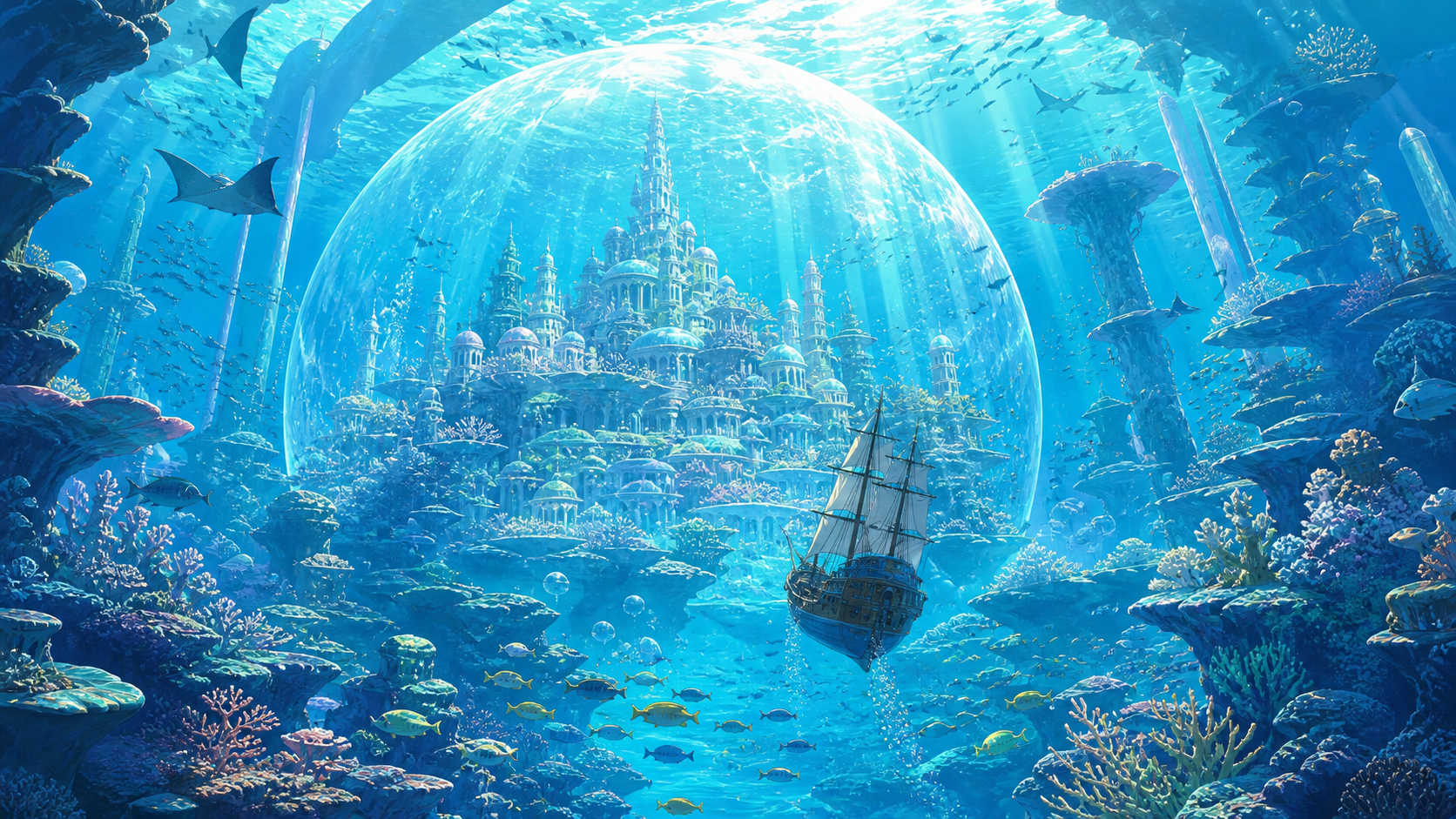
One Piece Fish-Man Island Saga Guide
What this saga covers
The Fish-Man Island Saga includes Return to Sabaody and Fish-Man Island. The reunited crew descends beneath the Red Line and enters a society shaped by slavery, migration, and competing strategies for liberation.
Return and changed capacity
The reunion demonstrates two years of training without pretending growth solved every interpersonal problem. New strength matters because the world remained dangerous while the crew was apart.
Fisher Tiger and Queen Otohime
Fisher Tiger fights enslavement and carries wounds he cannot simply reason away. Otohime pursues coexistence through political persuasion. The saga is strongest when neither strategy is reduced to a slogan.
Hody Jones and inherited hatred
Hody’s hatred is inherited without direct personal injury. That does not make the hatred unreal. The admission shows how institutions and stories reproduce violence across generations, even when a leader offers no liberatory project beyond domination.
Blood as political boundary
The prohibition on blood donation turns biology into segregation. Jinbe giving blood to Luffy makes mutual dependence visible and challenges the rule through an act of chosen care.
Poseidon and imposed destiny
Shirahoshi is both a person and the Ancient Weapon Poseidon. Her power makes her valuable to states and pirates, but political significance should not erase her right to fear, grief, and self-determination.
Fish-Man Island inherits violence from the surface
The island exists under the sea because the surface world made ordinary coexistence dangerous. Slavery, trafficking, segregation, and Celestial Dragon power shape daily life even when no surface visitor appears in a scene. Resentment does not emerge from biology. Resentment grows inside institutions and memories.
The saga is strongest when history remains specific. Fisher Tiger frees enslaved people and carries trauma he cannot simply reason away. Otohime builds political support for migration while knowing signatures cannot prevent every attack. Their strategies disagree because liberation creates more than one urgent problem.
Hody Jones is produced by inherited hatred
Hody’s admission that humans did nothing personally to him is often treated as proof that his hatred is empty. The hatred is not empty. The hatred is inherited, cultivated, and attached to real collective injury he converts into permission to dominate other Fish-Men.
That distinction matters because victims can reproduce authoritarian power without the original oppression becoming imaginary. Hody uses history as a shield against accountability. He punishes disagreement, targets Otohime’s children, and needs the next generation to believe revenge is the only authentic identity.
The blood transfusion rejects a political taboo
Jinbe giving blood to Luffy is intimate and public. The taboo says Fish-Man and human bodies should remain separate even when separation kills. Shared blood proves the rule was enforced history rather than nature.
The scene also completes a relationship built through Marineford and grief. Jinbe does not become valuable because he saves a human. The exchange matters because two people choose care across a boundary institutions worked to preserve.
Shirahoshi’s power is surrounded by coercion
Shirahoshi lives confined because Vander Decken weaponizes obsession and because her Ancient Weapon identity makes her valuable to powers she cannot yet assess. Protection becomes another form of enclosure when everybody else decides what information she can bear.
Her gentleness is not proof that suffering purified her. She withholds the truth about her mother’s killer because of a promise made as a child under impossible pressure. The story should let her revise that burden rather than praising silence as feminine virtue.
Sanji’s gag damages the saga’s argument
The nosebleed plot converts women’s bodies into medical danger and turns long isolation from women into justification for harassment. The blood-shortage setup eventually supports the transfusion theme, but the route cheapens both consent and care.
I refuse to ignore that problem because Fish-Man Island is trying to discuss prejudice, bodily difference, and inherited violence. A saga asking viewers to reject dehumanization should be especially careful about making women into visual supplies.
The island’s future cannot depend on one heroic family
Neptune’s family carries political responsibility, yet long-term change requires schools, public history, surface relationships, economic routes, and safety for people who disagree without becoming targets. Otohime’s petition is a beginning, not a completed program.
My verdict values the saga’s ambition and remains frustrated by execution. Fish-Man Island contains some of One Piece’s clearest ideas about inherited oppression. The story becomes weaker whenever metaphor replaces the specific institutions that produced the oppression in the first place.
Fish-Man Island begins with movement through controlled space
The route under the Red Line requires coating, navigation, knowledge of currents, and trust in people whose work keeps ships alive. Reaching the island is not a casual descent. The geography mirrors the political problem: Fish-Men and merfolk live beneath a world whose surface economy has enslaved, displayed, feared, and exoticized them.
The Straw Hats arrive with personal memories of Hatchan, Camie, Arlong, Sabaody, and Jinbe. Those relationships do not make the crew experts on the island’s history. The residents carry different experiences of discrimination, militancy, accommodation, grief, and hope. A useful guide has to preserve those disagreements instead of using one friendly character as permission to declare the problem solved.
Fisher Tiger and Otohime leave different unfinished strategies
Fisher Tiger liberates enslaved people through direct action and refuses the blood of humans after a lifetime shaped by violence. Otohime pursues political recognition and tries to build public consent for migration toward the surface. Their approaches are often framed as opposites, but both confront structures larger than one lifetime and both leave work for people who survive them.
Jinbe inherits responsibility without receiving a clean answer. His service as a Warlord, leadership of the Sun Pirates, relationship with Whitebeard, promise to Ace, and protection of Luffy place him inside compromises that cannot be reduced to cowardice or purity. His profile follows that chronology; this saga guide keeps the institutional pressures visible.
Hody represents inherited hatred without inherited injury
Hody grows inside a society marked by real oppression, but he treats history as fuel for domination rather than responsibility to living people. His emptiness answer matters because the story distinguishes structural cause from personal innocence. He has absorbed language, grievance, and hierarchy while choosing violence that harms the community he claims to defend.
The Energy Steroids make that politics bodily. Borrowed power accelerates damage while creating an appearance of strength. Hody spends the future of his own body to maintain authority in the present. The mechanism fits a movement that consumes younger lives while offering no workable future beyond permanent enemies.
The blood transfusion makes policy physical
Jinbe giving blood to Luffy answers a legal and cultural prohibition with a visible relationship. The moment carries symbolic force because bodies share a need institutions tried to separate. Symbolism cannot finish the island’s political work, but the scene gives the story a concrete refusal of inherited boundaries.
Fish-Man Island remains uneven. Sanji’s blood-loss comedy undermines the saga’s attention to bodily danger and turns women into triggers for a joke stretched far beyond usefulness. Shirahoshi’s vulnerability sometimes receives more spectacle than agency. The saga still matters because history, migration, public memory, and inherited prejudice remain central rather than decorative.
Shirahoshi carries power without political freedom
Shirahoshi can communicate with Sea Kings, but extraordinary inherited ability does not give her ordinary movement or safety. Years inside Hard-Shell Tower protect her body while narrowing her public life. Her decision to leave, grieve Otohime openly, and participate in the island’s future matters more than treating Poseidon as a weapon waiting for the correct owner.
The distinction protects the Ancient Weapon story from swallowing the person. Knowledge of Shirahoshi’s identity creates danger because governments and pirates value capacity before consent. Her relationships with Luffy, Fukaboshi, Megalo, and the Sea Kings should be read through the question Otohime left behind: can the next generation approach the surface without becoming resources for somebody else’s ambition?
RaeRae’s verdict
Fish-Man Island reaches for difficult material and sometimes lets spectacle or caricature interrupt the argument. The saga’s central insight remains vital: hatred is historical, but history does not remove the responsibility to choose what gets carried forward.