
RaeRae Reacts · One Piece Episode 189
Kalgara Rings the Bell for Noland
One Piece Episode 189 lets Kalgara ring the Golden Bell for Noland before the Knock Up Stream turns their promise into a four-hundred-year inheritance.
Bottom line: One Piece Episode 189 turns a terrible silence into a promise carried by the Golden Bell. Noland learns why Shandora rejected his crew, Kalgara learns why the sacred trees had to fall, and both men choose friendship seconds too late for a proper goodbye. Then history separates them with a violence neither man could predict.
“Eternal Friends! The Vowed Bell Echoes Across the Mighty Seas!” closes the Noland and Kalgara flashback through parallel heartbreak. One friend sails away believing he destroyed something sacred. The other runs toward the shore after realizing the supposed desecration saved Shandora again. Their reconciliation arrives through sound because distance has already taken conversation away.
My reaction: this entire episode is two grown men discovering the explanation after pride and timing already stole the goodbye. Kalgara running toward the shore while Noland sails away had me angry at everybody and nobody. The misunderstanding was not fake. Each side carried knowledge the other side needed, and neither understood how much time was left.
The bell promise works because sound can cross the distance conversation cannot. Kalgara cannot pull the ship back, so he gives Noland a way home. Knowing what happens to Jaya makes that promise crueler. He keeps ringing for a friend whose route has been moved into the sky.
The bell stays silent on Noland’s final night
Noland’s crew sits around a fire and prepares to leave Jaya. The men cannot understand why the village changed so suddenly, and the Golden Bell no longer offers the welcome that once guided them through the storm. Noland carries Kalgara’s rejection without an explanation.
The silence changes Shandora’s entire landscape. Gold still surrounds the visitors, the medicine worked, and both communities remain alive, yet the missing sound makes every achievement feel hollow. Noland does not defend himself because he does not know which action caused the wound.
Mousse crosses the distance nobody else will cross
While the camp sleeps, Mousse approaches the crew’s doctor beneath a cloak. She does not arrive to forgive the visitors or reopen the friendship. She wants Noland’s people to understand why the village cannot welcome them after what happened in the forest.
That decision requires courage of a quieter kind. Mousse honors communal grief while refusing to let the visitors leave with no knowledge of the harm. She creates the first opening for truth even though truth cannot restore the trees or erase the villagers’ shock.
The ancestor trees were part of Shandora’s living memory
Mousse explains that souls called home by the bell dwell within the sacred grove. The trees connect the living village to the ancestors whose voices, sacrifices, and protection shaped Shandora. Cutting those trunks therefore looked like destroying family rather than clearing ordinary plants.
Episode 189 gives the village’s anger the context Episode 188 deliberately withheld. Noland’s crew saw infected wood. Shandora saw a home for the dead. Neither meaning was visible to the other group, and nobody discussed the grove before irreversible action began.
The misunderstanding also sharpens the story’s larger argument about evidence. Noland trusts what disease leaves in bark and soil. Shandia trusts what generations taught about the bell and the grove. Scientific evidence determines how Tree Fever spreads, but that answer does not determine how a community should mourn sacred loss. Repair requires the characters to recognize which question each form of knowledge can answer.
Noland accepts the harm before defending the reason
The doctor tells Noland what Mousse revealed. Noland does not mock the belief or insist that good intentions should cancel grief. He understands that the bell’s call now feels robbed of a destination because his crew cut the place where Shandia believed the ancestors rested.
His response matters because apology begins with the injured community’s meaning. Medical necessity can explain the choice, but necessity does not make the emotional loss imaginary. Noland can know that the trees threatened every life on Jaya and still mourn what his people removed.
The treasure stays behind as an answer to broken trust
Noland orders his crew to leave the gifted gold on shore. His men protest after hauling treasure aboard, but he refuses to depart carrying wealth from people who now believe the visitors betrayed their hospitality. The decision cannot replace the grove, yet taking the gold would deepen the insult.
Leaving the treasure also rejects the ugliest version of Noland’s legend before that legend exists. He came seeking knowledge, not plunder. When trust collapses, he chooses an empty hold over any claim that saving the village purchased the right to Shandora’s riches.
The crew’s frustration gives the choice weight. Gold could reward a dangerous voyage and justify every hardship to the kingdom waiting at home. Noland still places relationship above proof of profit. He would rather face disappointment with nothing than convert Kalgara’s former gift into spoils taken after consent disappeared.
The doctor reveals the second Tree Fever emergency
Mousse learns the missing half of the story from the crew’s doctor. The sacred trees were already dead or infected, and Tree Fever could spread through the grove into the rest of the island. Cutting the affected trees created a barrier before another epidemic reached Shandora.
Noland’s crew did not recognize the grove’s spiritual meaning, but they recognized the same disease that nearly killed the village. The painful action came from the same promise behind the cure: no later family should suffer once medical knowledge can interrupt the danger.
Mousse forces the village to hold both truths
Mousse tells Kalgara and the gathered villagers that the trees carried infection. She asks what choice remained when one part of the grove could poison the whole island. Her tears refuse a simple verdict against either side.
The ancestors mattered. The epidemic also mattered. Noland should have learned what the grove meant before acting, while delay could have allowed disease to spread. Mousse does not erase the loss. She makes room for gratitude and grief to exist in the same judgment.
Kalgara runs after the friend he condemned
Once the medical reason becomes clear, Kalgara races toward the beach. The warrior who once stood immovable now spends every breath trying to close the distance created by his own anger. Pride has no value beside the possibility that Noland could leave believing their friendship died.
Kalgara’s run mirrors Noland’s struggle inside the earthquake crevice. Both men push their bodies against a closing deadline to reach somebody else. Noland fought to bring medicine before an execution. Kalgara fights to bring an apology before the ship disappears.
The ship leaves before words can reach the deck
Noland’s vessel moves away from Jaya while Kalgara remains short of the shore. The crew has no reason to expect another welcome, and Noland accepts departure as the consequence of a wound he cannot repair. Geography turns seconds into a permanent threat.
The scene understands how reconciliation can become physically impossible even after every misunderstanding is solved. Knowing the truth does not stop a sail, reverse the wind, or restore the chance for two friends to stand face to face.
Shandora rings the Golden Bell again
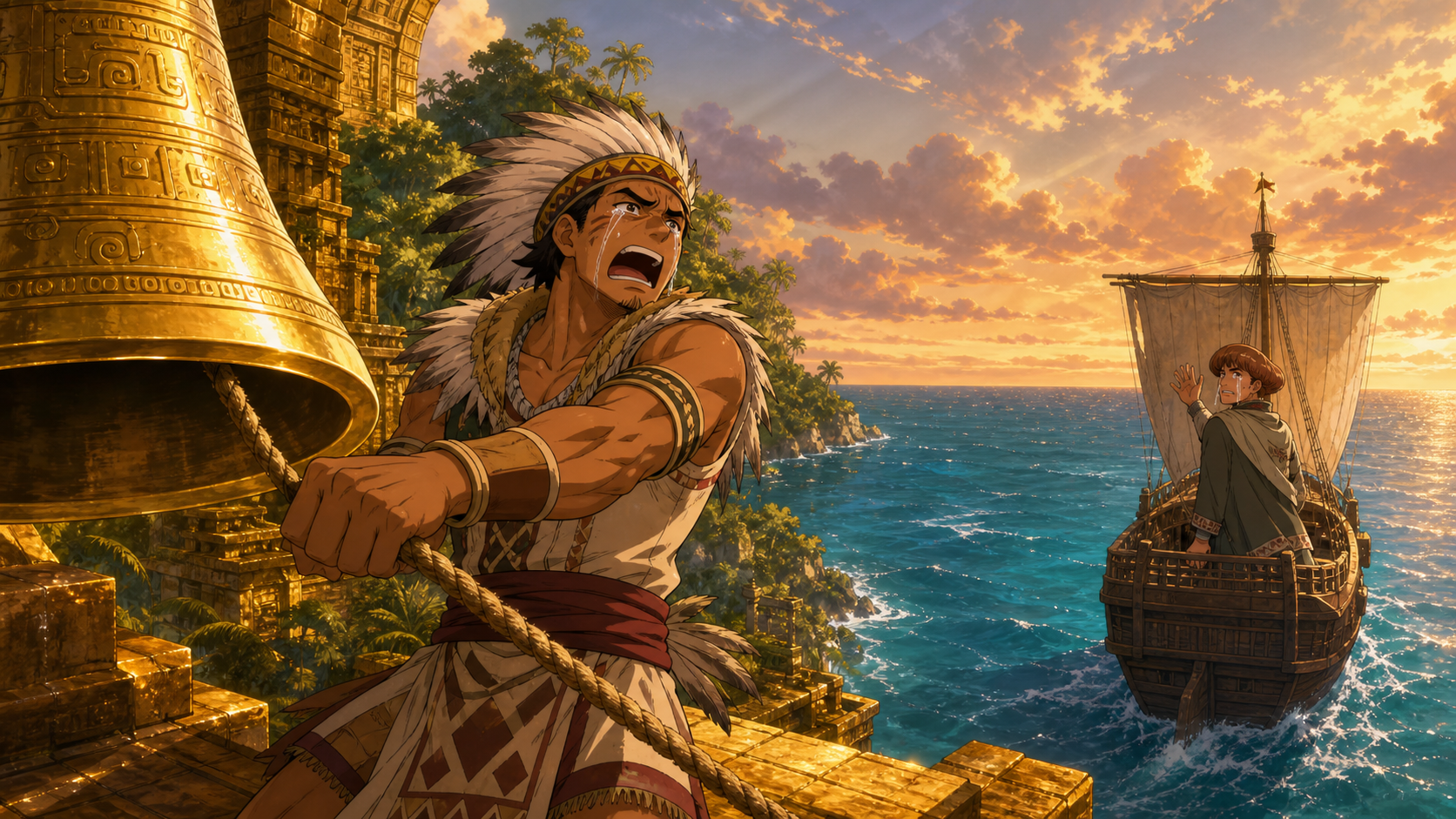
The villagers pull the bell rope and send Shandora’s voice across the sea. Noland hears the sound from the departing ship. The same bell that guided his crew toward Jaya now tells him the friendship survived the grove, the silence, and the final night.
No explanation can travel clearly across that distance, but the meaning reaches him. The bell had stopped when welcome vanished. Ringing again becomes an apology, an invitation, and proof that Shandora wants the explorers to find their way back.
Sound succeeds where language fails because both men already share the bell’s history. Noland remembers following the tone through lethal weather. Kalgara knows what that arrival began. One strike can therefore carry their entire friendship: discovery, conflict, medicine, welcome, injury, regret, and another chance. The episode earns the symbolism through everything the bell has already meant.
Kalgara promises to keep calling across the sea
Kalgara reaches the edge and shouts that Noland must return. He promises to ring the bell through storms so the ship can always locate Shandora. His vow transforms the sacred sound without replacing the ancestral purpose.
The bell can guide souls home and guide a living friend back. Kalgara expands tradition through relationship, just as he expanded his understanding of medicine. Protection of the past becomes compatible with a future he now wants to share.
Noland answers with a promise of return
Noland cries and vows that the two men will meet again. He cannot hear every word from shore, but he understands Kalgara’s call. The promise gives their friendship a future larger than the misunderstanding that nearly ended their first visit.
Neither man knows that nature and power will make the return impossible. That innocence makes the exchange hurt more. They believe time remains available because friendship survived the hardest conflict either man can imagine.
The Knock Up Stream tears Shandora from Jaya
A tremendous ocean current launches the golden city and much of Jaya into the sky. The event divides the island, carries Shandora above the clouds, and removes the destination from every Blue Sea map Noland could follow.
The disaster does not break their promise through betrayal. Noland can return to the correct coordinates and still find no city. Kalgara can keep guarding Shandora and still remain beyond any route his friend knows. One Piece makes geography the cruel witness against both men.
Skypiea names the stolen land a holy place
People already living in the sky hear the bell and discover the newly arrived Vearth. Their ruler claims the soil as sacred territory. Shandia survives the ascent only to face another authority determined to possess the land their ancestors protected.
Kalgara and the warriors resist because Shandora remains home, archive, grave, and promise. The conflict begins centuries of displacement. The bell Noland hoped to follow becomes unreachable while Shandia fights to retain the ground beneath the belfry.
Noland returns to an island the world cannot recognize
Back in the Blue Sea, Noland leads the king toward Jaya and finds only the remaining fragment. The city of gold appears absent because the sky took Shandora, not because Noland invented the discovery. Evidence vanished while his memory remained exact.
The king interprets absence as deceit. Noland’s knowledge, medical courage, and friendship carry no weight against an empty horizon. A man who refused superstition now faces a natural event so extraordinary that nobody accepts his truthful account.
That reversal never makes Noland foolish for trusting observation. The tragedy comes from incomplete evidence after the landscape changes. He reports what he witnessed, but the physical proof has moved beyond the world his accusers understand. Truth remains true while becoming nearly impossible to demonstrate, which creates a cruel contrast with the earlier cure that produced visible results.
Noland dies thinking Kalgara may blame him
At his execution, Noland continues thinking about Shandora and Kalgara. He cannot prove where the city went, cannot return the king’s expedition to the bell, and cannot know whether his friend survived. The public name “liar” replaces a life built around observation and discovery.
His final tragedy is not merely disbelief from strangers. Noland dies without learning why the promise failed. From his position, Kalgara could still be waiting, wounded, or convinced that the explorer abandoned him after swearing to return.
Kalgara keeps the promise inside an endless war
In the sky, Kalgara fights for Shandora and longs to ring the bell so Noland can hear that his friend remains alive. The battle prevents the signal, and news of Noland’s death eventually reaches the Shandia through another Blue Sea ship.
Kalgara never gets the reunion, but he does not discard the friendship. The promise survives as inherited memory. Later generations carry the duty to reclaim the bell, protect Shandora, and send the answer that history denied both men.
Final reaction to the promise carried by sound
Episode 189 is devastating because nobody ends the friendship. Mousse reveals the reason, Kalgara apologizes through action, the village rings, and Noland answers. Every emotional choice moves toward repair. The tragedy comes from arrival a moment late and separation on an impossible scale.
The official Japanese archive lists April 4, 2004 as the broadcast date, with Hirohiko Kamisaka credited for script, Katsumi Tokoro for direction, Kazuya Hisada for animation direction, and Miyuki Sato with Kunihiro Chida for art. The archive places the episode within the Skypiea story spanning manga Chapters 218 through 303.
RaeRae’s verdict: the Golden Bell becomes one of One Piece’s clearest arguments that a promise can outlive the people who made the promise. Kalgara and Noland never meet again, but their call does not disappear. The sound waits four hundred years for somebody strong enough to finish the answer.