
Excerpt: Bonds gives Naruto and Sasuke the reunion fans wanted, then refuses to pretend shared combat rhythm is the same thing as repaired trust.
Focus keyword: Naruto Shippuden the Movie Bonds review
SEO title: Naruto Shippuden the Movie: Bonds Review | CVM Sekai
Meta description: Our Naruto Shippuden the Movie: Bonds review explores Shinnō, Amaru, the Land of the Sky, Naruto and Sasuke’s reunion, and pain exploited as power.
Naruto and Sasuke Fight Together Again. That Does Not Mean They Are Fine.
Naruto Shippuden the Movie: Bonds knows exactly what it is selling.
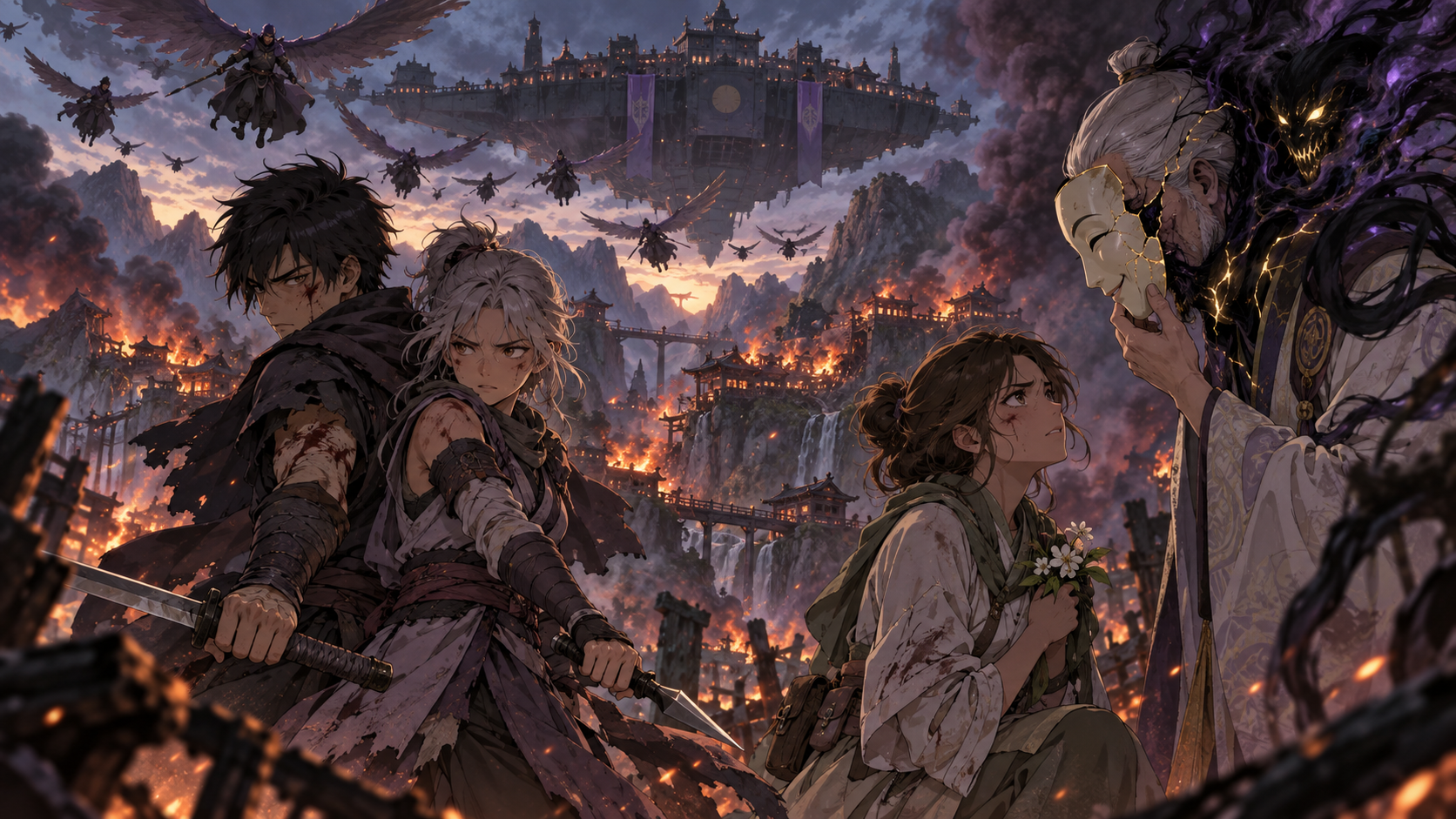
The Land of the Sky attacks Konoha with flying ninja and aerial weapons. A gifted physician arrives with a devoted student. Villages burn, a hidden fortress rises, and a creature that feeds on negative emotion waits inside the machinery. All of that gives the film scale.
But the poster promise is simpler: Naruto and Sasuke will stand on the same battlefield again.
The movie delivers that image without lying about what it means. The boys still understand each other in motion. Their instincts line up. They can exchange attacks and exploit an opening without rebuilding the relationship in words. The physical bond remains because bodies remember what pride denies.
That is not reconciliation.
Sasuke is present under Orochimaru’s orders, not because he has chosen Konoha, Naruto, or the life he abandoned. Naruto is still reaching toward the boy he remembers. Their temporary alliance gives fans a contained taste of Team 7 chemistry, then places the emotional distance back where it belongs.
The restraint is the film’s smartest choice. Shared combat rhythm proves the bond exists. It does not prove the bond is healthy.
The Land of the Sky Attacks Like a Memory Nobody Resolved
The flying ninja’s assault on Konoha arrives as retaliation for an older war. That history matters because the attack is not presented as random villainy. The Land of the Sky carries a grievance against the great shinobi powers, and the movie uses spectacular aerial violence to show what happens when defeated states are remembered only by the winners.
Konoha experiences the raid as sudden terror. The attackers experience it as return.
The film could dig deeper into that political history. The Sky ninja are ultimately organized around Shinnō’s ambition, and their collective grievance becomes fuel for a villain’s plan. Still, the premise fits the Naruto world uncomfortably well. Hidden villages create enemies faster than their official histories admit. Peace treaties end battles. They do not automatically end the stories survivors tell about them.
The aerial designs give the assault a different texture from ordinary shinobi combat. Gliders and flying formations make Konoha look vulnerable in a new direction. Walls, patrol routes, and familiar terrain mean less when the threat arrives above them.
The visual novelty helps the movie feel theatrical, though the mass attack sometimes promises a geopolitical story the screenplay does not fully pursue.
Shinnō Understands That Authority Looks Like Care
Shinnō is dangerous because he first appears useful.
He is a physician. He understands bodies, pain, and the trust frightened people place in somebody who can relieve suffering. Amaru adores him not because he demanded worship on their first meeting, but because he gave a wounded child a framework for survival.
That history makes his betrayal uglier than a routine disguise reveal.
Shinnō weaponizes the authority of care. He teaches, heals, praises, and creates dependency. Then he treats the devotion he cultivated as another resource available for extraction. Amaru’s faith becomes proof of his own power.
The movie is strongest when it notices how abuse hides inside benevolence. A mentor does not need to snarl in order to control somebody. Sometimes control sounds like reassurance. Sometimes it arrives with medical knowledge and the confidence of an adult who has already decided what the child owes in return.
Shinnō’s later transformations and villain speeches are less effective than the earlier emotional fraud. The monster is obvious. The trusted healer was the real threat.
Amaru’s Devotion Is Not Stupidity
Amaru can be frustrating because the truth about Shinnō reaches the audience before the character is ready to survive it. That delay is not evidence that Amaru is foolish. It is evidence that betrayal rearranges memory.
If Shinnō is a liar, then every act of care has to be re-examined. Every lesson becomes suspect. Gratitude turns into shame. The person Amaru built around his approval no longer has a stable foundation.
Naruto recognizes the shape of that collapse even when he cannot explain it gently. He has attached enormous parts of himself to teachers and rivals. He understands the terror of losing the person who made a future imaginable.
Where Naruto differs is that his strongest bonds eventually require disagreement. Iruka’s care survives Naruto’s anger. Kakashi can disappoint him. Jiraiya can fail. Sakura can challenge him. A bond that only functions through obedience is not a bond; it is hierarchy wearing affection.
Amaru’s arc asks the character to separate the knowledge received from the man who used it. Shinnō’s betrayal does not erase Amaru’s capacity to heal. That capacity belongs to the student now.
The film moves quickly through this recovery, but the idea lands.
The Zero-Tails Feeds on Pain Because Pain Is Easy to Harvest
The Zero-Tails is not one of the traditional tailed beasts despite the English name. It is a dark entity formed from negative emotions, and Shinnō treats that pain as an energy source.
The metaphor is not subtle. It is also effective.
The Naruto franchise repeatedly asks what happens when institutions store human suffering instead of healing it. The Nine-Tails is sealed into a child. Clan trauma becomes military strategy. Orphans become recruits. Revenge becomes policy. Bonds makes the mechanism literal: despair powers the machine.
Shinnō does not need to create every wound. He needs people to remain wounded and available.
That distinction makes him a recognizable kind of exploiter. He presents himself as the person who can resolve pain while designing a system that benefits from its continuation. The more frightened and hopeless people become, the more useful they are.
Naruto’s resistance is not positive thinking pasted over trauma. He has negative emotion in abundance. What prevents it from owning him is connection that allows pain to move rather than stagnate. He speaks, fights, grieves, fails, and returns to other people.
Shinnō isolates. Naruto interrupts isolation, often with all the subtlety of a door kicked off its hinges.
Sasuke’s Return Is Fan Service with Boundaries
Sasuke enters the film because Orochimaru wants information about the reincarnation technique. His mission intersects with Naruto’s, producing the alliance viewers have been waiting to see.
The movie understands that their coordination should look easier than their conversation. Naruto and Sasuke trained together, competed constantly, and learned one another at a level neither willingly admits. In battle, the old structure returns before emotion can interfere.
Outside combat, Sasuke remains distant. He does not apologize. He does not explain himself into forgiveness. He does not decide that one successful fight has restored Team 7.
Good.
The reunion works because it is temporary and incomplete. Naruto receives evidence that the Sasuke he knows still exists inside the choices separating them. Sasuke receives evidence that Naruto’s determination remains as irritating and dependable as ever. Neither is ready to transform that recognition into repair.
The film gives fans satisfaction without stealing work from the main story.
It also exposes a painful truth: compatibility can survive after trust breaks. Two people can still make sense together and remain unable to live together.
Sakura, Hinata, and the Supporting Teams Hold the Disaster Together
The movie’s large-scale attack allows familiar Konoha shinobi to participate beyond the central mission. Sakura’s medical role is especially important. A village under aerial assault needs triage, not only spectacular counterattacks, and her training places her where the human cost becomes visible.
Hinata joins Naruto and Amaru during part of the mission, and her Byakugan contributes practical intelligence. She is not simply present to worry about Naruto. The movie still gives him the dominant emotional role, but it recognizes that perception and rescue require different skills from frontal attack.
The supporting cast could receive more sustained attention. Konoha’s destruction is large enough that recovery should shape more of the story. Like many franchise movies, Bonds uses familiar characters to establish scale, then narrows toward guest-character drama and the central hero.
Even so, the attack feels inhabited. People respond according to training rather than waiting for Naruto to become the entire village’s emergency plan.
The Fortress Is Impressive Until the Plot Gets Lost Inside It
Ancor Vantian, the Land of the Sky’s flying fortress, is the movie’s major visual statement. Mechanical systems, dark chakra, flight technology, and ancient ambition combine into a location that feels distinct from the series’ usual architecture.
The setting gives the climax momentum, but it also encourages excess. Corridors, engines, transformations, and explosions begin competing with Amaru’s betrayal and Naruto–Sasuke tension. The larger the machinery becomes, the harder the film has to work to keep emotional cause and effect visible.
The best action remains character-specific. Naruto fights like belief expressed through impact. Sasuke fights with calculation and ruthless efficiency. Amaru’s choices matter when they reject Shinnō’s ownership. The fortress is strongest as the physical body of a system powered by stolen pain.
When it becomes merely a large thing that must be destroyed, the movie loses some of its edge.
The spectacle is entertaining. The emotional architecture is better.
Japanese Cast and Performance Notes
Junko Takeuchi gives Naruto urgency without smoothing away his frustration. He is compassionate, but he is not infinitely patient with Amaru’s denial. That tension helps. Care is not always delivered in the correct tone, especially by a teenager whose primary emotional tool is confrontation.
Noriaki Sugiyama’s Sasuke is used sparingly, which strengthens the appearance. His restraint makes every trace of old familiarity audible. Sasuke does not need to announce that the bond remains; the performance lets recognition slip through his control.
The performances for Shinnō and Amaru carry the betrayal. Shinnō’s early warmth has to be convincing enough that Amaru’s loyalty feels lived rather than scripted. Once the mask falls, his theatrical villainy becomes broader, but the damage is already real.
The voice work keeps the central relationships legible while the plot accelerates around them.
Where It Fits—and Whether It Is Canon
The most useful placement is after Naruto’s early Shippuden reunion with Sasuke and before Sasuke learns the full truth about Itachi. Viewers need to understand why Naruto cannot simply bring him home and why Orochimaru’s orders still direct his movement.
The movie is an anime-original side story. Its temporary Naruto–Sasuke cooperation does not fit cleanly into the manga chronology, and later central events do not depend on the Sky invasion or Zero-Tails.
That optional status is part of the appeal. The film creates a sealed environment where the boys can fight together without prematurely resolving the main story. Treat it as a thematic possibility: this is what remains available between them even when their choices have made ordinary partnership impossible.
Final Verdict
Bonds is a crowded but emotionally intelligent Naruto movie. Its aerial war promises more political depth than the screenplay delivers, its fortress climax becomes mechanically busy, and Shinnō is more disturbing as a trusted healer than as a transformed villain.
The core works.
Amaru’s devotion shows how authority can disguise exploitation as rescue. The Zero-Tails makes stored pain into infrastructure. Naruto offers connection as resistance without pretending pain disappears. Sasuke returns just long enough to prove that the bond survived—and not long enough to pretend survival equals repair.
That last distinction gives the movie its title real weight. Bonds are not automatically healthy, equal, or safe. They can endure betrayal. They can be manipulated. They can pull people toward each other after every rational reason to separate.
Naruto and Sasuke still move like partners. They are not partners anymore.
The film lets both truths stand.
Rating: 7.5/10 — An ambitious aerial-war side story whose mentor betrayal and tightly bounded Naruto–Sasuke reunion are stronger than its oversized fortress finale.