
Everyone’s Feelings
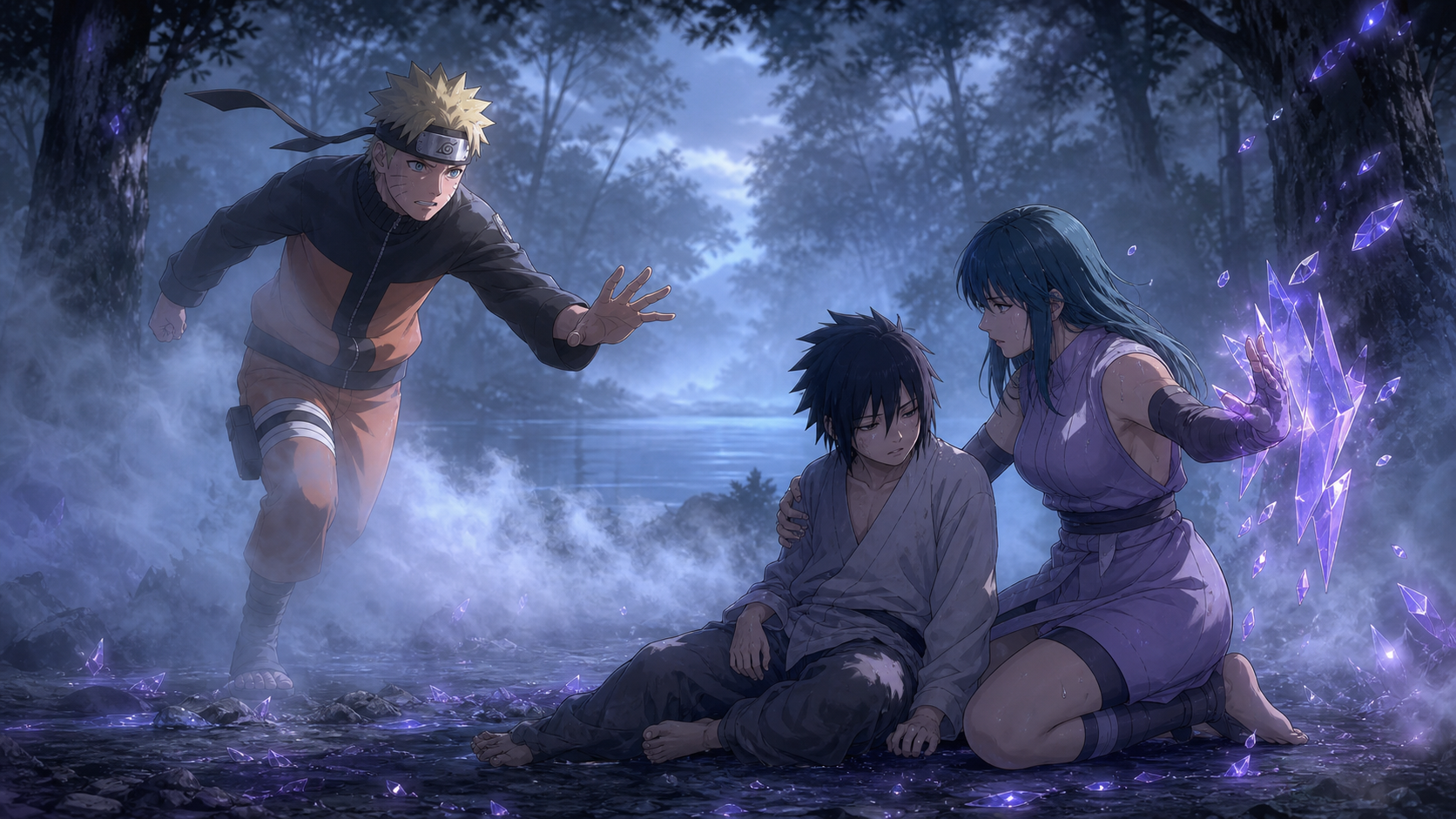
Naruto and Guren reach for the same exhausted child from opposite sides, forcing protection, loyalty and belonging into one mist-covered confrontation.
Two people reach for the same child
Everyone's Feelings brings Naruto and Guren together inside the mist, but Yukimaru,not the Three-Tails,becomes the center of the confrontation. Naruto enters the fog to find him. Guren remains beside him because his condition prevents him from moving. When they meet, neither can dismiss the other's concern as an easy lie.
That makes the conflict more complicated than a rescue. Naruto sees a vulnerable child caught inside Orochimaru's plan and wants to remove him from danger. Guren sees the same child and believes that staying close is the only way to protect him. Their methods and loyalties are opposed, but the feeling driving each of them is recognizable to the other.
Yukimaru's weakness gives the scene urgency without turning him into a passive object. His presence exposes what both adults value. Naruto responds to isolation because he remembers his own. Guren responds with fierce protection because Yukimaru has become the relationship that makes her imagine a life beyond usefulness to Orochimaru.
Protection and possession
The episode asks where protection ends and possession begins. Guren's care is genuine, yet she remains part of an operation that depends on Yukimaru's unusual connection to the Three-Tails. Keeping him beside her may feel safe emotionally while leaving him inside the machinery that exhausted him.
Naruto's alternative is morally clearer, but it is not emotionally simple. To Yukimaru, Guren is not merely an enemy uniform. She is the person who stayed. Naruto cannot help him by pretending that bond means nothing, and he cannot earn trust by demanding that Yukimaru abandon it on command.
The small crystal defense between them captures the problem. Guren's power can shield Yukimaru from an immediate approach, but the same barrier keeps possible help away. Naruto's open hand carries no guarantee either. He represents safety from Orochimaru's plan, yet following him means trusting strangers while leaving the one familiar protector in the mist.
Feeling becomes evidence
Naruto has always read emotion as information. He notices hesitation, loneliness, and contradictions that more tactical shinobi might discard. Here, that instinct helps him recognize that Guren's attachment is real. Recognizing it does not excuse her actions. It tells him that the confrontation cannot be solved by treating her as someone with nothing to lose.
Guren faces an equally disruptive truth. Naruto is not seeking Yukimaru as a weapon. His urgency comes from concern, and that makes it harder to reduce him to an interfering Leaf ninja. Both sides discover that their opponent understands the child at the center of the mission.
The mist reinforces the theme. Earlier it made visual evidence unreliable. Now emotion becomes the clearest signal available. Faces, posture, and the direction each person moves when Yukimaru falters reveal more than the distorted landscape around them.
RaeRae's reaction
I like that the episode chooses an emotional standoff after several chapters of expanding spectacle. The Three-Tails is enormous, the lake is unstable, and both villages have strategic decisions to make. Yet the story narrows everything to one exhausted child and two people who refuse to leave him.
Naruto is persuasive because he does not need to claim exclusive ownership of compassion. He can acknowledge Guren's feelings and still challenge the situation keeping Yukimaru in danger. That is a more mature response than insisting an enemy must be incapable of love.
Guren becomes more interesting for the same reason. Her crystal wall is both threat and shelter. She is ready to fight Naruto, but her attention keeps returning to Yukimaru. The episode makes clear that her loyalty to him is not identical to her loyalty to Orochimaru, and that gap may become the weakness in the larger plan.
Yukimaru's inability to move is painful because everyone else is making decisions around him. The best path forward must eventually include his own wishes, not only competing claims about what is safest. Naruto's greatest strength may be his willingness to ask what home means to someone before deciding where that person belongs.
Everyone's Feelings earns its title by refusing to give compassion to only one side. Naruto, Guren, and Yukimaru enter the clearing with different histories and obligations, but the emotion between them is real. The conflict sparks because care does not automatically create agreement. Sometimes it makes the stakes sharper: both protectors can see what the child needs, and neither yet trusts the other to provide it.
Official episode reference: Naruto Official episode guide
Licensed episode route: Crunchyroll licensed episode page
Yukimaru’s exhaustion is evidence of what the mission has already cost
The child does not become weak because he lacks courage. His body has been pushed through travel, fever, medicine, emotional pressure, and a forced connection to a tailed beast. Adults designed the conditions, then expected endurance to prove usefulness.
Naruto and Guren should read his inability to move as a limit demanding immediate care. Nobody gets to treat collapse as consent for whichever person reaches him first. The correct response begins with stopping further strain, checking his condition, and telling him what choices remain.
Guren’s presence provides comfort and danger at the same time
Yukimaru knows her voice, her touch, the crystal camellia, and the protection she offered during illness. That familiarity can lower fear when everything else becomes unstable. Guren also belongs to the operation that brought him to the lake.
Both truths must remain visible. Removing her abruptly may traumatize him. Leaving her in complete control may return him to Kabuto and Orochimaru. A responsible rescue has to preserve the relationship where possible while preventing the relationship from becoming the route back into harm.
Naruto cannot demand trust because he recognizes Yukimaru’s loneliness
Shared pain gives Naruto an opening, not ownership. He remembers wanting one person who would think of him and understands why Guren’s attention feels like home. Yukimaru still has no reason to assume a Leaf headband guarantees safety.
Naruto earns trust by explaining what he knows, naming what he does not know, and protecting the child without requiring immediate affection. His own history should make him more patient with suspicion, not more certain that he deserves agreement.
Guren has to distinguish being needed from being good for the child
Yukimaru’s dependence may feel like proof that she has become his home. A sick and isolated child will cling to the person providing warmth even when that person remains connected to danger. Need can be real without making the arrangement healthy.
Guren’s care becomes mature when she asks whether staying beside him protects his future or only protects her new sense of purpose. Love cannot make the child responsible for completing the adult.
The crystal wall carries Guren’s contradiction in one image
She creates a barrier to keep Naruto away from Yukimaru. The wall blocks a possible threat and blocks possible rescue. The same technique that made him a flower now decides who can reach his exhausted body.
That ambiguity is stronger than a speech declaring Guren torn. Her hands perform protection through the fighting method Orochimaru trained and valued. She has not yet learned how to protect Yukimaru without controlling the space around him.
Naruto’s open hand still belongs to an armed shinobi
The gesture looks gentle, but Yukimaru sees someone capable of enormous force who arrived with a village team. Naruto should not assume his intention determines how the approach feels to a frightened child.
He can lower his stance, keep distance, explain before touching, and allow Sakura or another medical person to approach if Yukimaru prefers. Care includes noticing how power changes an invitation.
Everyone’s feelings are real without being equally authoritative
Naruto feels urgency, Guren feels protectiveness, Yukimaru feels attachment and fear, and the Leaf team feels pressure from Isobu and Orochimaru’s plan. Emotion explains behavior, but it does not settle what should happen.
Yukimaru’s safety and agency deserve priority because his body bears the consequences. Guren’s grief matters without granting her custody. Naruto’s compassion matters without granting him the right to decide the child’s future alone.
Sakura’s medical role should interrupt the ownership argument
Two protectors staring each other down can forget that Yukimaru needs assessment more than another promise. Sakura can name immediate physical risks and create a neutral task: stabilize breathing, reduce fever, check chakra exhaustion, and stop whatever stimulus is worsening his connection to Isobu.
Medical authority must also remain accountable. Treatment should not become a quiet route into village custody. Yukimaru deserves explanation and as much consent as his condition allows.
Kakashi should recognize Guren’s attachment as a negotiation route
If she truly prioritizes Yukimaru, Kakashi can offer verifiable medical help, safe distance from Kabuto, and terms that do not require immediate surrender into an unknown prison. Threatening the child’s only trusted adult may make her fight harder and move him deeper into danger.
Negotiation does not require pretending her actions were harmless. It uses the responsibility she already feels to open a path away from the institution exploiting both of them.
Orochimaru’s plan depends on treating feeling as another tool
He benefits if Guren’s attachment keeps Yukimaru cooperative. He can promise recognition, imply a shared future, and let her believe completing the mission will secure belonging. Emotional bonds become useful to the hierarchy until they interfere with obedience.
The moment Guren protects Yukimaru from the experiment rather than for the experiment, her feelings stop serving Orochimaru. That is the decision the arc has been preparing.
Yukimaru needs choices small enough to make while exhausted
Asking where he wants to live forever would be unfair during a crisis. He may be able to choose who sits nearby, whether Naruto approaches, whether Sakura examines him, which charm stays in his hand, and whether Guren remains visible.
Small choices restore personhood without demanding that a sick child solve the political conflict around him. Adults can secure immediate safety while leaving larger decisions for a time when he has strength and information.
Naruto recognizes care by watching where Guren moves
She places herself between Yukimaru and a possible threat. Her body confirms what words could fake. Naruto understands protective movement because Iruka, Kakashi, Sakura, and others have stood in danger for him.
Recognition should change his tactic. Charging through Guren would prove her fear that the Leaf intends to take Yukimaru by force. Naruto needs to show that his protection can make room for hers if she stops serving the harm behind them.
The mist makes emotional honesty easier to see than uniforms
Visibility is unreliable, and official loyalties offer poor guidance. A Leaf shinobi may act recklessly. An Orochimaru subordinate may shield a child. The episode asks viewers to judge choices without pretending faction labels erase history.
That does not make both sides identical. Konoha arrived to stop exploitation, while Orochimaru created the operation. The mist simply prevents moral laziness from replacing attention to the people inside those structures.
RaeRae’s full take
Everyone’s Feelings works because Guren’s love is real and still not enough. She stayed, listened, made the camellia, and protects Yukimaru’s body in the clearing. She also carried him toward the people who exhausted him for an experiment.
Naruto is strongest when he refuses the easy lie that an enemy cannot care. Recognizing her attachment gives him a better way to help Yukimaru. The recognition does not pardon Guren. It gives her a door she can choose before Orochimaru closes every other one.
I need the adults to stop talking around the child. Yukimaru cannot make every decision while weak, but he can make some. Asking before touching him would mean more than another speech about understanding loneliness.
The crystal wall captures the whole episode. Guren’s protection has become real enough to block Naruto, yet the wall also blocks medicine, information, and another possible future. Her next act has to decide whether care means keeping Yukimaru close or helping him become safe enough to choose where closeness belongs.
Being the trusted person does not make Guren the only possible protector
Guren may believe only she can keep Yukimaru safe because he calms around her and fears strangers. That belief contains real evidence and a dangerous conclusion. Familiarity helps during crisis, but one adult should not become the child’s entire medical system, home, defense, and future.
Healthy protection builds more safe relationships. Guren can remain beside him while Sakura treats him, Naruto explains the Leaf’s intentions, and Kakashi establishes distance from Kabuto. If she blocks every new connection, her care begins reproducing the isolation that made Yukimaru dependent on the first person who stayed.
Naruto has to avoid using his childhood as a persuasive weapon
Telling Yukimaru that he was lonely too may create recognition. Repeating the story until the child agrees would make Naruto’s pain another pressure placed on an exhausted body. Shared experience should open conversation, not close disagreement.
Yukimaru may love Guren in a way Naruto finds difficult to accept. He may fear the Leaf, want contradictory things, or remain silent. Naruto proves understanding by allowing those responses while continuing to protect him from immediate harm.
Guren’s history explains why usefulness feels like belonging
Orochimaru recognized a rare ability and gave her a role. For someone accustomed to rejection or violence, being needed by a powerful person can resemble safety. The cost appears slowly because every reward depends on continued service.
Yukimaru’s attachment offers another kind of need. He values her presence, not merely crystal style. That difference can help Guren imagine personhood outside Orochimaru’s hierarchy. The risk is replacing one conditional identity with another, where she exists only as Yukimaru’s protector. She needs a self capable of choosing care without requiring dependence forever.
The Leaf team should offer terms Guren can verify
A promise that Yukimaru will be fine is too vague. Guren has reasons to distrust an enemy village, and shinobi institutions have poor records with tailed beasts and unusual children. Kakashi can offer specific steps: Sakura examines him in Guren’s presence, no restraints unless immediate danger requires them, and no transfer out of sight without explanation.
Concrete terms create accountability. If the Leaf breaks them, Guren and Yukimaru can identify the breach. Trust grows through kept actions rather than a heroic reputation the vulnerable person is expected to accept.
Kabuto remains dangerous precisely because he can sound medically reasonable
He understands symptoms, dosages, and the language of treatment. That knowledge can make coercion appear clinical. Yukimaru may have been told pain is necessary, weakness is temporary, and compliance will bring him closer to home.
Sakura’s contrast should be ethical as well as technical. She can explain what she is checking, stop when the child’s condition worsens, and refuse to use care as a route toward the experiment. Medicine becomes trustworthy when the patient matters beyond the result.
The Three-Tails amplifies feelings without explaining them
Isobu’s movement, Yukimaru’s resonance, Naruto’s internal experience, and Guren’s fear place enormous chakra around an intimate conflict. The scale can tempt everyone to read emotion as destiny. A powerful connection does not prove who belongs together or which plan is correct.
Chakra may reveal that bodies respond. The people involved still have to interpret the response, ask what caused pain, and decide whether continuing is safe. Power cannot replace consent with a dramatic glow.
Every protector needs a plan for what happens after the crisis
Naruto can remove Yukimaru from immediate danger and still fail if the child wakes in an unfamiliar secured room with no explanation. Guren can keep him calm tonight and still fail if she returns him to Kabuto tomorrow. Protection needs continuity.
A real plan includes medical recovery, safe housing, contact decisions, truthful information about Isobu, and protection from every faction seeking Yukimaru’s ability. The child should gain more choices as strength returns, not fewer choices because adults become comfortable with the emergency arrangement.
Care requires accountability for past harm
Guren may choose Yukimaru now, but the arc should not erase people injured by her missions or the role she played in bringing him to the lake. Accountability does not demand that Naruto punish her before treating the child. It means later safety cannot be built on silence about what happened.
She can provide information, help stop Kabuto, explain the experiment, and accept limits on her movement while trust is evaluated. Those actions would convert feeling into repair. Tears and sacrifice alone would make a moving scene without building a safe future.
RaeRae’s final word on everybody’s feelings
The title sounds soft, but the episode’s question is hard. Everybody feels something real, and those feelings pull Yukimaru’s exhausted body in different directions. The child should not have to reward whichever adult loves the loudest.
Guren deserves credit for becoming capable of care inside a system designed to make people useful. She also has to face that her obedience helped create the crisis. Naruto deserves credit for seeing humanity across enemy lines. He also has to stop assuming recognition grants instant trust.
The best path is cooperation with boundaries. Guren stays visible. Sakura treats. Naruto speaks without crowding. Kakashi keeps Orochimaru’s people away and states what the Leaf will do. Yukimaru receives small choices now and larger choices after recovery.
That arrangement is less dramatic than one protector defeating the other, which is exactly why I want it. Home should not be awarded through combat. Home becomes real when several people accept the work required to keep a child safe without making safety another form of ownership.
Yukimaru deserves that patience before anyone asks him to choose home.
RaeRae checkpoint: Feeling makes Naruto and Guren understandable. Responsibility decides what those feelings are worth. Yukimaru needs immediate care, truthful choices, and protection that does not turn his dependence into anybody’s claim of ownership.
Receipts and official routes
- Official synopsis, licensed title, and episode placement: Naruto Official Site episode guide.
- Licensed episode title, number, and current watch route: Crunchyroll.