
LION KING CHARACTER · HUNTER, SURVIVOR, QUEEN, AND THE PERSON WHO BROUGHT THE TRUTH ACROSS THE BORDER
Nala: The Lioness Who Survived Scar, Left to Find Help, and Refused to Let Simba Hide
Nala carries the missing years the original movie barely shows. She hunts through scarcity, crosses the border without a prophecy, finds Simba alive, and makes the Pride Lands’ reality impossible for him to ignore.
The quick file
Nala is Simba’s childhood friend, eventual partner and queen, mother of Kiara and Kion in the branches where those children exist, and one of the lions who survives Scar’s rule from inside the Pride Lands. Disney’s 1994 The Lion King
She is playful and physically confident as a cub, direct and politically urgent as an adult, and repeatedly willing to tell Simba what he does not want to hear. Simba’s Pride places her beside a king whose fear threatens Kiara’s autonomy. The Lion Guard makes her mother to Kion and participant in another generation’s leadership. The 2019 photoreal branch casts Shahadi Wright Joseph and Beyoncé Knowles-Carter in the role.
Name, family, and titles
Nala’s name is commonly glossed through several Swahili-related meanings in fandom and reference discussions, including gift or beloved, though simple one-word translations can hide linguistic context. Within the franchise she is friend, huntress, survivor, partner, queen, mother, political witness, and bridge between the damaged Pride Lands and the adult Simba living elsewhere.
The 1994 film does not identify her father and gives limited information about her wider family. Sarafina is named as her mother in credits and franchise material. Later branches make Nala mother to Kiara and Kion. The lack of paternal detail has fueled decades of theories that should remain theories unless a specific continuity establishes an answer.
A cub who can pin the prince
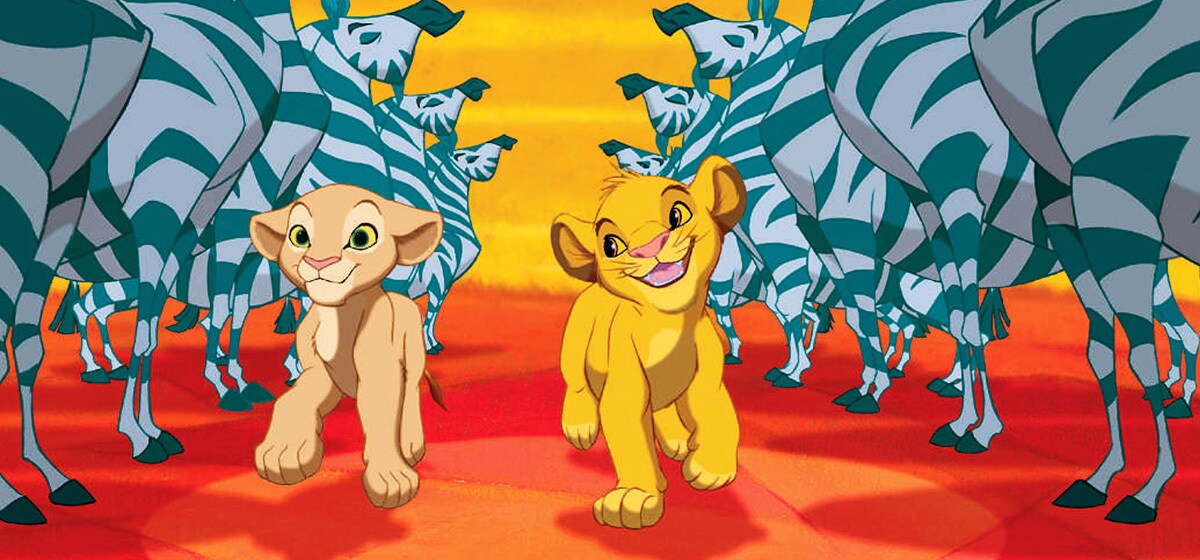
Nala’s first relationship to Simba is not worship. She competes, mocks his confidence, joins the elephant graveyard adventure, and pins him during play. The repeated flip gives her physical competence a visual joke and protects the friendship from becoming prince plus admirer. She knows his title and still evaluates the cub in front of her.
Their play creates equality the royal ceremony could not. Simba may inherit authority, but Nala can beat him at the game they are actually playing. That history matters when they meet as adults. She remembers the person before exile, shame, mane, and kingship. She can recognize growth without becoming impressed by the title alone.
The elephant graveyard
Nala follows Simba beyond the border after he disguises the destination from their mothers and Zazu. She shares curiosity and risk while refusing to become passive cargo in his performance of courage. During the hyena chase, both cubs run, improvise, protect each other, and discover that royal confidence cannot stop organized predators.
Mufasa’s rescue changes the lesson for each child. Simba carries responsibility for initiating the danger. Nala carries the knowledge that a trusted friend can use secrecy to recruit her into risk. The film restores their friendship quickly because childhood resilience and shared fear are stronger than one argument. A deeper profile should still remember that she was manipulated into the outing too.
Sarafina and the mother-daughter line
Sarafina appears during the cubs’ bathing scene and participates in the lionesses’ social world. The film gives little dialogue or private history between mother and daughter. That absence means Nala’s courage can appear self-generated when it likely grew through a community of lionesses surviving, hunting, teaching, and caring together.
The maternal line matters because the royal plot privileges fathers and sons. Mufasa teaches Simba, Scar destroys Mufasa, and Simba returns to inherit. Nala’s knowledge arrives from the pride that stayed. Sarafina and the other lionesses are part of the infrastructure beneath her strength even when the camera does not stop long enough to name the lessons.
What Scar’s rule asks of the lionesses
The lionesses continue hunting while resources disappear. Scar and the hyenas consume political attention, prey becomes scarce, and the land is represented as failing. Sarabi confronts the king with the practical limit: there is no food. Nala grows into adulthood inside this labor crisis rather than in the safety of a comic refuge.
Her survival therefore contains skills and grief the original film mostly leaves off screen. She has watched cubs and elders struggle, hunted farther for less return, lived under threat, and learned that Scar responds to evidence with violence. When Nala tells Simba everyone is depending on him, the sentence comes from years of collective work, not abstract loyalty to a crown.
The missing-middle problem
Simba’s exile receives a song and visible growth. Nala’s same years receive a reveal when she enters the jungle as an adult. The structural imbalance is understandable because the film follows Simba and still creates a major character gap. We know the Pride Lands deteriorated. We do not see enough of how Nala changed while enduring the deterioration.
That blank space should not be filled entirely with romance. Nala developed hunting judgment, political awareness, risk tolerance, knowledge of Scar’s rule, loyalty to the pride, and the capacity to leave home without knowing whether help existed. A future story could treat those years as a survival history worthy of its own narrative rather than a waiting room for reunion.
Leaving the Pride Lands is her decision
Nala crosses the border in search of help or viable resources. The original film moves quickly from her hunt to Simba’s jungle, but the act implies enormous risk. She leaves a starving community, travels through unknown territory, and hunts alone. There is no prophecy guaranteeing she will find the missing prince.
This makes her an active bridge rather than a messenger sent by fate. Rafiki later gives Simba spiritual direction. Nala gives him present-tense evidence. She has seen what Scar’s government has done and refuses to let his private shame become an excuse that keeps everyone else inside the consequences.
The reunion begins as a hunt
Nala first appears to Timon and Pumbaa as a predator. Simba intervenes, the two lions fight, and her familiar pin reveals identity before a formal introduction can. The choreography lets childhood recognition live in the body. Nala does not become less formidable because the opponent is Simba.
The sequence also protects her hunger from becoming villainy. She is trying to eat after living through scarcity. Timon and Pumbaa experience terror because they are prey animals. Simba stands between chosen family and an old friend who has a legitimate need. The reunion is joyful because nobody dies, not because the food chain was imaginary.
Can You Feel the Love Tonight
The romantic sequence allows play, recognition, touch, and desire to interrupt urgency. Nala can be relieved to find Simba, attracted to the adult he became, and angry that he refuses to return. Love does not dissolve the political argument. It raises the cost because she now knows the person avoiding responsibility is somebody she still trusts enough to want beside her.
The song is partly observed through Timon and Pumbaa, whose fear of losing Simba adds chosen-family tension. Nala enters an existing household. A healthy interpretation does not ask one bond to replace another. Simba’s future can include partner, childhood community, adoptive caregivers, and royal family without ranking affection through blood alone.
Nala does not accept Hakuna Matata as policy
She can understand that Timon and Pumbaa saved Simba without accepting permanent withdrawal from the Pride Lands. Her urgency comes from asymmetrical information. Simba knows his guilt story. Nala knows current conditions. Each believes the other is ignoring the decisive fact. The argument cannot move until Scar’s lie loses control.
Nala leaves the confrontation rather than comforting him into further avoidance. That boundary matters. She names the need, hears refusal, and does not pretend romance makes the refusal harmless. Rafiki reaches Simba afterward because Nala has already broken the fantasy that his new life exists without consequences.
She brings evidence before Rafiki brings memory
The structure gives Nala and Rafiki different functions. Nala testifies to the present. Rafiki reconnects Simba to identity and Mufasa. One without the other would be incomplete. Memory alone could become nostalgia. Evidence alone cannot undo the false guilt preventing action.
Calling Rafiki the sole reason Simba returns erases Nala’s work. She crosses the border, finds him, explains the crisis, challenges his refusal, and makes remaining away an active decision rather than an uninformed condition. The spiritual scene becomes possible after the political truth has arrived.
Returning to fight
Nala returns with Simba, Timon, and Pumbaa and participates in the confrontation against Scar and the hyenas. The lionesses are not spectators waiting for the rightful male. They attack, defend, and reclaim the territory they have kept alive under scarcity.
The final image centers Simba’s ascent, which follows the story’s royal structure. Nala’s labor remains in the surrounding pride. The restoration should be read as collective victory with one visible king, not proof that everyone else waited passively for bloodline to fix the land.
Queen without enough governing scenes
The ending places Nala beside Simba as partner and future queen. Later stories confirm that status. The franchise often gives her wisdom, emotional steadiness, and family influence without showing enough policy, dispute resolution, resource decisions, or independent authority. “Queen” can become a relationship title when governance stays off screen.
Her survival record supports a larger role. Nala understands scarcity, the lionesses, cross-border risk, Scar’s methods, chosen family, and the cost of a king withdrawing from evidence. A credible Pride Lands government would use that knowledge structurally rather than relying on private advice after Simba makes a decision.
Simba’s Pride and the overprotective king
In The Lion King II: Simba’s Pride, Nala watches Simba’s fear shape his parenting of Kiara. She recognizes risk and does not share the same intensity of suspicion toward Kovu. Her position is difficult because she supports her partner while seeing how trauma can become control.
The film could give her more direct intervention. Nala has already confronted Simba when avoidance harmed the pride. As queen and mother, she should have authority to challenge surveillance, banishment, and inherited judgment before Kiara must carry the entire argument. Her quieter presence should not be mistaken for agreement with every decision.
Relationship with Kiara
Kiara inherits Nala’s independence, physical confidence, curiosity, and willingness to confront Simba. Mother and daughter receive less private time than father and daughter, which repeats the franchise’s tendency to place paternal legacy at the center. The resemblance remains visible in action.
Nala can understand both Kiara’s need for autonomy and Simba’s fear because she lived the elephant graveyard, Scar’s rule, exile’s consequences, and the return. A fuller relationship would show her teaching hunting, leadership, consent, diplomacy, and how to love somebody without turning love into permission for control.
Relationship with Kovu
Kovu enters the pride carrying Zira’s plan, Scar’s association, and his own capacity to choose differently. Nala’s response is less dominated by resemblance than Simba’s. She can remain cautious without treating origin as permanent guilt because she saw what Scar’s false accusation did to Simba.
Accepting Kovu into the family should include accountability and opportunity. Nala’s history makes her uniquely positioned to distinguish evidence from inherited fear. The sequel does not develop that potential enough, leaving Kiara to perform most of the emotional bridge work.
The Lion Guard and mothering Kion
The Lion Guard makes Nala mother to Kion, leader of a cross-species team and bearer of the Roar of the Elders. She supports him through responsibilities that combine danger, ecology, royal history, and supernatural power. Gabrielle Union voices Nala in the series, giving the role a new branch-specific performance.
Kion’s leadership creates another chance to show Nala as mentor rather than background parent. She understands the danger of young lions proving themselves beyond borders and the cost of adults withholding full context. Her best guidance should include trust, preparation, and room for a child’s evidence to revise royal assumptions.
Nala and the Lion Guard’s cross-species model
The Guard distributes ecological protection among Kion, Bunga, Fuli, Beshte, and Ono. Nala’s adult world has been organized around lioness hunting and lion kingship. Her support for the team can mark growth in the Pride Lands’ understanding of who performs public responsibility.
The model also makes her own invisible labor easier to name. A kingdom survives through bodies with different skills. Nala has always represented practical knowledge outside ceremonial authority. The Guard turns that principle into an explicit team even while the Roar remains tied to royal inheritance.
Timon and Pumbaa are not rivals for Simba
Nala’s arrival threatens Timon because he expects romance to end the trio. The film plays his reaction comically. Nala does not demand that Simba abandon the friends who raised him. She joins a relationship network already changed by exile.
A mature family interpretation gives her space to know Timon and Pumbaa as caregivers, friends, and people with their own needs. They possess years of Simba’s life she did not witness. Nala possesses childhood and political history they do not. Nobody needs to win ownership of the complete person.
Relationship with Sarabi after the return
Nala and Sarabi survive Scar’s reign together and later become queen and elder queen within the restored pride. That relationship could carry history, grief, leadership knowledge, and tension about how the royal family rebuilds. The films give little sustained attention to it.
Sarabi knows Mufasa’s government and the cost of confronting Scar. Nala knows the outside search and Simba’s return. Their combined perspective could prevent restoration from becoming imitation. A political family needs intergenerational women as decision-makers, not only visual continuity around the king.
Voice and song performance history
Niketa Calame voices young Nala’s dialogue in the 1994 film, while Laura Williams performs the cub’s principal singing. Moira Kelly voices adult Nala in the original feature and major sequel films. Sally Dworsky provides the adult singing voice in the 1994 film. Gabrielle Union voices Nala in The Lion Guard.
The 2019 film casts Shahadi Wright Joseph as young Nala and Beyoncé Knowles-Carter as adult Nala. Each branch changes vocal age, authority, humor, musical texture, and the balance between private feeling and public urgency. Credits should name speaking and singing labor rather than letting one celebrity erase the ensemble required to build the character.
The 2019 photoreal Nala
The remake gives adult Nala additional vocal and narrative emphasis, including “Spirit,” “Beyoncé’s performance,” and a more extended route out of the Pride Lands. The photoreal body reduces the facial elasticity of 1994, so voice, gaze, physical distance, editing, and music carry more emotional information.
Her political function remains familiar: she brings the reality of Scar’s rule to Simba and demands return. The newer branch benefits when it expands what she did before reunion rather than only enlarging the romance. Added screen time should become added interiority, decision, and consequence.
Nala’s escape in the 2019 branch
The newer film spends more time showing Nala evade Scar and the hyenas before leaving. That choice partially repairs the missing middle by making departure a planned act under surveillance. She is not delivered to Simba by narrative convenience. She creates the route.
The sequence also exposes why her survival deserves independent attention. Scar’s control reaches bodies, food, movement, and fear. Nala’s resistance involves timing, knowledge of terrain, alliances, and willingness to risk being caught. Her later demand that Simba act comes from action she has already taken herself.
Design across cub and adult forms
Young Nala uses rounded cub proportions, pale fur, expressive eyes, quick ears, and confident posture. Adult Nala gains length, strength, and controlled movement without a mane carrying automatic authority. Her design must communicate maturity through body, gaze, and action within a franchise that uses male mane silhouettes as immediate political shorthand.
The repeated pin connects cub and adult identity through movement. She does not need a crown added to become recognizable as powerful. That visual continuity resists a hierarchy where female adulthood becomes visible only through partnership, motherhood, or jewelry.
Hunting competence and the ethics of predation
Nala is a predator and a provider. The film treats hunting as ordinary ecological labor when performed within Mufasa’s balance and as desperate evidence of collapse under Scar. Her attempt to hunt Pumbaa places beloved characters on opposite sides of the food chain without making either morally corrupt.
This tension is more honest than pretending friendship ends appetite. The Pride Lands’ political story depends on food. Lioness skill feeds the pride, while prey species receive little political voice. Nala’s profile should name both the competence and the unequal perspective built into a lion-centered kingdom.
Romance should not absorb her political argument
Nala loves Simba and needs him to confront a crisis. Those motives overlap without becoming identical. She does not seek a man so private happiness can begin. She seeks help for a starving community and discovers the missing heir is alive. Romance grows inside that discovery.
Reducing her to love interest converts courage into availability. The relationship works because she challenges him, remembers him, desires him, fights beside him, and later disagrees with him. Love is one form of action among many, not the explanation for every choice.
Queen, partner, and the burden of emotional translation
Nala often becomes the person expected to translate fear into reason for Simba, reassure children, soften conflict, and support royal continuity. That emotional labor can make her look wise while leaving her exhausted work invisible. A partner should not be the private mechanism keeping a king publicly functional.
Shared rule requires public authority, not only influence during intimate conversations. The franchise owes Nala scenes where her judgment determines policy, where other characters answer to her decisions, and where disagreement does not end with her waiting for Simba to reach the conclusion she already named.
Common fandom misconceptions
Nala did not spend Simba’s exile simply waiting for him. The film leaves much of her life unseen, and what appears on screen establishes hunting, survival, resistance, departure, and return. Absence of scenes is not evidence of absence of action.
Her father is not conclusively identified by the 1994 film. She is not responsible for solving Simba’s trauma because she loves him. She does not become politically relevant only after marriage. She already carries the Pride Lands’ evidence and risks her life before knowing the king survived.
What future stories owe Nala
A mature continuation should show her survival during Scar’s rule, relationship with Sarafina and Sarabi, leadership among the lionesses, independent governance, disagreements with Simba that change policy, mentorship of Kiara and Kion, and life beyond managing royal men’s fear.
Let Nala hunt, negotiate, fail, rest, laugh, grieve, command, and choose something not organized around finding or correcting Simba. The franchise has already given enough evidence to support that range. It needs to move the camera toward the work.
Profile conclusion
Nala is friend, hunter, survivor, witness, partner, queen, and mother. She crosses the border carrying a kingdom’s reality and refuses to let Simba’s private guilt become the final word on everybody else’s future. Her strength is not that she never needs help. It is that she acts before she knows help exists.
Return to The Lion King hub for films, series, guides, reviews, Reacts, rants, and the complete character directory as each profile is finished. The Pride Lands make more sense when the lionesses’ work remains visible beside the roar.
The character receipt Pride Rock cannot flatten
Nala cannot be reduced to a place in the royal family tree. The profile’s central problem is the labor of survival, the courage to leave a collapsing home, and the political authority the story recognizes without fully naming. That argument becomes visible through decisions, not biography labels. The story tells us who belongs near Pride Rock, but the character receipt asks who has information, who controls movement, whose fear is believed, and who performs the work after a public decision becomes a private emergency.
The relationship map includes Simba, Sarabi, Mufasa, Scar, Timon, Pumbaa, the lionesses, and the animals whose survival depends on the pride’s decisions. Each connection places a different demand on Nala. Love may require truth, friendship may require interruption, leadership may require listening, and family may require a boundary that ceremony cannot override. A complete profile follows what changes between two people after conflict. Repeating the word family is not evidence that repair occurred.
The performance matters at the same level as plot: Moira Kelly gives adult Nala urgency and disciplined anger while Niketa Calame voices the cub; Sally Dworsky carries the adult singing voice. Breath, tempo, silence, posture, and distance frequently carry what the screenplay leaves unspoken. The Lion King uses animals with highly readable human emotion while preserving movement drawn from observation. That balance lets a lowered head or delayed step become moral evidence without translating every feeling into dialogue.
The 1994 film also places Nala inside an African-inspired world assembled by an American studio through research, music, language, landscape photography, theatrical tradition, and fairy-tale structure. The result is culturally meaningful to many viewers without becoming a documentary map of one country or people. The profile names specific influences where evidence supports them and does not use “Africa” as a decorative adjective that ends the inquiry.
Later films, television series, stage productions, photoreal remakes, and the Mufasa branch revise Nala through different continuities. More screen time can expose a missing motive, but it can also tidy a contradiction that made the original performance interesting. The comparison asks what each version permits Nala to know, choose, refuse, remember, and repair. Visual realism alone does not make a characterization more truthful.
The final JIN test is whether Nala leaves behind a person rather than a symbol. Symbols can carry grief, monarchy, exile, ecology, parenthood, or chosen family, but people contradict the role assigned to them. The best future scene would let Nala make an ordinary choice with no ceremony watching, then allow that choice to matter later. Continuity begins when the franchise remembers what the character already paid to learn.
The scene after the applause
Nala also deserves the scene after everybody else believes the problem is solved. That is where duty becomes visible: checking on the injured, sharing food, naming the lie, sitting with grief, or admitting that the restored landscape did not restore every relationship. The Lion King often moves through magnificent public images. A private aftermath would show whether Nala can live the values the ceremony just announced.