

Character File · The Little Mermaid II · Return to the Sea
Melody
Ariel crossed the sea to reach the human world. Her daughter crosses the wall to reach the sea, proving that secrecy can reverse direction without becoming protection.
Quick file
Franchise branch: The Little Mermaid II: Return to the Sea (2000). Age: twelve during the main story. Performer: Tara Strong. Family: Ariel and Eric are her parents, King Triton is her grandfather, and the royal families of sea and shore form her inheritance.
Friends: Tip and Dash. Primary antagonist: Morgana. Defining conflict: her parents hide her merfolk ancestry and close the sea behind a wall, so the first adult who validates her longing can weaponize it.
The baby at the beginning is already a political symbol
Melody is introduced to Atlantica as the child of a human prince and former mermaid princess. Her birth represents the relationship the first film promised but did not have time to build.
Morgana attacks during the celebration because the child connects Triton’s line to the human kingdom. Melody is loved as a baby and targeted as a bridge before she can choose what either identity means.

The threat is specific, but the ban becomes total
Morgana threatens Melody and escapes. Ariel responds by hiding the locket, ending contact with Atlantica, and ordering a massive wall around the coast.
The danger is real. The solution treats the entire sea as danger. One enemy becomes the justification for erasing grandparents, aunts, culture, biology, and history from the child’s life.
The wall is family trauma made architecture
Triton used orders and magical destruction. Ariel and Eric use stone. Melody grows beside a physical structure that says something beyond it cannot be named.
Walls create curiosity as reliably as they create distance. Melody does not become safe because she lacks information. She becomes an explorer without a trustworthy guide.

She is twelve, not a tiny adult heroine
Melody is awkward at court, worried about belonging, frustrated with rules, and eager for a body that matches how the water feels. Her judgment should be read at twelve.
Adults hold responsibility for the secrecy and security failures around her. Her decision to leave is risky. It is also predictable after years of being denied a coherent account of herself.
Swimming is embodied knowledge
Melody swims beyond the wall before she knows her ancestry. The ocean feels natural through movement, attention, and joy.
That instinct does not prove every desire is biologically predetermined. It shows that identity can be experienced before family language makes it intelligible.

The locket carries erased history
The shell locket links Melody to Triton and Atlantica. Ariel throws it into the sea during the original threat, attempting to remove the object Morgana demanded.
Objects do not create ancestry, but they can hold names, stories, and public recognition. Recovering the locket gives Melody evidence that the family narrative is incomplete.
Ariel repeats Triton from the other side
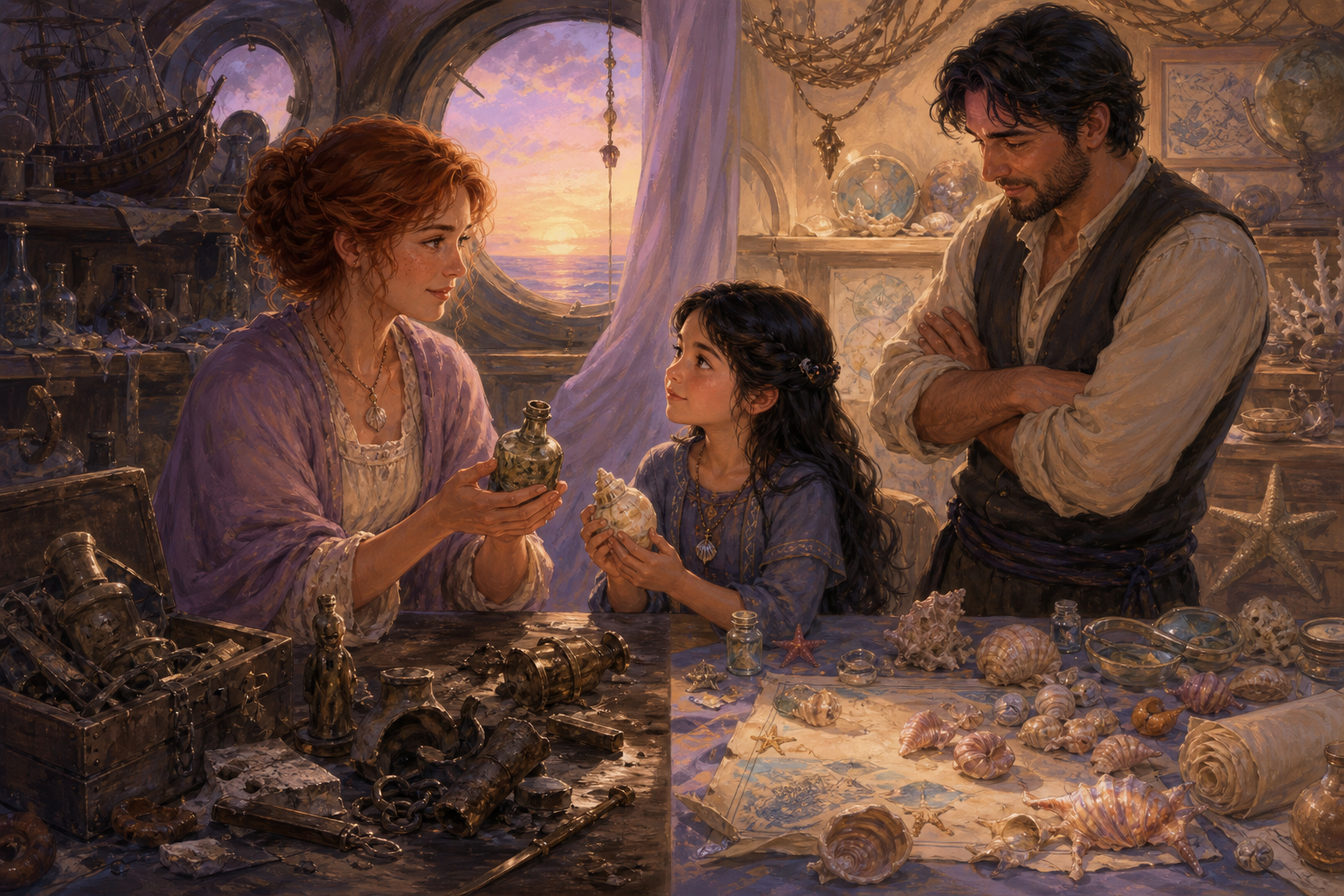
Ariel once kept human objects because Triton forbade the surface. Melody keeps sea objects because Ariel forbids the ocean. The collections mirror each other.
The sequel’s strongest idea is that surviving control does not prevent somebody from repeating it. Fear can make liberation temporary when the method has never been examined.

Eric co-signs the secrecy
Eric knows Ariel’s history and still helps maintain the wall. As ruler of the human shore and Melody’s father, he has political and parental responsibility.
The sequel centers Ariel’s fear, but Eric is not furniture. He can challenge the strategy, create specific defenses, and insist that Melody receive age-appropriate truth. He does not.
Triton accepts the separation too easily
Triton returns to the sea after Ariel closes the border. He understands the pain of losing access to a daughter and has already learned that prohibition fails.
His compliance protects the baby from immediate exposure while allowing the same family pattern to continue for twelve years. Grandfatherhood should include accountability, not only patient longing.

Tip and Dash offer belonging without pedigree
The penguin and walrus meet Melody as a lonely traveler and become friends before royal lineage is revealed. They share fear, humor, mistakes, and improvised courage.
Their friendship matters because every powerful adult has attached Melody to a plan. Tip and Dash attach themselves to her company. They are imperfect but not transactional.
Morgana listens where the parents refuse
Morgana recognizes Melody’s desire for the sea and promises a way to make it visible. Like Ursula, she approaches a child whose family conflict has created vulnerability.
Validation is not care when it exists to recruit. Morgana tells enough truth to gain trust, then hides the trident scheme and her willingness to discard Melody after use.

The body she wants is not a trivial costume
Melody’s desire to be a mermaid expresses affinity, ancestry, movement, and relief from feeling wrong in the human court. The transformation fantasy is emotionally serious.
Morgana converts that longing into a reward contingent on theft. The problem is not that Melody wants another body. It is that no ethical adult has helped her explore what the desire means.
The trident mission turns identity into labor
Morgana claims the transformation can become permanent if Melody retrieves Triton’s trident. The girl believes she is earning belonging.
In reality, she is performing dangerous political labor for an exiled adult. The bargain resembles Ursula’s system without a formal scroll. Desire becomes the wage for a task designed to empower the manipulator.

Atlantica should recognize her, but secrecy makes her an intruder
Melody enters the underwater world connected by blood to its king but without language, history, or public introduction. She should have grown with access to this family.
The adults’ wall converts a princess into a trespasser in her own heritage. Morgana’s deception fills the institutional vacuum left by two kingdoms that know she exists and choose silence.
Tara Strong makes loneliness active
Tara Strong voices Melody with uncertainty, frustration, curiosity, comic embarrassment, and determination. The performance lets social awkwardness coexist with physical confidence in the water.
Melody does not sound like Ariel copied into a younger register. Her longing is shaped by exclusion from a world she senses but cannot name, rather than by study of a known forbidden culture.
For a Moment is a mother-daughter argument through parallel joy
The duet allows Ariel and Melody to experience mermaid identity in different contexts, revealing how much pleasure the wall has withheld.
The song also sharpens the tragedy. Ariel knows exactly what the sea can mean and still believed Melody could live without that knowledge. Shared joy becomes evidence against the prohibition.
The betrayal is bigger than losing a tail
When Morgana’s plan becomes clear, Melody learns that the adult who validated her also treated her as expendable. The emotional injury joins the political danger.
She must separate the truth of her longing from the lie of the person who exploited it. Being manipulated does not make the desire false.
Ariel’s confession arrives after the crisis
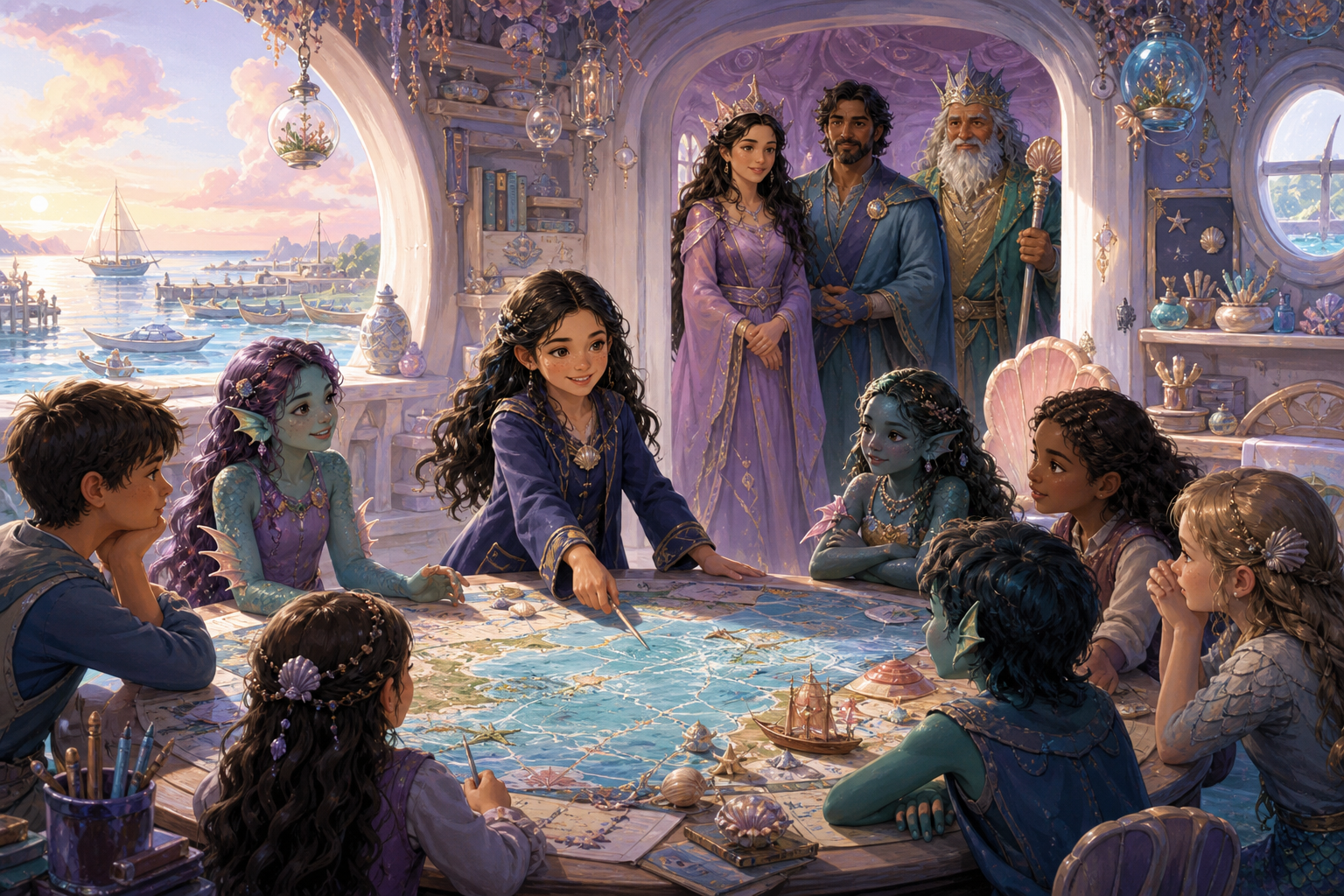
Ariel finally explains the family history and her fear. The explanation gives context but cannot return twelve years of relationship with Atlantica.
A meaningful apology must name the secrecy as harm, not only unfortunate necessity. Melody deserves to hear why the adults chose it and what they will change.
The wall coming down is structural repair
Removing the wall does more than symbolize reconciliation. It changes access, visibility, movement, and public policy between sea and shore.
The family finally alters the structure that carried fear. That is stronger than granting Melody a private exception while leaving everybody else separated.
She does not need to choose one permanent body
The ending allows Melody to reconnect both worlds. Her future should not force a final test of whether she is really human or really mermaid.
Mixed identity can involve changing context, language, community, and embodiment without becoming indecision. The border created the false binary.
The sequel repeats its predecessor on purpose
Melody follows agents of a sea witch, leaves home, receives transformation magic, and becomes the lever in a struggle over Triton’s power. The parallels are explicit.
Repetition can feel derivative, but it also functions as the point. Families reproduce unresolved patterns until somebody changes more than the ending.
What the film leaves underwritten
The movie moves quickly through twelve years of secrecy, court isolation, parents’ choices, and two civilizations’ silence. Melody’s emotional situation deserves more than a single adventure can contain.
We see little of her education, friendships before Tip and Dash, relationship with Eric, or knowledge of maritime politics. Those gaps make the character look simpler than the premise.
A future built around translation
Melody could become an ambassador, researcher, rescue coordinator, or educator who knows what happens when children inherit borders without explanations.
Her authority would come from lived connection, not blood alone. The best future lets her build institutions that make another secret archive unnecessary.
Final character receipt
Melody is not Ariel reversed as a gimmick. She is evidence that a family can repeat control while honestly believing it has learned from the past.
Her victory is not receiving a tail or defeating Morgana. It is forcing the adults to replace secrecy with relationship and tear down the wall they called love.
Twelve years of silence require a whole system
Ariel and Eric cannot hide Atlantica through one difficult conversation. The secrecy has to shape maps, lessons, servants, guards, visiting routes, family celebrations, and every question Melody asks about the wall. Adults across the palace must know which subjects to avoid. Atlantica must keep relatives away. The lie is institutional long before Melody breaks a rule.
That scale matters because blame often collapses onto one frightened mother. Ariel initiates the separation after Morgana’s threat, but a kingdom maintains it. Eric authorizes architecture and policy. Triton accepts distance. Grimsby and palace staff enforce the narrative. Merfolk relatives remain absent. Many loving adults choose consistency with the plan over relationship with the child.
Melody therefore does not discover one withheld fact. She discovers that her environment was curated around preventing self-knowledge. Trust repair cannot happen through one apology because the deception was repeated every day she grew up.
Security could have targeted Morgana instead of the ocean
Morgana is a specific antagonist with identifiable magic, allies, goals, and family history. The kingdoms could share intelligence, patrol routes, protective charms, evacuation plans, and procedures for suspicious contact. Instead, they treat the sea itself as the threat and make Melody’s ancestry part of the security problem.
Broad bans feel simple because they remove the need to distinguish danger from difference. They also create blind spots. Guards trained only to keep Melody away from water may not recognize Morgana’s methods. A child taught nothing about sea witches cannot evaluate the first one who offers help.
The wall also signals fear to everybody on both sides. It does not eliminate political conflict. It advertises a fracture that an enemy can exploit. Specific preparation would require cooperation. Total separation lets the adults avoid that difficult work.
Mixed identity is not half of two complete people
Melody is fully connected to both family lines. She does not become fifty percent human at breakfast and fifty percent merfolk when swimming. Her identity is produced through relationships, embodiment, history, place, and the meanings other people attach to those categories.
The wall makes the categories appear mutually exclusive. Human life occurs inside safety. Mermaid life exists outside knowledge. Melody responds by imagining that one bodily transformation will resolve the feeling of not fitting. That hope is understandable when nobody has shown her a way to inhabit both worlds openly.
A healthier family would let her learn multiple languages, customs, movement practices, and histories without requiring a final declaration of loyalty. Belonging can be plural and still be specific.
The palace social scene shows more than awkwardness
Melody struggles during the birthday celebration because court behavior expects ease, grace, and confidence she does not feel. The comedy of a child tripping or disrupting protocol can hide the pressure of performing a royal identity designed by adults.
She is not socially empty. She has interests, humor, and physical competence in the ocean. The palace recognizes only a narrow set of skills. A girl who can navigate currents and communicate with marine animals still feels defective because those abilities cannot be named inside the approved life.
Her isolation is therefore contextual rather than proof she is naturally antisocial. Tip and Dash meet her in a setting where competence and curiosity matter more than etiquette. Friendship appears when the environment stops grading the wrong person.
Morgana offers recognition before she offers magic
Morgana’s most dangerous move is not transformation. It is telling Melody that the sea longing makes sense. For the first time, an adult appears to possess an explanation that does not frame the desire as disobedience.
This is how predatory mentorship works. The manipulator identifies a legitimate unmet need, becomes the sole source of validation, and attaches compliance to continued belonging. Melody is not fooled because she lacks intelligence. She is recruited through information the family should have provided safely.
The eventual betrayal should not teach her to distrust every adult who recognizes her identity. It should teach the family that withholding truthful support does not erase a need. It transfers authority to whoever is willing to name it first.
Tip and Dash are comic relief with serious social value
Tip performs confidence before he feels it. Dash is cautious and loyal. Their friendship includes exaggeration, fear, disagreement, and repair. Neither has political power or a polished plan for Melody. That makes their companionship unusually nonhierarchical in a story full of rulers and witches.
They also give Melody witnesses outside the family conflict. Children need peers who know what happened, especially when adults have controlled the official account. Tip and Dash see her hope, the bargain, the failure, and the decision to fight back.
Their courage is not the absence of fear. It is the choice to remain present after the adventure becomes more dangerous than the boasting promised. The friendship deserves to continue after the wall falls instead of disappearing once the royal family reunites.
Tara Strong has to carry two kinds of not fitting
On land, Melody sounds self-conscious, frustrated, and defensive because she is failing at a role everyone assumes should be natural. In the sea, the vocal energy opens. Excitement and physical confidence arrive before she has language for ancestry.
Tara Strong has to keep both states recognizably the same child. If the sea version became a completely different personality, the story would imply the correct body magically solves every emotional problem. Instead, the performance lets longing, impulsiveness, loyalty, and uncertainty remain continuous.
The voice work also differentiates Melody from Ariel. Ariel knows the forbidden world exists and studies it. Melody has been told the relevant world does not belong in conversation. Her frustration comes from an absence she feels before she can identify its source.
The trident is stolen through a child’s need for legitimacy
Morgana cannot simply walk into Atlantica and claim Triton’s power. Melody’s unrecognized family connection gives her access, motivation, and a reason to believe retrieval will prove she belongs. The child becomes a political instrument because both sides understand her lineage differently.
The mission also turns royal inheritance against the kingdom. Melody should have been introduced to Triton, the palace, and the trident under safe conditions. Secrecy makes those encounters novel and removes the relationships that might expose Morgana’s lie.
When Melody realizes the theft, guilt can become another form of adult evasion. She made the mistake. Adults constructed the ignorance, conflict, and access failures that made the mistake useful. Accountability should be shared according to power.
Ariel and Melody need more than mirrored apologies
Ariel can tell Melody that fear motivated the wall, just as Triton can tell Ariel fear motivated the grotto. The explanation becomes meaningful only if the parent names the child’s loss without asking gratitude for loving intentions.
Melody lost years with grandparents and aunts, cultural knowledge, safe swimming instruction, and the chance to ask ordinary questions before those questions became crisis. Ariel lost an archive and trust. The injuries are not identical, but the family pattern is.
Repair should include ongoing conversation where Melody can remain angry, curious, or uncertain after the triumphant ending. Forgiveness cannot be another performance required to restore royal harmony.
The two kingdoms owe her public truth
Melody’s ancestry is not only private family information. Her existence embodies a political alliance and exposes the prior separation between civilizations. Both courts made decisions about her movement and knowledge. Both should explain those decisions.
Public truth matters because a wall affects communities. Fishers, sailors, merfolk travelers, guards, and families living near the border have adapted to separation. Removing stones without revising policy could leave the old assumptions intact.
Melody should not become the mascot who proves unity while adults retain control. She deserves representation in the process and protection from having her identity turned into another royal symbol.
A child-safe story can still examine bodily autonomy
Melody wants mermaid form because it feels connected to movement and ancestry. The story can honor that desire without treating one body as the correct solution to selfhood. Magic should not be the only route to legitimacy.
The ethical problem with Morgana’s offer is not transformation itself. It is deception, conditionality, and the adult’s plan to revoke belonging after extracting labor. Consent requires accurate information and freedom from coercion, especially when the person deciding is twelve.
A future with reversible, supervised transformation magic could let Melody explore embodiment without permanent contracts or political theft. Atlantica already possesses powerful magic. The question is whether access can be governed around care rather than crisis.
What school should look like after the wall
Melody needs education that includes sea history, human maritime history, ecology, magic safety, family genealogy, and the harms each kingdom caused through isolation. A tutor cannot simply replace the old silence with royal propaganda.
Shared classrooms could allow merfolk and human children to learn navigation from both perspectives. Human maps describe surfaces and coasts. Merfolk knowledge describes currents, depths, habitats, and hazards invisible from ships. Combining them produces safer travel and more honest history.
That future turns Melody’s private confusion into public prevention. The next child who feels pulled toward another world would have vocabulary, mentors, and routes before a villain can sell belonging.
The film’s direct-to-video status should not shrink its ideas
Return to the Sea has more limited production resources and a structure that repeats the first film. Those industrial facts affect animation, pacing, and reception. They do not make Melody’s premise disposable.
The sequel asks a sharper intergenerational question than many prestige continuations: what happens when the rebel becomes the parent and danger makes the old prohibition feel reasonable? That question deserves analysis even when execution is uneven.
A reference-grade profile separates concept from craft. It can criticize repetition, compressed psychology, or limited worldbuilding while recognizing that Melody creates a meaningful test of Ariel’s victory.
Final judgment on Melody’s agency
Melody acts throughout the story. She swims secretly, leaves the palace, trusts new friends, accepts magic, retrieves the trident, recognizes betrayal, and participates in defeating Morgana. Agency does not require that every choice be informed or wise.
Her age and deception shape responsibility. The adults have more knowledge, authority, and capacity to prevent harm. Treating her mistake as proof that the wall was necessary would reverse cause and effect. The wall helped create the vulnerability it claimed to solve.
Melody’s strongest act is insisting that separation end. She does not merely return home after an adventure. Her experience becomes the evidence that forces two generations to change the structure around her.
The shell locket should become a public family record
The locket begins as a gift, becomes a target, gets thrown away for protection, returns as forbidden evidence, and finally reconnects Melody to the family name hidden from her. Its changing use traces the whole argument. An object meant to welcome a baby into community becomes dangerous because adults let an enemy define its meaning.
After the crisis, the locket should not return to a locked drawer. It can anchor a family archive that records Melody’s birth, Morgana’s threat, the decision to build the wall, and the reasons the wall failed. Preserving only the triumphant reunion would repeat the habit of removing painful knowledge.
Melody deserves ownership of that record without becoming responsible for everybody else’s absolution. She can choose when to wear the locket, when to discuss the history, and which parts remain private. The family owes her truth. Truth does not turn her life into public property.
A repaired family makes room for future questions without waiting for another villain to prove why the child deserved an honest answer.
Keep exploring The Little Mermaid
Return to The Little Mermaid hub for film branches, reviews, Reacts, rants, lore, guides, and the full character directory.
Melody’s choices deserve to be read as curiosity shaped by secrecy, not disobedience appearing from nowhere. The wall creates the danger it claims to prevent because a child denied her history will search for answers without the context that might have kept her safe.