
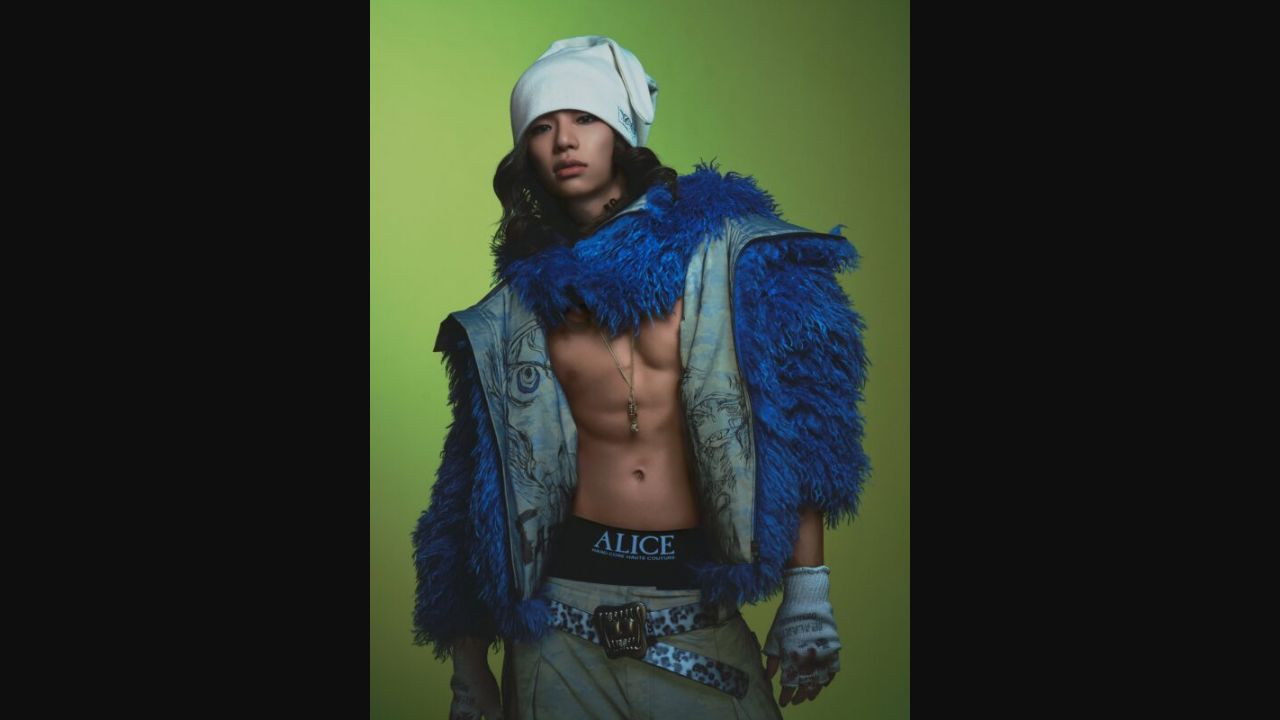
MEDUSA
Tarzzan built a rage-rap temple out of blown bass, direct stares, and expensive danger. The video knows exactly how to sell him. The flow still owes me a second gear.
Bottom line: “MEDUSA” works because the production and video understand Tarzzan’s strengths with almost rude precision. His low tone, physical control, stillness, face, and model-trained command of a frame all look enormous here. The track hits hard. The final section wakes up. The rap performance still spends too long treating one deep, clipped flow as a complete emotional range.
Track releaseDecember 8, 2025
Official videoJanuary 13, 2026
Core soundRage rap, drill pressure, distorted bass
Main complaintTone is not flow, and presence is not variation
What changed every time I replayed it
First listen: Oh, this bass is rude. I approve. It walked into the room like it owned the building and brought paperwork.
Second listen: Tarzzan’s voice fits the empty space beautifully, but I started waiting for the delivery to change shape. The beat moved more than the rapper for a while.
Third listen: The final stretch finally tightened the pressure. He sounded less like he was posing inside the production and more like he wanted to break it. That energy should have arrived earlier.
Fourth listen: The video made the strongest case. The camera turns his stillness, body lines, braids, jewelry, glare, and controlled movement into choreography before he even begins a full sequence.
Fifth listen: The myth started bothering me in a useful way. Medusa carries beauty, punishment, sexual violence, rage, fear, and weaponized looking. The song borrows the warning label and leaves most of that story unopened.
What “MEDUSA” is saying
The title does not hide the plan. Medusa turns people to stone when they look. Tarzzan flips that power into celebrity intimidation. Watch him, envy him, judge him, copy him, or hate him. Either way, you are stuck looking. The gaze becomes proof that he already won.
That creates a useful contradiction. A performer needs attention. Medusa punishes it. Tarzzan asks to be seen while casting the viewer as the weak person who cannot look away. That is idol culture with snakes: the audience stares, the artist complains about the staring, and both sides convert the tension into engagement.
The verses mostly use mythology as attitude packaging. We get danger, stone, venom, glare, fear, and an aura that supposedly stops the room. A rap track can swagger without submitting a classics thesis. I am not asking for a footnote every time somebody mentions Olympus.
I am asking what the title adds beyond a cool mood. Medusa is not simply a monster with snakes. Her myth carries questions about punishment, beauty, violation, blame, and who gets called monstrous after surviving somebody else’s violence. Once a performer chooses that symbol, “my aura is scary” feels like the first page, not the whole book.
The video understands more of that richness than the verses. It turns looking into danger. It makes beauty confrontational. It builds a body that appears displayed and weaponized at the same time. The words often settle for flexes while the frame keeps asking harder questions.
The bass deserves its own property deed
The production makes the song work. It is ugly in the correct way. Distorted low end drags across the floor. Metallic percussion gives the beat industrial edges. Empty space around Tarzzan’s voice makes him sound physically larger than the room.
Nothing reaches for pretty. Ya, Nick Spiders, JuniorChef, Actual Hate, and Legiiion build weight, menace, and grime. A busier instrumental would have swallowed Tarzzan. His tone sits low and dry, and he often plants himself on the beat instead of dancing around it. The producers turn that tendency into atmosphere.
Every pause feels like a pose. Every clipped phrase lands against something heavy. On good speakers, the low end does enough storytelling to make a short line feel like a threat. On a phone, some of the magic disappears. This song needs air to move, furniture to annoy, or a car door to test.
Then we reach the problem. Tone is not flow. Presence is not variation. Tarzzan holds roughly the same cadence and emotional temperature through too much of the track. Fans hear consistency and control. I hear a performance waiting for a left turn.
The final section proves he can turn. The pressure climbs. His delivery tightens. The track gains teeth instead of displaying a very expensive grill. I wanted that disruption before the last minute. Give me one faster pocket. Let the voice rise once. Drop the beat under a line. Break a phrase in half. Make the monster move.
My blunt verdict on the audio alone: excellent production, convincing physical charisma, and a rap performance that needs another trick. That does not make the track bad. It makes the track dependent on bass, styling, and the visual argument.
The voice, the body, and the difference between presence and technique
Tarzzan has presence. The camera confirms it before the first close-up finishes. He knows how to place his chin, shoulders, eyes, and weight so stillness reads as intention. Dancers and models understand that performance continues between the obvious moves.
Rap technique asks for another set of tools: cadence changes, breath design, internal rhythm, vowel shape, emphasis, and the ability to surprise the beat. “MEDUSA” gives glimpses of those tools without displaying a full cabinet.
That distinction matters because criticism gets flattened online. If somebody says the flow needs variation, fans may answer with screenshots of charisma. If somebody says he owns the video, critics may answer with a technical ranking. Both can be true. He can carry a solo visual and still need more rap range.
The production team wisely writes for the performer in front of them. They do not bury him under a lyrical obstacle course. They frame his weight and tone. That is good producing. It also means the next solo should expand the skill set instead of repeating the same successful frame with a new monster name.
The video makes the better argument
The visual knows exactly what Tarzzan can do. He is a dancer and model before he is the kind of rapper who can hold a track with ten cadences. The camera uses his body, stillness, angles, and face. Standing still looks choreographed because he understands where motion stopped.
Red and black dominate the world. The palette is obvious and effective. Red suggests blood, danger, heat, and an alarm. Black gives every silhouette enough negative space to look carved out. The sets feel like a temple, bunker, and fashion campaign got locked together overnight.
Tarzzan keeps meeting the lens directly. That is the Medusa contract. The video does not ask us to follow a complicated plot. It asks us to look, then makes the act of looking feel confrontational. Close-ups linger. Jewelry flashes. Braids and texture become part of the silhouette. His stare performs as much as the lyrics.
The dancers keep the visual from collapsing into a solo editorial. Their formations build a small cult around him. Sometimes they look like extensions of the creature. Sometimes they resemble people already caught in the spell. The strongest frames use bodies as architecture rather than background decoration.
I also like the restraint in the editing. A weaker production would cut on every beat to manufacture energy. Here, the camera often lets Tarzzan hold the frame. Confidence looks more believable when the editor does not rescue the performer every half second.
The myth under the styling
Medusa’s story changes depending on the source and era, but the modern cultural reading often centers a punished woman whose image becomes monstrous after violence. Her face carries fear because looking at her threatens the viewer. Her severed head later becomes a weapon for somebody else.
That history makes Tarzzan’s use of the symbol interesting and incomplete. A male performer borrows a female monster associated with the terror of the gaze, then turns her into masculine status and intimidation. The transformation works visually. It also removes most of the gendered wound that made her image powerful.
I do not think every pop song must carry the full political history of its reference. I do think the reference can expose what the song does not say. Tarzzan claims the weapon but not the punishment that produced it. He wants the stare to prove power, while Medusa’s stare also represents a body refusing to remain safely consumable.
That is why the best moments happen when the video makes beauty uncomfortable. Fashion imagery invites the gaze. Direct eye contact challenges it. The viewer becomes both customer and intruder. The song says, “You cannot stop watching me.” The myth asks whether watching was ever innocent.
Easter eggs and details worth poking
- The direct stare is the contract. Medusa’s power requires looking. The lens turns us into the person choosing the danger.
- Snake imagery works as branding more than plot. Coils, curves, textures, and menace supply the warning label without retelling the myth.
- Stone appears through bodies. Rigid poses and frozen formations suggest petrification without gray makeup and museum props.
- Red behaves like an alarm. It is not romance red. It is the color a building uses after something goes wrong.
- Dancers become architecture. Their bodies build the temple, the cult, and the trapped audience around him.
- The last escalation matters. Audio and video both become more alive near the end, which feels satisfying and proves the middle could have moved more.
The cultural conversation beside the video
I cannot review Tarzzan’s image as if the internet has not spent months arguing about his braids, grills, styling, rap posture, and even the “Tarzzan” identity. Some Black fans see a pattern in which Black culture becomes costume, edge, and marketable danger. Other listeners argue that hip-hop is global, influence is not automatically theft, and his dance training deserves more respect than a screenshot pile-on.
Both conversations exist. Pretending otherwise would make the review cleaner and less honest. The styling is effective on camera. It is also loaded. A look can be visually strong and still carry a history the performer did not invent.
I will not diagnose his private intentions from a hairstyle. I also will not tell Black fans they imagined a familiar industry pattern because the bass is good. Intention, impact, and commercial context are different questions.
Admiration does not cancel accountability. Criticism does not automatically mean the critic hates the artist. A global pop act should be able to enter a global cultural form and hear the communities that built it when they explain what feels extractive.
The macro and personal view
At a macro level, “MEDUSA” shows how labels package danger. The styling borrows symbols that already carry race, gender, myth, and subculture. The campaign compresses that history into an instantly readable image: this man is dangerous, expensive, and impossible to ignore.
That compression helps a three-minute video travel. It can also turn cultures into a rack of costumes. Global pop gains reach by moving symbols quickly. Editorial work matters because somebody should slow down long enough to ask what moved, who made it, and what got left behind.
On a personal level, the track understands the fantasy of turning judgment into power. If people stare, make the stare your stage. If they gossip, make the attention part of the rollout. That can protect an artist, but it can also trap him inside the version of himself that performs best under attack.
My RaeRae read: confidence can guard the self, but armor becomes another cage if you never remove it. Buddhist thought asks us to notice attachment, and the song attaches identity to control of the gaze. The problem with needing everybody to look is that the audience eventually owns part of the mirror.
What works
- The bass is ugly in exactly the right way.
- Empty space makes Tarzzan’s low tone feel huge.
- The camera understands his physical control.
- Dancer formations give the solo visual scale.
- The final section finally raises the pressure.
What gets my side-eye
- The flow stays flat for too long.
- The myth becomes mood more than meaning.
- The audio depends heavily on speakers and visuals.
- Styling carries cultural history the concept barely addresses.
- The next solo needs range, not a new version of the same pose.
RaeRae verdict
“MEDUSA” is a track I like more in motion than isolation. The production is nasty. Tarzzan looks completely at home inside the video. The concept fits him so well that I understand why viewers called it a star-making moment.
I am not giving the rap a free trophy for a deep voice and excellent lighting. The flow stays too steady, and the myth never becomes more than a very good coat. Still, the bass commits criminal activity, the final section wakes up, and the video has real command.
Replay level: Medium-high when proper speakers are available.
Best feature: The production and physical performance.
Biggest complaint: Invite a second flow before the last minute.
Final diagnosis: A rage-rap temple with one excellent room and a locked staircase.
Credits and receipts
Writing and production: Ya, Nick Spiders, JuniorChef, Actual Hate, and Legiiion are credited across the track’s creation.