
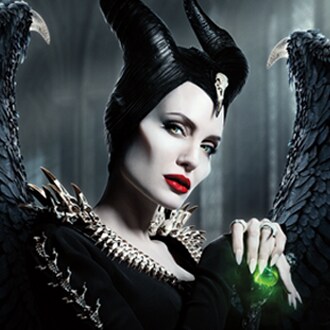
CHARACTER PROFILE · SLEEPING BEAUTY · JIN FROM BTS DEPTH
Maleficent Character Profile
Animated evil without apology, live-action survivor and mother, Dark Fey protector, curse-maker, ruler, phoenix, and the woman every version uses to argue about whether explanation changes judgment.
Bottom line
Maleficent became iconic in 1959 because she enters with total authority, curses a baby over an adult insult, commands a private army, turns into a dragon, and never asks the audience to approve her feelings. The live-action films keep the horns and power while building a different woman from bodily violation, political betrayal, reluctant caregiving, chosen motherhood, species persecution, and recovery.
Both interpretations work for opposite reasons. The animated villain is concentrated evil with immaculate presentation. The live-action Dark Fey is a wounded protagonist whose explanation never fully excuses cursing Aurora. Treating them as one seamless biography would flatten what each film is arguing.
Fast facts
Name: Maleficent. Animated continuity role: dark fairy, self-declared Mistress of All Evil, ruler of the Forbidden Mountain, and primary antagonist of Sleeping Beauty. Voice: Eleanor Audley. Supervising animator most closely associated with her design and performance: Marc Davis. Companion: Diablo the raven.
Live-action continuity role: powerful fairy and later identified Dark Fey, protector and ruler of the Moors, Aurora’s chosen mother, ally and employer of Diaval, and descendant of the phoenix. Performer: Angelina Jolie. The sequel connects her to Conall, Borra, and a hidden Dark Fey community.
The animated entrance
Maleficent arrives at Aurora’s christening after learning she was excluded. The room recognizes danger before she states a threat. She performs courtesy, confirms the insult, and offers a curse as a gift. Eleanor Audley’s controlled delivery makes every pause feel deliberate.
The entrance establishes that power does not need frenzy. Maleficent controls attention, language, and pace. She targets a newborn because harming Aurora guarantees pain for Stefan and the kingdom. The choice is cruel, disproportionate, and completely hers.
The animated grievance
Sleeping Beauty never explains why Maleficent was excluded or what relationship existed before the christening. The missing history enlarges her mystery. She appears as a recognized supernatural power whose invitation carried political meaning.
The grievance remains understandable at the level of insult and indefensible at the level of response. A child cannot answer for a guest list. Maleficent chooses the most vulnerable body because revenge outweighs justice.
Animated powers
Maleficent casts the spindle curse, produces green fire, teleports or appears through magical force, hypnotizes Aurora, commands thorns, controls weather-like atmosphere, uses her staff, communicates with Diablo, and transforms into a dragon. Her magic changes scale from intimate compulsion to battlefield destruction.
The curse has rules strong enough that the good fairies cannot erase the sentence. Merryweather can only change death into sleep. Maleficent’s power therefore includes imposing a legal structure on other magic, which makes the christening more than a threat.
The Forbidden Mountain
Maleficent rules from a dark fortress populated by goblin-like soldiers. The space uses sharp rock, green fire, darkness, and vertical architecture to contrast Stefan’s ceremonial castle and the fairies’ cottage. Her home makes fear structural.
Leadership inside the fortress depends on punishment. Her soldiers waste sixteen years searching for a baby because nobody understands aging. Maleficent reacts with rage rather than asking why her organization failed. Fear produces obedience and terrible intelligence.
Diablo is the competent employee
Diablo finds the cottage after detecting the fairies’ magical argument. He reports accurately and later tracks Phillip. The raven performs surveillance and analysis while the larger army searches for an infant for sixteen years.
Maleficent values his competence and still treats him as subordinate property. Merryweather eventually turns him to stone. His importance shows that villain organizations run on workers whose labor receives less attention than the leader’s image.
Animated Maleficent and Aurora
Aurora never develops a personal relationship with Maleficent. The villain sees the princess as the object of a curse and instrument of revenge. Aurora experiences Maleficent through compulsion, sleep, and the threat surrounding her life.
That distance makes the conflict archetypal. Later adaptations create intimacy because modern storytelling wants psychological exchange. The original does not hide a maternal bond waiting underneath cruelty. The absence is part of the character.
The dragon
Maleficent transforms into a dragon after Phillip crosses the thorns. The form turns elegant threat into physical scale and gives the climax an enemy large enough for enchanted weapons. Green fire and black-violet design preserve her visual identity.
Transformation does not reveal a secret true body. The dragon is another use of power. She chooses monstrosity as tactical form and declares herself the embodiment of evil. Phillip defeats her through the fairies’ assistance, making the battle a conflict between organized magics.
Eleanor Audley’s voice
Audley gives Maleficent clarity, patience, contempt, amusement, and sudden rage. The voice never needs constant volume because confidence carries threat. Her pronunciation turns ceremonial language into attack.
The performance also helps the villain survive limited screen time. Maleficent feels present while absent because every other character plans around her curse. Voice becomes the sound of a deadline controlling sixteen years.
Marc Davis and the animated silhouette
Marc Davis’s design gives Maleficent horns, a severe collar, long black robes, angular movement, pale face, and a staff. The silhouette reads instantly across distance, shadow, merchandise, and later reinterpretation.
Her shape combines beauty and danger without requiring a conventional ugliness reveal. Sharpness is not treated as a defect waiting for goodness to soften her. The visual confidence became part of why the character outgrew the film’s runtime.
The live-action childhood
The 2014 film introduces Maleficent as a young winged protector of the Moors. She knows the land, confronts intrusion, enjoys flight, and befriends Stefan. Trust grows before adult ambition converts the relationship into violence.
This history changes the moral structure. Maleficent does not begin as an unexplained dark power. She becomes guarded after betrayal. Context creates understanding and does not make the later curse morally clean.
The wing removal
Stefan drugs Maleficent and removes her wings to claim a crown. The scene centers incapacitation, intimate betrayal, bodily theft, grief, and survival. Viewers have reasonably read the sequence through sexual-assault and bodily-autonomy frameworks because the staging supports those connections.
Wings mean body, movement, identity, pleasure, and belonging. Stefan converts them into proof of his political worth. Maleficent wakes alive and altered. Recovery never requires pretending the loss was a lesson she needed.
The thorn wall
After the betrayal, Maleficent raises a barrier between the Moors and the human kingdom. Defense becomes isolation. Her personal evidence about Stefan expands into a policy governing every human and magical body near the border.
The wall protects and confines. Trauma identifies real danger and can make permanent control feel like the only safety. Maleficent’s later bond with Aurora gives her evidence that one human relationship can differ without erasing the history behind caution.
The live-action curse
Maleficent curses Aurora during the christening to punish Stefan. She adds true love’s kiss because Stefan once used the phrase and proved unreliable. The cure is designed as mockery rather than hope.
Her wording traps her when love for Aurora grows. She cannot revoke the spell because she declared the curse unchangeable. Regret does not reset harm. She must work inside the consequences of a decision made while revenge felt like control.
Reluctant caregiving
Maleficent watches Aurora because the child carries the curse and because the official guardians repeatedly fail. Surveillance becomes intervention. Feeding, rescue, protection, and attention accumulate before she admits affection.
Motherhood arrives through labor rather than biology or proclamation. Aurora calls her fairy godmother because behavior created the role. Maleficent’s redemption works whenever the film shows care changing decisions rather than asking a speech to erase the past.
The kiss that breaks the curse
Phillip’s kiss fails because one woodland encounter cannot carry true love. Maleficent kisses Aurora’s forehead while grieving the harm she could not stop. Aurora wakes through years of care, guilt, and maternal attachment.
The act does not absolve the curse. The same woman created and broke the danger through different choices across time. Love matters because responsibility became stronger than pride, not because motherhood automatically purifies every action.
Live-action powers
Maleficent controls plants, weather-like forces, shields, transformation, flight, telekinesis, curses, and restorative magic. She changes Diaval among raven, man, horse, wolf, and dragon forms. The sequel adds Dark Fey heritage and phoenix transformation.
Power rarely solves her central emotional problem. She cannot undo the curse, force Aurora to reject Phillip, or build peace through intimidation. The films use enormous magic to keep returning her to limits created by relationship and responsibility.
Diaval as partner and conscience
Maleficent saves Diaval and treats the rescue as a lifelong service contract. He scouts, advises, protests, protects Aurora, and tells her when cruelty or fear has distorted judgment. Sam Riley gives their exchanges dry warmth.
Their friendship needs a clearer consent conversation. Maleficent changes his body without asking and relies on his labor constantly. Affection becomes more credible when hierarchy can be renegotiated. Diaval deserves chosen partnership rather than permanent debt.
Aurora as daughter and political challenge
Aurora opens Maleficent’s emotional world and later refuses to let Maleficent’s fear decide her marriage. Their relationship develops from secret protection into mutual family, conflict, separation, rescue, and adult boundary negotiation.
Maleficent must learn that love does not grant ownership. Aurora can choose Phillip and remain her daughter. Protection becomes mature when the protector trusts the person who survived childhood and gained enough knowledge to make an adult decision.
Dark Fey identity
Mistress of Evil reveals a hidden population sharing Maleficent’s horns and wings. Conall frames her as part of a persecuted people rather than a singular anomaly. Borra represents survival through war, while Conall argues for coexistence.
The discovery gives collective history to features once treated as personal monstrosity. The film rushes Maleficent’s emotional response. Belonging after lifelong isolation should involve grief, relief, doubt, and questions about why connection came so late.
Phoenix ancestry
The sequel identifies Maleficent as descended from the phoenix and allows rebirth after she sacrifices herself for Aurora. Fire and renewal give the climax mythic scale and restore her during the battle.
Chosen bloodline risks weakening the survival story. Maleficent was important because of choices, failures, care, and persistence. Exceptional ancestry can make authority look inherited when the more interesting qualification was lived responsibility.
Conall and Borra
Conall rescues Maleficent, teaches Dark Fey history, and sees her human family as evidence that peace remains possible. Borra sees repeated persecution and believes war is necessary. Both positions have receipts.
Maleficent occupies the difficult middle because she has experienced human betrayal and human love. Her strongest leadership would combine Conall’s refusal of hatred with Borra’s demand for enforceable protection. Hope without security leaves survivors exposed.
Queen Ingrith
Ingrith uses manners, motherhood, monarchy, propaganda, iron, research, and a church trap to organize extermination. She provokes Maleficent at dinner so anger becomes public evidence supporting a prepared story.
Maleficent recognizes hostility and underestimates the institution behind the smile. Their conflict contrasts visible difference with hidden violence. Horns make Maleficent easy to fear. A crown makes Ingrith easy to trust.
Strengths
Maleficent is intelligent, visually commanding, magically formidable, observant, protective, adaptable, capable of deep loyalty, and willing to change when evidence reaches her. Humor prevents authority from becoming flat solemnity.
Her greatest strength in the live-action branch is the ability to love without returning to the person she was before harm. Recovery changes her future choices while leaving anger, strangeness, and power intact.
Weaknesses
Pride, rage, isolation, control, prejudice, and a willingness to use vulnerable people can distort her judgment. The animated version treats cruelty as identity. The live-action version lets trauma explain patterns without removing responsibility.
She also confuses protection with decision-making for Aurora and service with ownership over Diaval. Growth requires boundaries and consent, not merely softer feelings. Power makes those lessons more urgent because her mistakes become policy and magic.
Symbols
Horns represent visible otherness and authority. Wings represent body, freedom, identity, theft, and restoration. Thorns represent defense hardening into isolation. Green or lavender magic signals control and transformation. The staff concentrates command.
The raven connects surveillance, labor, and companionship. The dragon represents chosen destructive scale in animation. The phoenix represents rebirth and inherited exceptionalism in live action. Symbols matter when attached to decisions rather than collected as trivia.
What explanation changes
The live-action history changes how viewers understand her anger, border policy, and fear of human intimacy. The history does not make cursing Aurora proportional. Explanation creates a fuller judgment rather than a free pardon.
That distinction protects both versions. The animated Maleficent can remain magnificent evil. The live-action Maleficent can remain a harmed woman who also caused harm. Complexity should add accountability, not dissolve the verdict.
Cultural impact
Maleficent’s silhouette became one of Disney’s most durable villain images. The 2014 film proved a female-led villain reinterpretation could become a major theatrical success. Horns, cheekbones, wings, costumes, and Jolie’s performance created a second icon beside the animated one.
The character also shaped arguments about villain rehabilitation, female anger, trauma, motherhood, live-action remakes, and whether powerful women must receive wounds before audiences accept complexity. Fandom disagreement is part of the legacy.
What future stories need
A future story should show Maleficent governing alongside Dark Fey and Moors communities rather than ruling through personal power. Give Diaval negotiated freedom, Aurora an adult partnership, Borra political voice, and survivors institutional protection.
The character no longer needs another secret bloodline or larger transformation. She needs consequences, family routine, diplomacy, grief, humor, and decisions where magic cannot skip the work. The horns already have enough mythology.
Final verdict
Maleficent can be a perfect villain and an imperfect mother because those versions belong to different continuities. The animated character wins through concentration, voice, design, and unapologetic cruelty. The live-action character wins through bodily history, Jolie’s performance, chosen family, and the refusal to make recovery equal innocence.
My favorite receipt is the same across the complicated branch: a woman who believed true love was a joke becomes the person whose sustained care breaks the curse. The irony lands because the curse remains her fault. Love changes what she does next. Accountability keeps the story honest.
Maleficent and King Stefan in animation
Animated Stefan and Maleficent share political hostility without a revealed personal past. His failure to invite her triggers the public grievance. Her curse turns his daughter and kingdom into targets. He responds through spinning-wheel destruction and concealment rather than direct confrontation.
Their distance keeps the story ceremonial. Stefan represents the vulnerable kingdom and Maleficent the external supernatural threat. The simplicity supports fairy-tale momentum while leaving the invitation politics available for later reinterpretation.
Maleficent and Stefan in live action
The live-action pair begin as friends and young lovers. Stefan chooses the crown, drugs her, removes her wings, and builds a heroic public identity from the violation. Maleficent curses Aurora because harming Stefan’s love feels like the only revenge large enough.
Their final conflict is personal and political. He stores her wings as trophy and evidence. She eventually chooses mercy. Stefan attacks again and falls. His refusal to stop gives the tragedy a final choice rather than destiny.
Maleficent and Phillip
Animated Maleficent imprisons Phillip, mocks his future, and builds thorns and dragon fire between him and Aurora. He represents the cure condition she believed impossible and the heroic force capable of reaching the sleeping princess.
Live-action Maleficent distrusts Phillip because Stefan taught her what human romance can hide. Phillip’s failed kiss confirms that one meeting is not true love. Her eventual blessing depends on observing his choices and accepting Aurora’s adult judgment.
Maleficent and the good fairies
Flora, Fauna, and Merryweather oppose animated Maleficent through guardianship, counter-magic, intelligence, rescue, and enchanted weapons. Their teamwork defeats a stronger individual power. Merryweather softens the curse and later petrifies Diablo.
The live-action pixies lose much of that competence. Maleficent becomes the secret caregiver because Knotgrass, Flittle, and Thistlewit repeatedly fail. The adaptation strengthens one woman by reducing three others, which remains one of the rewrite’s weakest trades.
Leadership style
Animated Maleficent rules through fear. Mistakes trigger humiliation and violence. Her soldiers obey without understanding the assignment, producing sixteen years of failure. Diablo succeeds because observation survives where terrified bureaucracy does not.
Live-action Maleficent rules the Moors through protection and personal power. She can still make unilateral decisions, close borders, and assume authority. Her later contact with Aurora and the Dark Fey should push leadership from personal rule toward shared governance.
Combat style
Animated Maleficent escalates through curses, traps, thorns, fire, and dragon transformation. She shapes the battlefield before confronting Phillip directly. The good fairies counter with shields, escape assistance, and enchanted weapons.
Live-action Maleficent combines flight, vegetation control, shields, telekinesis, transformations, and physical speed. Iron creates material vulnerability. She fights best with open air and environmental control, while enclosed human spaces use metal and architecture against her.
Emotional habits
The animated version performs contempt and rage without revealing vulnerability. Emotion supports domination. She enjoys fear, humiliation, and the certainty of her curse. Mystery protects the scale of the villain.
The live-action version hides attachment behind sarcasm, nicknames, distance, and control. Grief becomes anger before becoming care. Jolie lets the character’s face contradict the words, especially around Aurora and Diaval.
Humor
Animated humor appears through wicked satisfaction and the incompetence of Maleficent’s minions. She rarely becomes the joke. Authority remains intact even when frustration exposes the limits of her organization.
Live-action humor grows from relationships. Diaval challenges her, Aurora ignores the villain pose, and royal dinner forces her through manners she considers ridiculous. The comedy makes affection visible without sanding away danger.
Design across continuities
The 1959 design favors graphic shape, black-violet robes, green skin, horns, angular collar, and a staff topped by a glowing orb. Every element supports silhouette and color contrast inside Eyvind Earle’s world.
The live-action design translates horns, cheek planes, capes, and dark fabrics through prosthetics and detailed costume. Wings add body history. The sequel expands the design into a shared Dark Fey anatomy while preserving Maleficent’s singular screen presence.
Profile verdict after every continuity receipt
Maleficent remains compelling because power never makes her simple in the same way twice. Animation uses concentration. Live action uses contradiction. One woman is evil with style. The other survives violence, causes violence, learns care, and still needs boundaries around power.
Fans do not need to vote one version out of existence. Keep the dragon, keep the wings, keep Audley, keep Jolie, and keep the argument honest. Explanation belongs beside judgment. A magnificent image deserves a complete biography and the full receipt.
What Maleficent fears
Animated Maleficent appears to fear defeat, humiliation, and the possibility that the curse can be broken. She controls information and imprisons Phillip because the prince turns an impossible cure into an immediate threat.
Live-action Maleficent fears intimate betrayal, bodily captivity, losing Aurora, and watching humans repeat persecution against magical people. Those fears identify real danger and sometimes make her controlling. Courage means using memory without letting memory make every new choice.
What Maleficent wants
The animated villain wants recognition, revenge, authority, and the satisfaction of proving her curse stronger than the kingdom’s hope. Desire remains concentrated around domination.
The live-action protagonist wants safety for the Moors, freedom in her body, loyalty she can trust, Aurora’s love, and a future where human power cannot take another piece from her. The goals conflict whenever protection becomes possession or revenge targets somebody innocent.
Status and continuity endpoints
Animated Maleficent dies after Phillip’s enchanted sword strikes during dragon combat. Diablo has already been turned to stone, and her forces lose their leader. The 1959 continuity closes the threat decisively.
Live-action Maleficent survives both films, regains her wings, joins the Dark Fey, returns through phoenix power, and blesses Aurora’s marriage. Her political future remains open across the Moors, Ulstead, and Dark Fey community.
The one rule future writers should protect
Do not make Maleficent harmless to prove she healed. Recovery can include sharp humor, anger, power, suspicion, and refusal. The moral line belongs in what she chooses to do with those qualities.
She should protect without owning, lead without silencing, remember without assigning guilt by species, and love Aurora without requiring Aurora to remain a child. That work is harder than another transformation and far more interesting.
Maleficent also needs ordinary scenes that power cannot dominate. Let her attend dinner without a genocide plot, disagree with Aurora about a visit, compensate Diaval for impossible labor, hear Borra criticize a peace agreement, and remember Conall outside a battle. A character becomes durable when spectacle and routine both reveal the same person. She already conquered the poster. Future writing should earn the morning after, including the apology, the invoice, the council meeting, and somebody finally asking Diaval what form he prefers for himself today and tomorrow.
Sources and continuity note
Character facts and credits are checked against Sleeping Beauty (1959), Maleficent (2014), Maleficent: Mistress of Evil, official Disney film materials, credited cast records, and production features. The animated and live-action branches are separate continuities. Editorial conclusions remain RaeRae’s interpretation.
Keep exploring
Return to the Sleeping Beauty hub for films, reviews, characters, rants, and guides.
The wound never excuses the damage
Maleficent can be betrayed, mutilated, protective, funny, furious, and still responsible for what she chooses next. That tension is the reason the character survives reinterpretation. The animated villain turns exclusion into theatrical annihilation. The live-action guardian turns personal violation into a curse aimed at a child. Neither reading becomes richer when accountability disappears. Her best scenes hold hurt and culpability in the same frame and refuse the easy comfort of making one cancel the other.
The details matter because this franchise repeatedly lets spectacle speak louder than the people living through it. A complete reading keeps the performance, relationships, production choices, and consequences connected instead of reducing the character to a costume, a quote, or somebody else’s motivation.