
JIN PROFILE FORMAT · Character Biography · Full Franchise Chronology
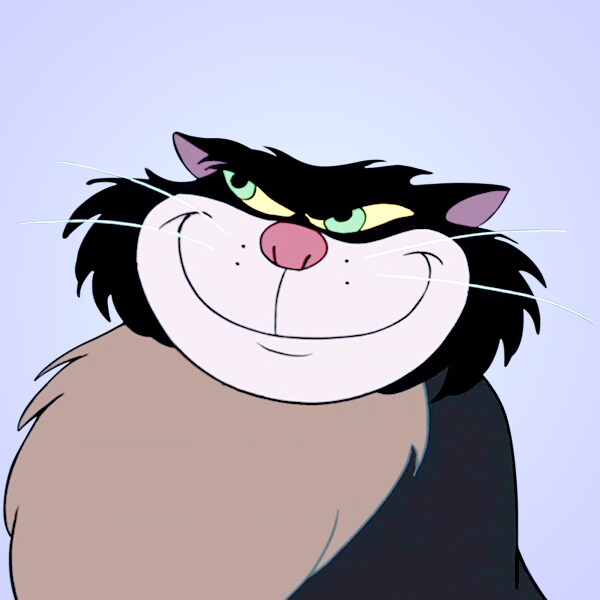
Lucifer Character Profile: The Cat Who Polices Cinderella’s Floorboards
He has the food bowl, the favored status, the whole staircase, and the confidence of somebody who knows the manager will blame the mouse.
Before blaming the cat
Lucifer is a predator living in a house full of mice, but the film gives him choices beyond instinct. He hides evidence, performs innocence, waits for vulnerable moments, and stretches a chase long after hunger could explain the behavior. Lady Tremaine rewards those habits because his control of the floorboards supports her control of the household. He is her favorite animal and her smallest enforcer.
That role makes him more than a comic obstacle. Cinderella protects Bruno, feeds the mice, and treats animals as neighbors. Tremaine indulges Lucifer when he creates fear. The women reveal their ethics through the creatures whose behavior they encourage. One builds trust across difference. The other keeps a predator close because intimidation is useful.
Profile at a glance
Lucifer is Lady Tremaine’s black cat, the primary enemy of Jaq, Gus, and the household mice, and a recurring obstacle to Cinderella’s attempts to complete her work or escape confinement. June Foray supplied his vocal effects in the 1950 film. Frank Welker later performed the character in sequel and television material. His communication depends on purrs, growls, body language, timing, and calculated expressions rather than spoken dialogue.
His strengths include patience, stealth, physical power, spatial control, manipulation, and an excellent understanding of which human will believe him. His weaknesses include arrogance, cruelty, overconfidence, appetite, fixation, and the assumption that every smaller creature will remain isolated. Bruno becomes dangerous only after the mice build an alliance, which means Lucifer loses when the household’s separate targets finally coordinate.
A name that tells on the household
Calling the cat Lucifer announces villainy before he enters a chase. The name reaches toward the fallen angel tradition while remaining exaggerated enough for family comedy. Lady Tremaine says the name with affection, which links her polished authority to a creature openly framed as malicious. The house does not hide what he is. The house simply decides his behavior is acceptable when directed downward.
Cinderella still handles him with restraint. She does not treat a sinister name as permission for cruelty. Her problem is specific conduct: trapping mice, provoking Bruno, interfering with chores, and exploiting Tremaine’s favor. That distinction matters because the film contrasts prejudice with observation. Cinderella extends care broadly and sets limits when actual behavior becomes harmful.
The morning staircase
Lucifer’s introduction turns a lazy descent into a declaration of rank. He stretches across space, expects service, and moves through the manor as though every surface belongs to him. Cinderella must wake, dress, feed, clean, and answer bells while the cat enjoys the privileges of somebody attached to the favored branch of the family.
His comfort becomes part of the labor map. Somebody fills the bowl, repairs the mess, and accepts blame when he causes disruption. Lucifer never sees that work as a relationship. He sees service as natural. The same assumption governs Lady Tremaine’s treatment of Cinderella, which makes the cat’s entitlement a household lesson successfully learned.
The breakfast trap
The corn sequence reveals a predator interested in control rather than a quick meal. Lucifer blocks the route, moves pieces into danger, and waits for panic. Jaq tries to coordinate safe collection while Gus reaches for more food than he can quietly carry. The cat turns scarcity into entertainment because the mice must expose themselves to eat.
His body dominates the frame while theirs disappear under kernels. Scale supplies physical threat, but patience supplies character. Lucifer understands that guarding access can be more effective than chasing randomly. He lets hunger bring the mice toward him. The tactic resembles Tremaine assigning impossible chores and waiting for Cinderella to fail.
Why Gus becomes his favorite target
Gus is new, hungry, inexperienced, and physically easier to notice. Lucifer quickly identifies the mouse whose fear and appetite can be manipulated. The targeting is strategic. Predators in social systems rarely distribute pressure evenly when one vulnerable person can produce a larger reaction from the group.
Jaq repeatedly redirects danger away from Gus, which frustrates Lucifer because friendship interrupts isolation. The cat expects panic to scatter the mice. Their network converts panic into warnings, retrieval, and rescue. Gus survives because somebody notices whom Lucifer has selected and refuses to call that selection inevitable.
The cup incident and manufactured evidence
Lucifer’s pursuit lands him beneath a teacup, creating the appearance that Gus has been delivered with breakfast. The scene pushes Cinderella into a conflict she did not cause. Lady Tremaine interprets the mouse as proof of failure while ignoring the cat’s role in creating the evidence. Lucifer benefits from a household where accusation travels downward faster than fact.
The comedy has an ugly administrative core. Cinderella can explain, but Tremaine controls which account becomes official. Lucifer has no need for language because his owner supplies the narrative. A favored creature receives presumed innocence. A servant receives punishment. A mouse becomes contraband simply by surviving.
Relationship with Lady Tremaine
Lady Tremaine gives Lucifer affection, protection, food, and access while tolerating the disruption he creates. He mirrors her taste for controlled suspense. Both watch before striking, enjoy another person’s discomfort, and prefer methods that preserve an appearance of calm. Their bond is not magical communication. Shared temperament and mutual usefulness are enough.
Lucifer also gives Tremaine plausible distance from certain harms. A cat may chase mice, knock objects, or block movement without a direct command. The household can call the result natural. Tremaine benefits from that naturalization in the same way she benefits when chores appear to be ordinary responsibilities instead of deliberate confinement.
Relationship with Cinderella
Cinderella feeds Lucifer because caring for him is part of the work imposed on her. She carries the bowl, manages his behavior, and tries to prevent conflict with Bruno. Her patience is real, but the relationship is not reciprocal. Lucifer receives care while actively making her day harder.
He seems to understand which person lacks authority to punish him. That awareness shapes his audacity. A cat behaving badly around the household owner might face consequences. Around Cinderella, he can provoke, delay, and create evidence while trusting Lady Tremaine to blame the worker. His cruelty grows inside a protection racket made domestic.
Relationship with Jaq and Gus
Jaq treats Lucifer as a tactical threat whose routes and moods must be studied. Gus experiences the cat more immediately through fear, close calls, and bodily danger. The pair never sentimentalizes the conflict. Lucifer wants access to their bodies, and survival requires plans rather than appeals to his better nature.
Their opposition also defines their community. Warnings, food routes, hiding places, and rescue skills develop because danger is constant. That does not mean Lucifer deserves credit for making them strong. Oppression can produce solidarity without becoming the source of the oppressed group’s value. The mice matter before and beyond the chase.
Relationship with Bruno
Lucifer provokes Bruno, then relies on Cinderella to stop the dog from responding. He understands that Bruno’s size is dangerous and that Lady Tremaine holds the dog’s future hostage. By creating small offenses under protection, Lucifer turns restraint into humiliation. Bruno must tolerate behavior the favored pet never would.
The climax reverses that arrangement. Jaq and Gus reach Bruno when Lucifer blocks the key rescue. The dog finally acts as part of a coordinated defense rather than an isolated animal likely to be blamed. Lucifer loses control of the household because his separate enemies recognize a shared problem.
The dressmaking threat
The mice and birds need thread, beads, ribbons, and open routes to complete Cinderella’s dress. Lucifer’s presence makes every supply movement dangerous. His role exposes the physical infrastructure behind the magical-looking transformation sequence. Beauty is being constructed through labor while a predator patrols the workshop.
He cannot understand why the community risks so much for Cinderella because his own relationships are organized around indulgence and domination. Nobody needs to force the mice to sew. Their commitment comes from remembered care. Lucifer has privilege without solidarity, which leaves him powerful in ordinary moments and alone when the whole house finally chooses sides.
The locked-room climax
Lady Tremaine locks Cinderella in the tower and walks away. Lucifer remains near the key route, turning a human act of confinement into an animal siege. The mice must carry an object heavier than their bodies while avoiding the cat’s teeth. Every second he delays them helps Tremaine erase Cinderella from the royal search.
His function here is unmistakably political. He protects a locked door and the lie downstairs. Instinct cannot explain why a cat cares about a glass slipper fitting. Loyalty to Tremaine’s household order can. Lucifer has learned that preserving her control preserves his comfort.
The tower chase
The chase up the stairs makes architecture feel hostile. Lucifer owns speed, claws, balance, and reach. The mice own information, cooperation, and purpose. The key keeps slipping because liberation has weight, and the cat uses every landing to turn that weight into vulnerability.
Cinderella can hear rescue happening without being able to complete the rescue herself. That frustration connects her directly to the mice’s danger. Lucifer is not chasing anonymous pests. He is preventing her friends from reaching her. The emotional stakes belong to the relationship the household has spent the film refusing to recognize.
Why Bruno must act
The mice cannot defeat Lucifer through courage alone. Their bodies remain smaller. Calling Bruno acknowledges that solidarity includes finding the ally with the necessary power. The story does not shame Jaq and Gus for needing help. Their achievement lies in surviving long enough to build and activate the alliance.
Bruno’s intervention also answers earlier restraint. Cinderella once protected him from punishment after Lucifer provoked conflict. During the climax, that history returns as rescue. The dog does not save a random mouse project. He protects Cinderella’s freedom because the network connects every participant.
The fall and villain punishment
Lucifer’s defeat sends him out of the tower window after Bruno corners him. The framing invites relief and comedy rather than mourning. Animated villains often receive vertical punishment because falling converts lost power into a visible change of position. The creature who controlled the stairs can no longer occupy the route.
Modern viewers may still flinch at the implication of animal injury. The film softens certainty through cartoon grammar and later appearances. The useful reading is structural rather than literal. Lucifer is removed from the doorway at the moment cooperation becomes stronger than privileged access.
Cinderella II and the return of household trouble
Later stories preserve Lucifer as a familiar source of pursuit and irritation. Palace life changes Cinderella’s address but does not erase the comic language built around mice and cat. His appearances reconnect the sequel to the domestic scale of the original, even when the larger conflict now involves court rules or Jaq’s insecurity.
Repetition creates a problem as well as continuity. If Lucifer only chases, the character becomes machinery. A richer sequel could ask how his position changes when Tremaine no longer controls Cinderella’s labor and the mice live closer to royal protection. The old predator remains funny, but the old power arrangement has already collapsed.
Cinderella III and loyalty to the old order
When Lady Tremaine acquires the Fairy Godmother’s wand and rewrites the slipper outcome, Lucifer again belongs to the side trying to restore household hierarchy. The sequel gives Tremaine magical force, yet familiar helpers still handle access, evidence, and interruption. The cat’s allegiance remains practical and personal.
His continued presence reminds viewers that a rewritten timeline does not invent Tremaine’s values. Magic amplifies an existing project. Lucifer supported the project when the only weapons were doors, claws, and presumed innocence. The wand changes scale, not direction.
Pom Pom and romantic distraction
Cinderella II introduces Pom Pom, a white female cat who becomes Lucifer’s object of attention. The story uses attraction to complicate his pursuit and create another form of comic humiliation. His confidence around mice does not translate into emotional competence around a cat he wants to impress.
The contrast briefly exposes desire beneath domination. Lucifer wants recognition from somebody he cannot simply corner into affection. The plot remains broad and does not transform him into a gentle partner. Attraction interrupts his control without repairing his ethics.
Why he does not need a tragic backstory
Fandom often searches for pain behind every antagonist. Lucifer may have ordinary animal drives and learned behavior without a hidden wound large enough to explain cruelty. Lady Tremaine rewards aggression, access remains abundant, and smaller creatures cannot retaliate safely. Those conditions already explain why bad behavior continues.
Adding tragedy could deepen him if a story actually supported the material. Inventing trauma only to make accountability feel impolite would weaken the profile. Sometimes a character enjoys power because power feels good and nobody with authority objects. That answer is uncomfortable because the household is recognizable.
Instinct versus choice
A real cat chasing mice follows predatory behavior. An animated character plans scenes around social consequences, disguises intent, and reacts to human authority with theatrical calculation. Lucifer belongs to both registers. The film borrows instinct for plausibility and personification for moral comedy.
Criticism should hold the registers together. Condemning a real animal would be absurd. Reading a fictional cat only as biology ignores the choices animators and writers use to mirror Tremaine. Lucifer is designed as a character whose natural appetite becomes socially protected cruelty.
Animation and silent acting
Lucifer communicates through weight, eyelids, whiskers, tail movement, paw placement, and changes from liquid laziness to compressed attack. His face can appear bored, delighted, suspicious, or falsely wounded within seconds. The performance demonstrates how animation creates dialogue without words.
His heaviness matters. Jaq and Gus move in nervous bursts while Lucifer settles across paths like furniture. When he rises, the change signals danger before a sound arrives. The body tells viewers that control has become so ordinary he barely needs to chase until somebody challenges access.
June Foray and the original voice
June Foray supplies vocal effects that turn breath, purr, hiss, and complaint into personality. The work sits between animal sound and human intention. Lucifer never needs a sentence because timing makes motive legible. A pleased rumble after causing trouble carries more character than an explanatory monologue would.
Foray’s contribution belongs beside the animators’ physical acting. Sound gives weight to a stare and rhythm to the chase. The performance also differentiates affection performed for Tremaine from aggression directed toward the mice. His voice changes according to who holds power in the room.
Frank Welker and later continuity
Frank Welker has voiced Lucifer in later productions, carrying the character across sequels and related appearances through animal vocalization rather than conventional dialogue. Continuity depends on preserving the mixture of domestic-cat familiarity and villain intelligence.
Later performance cannot rely only on louder hissing. The humor comes from thought appearing inside sound. A tiny pause before attack or offended noise after failure tells viewers that pride has been wounded. Lucifer remains recognizable when the voice implies a plan.
The black-cat problem
Western superstition has often framed black cats as unlucky, sinister, or associated with evil. Naming a large black cat Lucifer draws directly from that visual shorthand. The design works immediately while participating in a tradition that has harmed real animals through fear and adoption bias.
A profile can appreciate the character without transferring fictional coding onto actual cats. Coat color does not determine temperament. Lucifer is malicious because the narrative writes and animates specific behavior. Real black cats deserve homes, naps, treats, and freedom from somebody using a 1950 villain as personality science.
Class privilege in a food bowl
Lucifer receives reliable meals while the mice risk their lives for scattered corn and Cinderella works before eating. The distribution tells a class story without a ledger. Proximity to Lady Tremaine produces comfort. Living outside her favored circle turns basic need into a dangerous negotiation.
The cat never questions abundance because privilege feels ordinary from inside the bowl. He can treat food as bait, interruption, or expectation. Gus treats each kernel as security. Their conflict is partly appetite and partly unequal access to a household both inhabit.
The favored dependent
Lucifer has no independent income, property, or authority. His power comes entirely from Lady Tremaine’s protection, which makes him a favored dependent rather than a ruler. He punches downward while remaining charming upward. The pattern is familiar in families, offices, courts, and fandom spaces where borrowed power feels safer than solidarity.
Dependence also explains loyalty. If Tremaine’s order ends, his special treatment may end with the order. Protecting her schemes protects his place. He does not need ideological speeches. Comfort supplies enough motivation.
Why children understand him immediately
Children recognize the person who causes trouble, changes expression when an adult arrives, and watches somebody else receive blame. Lucifer’s behavior is exaggerated but emotionally precise. Young viewers may not know the language of plausible deniability. They know the fury of seeing a smug face escape consequence.
That recognition helps the film communicate Tremaine’s household without long explanation. The cat performs the small version of the larger injustice. Somebody protected can be visibly guilty while authority insists the vulnerable person caused the problem.
What redemption would require
A redemption arc would need more than affection for Pom Pom or one moment of restraint. Lucifer would have to stop hunting the household mice, stop using Tremaine’s favor to manufacture blame, and accept boundaries around food and shared space. Changed conduct matters more than a sad expression.
The mice would not owe immediate trust. Their safety cannot become the reward proving he improved. A credible story could show distance, supervised coexistence, repeated choices, and consequences. Redemption belongs to the person changing; reconciliation still belongs to the people harmed.
What the character symbolizes
Lucifer symbolizes petty tyranny protected by larger tyranny, appetite converted into entitlement, surveillance inside domestic space, and the favored dependent who helps maintain a hierarchy because hierarchy supplies comfort. He also symbolizes the physical danger hiding inside a story marketed through sparkle.
For the mice, he is not metaphor. He is teeth. That grounding keeps interpretation honest. Systems operate through ideas, but bodies encounter doors, hunger, exhaustion, and threat. Lucifer makes the household’s cruelty touch the floor.
The RaeRae verdict
Lucifer is the coworker who creates the problem, sits beside the manager during the investigation, and somehow watches you get assigned three new tasks. I respect the animation. I respect the commitment to the smirk. I do not trust that cat within fifty feet of a breakfast tray, a key, or anybody smaller than his ego.
The funniest part is that he has every structural advantage and still loses to mice with thread, a tired dog, and a group chat happening through squeaks. Tremaine gave him the house. Cinderella built the community. Guess which one survives the climax.
The final character reading
Lucifer is beautifully animated, socially protected, strategically cruel, physically dangerous, occasionally ridiculous, and completely at home inside Lady Tremaine’s hierarchy. His villainy works because the film never needs him to become grand. Small acts of obstruction can preserve enormous harm when performed at the right doorway.
He earns a full profile because the Cinderella story depends on who controls movement through the house. Bells control Cinderella’s time. Locks control her body. Lucifer controls the floor. Jaq, Gus, Bruno, and Cinderella defeat those controls through relationships none of the powerful residents considered important.
Profile receipt
Lucifer appears in Cinderella, Cinderella II, Cinderella III, and related franchise material as Lady Tremaine’s cat and the recurring enemy of the mice. June Foray performed his original vocal effects, and Frank Welker is associated with later performances. Pom Pom appears as a later romantic interest.
His major scenes involve breakfast, the teacup accusation, pursuit of Jaq and Gus, interference with the key rescue, conflict with Bruno, and continued alignment with Tremaine. His strengths are stealth, patience, manipulation, and physical power. His failures are cruelty, arrogance, fixation, abuse of favor, and inability to understand solidarity.
Why the cat still works
Lucifer remains memorable because every movement contains intention. He can be funny without becoming harmless and frightening without breaking the fairy-tale tone. The design makes menace readable to a child while leaving enough social behavior for adults to recognize a household accomplice.
Most importantly, he gives the mice an antagonist scaled to their world. Tremaine may control the estate, but Lucifer controls the route between a kernel and a hiding place. Defeating him turns friendship into action at the exact scale where friendship is needed.
That scale keeps the franchise emotionally coherent. Royal proclamations and glass slippers may determine the public ending, while a cat stationed outside a mouse hole determines whether the people carrying the key ever reach the door. The story needs both levels, and Lucifer makes the lower level impossible to ignore.
Sources and credits
Film chronology and credited production details are checked against official D23 entries for Cinderella (1950), Cinderella II, and Cinderella III.
Keep exploring
Return to the Cinderella hub for reviews, profiles, rants, and guides.
Lucifer as household enforcement
Lucifer is funny because the animation gives him theatrical greed, offended dignity, and the confidence of a creature who believes the house belongs to him. He is frightening from the mice’s scale because the same household that confines Cinderella also gives him permission to patrol every crack where her friendships survive. The cat becomes Tremaine’s domestic authority in miniature. He interrupts food, movement, communication, and rest, then receives protection because the household reads his violence as ordinary animal behavior. That does not make Lucifer a moral mastermind. It makes him part of the machinery. The profile matters because coercive homes are maintained through routines and favored agents as often as through speeches, locks, and direct orders.