
LION KING 101 · WATCH ORDER · FILMS, SERIES, RETELLINGS, STAGE, AND THE PHOTOREAL BRANCH
The Lion King Watch Order: Every Film, Series, Mufasa Branch, and Side Road
The franchise has release order, royal-family order, comedy continuity, television mythology, stage adaptation, and a separate photoreal history. Here is how to choose without turning Pride Rock into homework.
Bottom line first
Start with The Lion King (1994). Then choose whether you want release order, Simba’s family line, Timon and Pumbaa’s comic side road, The Lion Guard television mythology, or the separate photoreal continuity beginning in 2019. The franchise has several compatible emotional ideas and several continuities that should not be forced into one clean timeline. A useful watch order names the branch before promising that every detail will agree.
My default release path is the 1994 film, Timon & Pumbaa, The Lion King II: Simba’s Pride, The Lion King 1½, and The Lion Guard. After that, begin the photoreal branch with The Lion King (2019) and Mufasa: The Lion King. Stage productions, albums, games, shorts, attractions, and special presentations can be added where your interest points rather than treated as homework blocking the next film.
The Lion King (1994) is the anchor
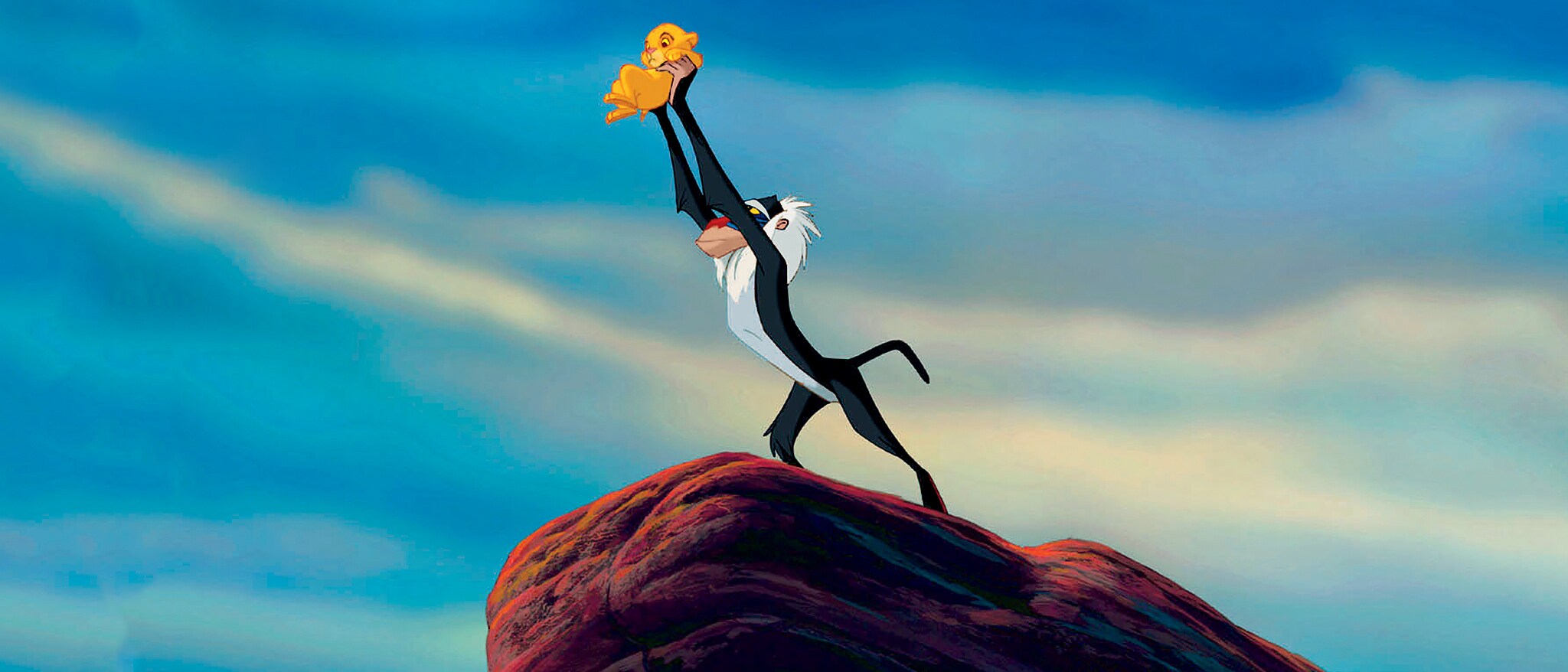
The original animated feature establishes Simba, Nala, Mufasa, Scar, Sarabi, Rafiki, Zazu, Timon, Pumbaa, the hyenas, Pride Rock, the elephant graveyard, exile, return, and the Circle of Life argument every later branch inherits or revises. Watch it before any prequel even if you already know the stampede. The later stories depend on the audience understanding how Simba remembers Mufasa and why Scar’s rule remains a wound rather than ordinary royal history.
Release context also matters. The film opened in 1994 under directors Roger Allers and Rob Minkoff, with songs by Elton John and Tim Rice, a score by Hans Zimmer, vocal and choral work connected to Lebo M, and a production that combined hand-drawn character animation with computer-assisted work in the wildebeest stampede. Later editions may include or remove “The Morning Report,” so the exact cut you watch can differ without creating a new continuity.
Timon & Pumbaa is a comic branch, not required royal history
The animated television series Timon & Pumbaa began after the original film and follows the pair through international travel, surreal situations, recurring enemies, and continuity that frequently values a joke over Pride Lands geography. Watch it after the 1994 movie because the friendship, Hakuna Matata, and many character relationships arrive from that film. Do not expect every episode to fit neatly into Simba’s exile years.
The show is useful when you want side-character life without royal succession controlling every plot. It expands Timon’s anxieties, Pumbaa’s emotional intelligence, and the comic ecosystem around them. Some viewers fold episodes loosely before, during, or after the original movie. I treat the series as a flexible comedy world connected by character rather than a calendar that must survive frame-by-frame comparison.
The Lion King II: Simba’s Pride moves to the next generation
Watch Simba’s Pride after the 1994 film. The 1998 sequel centers Kiara, Simba and Nala’s daughter, and Kovu, a young lion raised within Zira’s Outsider pride. The story inherits Simba’s trauma and asks what happens when the returning hero becomes an overprotective king capable of reproducing division. It is a sequel to the emotional and political ending, not a retelling of the same coming-of-age path.
The movie adds Zira, Nuka, Vitani, Kovu, Kiara, the Outsiders, Upendi, and a reconciliation argument shaped by two prides. It does not follow the later Lion Guard mythology perfectly because the television series was created much later and inserts Kion into the family. Watch release order if you want to experience those additions as audiences received them. Choose a story-order variation only if continuity puzzles are part of the fun.
The Lion King 1½ retells the first movie from the cheap seats
Watch The Lion King 1½ after the original and preferably after you already know Timon and Pumbaa well. The 2004 film reframes familiar scenes through their perspective, gives Timon a meerkat colony and family history, and treats the 1994 plot as something happening beside another life. It is part prequel, part parallel story, part parody, and part sincere chosen-family account.
Trying to place every gag literally creates unnecessary pain. The movie uses visible continuity jokes, hidden participation, and a framing device where Timon and Pumbaa watch and interrupt their own story. Its value comes from narrative authority. Side characters who served Simba’s arc claim the screen and reveal that royal history was never the only story happening in the Pride Lands.
The Lion Guard begins before Simba’s Pride and grows beyond it
The Lion Guard introduces Kion, Simba and Nala’s son, and a team consisting of Bunga, Fuli, Beshte, and Ono. Early episodes take place while Kiara is young, which places much of the series before the main events of Simba’s Pride. The show expands Scar’s history, the Roar of the Elders, ecological patrol, interspecies leadership, the Outlands, the Tree of Life, and rulers beyond Pride Rock.
A story-order viewer can watch the 1994 film, then The Lion Guard: Return of the Roar, then Seasons 1 and 2, much of Season 3, Simba’s Pride near the late-series transition, and the remaining conclusion. Exact placement arguments depend on which visual and dialogue details receive priority. A first-time viewer will usually have an easier experience watching Simba’s Pride before the series and allowing the show to explain its own bridge later.
A clean release-order route
The practical release route is: The Lion King (1994); the Timon & Pumbaa television series and related shorts; The Lion King II: Simba’s Pride (1998); The Lion King 1½ (2004); The Lion Guard: Return of the Roar (2015); then The Lion Guard Seasons 1 through 3. You can watch the 2003 special-edition material with the original film rather than treating it as a separate movie.
Release order protects surprises and avoids asking an older sequel to acknowledge lore created seventeen years later. It also shows how Disney’s priorities changed: theatrical tragedy, television comedy, direct-to-video romance, meta retelling, preschool adventure, and finally a larger serialized mythology. The shifts are part of franchise history rather than mistakes a timeline must hide.
A Simba family-line route
For the royal family story, watch the 1994 film, The Lion Guard: Return of the Roar, the series through its early arcs, Simba’s Pride, and the end of The Lion Guard. Add The Lion King 1½ after the original as a parallel account. The Timon and Pumbaa series can sit anywhere after their introduction because its comic geography rarely submits to palace chronology.
This route emphasizes Mufasa’s legacy moving through Simba, Kiara, and Kion. It also makes the contradictions easier to see. Kiara may appear to be the only royal child in a film created before Kion existed. Characters important to the series vanish from the sequel. Later episodes work to explain absence, but production history remains the honest reason. Continuity can connect stories without pretending creators planned every generation from 1994.
The 2019 film begins a separate photoreal continuity
Watch The Lion King (2019) after the 1994 film if you want comparison, or first if the newer performance is your entry point. Jon Favreau’s film uses computer-generated animals, environments, lighting, and virtual production techniques designed to resemble wildlife photography. Disney markets it within live-action categories, but the visible animal performances are animated. That craft question belongs inside the review rather than being settled by a label.
The remake follows the original plot closely while changing dialogue, song placement, comic timing, vocal performance, ecological detail, and the expressive range allowed by photoreal design. It does not replace the 1994 continuity. Treat it as a new branch where familiar events establish the history required by Mufasa: The Lion King.
Mufasa: The Lion King follows the 2019 branch
Watch Mufasa: The Lion King after the 2019 movie. Barry Jenkins’s 2024 feature frames Rafiki telling young Kiara about Mufasa’s childhood, his bond with Taka, the journey toward Milele, and the history that eventually produces Mufasa and Scar. It is simultaneously prequel and sequel because the telling occurs after Simba and Nala have established their family.
Do not use Mufasa as background for the 1994 Scar unless you intentionally want a cross-continuity interpretation. The original film and later animated sequels do not establish the same childhood account, names, family structure, or political origins. The prequel answers questions created by the photoreal remake’s continuity and should be judged on those terms.
Where the Broadway musical belongs
The stage musical can be watched after the 1994 film or used as a separate first encounter. Julie Taymor’s production does not attempt to hide performers inside realistic animals. Masks, puppetry, fabric, movement, language, and visible theatrical mechanics create a new performance system. Added songs and expanded character material give figures such as Nala, Rafiki, and Scar different weight.
Cast recordings are valuable but cannot reproduce the visual argument of the stage design. If access to a production is limited, listen to the score and read production histories without pretending the album is the entire work. International companies, translations, touring designs, anniversary concerts, and filmed promotional excerpts belong to the stage branch rather than the film timeline.
Shorts, sing-alongs, albums, games, and parks are optional worlds
Franchise media includes sing-along releases, music videos, read-alongs, educational titles, games, park shows, parade appearances, concerts, television specials, and crossover material. These works may reuse film continuity, invent a temporary setting, or prioritize participation over story. Add them by subject: music after the relevant film, games when you want interactive adaptation, and parks when production design or performance history interests you.
Completionism should not turn fandom into unpaid clerical work. A hub exists so every branch remains findable, not so every visitor must consume it in one approved sequence. The important distinction is whether a work continues the royal story, retells it, comments on it, or uses recognizable characters for another format. Once that role is named, the order can follow curiosity.
My recommended routes by mood
For tragedy and family legacy: 1994, Simba’s Pride, then The Lion Guard. For comedy: 1994, The Lion King 1½, then selected Timon & Pumbaa episodes. For production comparison: 1994, the stage musical, 2019, then Mufasa. For next-generation characters: 1994, Return of the Roar, The Lion Guard, and Simba’s Pride with the late-series bridge.
For the shortest complete franchise foundation, watch 1994, Simba’s Pride, The Lion King 1½, the 2019 film, and Mufasa. That route covers the main animated sequel line, the side-character retelling, and the photoreal continuity. Add television once you know whether comic travel or serialized Pride Lands lore is the stronger pull.
Where to watch without promising forever
Disney+ is the principal United States subscription home for Disney-controlled Lion King films and series at the time this guide is maintained, while exact titles, bonus material, regional catalogs, purchase options, theatrical revivals, and stage access change. Check the individual title page before promising a route to somebody in another country. A current legal option should be recorded as a dated fact rather than permanent franchise lore.
The hub keeps films, series, reviews, Reacts, characters, and guides connected even when one service changes. Start with the branch you actually want tonight. The Circle of Life has survived multiple release formats, aspect ratios, edits, remakes, and marketing labels. Your watch order can survive skipping the part that feels like homework.
If a title is temporarily unavailable, move to the next branch instead of replacing it with an unofficial upload that strips credits or compresses the animation into mud. Availability is a distribution problem, not a continuity problem. The directory can preserve the proper place while the legal route catches up.
Receipts and official records
Disney Movies records the 1994 film’s June 24 release, directors Roger Allers and Rob Minkoff, principal cast, and official character descriptions. D23’s Disney A to Z entry documents the Africa research trip, live-animal study, songs by Elton John and Tim Rice, Hans Zimmer’s score, the computer-generated wildebeest work, rereleases, and stage adaptation. Disney’s official pages separately document Simba’s Pride, the 2019 film, and Mufasa.
Those records establish release and production facts. The continuity organization and editorial judgments in this guide are CVM Sekai’s own. Return to The Lion King hub, browse Animation Library, or open Anime Home when you are ready to choose another branch.
The Lion King watch order needs branch labels more than commandments
Release order gives the clearest first route: the 1994 feature, Simba’s Pride, The Lion King 1½, and then whichever television or remake branch interests the viewer. That order preserves revelations and lets the franchise’s idea of family widen over time. Timon and Pumbaa’s feature deliberately runs beside the original rather than after every event, so its placement is emotional and comic rather than strictly chronological.
The Lion King’s Timon & Pumbaa television series belongs to a loose comic continuity. It sends the pair around the world, bends logic, and treats familiar characters as available for jokes. Viewers do not need to force every gag into Simba’s reign. The Lion Guard creates a more sustained branch with Kion, ecological duties, new territories, and its own chronology between the films. Naming that difference prevents two television series from becoming one vague shelf.
The 2019 film retells the 1994 story with computer-generated photoreal imagery and altered performances. Mufasa: The Lion King builds a prequel and sequel frame around that remake continuity. Those films should be watched together if the viewer wants their version of the family history. They do not retroactively become required explanations for the hand-drawn film, even when names and major events overlap.
The stage musical is another retelling, not a missing movie chapter. Julie Taymor’s masks, puppetry, movement, expanded songs, languages, and visible theatrical machinery create arguments the screen versions cannot make in the same way. Watching it after the 1994 feature makes adaptation choices legible, but its scenes should not be used to repair the animated continuity unless the comparison is clearly labeled.
Shorts, music videos, games, books, attractions, and compilation appearances vary in narrative weight. The guide files them by format and tells the reader whether the branch adds story, reframes a known event, or simply uses recognizable characters. “Everything” is not a useful viewing requirement. A map should help someone choose the kind of evening they want without making fandom feel like unpaid homework.
The Lion King Watch Order: Every Film, Series, Mufasa Branch, and Side Road separates documented production or release information from interpretation. A date, credit, platform order, or public interview belongs to the factual record. A claim about power, grief, ecology, representation, or adaptation belongs to the editorial reading. Both can appear on the same page, but the transition should be visible so confidence does not impersonate evidence.
The answer the franchise still owes
The Lion King Watch Order: Every Film, Series, Mufasa Branch, and Side Road remains open because later branches keep changing the evidence. A guide should record the unresolved point rather than manufacture closure. That may be a continuity break, an ecological simplification, a disputed production story, or a cultural influence the studio used without defining. The unanswered question is not clutter. It is the reason this page belongs in a living fandom library instead of a static plot summary.
Context that belongs with the practical answer
The Lion King Watch Order: Every Film, Series, Mufasa Branch, and Side Road benefits from comparing what the story says with what the image makes feel inevitable. A narrator, parent, ruler, or promotional summary can state a rule clearly while framing, music, and repetition quietly widen or contradict it. The guide records both layers. That prevents one memorable quotation from becoming the only evidence admitted into the discussion.
The Lion King Watch Order: Every Film, Series, Mufasa Branch, and Side Road also follows labor. Somebody draws the frame, performs the song, hunts for food, carries news, raises children, keeps records, repairs damage, or guides a traveler. When that work disappears behind royalty, destiny, or studio mythology, the explanation becomes cleaner than the world it describes. Naming labor restores cause and consequence without turning the page into a credit dump.
The Lion King Watch Order: Every Film, Series, Mufasa Branch, and Side Road needs a boundary between symbolism and literal fact. Rain can signal renewal without proving that monarchy controls weather. A theatrical mask can reveal character without becoming zoological realism. A release-order recommendation can support emotional continuity without claiming every branch occupies one timeline. The guide stays trustworthy by stating which kind of claim it is making.
The Lion King Watch Order: Every Film, Series, Mufasa Branch, and Side Road ends with a route back into the fandom. The reader can choose the complete review for judgment, a character profile for sustained biography, a React for one scene, or a Rant for the argument that remains irritating. The guide has done its job when that next choice feels informed rather than assigned.
The receipt stays open
The Lion King Watch Order: Every Film, Series, Mufasa Branch, and Side Road will keep changing as restorations, new productions, platform catalogs, and public records alter what viewers can see. The page does not freeze one convenient answer into permanent canon. It preserves the evidence behind the current answer, names uncertainty, and leaves enough structure for the next verified detail to join the conversation without rewriting the whole history.
How this route stays usable
The watch-order page keeps branch labels visible because a reader may want one emotional line without adopting every version as canon. Animated films, loose comedy television, The Lion Guard continuity, stage adaptation, and photoreal films make different promises. The route explains those promises before recommending an order, so skipping a branch becomes an informed preference rather than a fandom failure.
New releases should enter beside the branch they actually continue. A future sequel to the photoreal films does not silently become the next chapter of the 1994 animation. A restored short does not rearrange the feature trilogy by itself. The page grows by clarifying relationships, not by extending one enormous numbered list until the labels stop meaning anything.