
FULL MOVIE REVIEW · GRIEF · HULA · CAREGIVING · ICONIC BY MISTAKE FORMAT
Lilo & Stitch 2 Review: The Glitch Was Not a Goodness Problem, and Jumba Owed This Family the Truth
Stitch did not stop loving Lilo. His body stopped reliably carrying the behavior he chose. The family needed a diagnosis, Nani needed the truth, and Jumba needed consequences.
Before somebody calls this the little direct-to-video sequel
Stitch Has a Glitch takes a frightening idea seriously. A character who learned care begins behaving destructively again, not because redemption was fake, but because an unfinished creation process destabilizes his body. Lilo interprets the behavior as betrayal while preparing a hula story connected to her dead mother. Stitch interprets symptoms as proof that he has become bad. Jumba recognizes the scientific cause after the household has already absorbed the harm.
The movie is short, emotional, culturally complicated, and much better than the title promises. The review keeps intention, capacity, impact, diagnosis, safety, and repair separate. Family love stays central without becoming a medical machine. Hula stays connected to story rather than becoming a generic contest. Nani’s labor stays visible even when the screenplay forgets to give her enough authority.
A shallow recap would say Stitch acts badly, Lilo gets angry, Jumba finds a machine, and love saves the day. That summary misses the whole wound. Lilo is building a dance around her mother’s memory while fearing another loved one has chosen to abandon her. Stitch is watching chosen identity become inaccessible and blaming himself for symptoms created in a laboratory. Nani is responsible for the family without receiving the information needed to protect the family. Jumba becomes the emergency expert after his own process created the emergency. The ending only means something when all four positions stay visible.
The review also refuses to use disability as a decorative synonym for broken. Stitch is a fictional engineered being, and his molecular crisis cannot stand in for every real diagnosis. The resonance comes from fear, misinterpretation, delayed information, changing capacity, and the need for support. The limits matter as much as the resemblance. Real people do not owe an audience inspirational recovery, and real families do not fail because love cannot reverse biology.
This sequel makes good behavior a medical emergency
Stitch Has a Glitch begins after the household has accepted Experiment 626 as family. Stitch wants to be good, enjoys domestic life, and shares Lilo’s routines. Then destructive behavior returns without his consent because Jumba’s creation process was interrupted before molecular charging completed. The sequel separates intention from action and asks whether love survives when behavior becomes frightening before anybody understands the cause.
That premise is darker than the direct-to-video label suggests. The first film allowed Stitch to choose differently once he learned care. The sequel threatens the body supporting that choice. Moral growth remains real, but biology can interrupt expression. Lilo sees betrayal. Stitch experiences loss of control. Jumba recognizes a technical failure he should have disclosed much earlier.
The nightmare reveals Stitch’s deepest fear before the glitch does
Stitch dreams that his destructive side consumes the family bond. The sequence tells viewers that goodness has become emotionally important to him. He is not merely performing better behavior to avoid punishment. He fears becoming the creature everybody first believed he was.
The dream also establishes shame as part of the malfunction story. Stitch interprets involuntary behavior through a moral framework built after adoption. Without explanation, he assumes regression means personal failure. The sequel understands how terrifying symptoms can become when the person experiencing them lacks language, diagnosis, and trustworthy information.
Lilo’s hula competition is grief wearing a deadline
Lilo wants to enter the same competition her mother once won. Performance becomes a route toward memory, approval, and continuity. She is not only trying to create a good dance. She is trying to touch a parent through an achievement the community can witness.
That pressure makes Stitch’s interruptions feel personal. Lilo has attached grief to a deadline, and his malfunction threatens the ritual. Her anger grows from more than competitive disappointment. She fears losing another connection to her mother because somebody she trusted cannot remain stable long enough to help.
Nani recognizes the grief project before Lilo can explain the whole weight
Nani understands why the competition matters because the mother belongs to both sisters. Her support carries memory and responsibility at once. She wants Lilo to participate without letting remembrance become another impossible standard.
The sequel gives Nani less narrative space than the original, but her role remains essential. She holds the adult context around Lilo’s determination. A child may call the goal a dance. The older sister hears the parent inside every rehearsal.
Stitch does not choose the harm, but Lilo still experiences harm
The malfunction creates one of the franchise’s most useful moral tensions. Explanation changes blame without erasing impact. Stitch’s aggression, disruption, and withdrawal hurt Lilo even though he cannot fully control them. Lilo’s hurt remains valid before diagnosis arrives.
Family stories often demand immediate forgiveness once a medical or traumatic explanation appears. Stitch Has a Glitch allows anger and misunderstanding to exist first. Care becomes more honest when cause, consequence, and repair receive separate attention.
Jumba’s negligence is the villain hiding inside the family comedy
Jumba knows more about Stitch’s construction than anybody else and still fails to identify the danger early enough. His secrecy or delay places the household at risk. The crisis is not random fate. The creator left a sentient being unfinished and allowed the family to discover the consequences through emergency.
The franchise likes Jumba as comic uncle and brilliant inventor. Affection should not erase accountability. A full review must keep returning to the fact that Lilo is performing emotional triage for a problem created by an adult scientist with access to the relevant knowledge.
Dakota Fanning inherits Lilo without sanding away the edges
Dakota Fanning replaces Daveigh Chase as Lilo and maintains the character’s intensity, stubbornness, rapid shifts, and emotional directness. The voice differs, but Lilo still sounds like a child whose feelings arrive faster than adult explanation.
Continuity depends on more than imitation. A replacement performer must preserve the character’s internal pressure while finding natural delivery. The sequel succeeds when Lilo’s anger sounds specific to her relationship with Stitch and her mother’s memory rather than generic sequel conflict.
The shorter runtime makes every misunderstanding sharper
At roughly seventy minutes, the movie moves quickly from domestic peace into symptom, conflict, diagnosis, and rescue. Compression gives the emotional arc urgency. Compression also limits the time characters spend processing fear before the next plot requirement arrives.
Direct-to-video efficiency can become emotional bluntness, but this sequel uses recurring rehearsal and malfunction scenes to build pressure. The story keeps returning to the same wound from different angles: Lilo thinks Stitch will not help, Stitch thinks he cannot stay good, and Jumba knows the clock is physical.
The first sequel receipt
Stitch Has a Glitch understands that redemption does not create immunity from illness, relapse, trauma, or bodily failure. The comparison should remain careful because fictional molecular charging is not a real diagnosis. The emotional structure still resonates. A person may want to act according to learned values and lose reliable access to the behavior expressing those values.
The family’s task is not deciding whether Stitch was ever good. The task is learning what happened, keeping everybody safe, repairing trust, and refusing to let a frightening symptom become the whole identity. That is serious work for a movie sold beside a cute blue character.
The movie keeps calling a medical crisis a goodness problem
Jumba’s machines measure Stitch through a goodness level, which turns a technical malfunction into moral language. The device creates visual stakes, but the vocabulary is dangerous. Behavior affected by an unfinished molecular process does not prove goodness draining from a person. The sequel knows that emotionally and still uses the meter because franchise shorthand is convenient.
Lilo also interprets the symptoms morally before receiving information. Stitch promised to help and then becomes destructive. From her position, trust appears broken. The review must hold two facts together: her interpretation is understandable, and the story’s goodness language risks treating involuntary symptoms as character failure.
Jumba waits too long to translate science into care
Once Jumba identifies the cause, he shifts into technical rescue mode. The urgency does not erase the earlier information failure. Stitch and the household deserved an explanation of unfinished charging before symptoms appeared. A creator responsible for hundreds of experiments should understand preventive care as part of creation.
Comedy protects Jumba from consequences because he is useful during crisis. The family needs his equipment and expertise. That dependency makes accountability harder. People with specialized knowledge can cause harm, become indispensable to repairing the harm, and receive gratitude before anybody asks why prevention failed.
Lilo wants to create an original hula and ends up choreographing grief
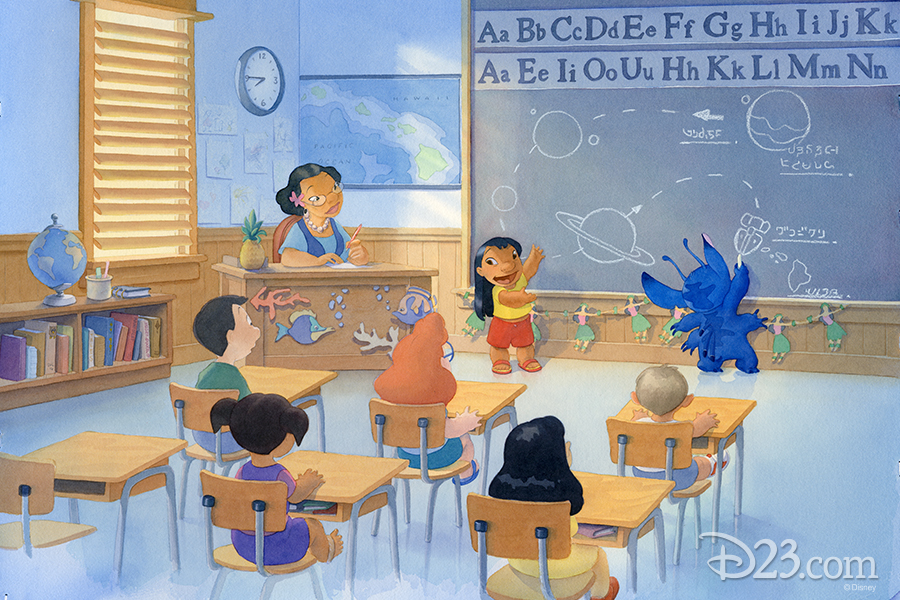
Her teacher asks for a story with personal meaning. Lilo reaches toward local history, family memory, dance tradition, and theatrical spectacle while struggling to decide what belongs to her. The competition becomes an artistic problem rather than a simple talent test.
The best part of the arc is the recognition that borrowing her mother’s achievement cannot replace making her own offering. Honoring a parent does not require repeating the parent exactly. Lilo needs continuity and authorship, which is an enormous emotional assignment for a child already afraid of losing connection.
The King of Rock and Roll is not a substitute for genealogy
Elvis returns as Lilo’s most available model for performance. His music gives confidence, rhythm, and a recognizable language of showmanship. The hula project asks for a story rooted somewhere deeper than celebrity imitation. The tension is useful because Lilo’s cultural world contains both local inheritance and global media.
A child can sincerely love Elvis without that love answering every artistic question. The sequel treats influence as material rather than identity. Lilo eventually needs to understand what she wants the dance to remember.
Mertle turns artistic insecurity into social ammunition
Mertle dismisses Lilo’s ideas and presses directly on her fear of failure. Their rivalry continues because the franchise needs peer conflict, but the competition setting gives the cruelty another edge. Lilo is not merely trying to win. She is trying to honor her mother under public judgment.
Mertle does not know the full emotional burden, and children can harm one another without understanding the hidden story. The movie lets the insult matter while keeping the deeper conflict inside Lilo’s family and self-perception.
Stitch helps create the dance before his body interrupts the work
Early collaboration shows how far the relationship has come since the original. Stitch participates in research, rehearsal, and playful invention. Their creative partnership makes the later rupture hurt more because the sequel establishes competence before removing reliable control.
The structure avoids treating Stitch as a problem from the opening frame. He has a life worth preserving, habits shaped by care, and work he wants to complete. The glitch threatens an existing person rather than revealing a hidden monster.
Lilo’s anger contains the old abandonment fear
When Stitch fails her, Lilo does not experience one ruined rehearsal in isolation. Her parents died. Nani’s custody remained precarious. Stitch once left because he believed the family would be safer. Every disruption can activate the fear that another person will disappear when needed most.
Anger becomes a defense against pleading. Lilo can accuse Stitch before admitting how frightened she is to depend on him. The sequel gives that pattern enough room to feel connected to the original rather than invented for plot convenience.
Stitch isolates because shame feels safer than explanation
He lacks a clear diagnosis and cannot promise control. Withdrawal appears protective. If he stays away, he cannot destroy the dance or hurt Lilo. Shame convinces him that absence is the only useful behavior left.
The logic echoes the first movie’s lost-creature sequence and becomes more tragic because Stitch now knows what he would lose. Isolation is no longer freedom from capture. Isolation is self-removal from family before family can reject him.
Nani cannot mediate a crisis nobody has explained to her
The household still relies on Nani as practical center, yet the alien adults possess the crucial information. She can respond to fights and damage without knowing the mechanism. That imbalance repeats the original’s labor problem. Nani manages consequences created by systems outside her control.
A fuller sequel could have given her more confrontation with Jumba and more authority inside the treatment plan. The short runtime leaves her mostly supporting Lilo while the scientists drive technical rescue. The omission is visible because Nani’s competence was foundational to the first film.
David remains the family member who helps without taking over
David supports the dance and household while leaving emotional leadership with the sisters. He can offer perspective, transportation, humor, and presence without treating Nani’s family as a project he owns.
His steady role matters in a story built around unreliable behavior. David represents continuity. The film does not need him to become dramatic because showing up is the point.
The rehearsal conflict makes art collateral damage
Stitch’s symptoms destroy or interrupt work carrying Lilo’s grief. The material loss matters because artistic preparation gave her a way to organize feelings. When the dance falls apart, she loses more than points in a competition.
Caregiving stories often focus only on danger to bodies. This sequel also shows danger to trust, ritual, and creation. A crisis can consume the project somebody needed to feel like themselves.
The second receipt
The middle of Stitch Has a Glitch works because nobody has complete information. Lilo sees broken promises. Stitch sees moral collapse. Nani sees another household emergency. Jumba sees a molecular deadline. Each response makes sense from the available evidence and harms somebody from another position.
The solution requires shared knowledge before shared love can become useful. Family cannot respond ethically to a mystery everybody interprets alone. Diagnosis is not the ending, but diagnosis changes what repair should mean.
The final performance cannot stay separate from the emergency
Lilo reaches the competition carrying grief, rivalry, preparation, and the fracture with Stitch. Performance asks her to convert private emotion into public movement while the person who helped shape the dance is missing. The stage becomes another place where family crisis refuses to remain backstage.
The movie chooses relationship over completion. That choice does not make the artistic goal meaningless. The unfinished or interrupted performance reveals the goal underneath the trophy: connection to her mother and the family still present.
Stitch’s collapse removes every comfortable metaphor
The glitch progresses until his body stops responding. Comic malfunction becomes possible death. The sequel has spent enough time linking symptoms with moral fear that the collapse forces everybody to abandon the goodness frame. Stitch is not failing a behavior test. He is dying from unfinished creation.
The tonal jump is severe, especially for a short family film. The severity works because viewers already know the household survived one separation threat. Death would create another absence Lilo cannot organize through a contest or storybook.
Lilo’s love cannot become a medical machine, even when the scene wants magic
The climax leans toward love restoring Stitch after Jumba’s equipment fails. Emotionally, the scene argues that belonging gives him a reason to return. Literally, the cure risks turning affection into biological treatment. Real illness does not reverse because a family loves correctly.
Fantasy can express emotional truth without becoming medical advice. The responsible reading keeps the categories separate. Lilo’s presence matters to Stitch. Jumba’s failure remains technical negligence. Love supports survival and meaning; love should not be blamed when bodies cannot recover.
The apology travels in both directions
Lilo regrets interpreting the behavior as chosen betrayal. Stitch regrets the harm even though the cause reduced control. Neither apology needs to erase the other. Impact and intention occupy different parts of repair.
That reciprocity gives the sequel more maturity than a simple revelation scene. Explanation changes the story, but relationship still needs words and changed understanding. Nobody wins by proving only one person had the right to hurt.
The hula story becomes family history rather than imitation
Lilo’s eventual artistic understanding connects mother, sister, Stitch, and her own voice. The dance no longer needs to reproduce an inherited victory exactly. Memory becomes material she can rearrange without betrayal.
That is a generous lesson for children living after loss. Honoring the dead is not a competition against their best moment. A new work can include grief, interruption, and the family that formed afterward.
The animation has less theatrical luxury and retains emotional clarity
Direct-to-video production usually carries tighter resources than a theatrical feature. Background detail, movement density, and cinematic scale cannot simply be judged as if budgets were identical. The relevant question is whether character acting, staging, color, and timing support the story the sequel chose.
Stitch’s malfunction needs readable physical difference without turning every symptom into spectacle. Lilo’s performance needs enough grace to carry memory. The film succeeds most when faces and posture preserve emotional continuity with the original.
Dakota Fanning and Chris Sanders carry the rupture
Fanning gives Lilo sharp anger and exposed fear. Sanders keeps Stitch verbally limited while using strained sound and rhythm to suggest loss of control. Their performances must maintain friendship even during separation, or the climax becomes a generic rescue.
The voices succeed because affection remains audible under conflict. Lilo’s accusations matter precisely because trust existed. Stitch’s shame matters because Lilo’s opinion has become part of his self-understanding.
Jumba receives usefulness instead of consequences again
He builds the charging chamber and races against the deadline, becoming essential to rescue. The plot rewards expertise without requiring a sustained reckoning with creation ethics. That franchise habit should be named every time.
Jumba can be funny, loving, brilliant, and negligent. A deep review does not flatten him into villainy. Depth comes from refusing to let charm cancel responsibility.
The sequel’s illness metaphor works until the meter says good and bad
Uncontrolled episodes, fear of recurrence, caregiver misunderstanding, diagnosis delay, and bodily shutdown all invite illness and disability readings. Those readings can create recognition. The goodness meter pulls toward a moralized model in which health and virtue become visually linked.
Viewers should use the resonance without forcing real conditions into the fictional mechanism. Stitch’s experience can open empathy. The movie cannot define disability through alien molecular charging.
The sequel earns its tears through continuity
The climax works because the original established Lilo’s history with loss and Stitch’s fear of being alone. The sequel does not manufacture a random death scare. The possibility attacks the exact family promise the franchise made.
Tears arrive from accumulated relationship, not the medical device. The machine fails. Lilo stays. Stitch’s return means the family survives another threat without pretending the threat never changed them.
The third receipt
Stitch Has a Glitch is strongest when the movie treats involuntary behavior as a relationship problem requiring information, safety, compassion, and repair. The story weakens when “goodness” becomes a measurable substance or love becomes a literal cure.
The contradictions deserve examination because the emotional core is sincere. A sequel can stumble in metaphor and still tell the truth about how frightening love becomes when somebody’s body stops obeying the person everybody knows.
Release order and story order are not the same thing
Stitch Has a Glitch arrived in 2005 after Stitch! The Movie and the television series had already expanded the experiment mythology. The story itself takes place before the other 625 experiments arrive in Hawaiʻi. Disney+ states that placement directly. Viewers therefore meet a household still focused almost entirely on Experiment 626 rather than managing a growing network of cousins.
That chronology lets the sequel remain intimate. No rotating experiment can distract from Stitch’s body, Lilo’s grief, and Nani’s family. Franchise release order promises expansion. Story order temporarily returns to the smaller emotional unit that made expansion worth wanting.
Direct-to-video should describe distribution, not become a synonym for disposable
Disney released the movie directly to home video on August 30, 2005. The label often carries assumptions about budget, animation density, runtime, and commercial purpose. Those assumptions can be relevant, but they do not replace criticism. A smaller production may still choose a serious emotional problem and execute character work with precision.
The sequel deserves judgment against its own goals and against the relationships inherited from the first film. Visual comparison matters. So do writing, performance, pacing, music, and cultural care. Calling the movie cheap without examining those elements is not analysis.
Tony Leondis and Michael LaBash inherit somebody else’s emotional architecture
Directors Tony Leondis and Michael LaBash step into a world shaped by Chris Sanders and Dean DeBlois. The task includes preserving character behavior, visual language, setting, and tonal collisions while telling a story capable of standing beyond brand continuation.
Inheritance can encourage caution. The sequel repeats Elvis, hula, ʻohana, Jumba’s technology, Lilo’s rivalry, and domestic comedy because those elements identify the property. Originality comes through rearrangement: the alien danger now begins inside Stitch, and Lilo’s artistic goal now carries her mother’s legacy.
The voice cast creates continuity across a changed production
Chris Sanders, Tia Carrere, David Ogden Stiers, Kevin McDonald, and Jason Scott Lee return, giving the household and alien family recognizable vocal texture. Dakota Fanning takes over Lilo. Continuity becomes a group achievement rather than dependence on one exact sound.
Returning voices help the sequel move quickly because character relationships arrive already audible. Jumba’s authority, Pleakley’s panic, Nani’s concern, David’s warmth, and Stitch’s rough speech require little reintroduction. The film can spend limited runtime on the new crisis.
Lilo’s mother becomes more specific through absence
The original film made parental loss present through photographs, routines, and fear. This sequel connects the mother to hula achievement, giving Lilo a concrete piece of inherited history. The detail makes grief active without using a long flashback to manufacture intimacy.
A trophy or remembered performance can become both bridge and burden. Lilo wants proof that she belongs to the same story. The pressure comes from assuming resemblance must be earned publicly. The film gradually moves her toward a relationship with memory that allows difference.
Nani is grieving the same mother from a different life stage
Lilo’s competition receives the plot focus, but Nani also lost the woman whose dance anchors the event. She remembers more, carries different responsibilities, and must support Lilo while managing her own reaction. Older siblings often become custodians of family memory after loss because younger children need stories and adults expect competence.
The sequel could have given Nani more interior space around that role. Her supportive presence still suggests grief expressed through caregiving. Lilo gets to create the dance because Nani keeps the rest of the day moving.
Hula cannot be reduced to a contest prop
The movie uses a hula competition to organize the plot, but hula carries cultural genealogy, story, place, discipline, and community beyond winning. A review should resist treating the dance as interchangeable with a generic talent show. Lilo’s search for a story matters because movement communicates relationship and history.
A Disney sequel remains an outsider-produced commercial text, so respect on screen does not end the cultural discussion. Hawaiian voices and practitioners hold authority the movie cannot grant itself. The useful critical position recognizes care in the portrayal and keeps the production’s limits visible.
The story asks Lilo to mature without making her less Lilo
Lilo must reconsider anger, artistic ambition, and her interpretation of Stitch. Growth does not require removing her oddness, intensity, Elvis fixation, or willingness to challenge people. The sequel works when maturity means wider understanding rather than obedience.
Children in family media are often rewarded for becoming easier for adults to manage. Lilo’s lesson is different. She learns information and empathy while remaining emotionally forceful. The family must also change around her.
Stitch’s body becomes the antagonist without becoming his enemy
The malfunction originates inside him, but the narrative should not frame the body as a moral enemy deserving defeat. His unfinished molecular state is a condition created by interrupted development. The charging chamber attempts completion rather than punishment.
The distinction protects the personhood established in the first film. Stitch is not fighting an evil version hidden inside. He is trying to remain connected while bodily processes interfere with chosen behavior. The danger is real, and the self remains larger than the danger.
Pleakley’s comedy keeps the movie from becoming clinical
Pleakley responds to crisis through panic, improvisation, and domestic concern. His presence interrupts technical exposition before the film turns into a medical briefing. Comedy keeps the family texture around the machinery.
That function can also reduce urgency if jokes arrive without emotional calibration. The sequel generally lets the malfunction grow darker across the runtime, allowing Pleakley’s humor to recede as the possibility of death becomes clear.
The fourth receipt
This sequel has a deceptively narrow plot: prepare a dance and repair an alien. Underneath, both tasks concern inheritance. Lilo must decide how to carry her mother’s story. Stitch must survive the biological inheritance of Jumba’s unfinished process. Neither character can simply repeat the past.
The strongest scenes let creation become authorship. Lilo makes a dance rather than copying a trophy. Stitch chooses family even when his body disrupts the choice. The weakest language turns those struggles into measurable goodness.
The sequel opens with peace because peace needs evidence
Domestic happiness appears before the malfunction so viewers can see what Stitch has built. He is not waiting at the edge of the family. He belongs in routines, games, meals, and Lilo’s projects. The crisis threatens a functioning relationship rather than offering another audition for membership.
That setup prevents the sequel from undoing the first film for convenience. Stitch’s redemption remains true. New symptoms create a new problem. Good sequels pressure established growth without declaring that growth fake.
The badness fantasy reveals how much judgment Stitch has absorbed
Nightmare imagery exaggerates destruction, rejection, and loss of control. Stitch has learned the family’s moral language deeply enough to fear failing the category. The dream shows social judgment moving inside the self.
Internalized judgment can motivate care and produce shame. Stitch wants to protect Lilo. He also fears that one episode proves everybody was right about him from the beginning. The sequel’s emotional job is separating accountability from permanent condemnation.
Lilo’s rehearsal process is research disguised as chaos
She studies stories, experiments with movement, argues about meaning, tests theatrical ideas, and recruits Stitch. The process looks disorderly because childhood creativity rarely arrives in a neat production binder. Lilo is doing artistic inquiry through play.
Her mother’s history makes the inquiry emotionally loaded, but the creative labor remains real. Dismissing the dance as a child’s subplot would repeat the way adults dismiss Lilo’s methods whenever the methods look strange.
The rivalry with Mertle keeps social pressure outside the home
Even while family crisis grows, Lilo faces peers ready to interpret failure as proof of inferiority. Mertle supplies the public gaze. The competition means Lilo cannot process the glitch privately because every disruption affects how the community sees her.
External judgment intensifies her anger toward Stitch. She is protecting grief and reputation at once. The response is unfair to him and psychologically believable.
Jumba’s diagnostic device turns emotion into a dashboard
A moving indicator gives children a readable countdown and gives the screenplay a quick exposition tool. The visual also suggests that goodness exists as fuel inside Stitch. That metaphor clashes with the original film, where goodness emerged through learning, attachment, and action.
The review should not pretend one prop destroys the movie. The prop reveals a franchise tension between moral storytelling and toy-friendly science-fiction shorthand. A dial is easier to animate than a conversation about neurological control and shame.
The charging chamber resembles a repair attempt and a return to the laboratory
Stitch must enter machinery connected to the conditions of his creation. The family depends on Jumba’s lab logic to save him, even though lab logic caused the incompleteness. Treatment sends the person back into the system that failed him.
That image carries anxiety common to medical care without mapping perfectly onto real experience. Safety may require surrendering control to experts. Trust becomes difficult when expertise and negligence share a face.
Lilo arrives emotionally late because the adults arrived informationally late
She cannot respond correctly to facts nobody gave her. The movie places guilt on her after misunderstanding Stitch, but responsibility must travel upward. Jumba delayed explanation. Nani lacked the science. Stitch lacked language for symptoms. Lilo made a painful interpretation inside that vacuum.
Her apology matters. Adult accountability matters too. A family should not make the child carry the entire moral repair for an information failure created above her.
The near-death scene presses directly on unresolved bereavement
Lilo has already lost parents without control or warning. Watching Stitch become unresponsive repeats helplessness in a new body. The sequel reaches for maximum emotional force because another death would confirm her worst belief: everybody she loves can disappear.
That history explains why the revival scene matters beyond franchise preservation. Lilo is pleading against repetition. Stitch’s return does not heal the parents’ absence, but the moment prevents grief from becoming destiny.
Love becomes visible through staying beside the failed machine
Jumba’s equipment cannot guarantee rescue. The family remains present after technical certainty collapses. Presence cannot repair every body. Presence still defines relationship when action runs out.
The scene earns tenderness because love is not introduced as a last-second power. Lilo and Stitch have spent two films practicing return. The climax concentrates that practice into one unbearable wait.
The dance after crisis carries a changed story
Whether the competition yields victory matters less than the meaning Lilo found. Her story now includes interruption, anger, fear, memory, and reconciliation. A perfect performance would be less honest than one carrying those marks.
The sequel treats art as a way to place experience into communal form. Lilo cannot control the past or Stitch’s body. She can choose what the dance says after both have changed her plan.
The fifth receipt
Stitch Has a Glitch earns seriousness by making the body capable of interrupting redemption without invalidating redemption. The movie remembers that family promises are tested by symptoms, misunderstanding, exhaustion, and fear rather than by slogans alone.
The review’s complaint is not that the sequel becomes emotional. The complaint is that goodness language sometimes moralizes a technical crisis and adult negligence escapes enough attention. The emotional truth survives those problems because Lilo and Stitch remain specific people to one another.
Lilo is not selfish for caring about the dance
A medical emergency eventually eclipses the competition, but Lilo does not know the diagnosis while the conflict develops. Her project carries memory, effort, public risk, and a promise to herself. Dismissing that investment because Stitch is secretly ill would demand impossible foresight from a child.
Care does not require having no needs. The tragedy comes from two legitimate needs colliding under missing information. Stitch needs safety and treatment. Lilo needs reliability and room to honor her mother. The adults should have created conditions where neither child carried the full collision.
Stitch is not manipulative for failing after promising
His promise to help is sincere. The malfunction later disrupts his ability to follow through. A broken commitment normally invites questions about effort and honesty. Here the body changes the available capacity after the commitment was made.
The sequel becomes compassionate when viewers understand that sincerity and failure can coexist. Stitch still witnesses the impact. Lilo still feels abandoned. Neither fact proves the original promise false.
Nani should have been allowed to confront the scientist
The first film established Nani as the person accountable to earthly institutions whenever alien behavior damages the household. A sequel about Jumba’s unfinished work should give her direct authority in the reckoning. She deserves to ask what he knew, when he knew, and why nobody warned the family.
Instead, the plot prioritizes technical urgency and Lilo’s emotional arc. The omission leaves the caregiver doing familiar background labor while the inventor receives center-stage expertise. That choice repeats the franchise problem even while the story praises ʻohana.
Jumba loves Stitch and still failed him
Later affection does not retroactively make the creation process ethical. Jumba refers to Stitch with pride, fear, and tenderness. Those feelings can be genuine. The unfinished charging remains a preventable danger rooted in a project that treated sentient life as invention.
The character becomes richer when love and negligence coexist. Removing blame would flatten him into comic benevolence. Removing love would flatten him into villainy. The uncomfortable combination resembles real family systems where the person capable of repair may also be the person who caused the wound.
Pleakley performs care through presence and panic
Pleakley lacks the technical authority to cure Stitch, but he stays involved, worries visibly, and supports the household. His anxiety can create noise, yet the noise communicates attachment. He is no longer protecting Earth as an assignment. He is afraid for one person.
The progression from expert outsider to family participant continues quietly. Pleakley’s usefulness is relational rather than heroic. The franchise needs that form of care beside machines and rescue flights.
David understands when a project means more than the project
His support for Lilo’s hula preparation recognizes the emotional stakes without forcing her to explain every detail. David has enough history with the sisters to know their mother’s memory lives inside ordinary events.
He remains steady while the primary relationship ruptures. The movie uses him sparingly, but his presence helps keep the household from feeling emotionally sealed around one conflict. Family resilience often depends on somebody who can stand nearby without demanding narrative ownership.
Mertle wins moments because social cruelty is efficient
Mertle does not need full knowledge to find the weak point. Competition creates visible uncertainty, and she presses. Her behavior reminds viewers that Lilo’s home crisis does not pause peer judgment.
The franchise could deepen Mertle by exploring why status matters so much to her. This film uses her functionally. She sharpens Lilo’s fear of public failure and then leaves the deeper emotional work to the family.
The hula teacher holds tradition and childhood mess together
Teaching asks for discipline without extinguishing personal story. Lilo’s process challenges order, but the assignment itself invites individual meaning. The teacher’s role is to keep cultural practice from becoming either rigid display or unstructured spectacle.
A reviewer should avoid claiming authority over the dance’s cultural accuracy from visual impression alone. The useful observation is narrative: the teacher frames hula as story, and Lilo must learn that personal story needs listening as much as invention.
The family photograph in the artwork is the correct symbol
The review’s original fan art uses a repaired family photograph beside the malfunctioning blue plush and hula materials. That image connects three obligations: preserve memory, care for the body in crisis, and keep cultural performance from becoming detached decoration.
A hero image should carry the argument rather than copy a movie frame. The symbolic repair scene keeps the featured image, post hero, and landing card consistent while avoiding the lie that one official still could represent a ten-thousand-word editorial.
The character receipt
Nobody in Stitch Has a Glitch needs to become a villain for harm to happen. Lilo misreads symptoms. Stitch loses control. Nani lacks information. Jumba delays or fails diagnosis. Mertle exploits insecurity. The hula deadline compresses grief. The machine cannot guarantee rescue.
That network of partial knowledge is more interesting than a bad guy plot. The sequel asks whether family can revise judgment quickly enough when the explanation changes. Emotional maturity appears through revision rather than certainty.
The visual language has to show a glitch without dehumanizing Stitch
Electrical bursts, color shifts, spasms, aggressive movement, and altered expression make the malfunction legible. The danger is turning symptoms into horror spectacle. The animation generally keeps familiar Stitch visible inside the episode, allowing viewers to fear for him as well as fear what he may do.
Character continuity depends on silhouette and timing. His body moves wrongly, but the person does not disappear from every frame. That distinction supports the story’s moral claim better than the goodness meter does.
Hula animation carries weight beyond pretty movement
Dance scenes must communicate practice, frustration, storytelling, and memory. Movement cannot function only as colorful spectacle because Lilo attaches the performance to her mother. Gesture becomes emotional vocabulary.
A direct-to-video production has fewer resources than the theatrical original, yet clarity matters more than ornamental density. The audience needs to see when Lilo is copying, inventing, losing focus, and finally understanding the story she wants to tell.
Color separates domestic warmth from the malfunction
Warm island interiors and rehearsal spaces establish safety. Electrical or warning colors interrupt that palette as Stitch’s condition worsens. The contrast turns a familiar home into a place where crisis can suddenly enter.
The review art follows the same logic with lamplight against red and blue internal threads. CVM colors remain present without letting a franchise image dictate the site palette. Editorial design should interpret the story and still belong to the website.
Sound makes loss of control physical
Stitch’s familiar vocal texture changes under strain. Mechanical effects and music give symptoms an invasive rhythm. Lilo hears behavior before she understands cause, so sound becomes part of the misunderstanding.
Silence around the collapse carries more force after a film full of comedy, rehearsal, and electrical noise. The body stops producing the sounds that identify Stitch. Family voices must fill the absence.
Music connects Elvis, hula, and family memory without making them interchangeable
The franchise continues using Elvis as Lilo’s chosen pop-cultural language. Hula connects to her mother and community. The movie places both inside one creative life rather than demanding a purity test about influence.
The critical responsibility is maintaining difference. Elvis songs cannot stand in for Hawaiian cultural history. Hula cannot become scenic accompaniment to a branded alien. Lilo’s character is interesting because she moves among forms while searching for her own story.
The illness metaphor reaches viewers because control is never guaranteed
Many people recognize the terror of wanting to behave, work, speak, remember, or move in one way while the body produces another outcome. Caregivers may recognize the confusion of responding before diagnosis. Children may recognize being judged for something they cannot yet explain.
Recognition should create empathy, not a one-to-one decoding chart. Stitch’s fictional condition combines programming, energy, morality language, and science-fiction revival. Real disability and illness cannot be reduced to those mechanics.
The goodness meter deserves a full objection
A machine that displays moral status invites viewers to imagine virtue as measurable biology. The original film argued the opposite. Stitch learned relationship through experience and chose different action. Goodness lived in practice.
The sequel uses the meter for speed and visual suspense, then emotionally rejects the implication by proving Stitch’s love remained during malfunction. The story corrects its own prop. A stronger script would have named stability, charge, or neural control and left morality outside the dashboard.
Love as cure deserves an equally full objection
The revival scene can be read symbolically as Stitch responding to Lilo’s presence. Literal framing risks the harmful belief that enough love cures fatal conditions. Families already burdened by illness do not need stories implying loss reflects insufficient devotion.
The scene works emotionally when love means witness, reason, connection, and refusal to abandon. The scene fails if treated as medical mechanism. Critical affection means keeping that boundary clear.
The sequel is brave enough to let the machine fail
Jumba’s chamber does not produce a clean technological victory. Failure exposes the limits of expertise and leaves the family with grief before the return. The movie briefly enters a world where the franchise might not protect its mascot.
That risk gives the ending weight. Even knowing commercial reality makes permanent death unlikely, viewers feel Lilo’s terror because the story connects the moment to earlier loss rather than depending on surprise.
The craft receipt
The production cannot reproduce every watercolor luxury or movement detail of the 2002 theatrical feature. The sequel succeeds by preserving emotional readability, vocal continuity, rounded design, domestic warmth, and the contrast between comic energy and sudden fear.
Craft serves a focused question: can the audience recognize the person while the character loses reliable control? Most of the film answers yes. The moralizing meter remains the loud exception.
The pre-series placement restores Stitch as the only experiment in the room
Later continuity fills Hawaiʻi with activated experiments, special abilities, capture plots, and placement missions. Stitch Has a Glitch deliberately occurs before that expansion. Stitch cannot compare symptoms with cousins or disappear into an ensemble. The family must face his unfinished creation as a singular responsibility.
That placement also keeps Jumba’s laboratory history partially hidden. The audience may know hundreds of other experiments exist from release-order viewing, but Lilo’s household has not yet built the systems used in the series. Crisis exposes how unprepared everybody remains.
The sequel deepens Stitch without adding another power
Franchise escalation usually gives a mascot new abilities, enemies, or mythology. This story reduces control instead. Stitch becomes compelling through vulnerability rather than upgraded spectacle. His strength cannot solve a molecular failure inside his own body.
The choice protects him from becoming only an action figure. A character created as a weapon receives development through dependence, shame, trust, and the need for care. Power remains visible and insufficient.
Lilo’s artistic arc keeps her from becoming only the moral teacher
The original often positions Lilo as the person teaching Stitch family. This sequel gives her a goal independent of his rehabilitation. She wants to tell a story through hula, honor her mother, withstand Mertle, and create something recognizable as her own.
Stitch affects that goal, but he does not originate the goal. Lilo remains a protagonist with ambition, grief, and artistic judgment. The relationship becomes healthier on screen when both characters have needs beyond serving the other’s lesson.
Nani remains the franchise’s invisible infrastructure
Every adventure assumes housing, food, supervision, transportation, and emotional triage continue. Nani supplies much of that continuity. The sequel focuses on Lilo and Stitch while treating the household foundation as stable enough to support the plot.
That stability was never automatic. A complete franchise ecosystem needs profiles and rants that keep Nani’s labor visible across branches. Review pages should not repeat the franchise’s habit of noticing her mainly when the home is in danger.
The competition result is less important than authorship
A trophy could have converted grief into simple victory. The deeper resolution is Lilo understanding that her mother’s history does not require duplication. She can tell a connected story from her own life, including Stitch and the family formed after loss.
Art becomes inheritance through transformation. Copying would preserve form. Creating preserves relationship. The sequel’s best idea lives there, even when pacing rushes the final performance.
The movie remembers that reconciliation needs changed knowledge
Lilo and Stitch do not reunite because anger suddenly becomes inappropriate. They reunite after the cause becomes known and the threat becomes visible. Information changes the moral map. The same actions receive a new interpretation.
That is not an excuse machine. Lilo still needs time to understand impact and intention. Stitch still cares about damage. Changed knowledge makes a more accurate repair possible.
The family principle becomes care during regression
The first movie asks whether a destructive outsider can learn belonging. The sequel asks whether belonging remains when destructive behavior returns. Family becomes tested by recurrence rather than novelty.
The answer is conditional care, investigation, and presence. Nobody should accept unlimited danger without safety. Nobody should abandon Stitch because symptoms resemble an earlier self. The movie gestures toward that balance even while moving too quickly to build every boundary.
The sequel refuses the easy accusation that redemption was fake
A less thoughtful story would reveal that Stitch never changed and force Lilo to teach the same lesson again. This movie makes the change genuine and the regression involuntary. The first film keeps its meaning.
That distinction matters across long franchises. Growth should create new problems, not be erased whenever writers need familiar conflict. Stitch Has a Glitch pressures growth through vulnerability instead of pretending two films never happened.
The continuity receipt
Placed between the original and the experiment expansion, the sequel functions as an intimate stress test. The family survives a crisis created by the same laboratory history that will later populate the series. Jumba’s past keeps arriving in the house.
The movie strengthens Lilo and Stitch as a pair while revealing how much support remains underwritten. Nani, David, Pleakley, and community make the relationship possible. Future branches should remember the circle rather than shrinking ʻohana to two marketable figures.
Easter egg: the Elvis curriculum still cannot solve every problem
Elvis references continue the original film’s joke about Lilo teaching citizenship through performance. The sequel places that curriculum beside a crisis no style lesson can solve. Stitch can imitate confidence and remain physically endangered.
The return of Elvis therefore marks continuity and limitation. Pop culture gives the pair joy and shared language. Diagnosis, accountability, and grief require other tools.
Easter egg: photographs keep connecting the living and the dead
Family photographs remain visual anchors because the Pelekai household does not treat new membership as replacement. Lilo’s mother belongs to the emotional present through the competition. Stitch belongs beside that history without erasing anyone.
Watch how images and remembered stories motivate action. The franchise repeatedly uses photographs as proof that family can expand while preserving absence.
The nightmare sequence deserves a slower rewatch
The opening fear imagery previews the moral language Stitch will use against himself. Destruction appears less as pleasure than as compulsion followed by loss. The sequence tells viewers where the real antagonist lives: not inside an evil personality, but inside fear that chosen identity can vanish.
On rewatch, the nightmare makes later isolation more legible. Stitch is acting out a fear already rehearsed in sleep. Symptoms confirm the scenario he hoped was imaginary.
The rehearsal montage contains the relationship before the rupture
Creative play shows Lilo and Stitch exchanging ideas, testing movement, and building shared rhythm. Those scenes are not filler before the glitch. They establish what illness interrupts.
A relationship needs ordinary competence on screen before crisis can feel like loss. The montage gives the audience a version of them functioning together, which the ending can restore without resetting.
The pacing is both asset and injury
A short runtime keeps the movie focused and makes the molecular deadline urgent. The same speed limits grief processing, Nani’s confrontation, Jumba’s accountability, and cultural depth around the hula competition.
The film often reaches the correct emotional point with too little room around the point. Viewers supply continuity from the original. That dependence is acceptable for a sequel and worth naming as structural economy.
The humor lands best when characters create the joke
Pleakley’s panic, Jumba’s confidence, Lilo’s logic, Stitch’s physicality, and David’s steadiness generate comedy from established personality. Those jokes preserve continuity.
Gags become weaker when the malfunction itself becomes the entire joke. Loss of bodily control deserves careful calibration. The film gradually adjusts tone as danger becomes undeniable, but early laughter can feel harsher after diagnosis.
The emotional climax is manipulative and earned
The movie knows exactly what happens when Lilo faces another death. Music, silence, stillness, memory, and desperate speech are arranged for tears. The construction is visible.
Visible construction does not make the emotion false. Setup connects the scene to parental loss, Stitch’s nightmare, and the family promise. The tears have narrative receipts.
Who should rewatch this sequel
Viewers who remember only a lesser home-video continuation may find a focused story about involuntary behavior and grief. Families navigating diagnosis may recognize parts of the confusion, though the goodness meter and love-cure imagery require critical distance.
Fans building a franchise timeline should watch before Stitch! The Movie despite the later release. The placement preserves the intimate household era and clarifies why later experiment stories represent expansion rather than the starting condition.
The rewatch receipt
Watch Lilo’s face when performance pressure becomes family fear. Watch Stitch’s movement before and during episodes. Watch who receives information and who remains responsible without information. Watch Jumba become necessary before becoming accountable.
Then watch the ending photographs and dance as arguments about authorship. Lilo cannot repeat her mother’s life. Stitch cannot return to an unbroken creation process. Both can make meaning from what remains.
The sequel’s central question is whether family can update its interpretation
Lilo knows Stitch as somebody who chose care after destruction. New destructive behavior appears to contradict that knowledge. The family must decide whether the earlier person disappeared, lied, or remains present under a condition nobody understood. Updating interpretation becomes an act of love and accuracy.
That update does not happen through blind faith. Evidence arrives through Jumba’s diagnosis, Stitch’s fear, physical decline, and the history of his choices. Trust becomes informed rather than sentimental. The movie argues that relationships create a record larger than one frightening episode.
Forgiveness without information would have been unsafe
If Lilo simply ignored the danger because ʻohana never leaves, the message would become reckless. Stitch loses control around people and property. Safety requires distance, investigation, and treatment. Family language cannot demand exposure to harm.
The sequel partly understands this boundary. Characters try containment and repair before reconciliation. The final reunion feels loving because the danger has been named, not because Lilo agrees to pretend the danger never existed.
Diagnosis without apology would have been emotionally incomplete
Learning that Stitch lacked control changes blame, but Lilo still experienced fear and loss. Stitch still understands that his actions damaged her project. Their bond needs acknowledgment from both sides.
The film compresses that work into emotional climax and return. A longer version could have shown more conversation after survival. The basic structure remains sound: explanation opens the door, and relational repair walks through.
The mother’s legacy should not become another adult judging Lilo
Lilo imagines the competition through a standard associated with her mother. The danger is turning the deceased parent into an impossible audience. A child cannot build healthy memory while assuming every new work must earn approval from somebody unavailable to answer.
The resolution moves away from that trap. Lilo’s mother becomes inspiration and connection rather than a scoreboard. The dance can carry loss without becoming a test administered by the dead.
The film gives grief a creative outlet and then lets crisis interrupt
Art does not protect Lilo from emergency. The hula project offers focus, story, and continuity, but Stitch’s condition still enters rehearsal and performance. Creative practice becomes vulnerable because the artist is vulnerable.
The interruption does not prove the project failed. Lilo learns what the dance means through the interruption. Experience changes the work before the work can become public, which is often how art actually develops.
Jumba’s redemption remains unfinished
He works desperately to save Stitch and clearly cares about him. The film uses those actions as enough emotional accountability for the immediate crisis. The larger ethical question remains open. How many experiments carry risks their creator never disclosed? What care systems exist for beings produced around single functions?
Later franchise branches expand the number without fully solving the responsibility. A complete hub should keep Jumba’s brilliance and negligence in the same profile. Comic affection cannot become an eraser.
The sequel deserves more respect than the franchise hierarchy gives
Theatrical originals usually receive critical attention while home-video sequels become checklist entries. Stitch Has a Glitch selects a concentrated emotional problem, preserves character continuity, and risks a genuinely painful climax. Those achievements deserve examination.
Respect does not require inflated praise. The goodness meter is clumsy. Love-as-cure imagery needs qualification. Nani lacks enough agency. The runtime rushes consequences. Serious criticism means naming both craft and limitation instead of dismissing the whole category.
What the sequel understands about children
Children can misread behavior, carry grief into competition, say cruel things during fear, and still deserve explanations appropriate to their role. Lilo is not written as a miniature therapist. She reacts before she understands and revises after learning.
The film also trusts children watching to tolerate death anxiety and ambiguity. Emotional safety comes from return and family presence, not from pretending frightening experiences never occur.
What the sequel understands about caregivers
Caregivers often manage symptoms before receiving diagnosis, protect multiple people with competing needs, and continue routine during fear. Nani, Pleakley, David, and eventually Jumba occupy different parts of that work.
The portrayal would be stronger if labor were more explicitly shared and Nani confronted the creator. Even so, the rescue depends on a network. Stitch is not saved by one heroic caregiver acting alone.
The ethical receipt
Intent, capacity, impact, diagnosis, safety, and repair are different questions. Stitch Has a Glitch becomes thoughtful whenever the story allows those questions to remain separate. The movie becomes careless whenever a goodness gauge or magical revival collapses them into one image.
Family does not mean abandoning judgment. Family means judging accurately enough to protect people without erasing the person in crisis. The sequel reaches that answer through mess, and the mess is more valuable than a cleaner slogan.
What I would change without flattening the movie
Rename the goodness meter as molecular stability. Let Jumba warn Nani and Lilo as soon as he suspects the problem. Give Nani one full confrontation about undisclosed risk. Allow Lilo to apologize without carrying adult negligence. Keep the dance unfinished long enough for grief and artistic revision to breathe.
Most importantly, preserve the near-death scene while making clear that family presence accompanies treatment rather than replacing treatment. The emotional truth does not need a harmful medical implication.
What absolutely should remain
Keep Lilo’s mother connected to hula. Keep Stitch frightened by his own loss of control. Keep Dakota Fanning’s sharp, vulnerable Lilo and Chris Sanders’s strained vocal performance. Keep the intimate pre-series placement. Keep the household small enough for one symptom to change every relationship.
Keep the willingness to let a cute mascot become physically fragile. Franchise characters need vulnerability or affection turns into product recognition.
How the movie changes the first film
The original ends with Stitch choosing family and the household gaining support. The sequel reveals that choice requires a body capable of carrying the choice and a family capable of interpreting interruption. Redemption becomes practice under changing conditions.
The first film’s message survives and becomes less naive. Nobody is left behind, but staying may involve diagnosis, safety planning, anger, machines, apologies, and a dance that no longer follows the original plan.
How the movie prepares the later franchise
By confronting Jumba’s unfinished process, the sequel reminds viewers that experiment design has consequences beyond powers. Later stories can activate hundreds of beings, each carrying purpose and risk. Placement should require more than finding a convenient job.
Stitch’s crisis offers a standard the television formula does not always meet: understand the created being as a person before celebrating usefulness. The family should not become a cheerful extension of Jumba’s laboratory.
Final score without pretending numbers are neutral
As a character sequel, Stitch Has a Glitch succeeds. As a medical metaphor, the movie is moving and unstable. As a cultural story, the hula and maternal memory deserve attention alongside caution about Disney translating Hawaiian practice for global entertainment. As animation, the film works within a smaller production frame and preserves the emotional readability that matters most.
A numerical score would compress those judgments into fake precision. My actual verdict is stronger: watch the sequel, take the grief seriously, challenge the goodness meter, and do not let the direct-to-video label decide the conversation before the movie begins.
RaeRae’s final word
Lilo was not wrong to care about her dance. Stitch was not lying when he promised to help. Nani should not have been left outside the scientific explanation. Jumba should have disclosed every risk before a child discovered the emergency through broken trust. Everybody needed accurate information sooner.
The ending works because Lilo does not love a machine back into moral worth. Stitch already had worth. She stays beside somebody whose body is failing, carries their shared history into the room, and gives him a relationship to return to. The distinction saves the scene from its own clumsy metaphor.
Stitch Has a Glitch is small, bruising, imperfect, and much smarter than the title sounds. The movie understands the terror of becoming unreliable to somebody you love. The movie also understands the equal terror of watching familiar behavior disappear without explanation. ʻOhana survives because interpretation changes before judgment becomes abandonment.
Questions the movie leaves inside the charging chamber
Does Jumba inspect the other experiments for unfinished processes after Stitch survives? Does the Galactic Federation know created beings can deteriorate because of laboratory interruption? Does Nani receive instructions, warning signs, or equipment for recurrence? The sequel closes emotionally before answering the care-plan questions created by the plot.
Those omissions matter because ʻohana continues after revival. Emergency love is visible. Maintenance is quieter. A complete franchise reading should imagine follow-up without pretending the film supplied the details.
The difference between relapse and revelation
Stitch’s destructive episodes do not reveal that his earlier goodness was fake. They interrupt access to chosen behavior. Calling the episodes revelation would validate his shame and the council’s original classification.
The movie ultimately supports the relapse reading even though the goodness meter confuses the language. Stitch returns to the relationship rather than unveiling a secret true self. His true self includes dangerous design, learned care, bodily vulnerability, and responsibility after harm.
Why the sequel still belongs in a serious animation library
Animation history cannot be reduced to theatrical landmarks. Home-video sequels employed artists, extended character worlds, responded to audience attachment, and reveal how studios managed intellectual property across changing markets. Quality varies, and variation deserves evidence rather than contempt.
Stitch Has a Glitch offers a useful case because production scale is smaller while emotional ambition remains high. The film shows what continuity can preserve, what compressed schedules may limit, and how a franchise mascot can carry a story about bodily failure.
The review in one hard paragraph
A child tries to honor her dead mother through dance. Her best friend promises help, loses control of his body, and interprets the loss as moral failure. The scientist responsible recognizes the danger too late. The caregiver sister remains underinformed. The family races toward a technical solution, the machine fails, and relationship becomes the language surrounding possible death. That story is worth more than a sequel footnote.
The movie gets enough wrong to require criticism and enough right to earn affection. The goodness meter should go. Jumba needs consequences. Nani needs authority. The hula needs room. Lilo and Stitch remain emotionally true.
Last receipt before leaving the room
Family is not proved by never misunderstanding. Family is proved by revising the misunderstanding when better evidence arrives, protecting people during uncertainty, and repairing what the uncertainty damaged. Stitch Has a Glitch builds its best scenes around that difficult revision.
The sequel does not reach perfection, and perfection would sound suspicious on this site anyway. The story reaches something better: a messy, frightened household learning that love needs information, boundaries, apology, labor, and room for somebody to return without pretending the crisis never happened.
Sources and credits
Release date, directors, cast, runtime, and story placement were checked against the D23 film archive and the Disney+ film listing. Cultural, disability, grief, labor, animation, and franchise commentary are original CVM Sekai editorial analysis. Hawaiian cultural practice deserves continued listening to Native Hawaiian teachers and practitioners beyond any studio synopsis or outsider review. That responsibility always continues after the credits because affection for the franchise does not create cultural authority.
Keep exploring
Return to the Lilo & Stitch hub for the original review, character profiles, franchise branches, rants, and guides.