
Like A Dream: MINNIE Made Borrowed Time Sound Tender Without Making It Safe
MINNIE sings a Lovely Runner love story where time can fold, memory can fail and tenderness still refuses to become a guarantee. The OST hurts because the dream knows the alarm exists.
Release file
Released: April 17, 2024
Runtime: 4:10
Artist / channel: MINNIE / Lovely Runner OST / Stone Music Entertainment
Exact-file focus: The exact official Like A Dream OST music video, not an audio repost, drama edit, stage, fancam, short, fan translation or another MINNIE release.
Watch: Exact official uploadDaily+41.6KTotal views55.2M.
RaeRae verdict
Like A Dream gives MINNIE the exact kind of ache her voice handles best: soft edges with an actual drop beneath them. The drama footage does plenty of emotional lifting, but the song survives when I stop watching and follow her breath alone. I replay the moments where prettiness fractures into fear. Borrowed time is not safe, and the OST is stronger because it never promises a refund.
Verdict first: “Like A Dream” works because MINNIE sings romance as something already becoming memory. The Lovely Runner OST context supplies impossible timing, but her performance keeps the feeling human: warmth in the present, fear at its edges, and no false promise that wanting more time can manufacture it.
First reaction: the softness has a deadline
The opening does not rush to prove this is an important OST. Piano, suspended texture and MINNIE’s breath arrive with the scale of a private thought. Her first lines sound close enough to touch, yet the space around them is wide. That distance creates the song’s central contradiction before the lyric needs to explain anything: two people can feel emotionally near while time, circumstance and the logic of the drama keep making nearness temporary.
A lesser arrangement would turn that contradiction into constant swelling strings. This one lets anticipation accumulate. When the chorus opens, it feels larger because the verses protected quiet instead of treating quiet as empty space waiting for production to rescue it.
The production earns its dream language
Dream songs are dangerously easy to blur. Add reverb, slow the drums, place a piano under a high note, and the word “dreamy” starts doing unpaid critical labor. Here the texture has direction. The low end stays restrained, percussion enters as motion rather than impact, and sustained tones create a horizon behind MINNIE instead of fogging her diction.
Listen to the transitions into the chorus. Instruments do not simply become louder; the stereo field and harmonic support widen, giving the voice somewhere to travel. The production makes expansion feel emotional without asking MINNIE to shout across it. Restraint becomes an engineering decision, not just a compliment attached to a ballad.
MINNIE’s voice is the narrative camera
MINNIE has an immediately recognizable smoky color, but color alone does not make this performance. She adjusts how firmly a word begins, which consonants receive weight and when breath is allowed to soften an ending. Those choices move the listener between certainty and recollection. A line can begin as direct address and finish like she is already describing somebody who is gone.
Her lower phrases keep the song grounded. When the melody rises, the contrast feels like memory pulling upward rather than a singer displaying range because an OST contract demands one large note. Technical control disappears into point of view, which is exactly where it should disappear.
The MV borrows drama footage without becoming a recap
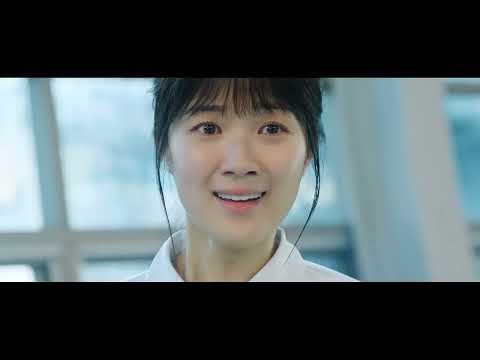
The official Stone Music upload uses Lovely Runner scenes, but it does not attempt to summarize an entire time-slip romance in four minutes. The edit prioritizes looks, interrupted proximity and moments whose ordinary surfaces become painful once the audience understands how unstable the timeline is. Running, waiting and turning back acquire meaning through repetition.
That approach respects both viewers. Someone who knows the series can place each image inside a larger emotional sequence. Someone arriving only for MINNIE still receives a coherent visual argument about a relationship experienced under pressure from time. The MV sells atmosphere without requiring homework.
Time travel is the mechanism, not the emotion
Lovely Runner provides a fantastical machine for revisiting loss, but “Like A Dream” is persuasive because its feeling does not depend on fantasy rules. People regularly understand a good moment as temporary while they are still living it. They notice a face too carefully, store an ordinary sentence, or feel nostalgia begin before the day has ended. The song lives in that pre-memory.
MINNIE does not romanticize powerlessness. Tenderness remains beautiful, but the arrangement keeps a small ache underneath it. Wanting to preserve someone is not the same as being able to control what happens next. The performance knows the difference.
What the chorus gets right
The chorus is memorable without turning the title into a blunt slogan. “Like a dream” becomes a condition applied to several things at once: the unreality of reunion, the speed with which happiness passes, and the fear that waking will expose the relationship as something time never intended to keep. Repetition adds pressure because the comparison cannot settle on one meaning.
Melodic shape helps. Phrases lift, hover and resolve gently rather than crashing into a dramatic floor. That motion preserves uncertainty. The singer can reach the note; the character cannot guarantee the future.
What I would change
The official video leans heavily on polished drama footage, and one quieter visual interruption could have made the song feel even more like MINNIE’s perspective rather than a beautiful emotional package surrounding the series. A brief performance image, recording-room detail or visual motif belonging only to the song might have created a second interpretive door.
That change carries a cost. The MV is an OST vehicle, and breaking from the drama could weaken the immediate connection viewers came to revisit. The existing choice favors emotional continuity over artist-centered authorship. It is commercially sensible and mostly effective, even if I still want one frame where the song gets to own the room by itself.
Where this belongs in MINNIE’s artist profile
This release is important to MINNIE’s solo file because it demonstrates a form of authorship that is not measured only by writing credits. An OST singer inherits characters, footage and a narrative world, then has to make the emotional angle believable through interpretation. MINNIE turns assigned material into a recognizable performance without bending the song until it sounds like an i-dle B-side.
That distinction is why her artist and member profile should be one canonical page. Group history explains the instrument listeners recognize; solo and soundtrack work document what she can build when the surrounding voices, concepts and responsibilities change.
Bottom line
“Like A Dream” lets romance remain warm without pretending warmth is protection. MINNIE sings inside borrowed time, and every careful breath makes the beautiful moment feel more valuable because the song refuses to guarantee it will last.
Replay section
- First replay: follow only the piano and note where silence creates more tension than another string layer would.
- Second replay: listen for MINNIE’s consonant attacks and the lines that soften from direct address into memory.
- Third replay: watch how repeated drama gestures—running, waiting and looking back—change meaning after the chorus.
- Fourth replay: ignore plot knowledge and test whether the video still communicates a complete emotional arc.
Canonical profile trail
- MINNIE artist and i-dle member profile
- i-dle group profile
- Exact official Stone Music OST videoDaily+41.6KTotal views55.2M
Sources and receipts
- Exact official upload from Stone Music EntertainmentDaily+41.6KTotal views55.2M
- MINNIE official i-dle channel context
One visual detail earns special attention: the edit repeatedly cuts near the moment a character could complete a movement or answer a look. That tiny withholding mirrors the arrangement. Resolution is available, but it is rarely allowed to feel permanent. The MV does not need a clock in every frame because interrupted body language keeps time pressure visible. On replay, watch the ends of shots rather than their subjects; the cut often arrives where another story would permit contact.
The song also avoids turning suffering into proof that the romance is more authentic. Pain follows the situation, not a requirement the couple must satisfy to deserve the audience’s investment. MINNIE protects that distinction by singing the tender passages with as much attention as the aching ones. Happiness is not shallow setup for tragedy. It is the thing the characters are trying to preserve, which gives loss its scale without worshipping loss itself.
What changed every time I replayed it
The second replay ignores the drama footage and follows MINNIE’s breath, checking whether the melody holds grief without borrowed plot context. The third watches how the edit joins remembered intimacy to impending loss without pretending chronology can protect anybody. The fourth listens for the places her airy color thins into fear rather than simple prettiness. The fifth compares the safest melodic phrases with images where time has already become unstable. By the sixth, the title stops sounding escapist. A dream is precious here because waking cannot be negotiated away, only delayed long enough for love to become memory.
Lyrics and meaning
Like A Dream treats love as real even when the time containing it proves fragile. The narrator does not earn permanence by feeling deeply enough; affection cannot bully chronology into obedience. That restraint matters in an OST built around time travel, where plot machinery could make every loss feel reversible. MINNIE keeps tenderness and danger in the same phrase. Remembering somebody is not the same as keeping them, but memory can still refuse the idea that temporary love was meaningless.
RaeRae verdict
Like A Dream gives MINNIE the exact kind of ache her voice handles best: soft edges with an actual drop beneath them. The drama footage does plenty of emotional lifting, but the song survives when I stop watching and follow her breath alone. I replay the moments where prettiness fractures into fear. Borrowed time is not safe, and the OST is stronger because it never promises a refund.