
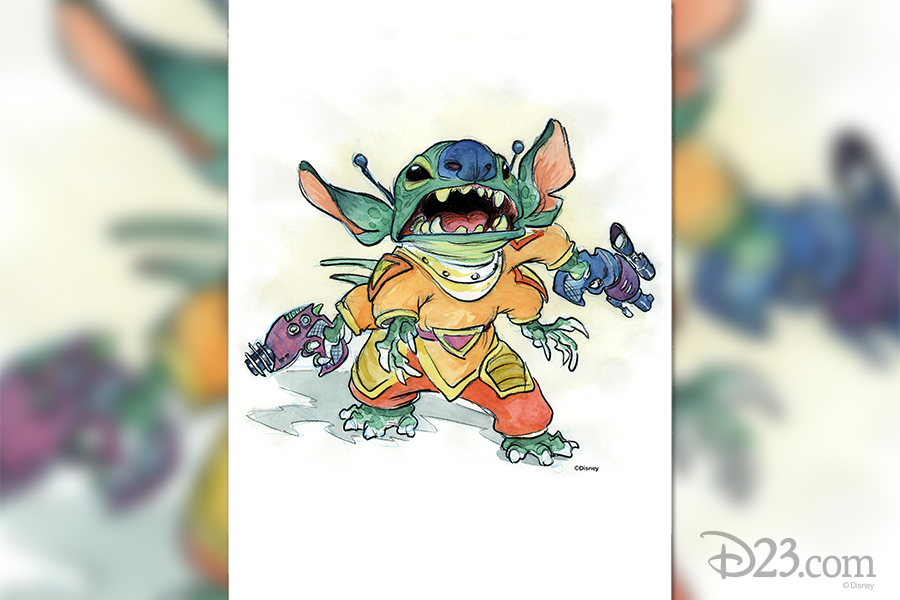
CHARACTER PROFILE · COERCION · CLONING · PERSONHOOD · RECOVERY · JIN FROM BTS FORMAT
Leroy Character Profile: The Red Experiment Was Built for Obedience, Copied Into an Army, and Condemned Before Anyone Asked What He Chose
The franchise gave Stitch a family before asking who he could become. Leroy got a command.
The profile receipt
Character: Leroy. Role: red counterpart created from Stitch’s template, coerced operative for Hämsterviel, source body for a mass-produced army, and the franchise’s clearest test of whether a person designed for obedience receives moral agency. Primary English voice: Chris Sanders in the core animated continuity. Core conflict: Leroy is treated as villain, weapon, copy, and product before the story gives him enough independent life to show what he wants.
This profile follows Leroy & Stitch and reads the character through creator responsibility, coercive activation, cloning, labor, punishment, personhood, and the dangerous convenience of calling forced behavior an evil nature. The movie gives viewers a final boss. The deeper franchise owes the created person an aftermath.
Leroy is born into a contract he never signed
Hämsterviel orders Jumba to create a new experiment with Stitch’s strengths and stricter obedience. The demand defines Leroy as commissioned property before consciousness enters the room.
No moment of creation gives him informed choice, counsel, family, or a neutral environment. His first relationships are creator, purchaser, and commander. Every later judgment should remember that beginning.
The red design encourages moral shorthand
Color, posture, expression, and musical cues tell viewers that this creature mirrors Stitch through menace. The visual language makes the threat readable quickly.
Readable threat is useful cinema and dangerous ethics. A body designed to look evil can make audiences assume guilt before conduct, which repeats the Federation’s habit of treating specifications as identity.
A counterpart is not an original life description
Characters describe Leroy through similarity to Stitch. Comparative language explains power, but the comparison steals room for difference.
He may share genetic material, strength, instincts, or vocal qualities while remaining a separate consciousness. Personhood does not require enough novelty to satisfy the creator’s catalog.
Jumba repeats the offense after learning the lesson
The first film establishes that creating destructive life without responsibility causes suffering. Jumba later complies with another demand to build a controlled weapon.
Coercion from Hämsterviel matters. Jumba still possesses technical knowledge and moral memory. The sequel should hold both facts together instead of letting comedy and eventual victory erase repeated creator harm.
Hämsterviel wants obedience more than intelligence
Stitch’s independence defeated ownership. Leroy is commissioned as the correction: similar power with a command structure designed to prevent refusal.
That preference reveals the villain’s politics. He does not fear destructive capacity when he controls the target. He fears a created person who can decide the creator is wrong.
The first command becomes a developmental environment
New consciousness learns the world through immediate demands, reactions, and consequences. Leroy receives domination before conversation.
Behavior formed there cannot be read like behavior chosen after safety and education. The franchise may label him bad, but the opening conditions were built to make alternatives unavailable.
His name arrives from the same people controlling him
Leroy gains a name rather than remaining only a number, yet naming occurs inside ownership. The label serves a production and villain plan before personal identity.
A future recovery should ask whether he keeps the name. Retaining Leroy may reclaim history. Choosing another name may reject the assignment. Either answer belongs to him.
Command activation is coercion written into the body
The story gives Hämsterviel reliable control through a built-in mechanism. Leroy’s nervous system becomes the enforcement tool.
Ordinary coercion threatens consequences after refusal. Embedded coercion narrows or removes the capacity to refuse at all. Moral judgment must begin by asking which actions remained available to him.
Programming is context, not destiny
Stitch demonstrates that designed purpose can change through relationship and practice. Leroy comes from the same scientific tradition, so the franchise already knows programming is not a complete moral identity.
The question is not whether design influences conduct. The question is whether environment, autonomy, and time could produce another pattern if commanders stopped reinforcing the violent one.
The story denies him the slow learning Stitch received
Stitch encounters Lilo, Nani, routines, consequences, grief, and repeated opportunities to choose. Leroy moves from creation into mission and mass duplication at sequel speed.
Comparing outcomes without comparing conditions becomes unfair. One creature receives family and the other receives orders. The difference says more about environment than color.
Stitch’s family becomes evidence for Leroy’s possible future
A destructive experiment learned attachment without losing strength or personality. That precedent should shape every institutional response to Leroy.
The Federation cannot claim rehabilitation is impossible after watching Stitch succeed. Leroy deserves assessment and support built from the lesson, not a harsher cage because he arrived later.
The fight stages two bodies and two histories
Leroy and Stitch can match strength, speed, and improvisation. The action emphasizes equivalence while emotional history separates them.
Stitch fights with relationships behind him. Leroy fights under command and recent creation. The physical contest therefore cannot settle who is morally better. The conditions are radically unequal.
Obedience can look like enthusiasm from the outside
A controlled person may move quickly, perform confidence, and show aggression consistent with the command. Viewers cannot infer free desire from efficient execution.
The franchise needs a post-control scene where Leroy encounters choice without immediate punishment. Only then can behavior begin to reveal preference rather than system compliance.
A weaponized person remains a person during danger
Public safety cannot wait for philosophical certainty while an army attacks. Characters may need restraint, disarmament, or temporary containment.
Emergency action should use the least harmful effective method and preserve future review. Calling the target a weapon must describe the risk, not cancel the personhood that makes coercion wrong.
The broken collar in the portrait asks the missing question
The original fan art shows a shattered control device beside Leroy. The object is editorial symbolism rather than a claim about one exact frame.
Breaking control creates possibility, not instant innocence or healing. Freedom begins when the command ends. Learning what to do with freedom takes longer than the final battle allows.
Mass cloning turns one exploited body into infrastructure
Hämsterviel does not merely command Leroy. He uses Leroy as the template for an army, multiplying the desired obedience and treating each result as replaceable output.
The production plan violates bodily autonomy at scale. Leroy’s genetic material and identity become resources. Copies also become separate lives the moment consciousness exists, regardless of identical origin.
A clone army is still a population
Thousands of similar bodies do not merge into one legal person. Each clone can experience commands, restraint, harm, confusion, and potentially preference.
After defeat, the Federation owes individual assessment rather than warehouse disposal. Administrative inconvenience cannot reduce a population back into inventory.
The word copy can hide separate suffering
Calling each Leroy a copy helps the audience follow the joke and battle. The word can also make destruction seem less serious because another identical body remains.
Physical similarity does not transfer experience. Harm to one consciousness is not repaired by the survival of another. The system must count every created life.
Hämsterviel builds a labor force without wages, rights, or exit
The army performs capture, occupation, and enforcement entirely for the commander’s political project. No participant negotiates terms.
Forced labor sits underneath the science-fiction comedy. The bodies are engineered, duplicated, activated, and sent into danger so one executive can seize power without personal risk.
The factory logic resembles franchise logic on purpose
A sequel produces a red version of a popular character and then reproduces that version in huge numbers. The narrative joke mirrors commercial pressure for recognizable variation.
RaeRae can enjoy the visual gag and notice the industry echo. Mass production turns character into unit, whether the factory belongs to Hämsterviel or merchandise planning.
Individual difference could emerge immediately
Identical starting material does not guarantee identical experience. Position in the room, first command heard, injury, contact, and tiny timing differences can create divergent memories.
A follow-up story should show clones developing preferences and names quickly. The population would become harder to manage on paper and more honest as character writing.
The army’s defeat should trigger medical triage
Large numbers may be injured, disoriented, chemically affected, or unable to function without commands. Some may fear silence because silence is unfamiliar.
Care should begin before interrogation. Stabilization, communication, food, sleep, and protection from Hämsterviel’s remaining influence are public responsibilities, not rewards for cooperation.
The original Leroy should not carry guilt for every clone
His body became the source, but Hämsterviel and Jumba made the replication choices. The original did not authorize production.
He may still feel responsibility or kinship because the copies share appearance and history. Emotional burden does not equal legal blame. Support should help him choose a relationship to the population.
Music becomes both control mechanism and escape route
The sequel uses a musical vulnerability to neutralize the Leroy army. The solution carries comedy, franchise memory, and tactical ingenuity.
A sensory trigger capable of overriding bodies raises consent questions even when heroes use the trigger to stop immediate violence. Emergency necessity should lead to later medical study and safeguards against future exploitation.
Aloha ʻOe carries emotional history Leroy never received
The song belongs to the franchise’s family language and to a larger Hawaiian cultural history. Stitch encounters music inside relationship. Leroy encounters the sound as a disabling force.
The same cultural object can therefore mean belonging for one character and involuntary control for another. A sequel should not assume later exposure feels comforting without consent and context.
The victory repeats control to defeat control
Heroes stop Hämsterviel by discovering another way to override the army. Tactical success prevents wider harm.
The moral problem remains. If personhood matters, the goal after safety must be restoring agency and ensuring nobody keeps the override as a convenient management tool.
Jumba should disclose every vulnerability
Creator secrecy allows Hämsterviel to exploit design and forces the family to improvise. Leroy and the clones need access to complete information about their own bodies.
Medical self-knowledge is a right. Jumba cannot keep triggers, limits, or control mechanisms private because embarrassment or intellectual pride makes disclosure uncomfortable.
Chris Sanders connects Leroy to Stitch without making them identical
Shared vocal texture reinforces the counterpart design. Performance choices can still separate aggression, timing, and emotional availability.
The casting makes the mirror audible. A future story would need greater differentiation as Leroy develops an independent life, allowing voice to record experience rather than template alone.
Silence could become Leroy’s first chosen sound
After constant commands and weaponized music, quiet may feel frightening or relieving. The franchise never lets the aftermath linger long enough to learn which.
A small scene where he selects silence, noise, or his own song could establish preference without a speech. Choice becomes concrete through sensory control.
His anger at Stitch would make sense
Stitch receives family, a name, protection, and the benefit of time. Leroy receives comparison, command, defeat, and moral condemnation. Resentment could emerge even after control ends.
The resentment would not make him irredeemable. The feeling could open a hard conversation about unequal rescue and survivor envy. Stitch should listen without pretending family was earned through superior character.
His anger at Jumba should be sharper
Jumba created him under pressure, embedded vulnerability, and enabled duplication. Later regret cannot erase technical participation.
Leroy deserves answers, records, boundaries, and the option to refuse contact. Forgiveness may come slowly or never. Creator remorse does not create a right to reconciliation.
The Federation needs a recovery plan before a prison plan
Containment may be necessary while command systems remain active. The next institutional move should not be permanent mass confinement.
Independent advocates, medical teams, interpreters, secure voluntary housing, and gradual choice would address safety without repeating Hämsterviel’s ownership. Review must begin immediately.
One body should never become the evidence against a whole class
Officials may see identical red experiments and assume identical danger. That shortcut would reproduce discrimination through appearance and origin.
Assessment should focus on individual conduct, current coercion, support needs, and chosen goals. Shared creation provides no basis for collective punishment.
A clone needs a name without passing a personality test
Names help administration and relationship, but no clone should have to display uniqueness before receiving dignity. Numbers may remain useful only if voluntarily retained.
Choice could include names, pronouns, symbols, colors, or other identifiers. The state must provide options without forcing rapid self-definition during recovery.
Housing should not become another cute job assignment
Hundreds or thousands of Leroys cannot all receive one visual gag placement. Their needs include space, privacy, food, healthcare, education, and community.
Some may want work. Others may need rest. A humane program would not solve population through unpaid labor disguised as purpose.
The experiments can offer peer support without becoming unpaid staff
Stitch, Reuben, Angel, Sparky, and other cousins understand parts of created life the Federation cannot. Their knowledge could help recovery.
Peer involvement must remain voluntary and compensated when substantial. Surviving one coercive system does not create a permanent duty to rehabilitate everyone produced afterward.
Leroy may need distance from the copies
Similarity could feel comforting, overwhelming, or like the continuation of bodily violation. He should choose the pace of contact.
The clone population also should not be told the original owes parenthood or leadership. Shared template does not assign family roles automatically. Relationship can grow after consent.
Rest is part of deprogramming
A life organized around command may interpret stillness as failure or danger. Sleep, food, play, and unstructured time help the nervous system learn that no order follows every pause.
Rest should not be monitored as a productivity stage. Recovery loses meaning when officials demand visible progress on the same schedule used for military readiness.
Accountability begins after meaningful agency appears
Leroy may eventually make harmful choices without active command. Personhood includes responsibility as well as rights.
The response should separate coerced history from later conduct, consider support and context, and preserve proportional consequences. Declaring him forever blameless would deny agency as surely as declaring him born evil.
A good character arc would begin after the movie ends
The final battle resolves the external threat before Leroy develops stable preference, relationship, or self-understanding. That unfinished space is the character’s real beginning.
A series could follow choices about name, home, contact with Jumba, the clone population, music, work, and whether Stitch feels like brother, rival, or unwanted comparison.
His first friend should not be assigned by matching color
Placement stories love visual symmetry. Leroy needs somebody who listens without treating appearance as destiny or trying to make him into Stitch’s darker twin.
Friendship might grow through a shared task, mutual irritation, quiet routine, or another survivor of control. The connection should survive difference rather than depend on cute pairing.
Reuben could understand refusal better than Stitch
Reuben spent years rejecting assigned productivity while witnessing an abusive command structure. Leroy arrives with almost no practice refusing.
Their conversations could separate autonomy from isolation. Reuben can validate the right to say no while admitting that comfortable distance sometimes protected the wrong person.
Gantu owes him a complicated account
Gantu served Hämsterviel and participated in experiment capture before defecting. He understands the boss’s abuse and the temptation to trade obedience for restored dignity.
That history could support empathy without making Gantu an automatic mentor. Leroy may see another former operative who had more choice and used that choice badly. Honesty must come before guidance.
Lilo cannot become his sole moral educator
Her relationship changed Stitch, but one child should not be assigned every dangerous created person because empathy worked once.
Lilo may choose contact and offer insight. Adults and institutions must provide the structure. Repeating the first film’s miracle as policy would exploit her and fail Leroy.
Fandom should stop treating red as a diagnosis
The character design intentionally signals danger. Fans can recognize the shorthand without repeating the conclusion that appearance proves moral nature.
Talk about commands, attacks, creation, and choices with precision. “Evil Stitch” may identify the marketing role, but the phrase cannot carry a complete character analysis.
The best redemption would keep some anger
Healing does not require Leroy to become cheerful, cuddly, or grateful to the people who defeated him. He can remain intense, skeptical, and difficult while learning consent and care.
A softened personality would reassure everyone else. A freer personality may challenge them. Rehabilitation succeeds when he can disagree safely, not when he becomes easier to merchandise.
The final RaeRae receipt belongs to the person inside the product
Leroy was commissioned, designed, controlled, copied, deployed, and defeated before receiving the narrative time Stitch received in one afternoon with Lilo. The franchise calls him villain because the plot needs a final threat.
A deeper ecosystem cannot stop there. Jumba owes disclosure and accountability. Hämsterviel owes criminal responsibility. The Federation owes rights and recovery. Stitch owes curiosity without superiority. Leroy owes accountability only where meaningful choice begins. The red body is not the moral argument. The command system is. Break the system, then give the person enough quiet to answer who he wants to become.
A medical team should answer to Leroy, not Jumba
Jumba possesses rare technical knowledge, but the creator’s expertise arrives with conflict of interest and a record of concealment. Leroy needs clinicians who can challenge him.
The care team should explain findings in accessible language, request consent, protect records, and let Leroy remove Jumba from the room. Technical necessity does not grant the creator permanent access to the body created.
Control research must be destroyed carefully
Deleting every record might prevent another commander from repeating the mechanism. Destruction could also erase information needed to remove the command safely or defend victims in court.
An independent authority should secure the evidence, restrict access, create medical copies under patient control, and prosecute misuse. Jumba and the Federation cannot decide alone which embarrassing files disappear.
The clones need language access
A mass-produced population may begin with limited speech, command vocabulary, or shared vocal patterns. Officials could mistake communication barriers for lack of thought.
Interpreters, nonverbal systems, patient interviewing, and peer-developed language would help individual preference emerge. Rights cannot wait until every clone speaks in the chamber’s preferred register.
Some Leroys may choose the same name
Individuality does not require visible difference. Several clones could keep Leroy because the name feels familiar, politically important, or simply good enough.
Records can distinguish people through chosen additional identifiers without declaring one name invalid. The burden belongs to administration, not to the person pressured to perform uniqueness for official convenience.
Family among clones should remain voluntary
Shared origin may create immediate kinship for some and unbearable closeness for others. The Federation may want one collective household because placement becomes easier.
Support should offer contact, privacy, and changing choices. Nobody should be forced into sibling language or separated from a bond formed during deployment merely because officials prefer tidy categories.
Public fear will not disappear after the command ends
Residents who saw the army attack may continue reading every red body as an imminent threat. Fear can produce exclusion, vigilantism, and political demands for permanent confinement.
The government must provide accurate information, safety plans, and anti-discrimination protection without demanding that survivors perform harmlessness for public comfort. Trust can grow through evidence and time, not propaganda.
Restitution should come from the people who profited
Hämsterviel sought political power. Jumba protected knowledge. The Federation failed prevention. Those actors hold responsibility for recovery costs.
Leroy and the clones should not finance care through compulsory work or public exhibitions. Restitution includes housing, healthcare, education, legal help, and compensation for the use of their bodies.
A trial must distinguish commander, creator, and operative
Hämsterviel ordered the project. Jumba performed the creation. Leroy executed actions under embedded control. Treating all three as equivalent would erase causation.
Evidence should examine capacity to refuse, knowledge, intent, alternatives, and benefit. Legal precision protects victims better than one broad villain label because precision identifies how the system can be prevented from repeating.
Stitch should not lead with a lecture about goodness
Stitch may want to explain family and choice because those lessons saved him. Leroy could hear the speech as proof that the favored experiment believes he earned superior treatment.
A better first conversation begins with acknowledgment: Stitch had time, support, and repeated chances that Leroy did not. Advice can come later, after the unequal conditions are named.
The first freely chosen mistake would be important
Recovery stories sometimes demand perfect behavior from the formerly controlled person. Real agency includes poor judgment, irritation, selfishness, and consequences unrelated to programming.
A small mistake followed by proportionate repair would prove Leroy entered ordinary moral life. Nobody should reactivate a prison plan because he breaks a promise, starts a fight, or chooses the wrong friend.
His future needs an ordinary Tuesday
Battles and hearings reveal extreme choices. Personhood also lives in breakfast, boredom, a disliked chore, a favorite chair, and the decision to ignore a ringing communicator.
An ordinary day would give Leroy something the villain plot never offered: time that belongs to nobody else. The first unremarkable Tuesday may be more radical than another victory.
Keep exploring
Return to the Lilo & Stitch hub for the character directory, film and series reviews, episode reactions, rants, and guides.
An army of copies is still an army of individuals
Leroy is created for obedience and duplicated before he has any chance to develop a self outside Hämsterviel’s command. The red body and aggressive purpose make him easy to classify as evil, yet the franchise already established that design is not destiny. Defeating the army solves the immediate attack. It does not answer what happens to hundreds of sentient beings whose first experiences were orders, combat, and forced synchronization. Rehabilitation requires separation, names, consent, patient education, and the possibility that different Leroys will become different people.