
Yuria Legend OVA React: She Was Never Just Waiting for Kenshiro
Immediate reaction: Yuria Legend rewrites the hidden years through prophecy, strategy, grief, and the question of whether a woman can become a symbol without disappearing inside it.
Spoilers: This React discusses the complete OVA and its ending.
A perspective shift matters only if the person receiving the camera gains decisions, not merely additional suffering
The official premise follows Yuria from childhood through her acceptance of the Nanto Last General role, revealing actions hidden behind the familiar Kenshiro route. That structure corrects an absence: the woman positioned at the center of multiple men’s destinies possessed a history while they were fighting around her.
More screen time is not automatically sovereignty. The OVA must distinguish what Yuria chooses from what prophecy, protectors, lovers, and political necessity choose for her. Its success lies in making waiting active without romanticizing the systems that made concealment look like her only safe form of leadership.
Precognition isolates Yuria because adults treat knowledge as a function before treating fear as a childhood experience
Yuria’s unwanted visions establish that special ability can be another form of vulnerability. Adults may value what she can foresee while failing to ask what living beside catastrophe does to a child. Knowledge arrives without the authority to alter every outcome, producing grief before events occur.
Her meeting with Kenshiro matters because recognition briefly returns her to relationship rather than function. The emotional foundation works when love is not presented as a cure for prophecy but as evidence that someone can encounter her without requiring a performance. A child should not have to become cosmically useful before receiving care.
His love remains coercion even when the OVA gives Yuria more space inside its consequences
Revisiting Shin from Yuria’s perspective makes possession harder to confuse with tragic romance. He may feel intensely, suffer, and construct a city around what he believes she deserves. None of those acts makes her refusal less authoritative. Love cannot be proved by increasing the scale of what another person did not request.
Yuria’s attempt to escape his escalating violence reveals the danger of making a woman responsible for managing a powerful man’s feelings. She can understand his wound without owing captivity as treatment. The OVA’s perspective gains ethical force whenever it keeps that distinction visible instead of using his grief to soften the cage.
Protection becomes government when guardians control information, movement, and the public meaning of the person protected
Rihaku and the guardians save Yuria from immediate death and place her inside a wider Nanto strategy. Their loyalty is genuine, and the structure remains paternalistic if she cannot shape it. Concealment may be tactically necessary while still removing ordinary forms of consent.
The OVA improves the familiar saga by showing Yuria accept responsibility rather than exist as cargo passed between men. The key question is whether acceptance occurs after meaningful alternatives are explained. A symbol gains sovereignty when she can question the institution invoking her name and survive disagreement with those sworn to protect her.
Yuria’s authority is moral and political, yet the title risks making maternal symbolism substitute for personhood
As the Last General, Yuria represents compassion, coalition, and resistance to Raoh’s empire. Those qualities give Nanto a social horizon beyond martial rivalry. People can gather around protection rather than conquest, making her leadership consequential even when she does not fight like the men surrounding her.
Maternal imagery becomes limiting when care is treated as a natural essence rather than chosen labor and judgment. Yuria should be allowed anger, uncertainty, strategic error, desire, and boundaries. A holy mother who exists only to absorb male sorrow is another form of disappearance. The OVA approaches a fuller person whenever authority carries tension rather than purity.
Hidden encounters repair continuity by letting Yuria recognize allies outside romantic destiny
The official account emphasizes meetings with Rei and Toki not shown in the original route. These scenes widen Yuria’s relational world. She is not connected to history solely through Kenshiro, Shin, and Raoh; she encounters men whose forms of care and sacrifice complicate the martial landscape.
The value depends on reciprocity. If every meeting exists only to confirm Yuria’s saintliness, the network remains symbolic. When she interprets, advises, withholds, or changes because of another person, the perspective becomes lived. Relationship should alter both sides rather than arrange admirers around an ideal center.
A renewed Japanese performance gives Yuria composure while the script decides how much strain may be heard beneath it
The Legends project recasts central roles, and Yuriko Ishida’s Yuria carries a cinematic stillness distinct from the television memory. Calm supports the Last General’s symbolic presence and risks smoothing the emotional cost of being watched as destiny.
The strongest vocal moments allow breath, hesitation, and controlled grief to interrupt holiness. Yuria becomes human when composure sounds chosen rather than effortless. A leader can steady others and still need a place where steadiness is not required. Performance restores interiority in the spaces iconography leaves open.
Beauty should frame Yuria’s attention and decisions rather than turn suffering into an elegant portrait session
The OVA’s refined character design and cinematic lighting make Yuria visually central. This can correct the old story’s absence and can aestheticize captivity. The ethical camera notices what she sees, which route she studies, whose warning she accepts, and how her body responds to spaces controlled by others.
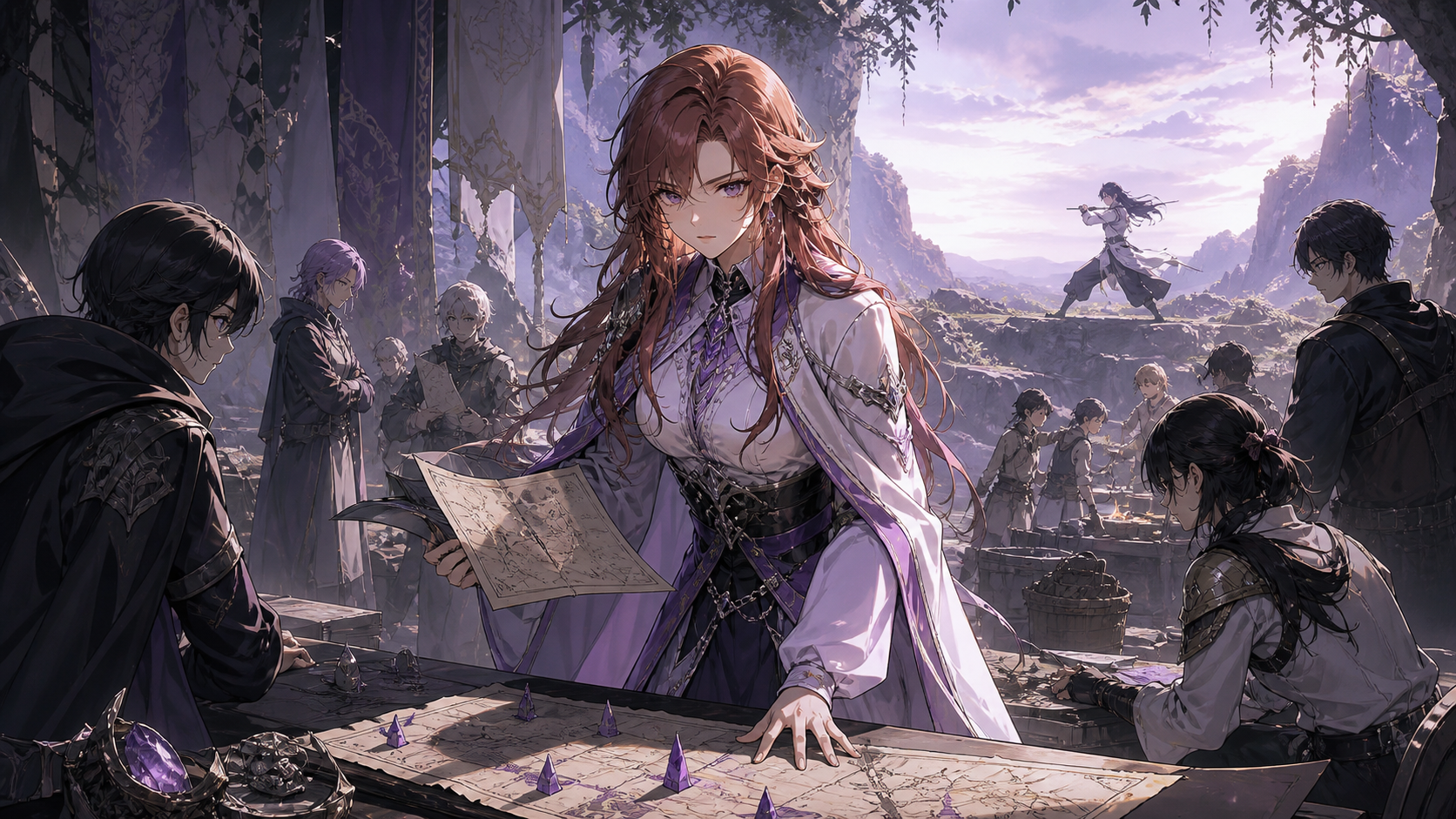
Our canonical fan art therefore places her over a working map inside an active sanctuary. The image preserves beauty without letting beauty define the role. A landing card should tell viewers they are opening a political perspective, not another profile of the woman men loved.
8.7 out of 10 — necessary perspective, imperfect sovereignty, and the strongest argument for why this five-part retelling exists
Yuria Legend gives hidden history to a woman the original saga too often converted into destination, symbol, or evidence of male tenderness. Childhood prophecy, Shin’s coercion, guardian politics, new encounters, and Last General responsibility create meaningful depth.
The OVA still relies on saintly maternal framing and cannot entirely free Yuria from destiny’s architecture. Its achievement is making that architecture visible from inside. She was not merely waiting for Kenshiro. She was surviving systems, interpreting power, and deciding what kind of future her name could gather.
Rearranging familiar events around Yuria exposes which absences the original route treated as natural
The OVA revisits canonical landmarks without pretending a perspective shift leaves their meaning unchanged. Events previously understood through Kenshiro’s search or Shin’s collapse become conditions Yuria had to interpret while information was controlled around her. The retelling is valuable where it changes causality, not merely camera placement.
Compression still encourages summary. Childhood, captivity, rescue, prophecy, guardianship, hidden meetings, and resistance compete inside one installment. The React should notice where a scene gives Yuria a decision and where narration simply informs us that she endured another transition. Perspective requires duration enough for thought to affect action.
Can a woman be loved by powerful men without becoming responsible for making their power humane
Shin, Kenshiro, Raoh, guardians, and allies attach different feelings and duties to Yuria. The franchise frequently treats her presence as the force revealing tenderness inside men. That function grants symbolic importance and transfers emotional labor onto someone whose own fear and desire receive less space.
Humanity requires reversing the test. We should judge the men by whether Yuria remains free, rather than judge her value by how beautifully they suffer. Love becomes ethical when it accepts an answer, shares information, and refuses to turn protection into jurisdiction. The OVA makes this standard available even when it does not always meet it.
Foreknowledge becomes another cage when everyone treats the predicted role as consent
Yuria’s visions and Last General destiny connect her to histories larger than individual choice. Myth can help a community organize hope and can excuse decisions made over the person carrying it. Knowing what may happen does not mean agreeing to every strategy others construct around the knowledge.
The strongest interpretation treats prophecy as pressure rather than command. Yuria’s courage belongs to how she answers a role, questions it, and decides which obligations she will claim. Destiny explains the arena. It cannot sign on her behalf.
A second viewing should follow the information Yuria possesses rather than the events the audience already knows
Viewers familiar with the saga may rush toward revelations they can already predict. Rewatching becomes richer when attention stays with what Yuria knows at each moment, who controls the next fact, and whether she is allowed to ask the question that would change the plan.
This method exposes the OVA’s achievement and limitation. Hidden continuity gains emotional coherence, while institutional protectors still manage too much of her world. Yuria is most vivid when knowledge changes her strategy, not when the story praises how gracefully she accepts what others reveal.
The production record and editorial judgment remain separate
The Fist of the North Star official movie and OVA archive establishes the five-part order, release format, perspective, and official story summary used here. All analysis of coercion, gender, care, disability, performance, and political meaning is CVM Sekai editorial criticism.