
JIN PROFILE FORMAT · Character Biography · Full Franchise Chronology
Lady Tremaine Character Profile: Control Was the Whole Magic Trick
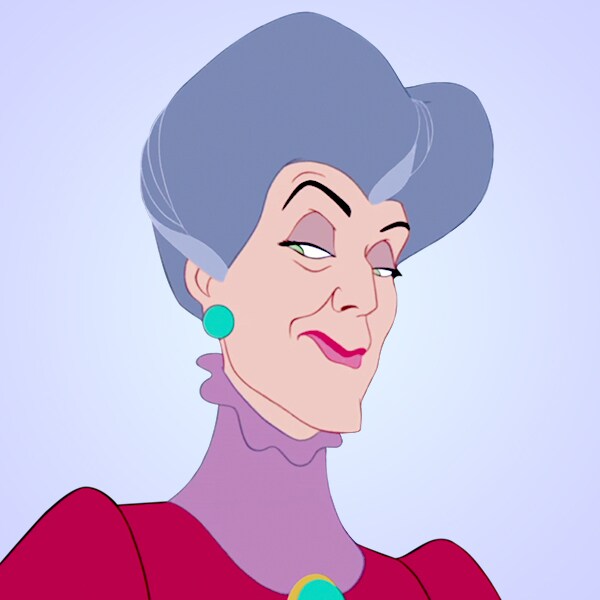
She could make one eyebrow feel like an eviction notice, and the wand only proved that domestic control had always been political training.
Profile at a glance
Franchise: Cinderella
Roles: stepmother, widow, estate controller, political conspirator, temporary magic user
Animated voice performers: Eleanor Audley and Susanne Blakeslee
2015 performer: Cate Blanchett
Daughters: Anastasia and Drizella
Primary target: Cinderella
Core strengths: observation, composure, social strategy, patience, coordination
Core failure: treating security as the right to remove another person’s choices.
The profile before the wicked-stepmother label
Lady Tremaine is a strategist of domestic control whose elegance makes cruelty easier to dismiss as discipline. She rarely needs physical force because she controls rooms, schedules, food, clothing, reputation, access, and the meaning assigned to every event. Her power grows from proximity. She knows what Cinderella values and arranges the household so each valued thing can become leverage.
Calling her jealous is accurate and incomplete. She is threatened by Cinderella’s beauty, competence, inheritance, emotional connection to the dead father, and ability to inspire loyalty without demanding performance. Across animation and live action, Tremaine treats another woman’s existence as evidence that her own security is unstable. Rather than challenge the system producing insecurity, she builds a smaller system where she can always rank first.
Identity card
Lady Tremaine is Cinderella’s stepmother, Anastasia and Drizella’s mother, widow of at least one husband, manager or occupier of Cinderella’s family estate, and central antagonist across the 1950 film, both animated sequels, and the 2015 adaptation. Cinderella III briefly turns her into a magical and political threat after she acquires the Fairy Godmother’s wand.
Her voice performers include Eleanor Audley in the 1950 film and Susanne Blakeslee in later animated productions. Cate Blanchett plays the 2015 version. The character has no supernatural ability by default. Her recurring tools are observation, emotional restraint, household authority, social presentation, maternal influence, plausible deniability, and an ability to make institutional rules serve private cruelty.
Marriage as security and acquisition
The 1950 narration describes a woman of good family who marries Cinderella’s widowed father while hiding her true character until his death. The marriage gives Tremaine access to a home and social position. After losing the husband, she protects that position by reducing the heir to unpaid labor and directing resources toward her biological daughters.
The 2015 film gives her additional widowhood, financial anxiety, and a sharper sense that marriage is the only structure protecting women of her class. Those pressures make her strategy legible. They do not make Cinderella responsible for the strategy. Tremaine has experienced dependence and chooses to reproduce dependence for a younger woman with fewer options.
The controlled voice
Eleanor Audley performs threat through low pitch, precision, pauses, and the sense that every sentence has already been edited before delivery. Tremaine does not waste volume because the household has learned to respond to smaller signals. A raised eyebrow or carefully repeated name can carry the consequence of a shout.
That restraint separates her from daughters whose noise exposes insecurity. She trains them for display while embodying self-control as social weapon. The contrast makes the family dynamic readable through sound. Anastasia and Drizella compete for immediate attention. Tremaine waits until attention belongs to her by default.
The bedroom scene and impossible fairness
When Cinderella asks to attend the ball, Lady Tremaine appears to grant permission under conditions that sound reasonable: complete the work and find a suitable dress. She then expands the chore list until preparation becomes impossible. The tactic allows her to present obstruction as Cinderella’s failure to meet a neutral standard.
Coercive systems often hide inside conditional permission. The target technically may succeed while every resource has been arranged against success. Tremaine’s daughters interrupt constantly, and the household consumes Cinderella’s time. When the mice solve the schedule problem through collective sewing, Tremaine finds another mechanism. The rule was never designed to produce access.
The dress destruction through delegated violence
Lady Tremaine identifies discarded accessories on Cinderella’s restored gown and lets the stepsisters tear the dress apart. She does not need to grab fabric. Her daughters understand the invitation and perform the attack. Tremaine preserves physical distance while controlling cause, timing, and aftermath.
The scene reveals how she converts maternal authority into a weapon. Anastasia and Drizella learn that cruelty earns alignment with their mother. Cinderella learns that technical compliance offers no protection when the rule-maker wants exclusion. The dress is destroyed because ordinary labor unexpectedly succeeded, proving the household narrative could be beaten.
Why Cinderella’s beauty bothers her
Beauty matters because the household treats marriage as economic destiny. Cinderella appears to possess social advantages without participating in Tremaine’s training system. Her face, composure, competence, and inherited status threaten the daughters’ prospects and the mother’s belief that relentless presentation is necessary for survival.
The conflict is not beauty against ugliness. Lady Tremaine is elegant, and the 2015 film makes her visually commanding. The conflict concerns whose beauty receives legitimacy and what beauty can purchase. Tremaine cannot tolerate a world where Cinderella enters the room without permission and receives the recognition her daughters were trained to secure.
The locked tower
After recognizing the mystery woman, Tremaine confines Cinderella during the slipper search. The locked door exposes the household arrangement without the language of chores or etiquette. When persuasion, scheduling, humiliation, and dress destruction fail, physical containment remains. The earlier politeness was always backed by force.
She also takes or controls the key, knowing that isolation prevents testimony. Cinderella’s voice, animal allies, and a second slipper eventually defeat the plan. Tremaine loses because she cannot control every witness or every piece of evidence. Her mistake is assuming beings she treats as insignificant cannot organize.
The slipper smashed and the backup receipt
Lady Tremaine trips the Grand Duke’s servant or otherwise causes the official slipper to shatter, depending on how viewers parse the staged accident. Her expression reveals intention even while the action maintains deniability. She believes eliminating the object will eliminate Cinderella’s claim.
Cinderella produces the matching slipper, proving she retained evidence outside Tremaine’s control. The reversal is emotionally satisfying because Tremaine’s strategy has always depended on controlling the record. One shoe can be broken. A person with memory, allies, and another receipt cannot be erased as easily.
Motherhood as rank management
Lady Tremaine claims to advance Anastasia and Drizella, but her parenting treats daughters as investments whose success validates her. She encourages competition, vanity, performance, and dependence on advantageous marriage. Their emotional development receives less attention than their marketability.
Cinderella III reveals the cost when Anastasia receives the desired crown and discovers that status without love feels empty. Tremaine responds by increasing control rather than recognizing her daughter’s refusal. Maternal protection becomes indistinguishable from ownership. The daughter may succeed only inside the future the mother selected.
Dreams Come True and the threat of ordinary love
Anastasia’s relationship with the Baker threatens Tremaine because ordinary affection does not advance family rank. The man is kind, employed, interested, and socially unsuitable according to her plan. Tremaine would rather preserve a daughter’s availability for status than allow a relationship that produces mutual recognition.
Cinderella supports Anastasia, creating a sharp contrast between maternal possession and former victim solidarity. Tremaine reads the support as interference because she assumes women act only through competition or strategy. A choice made for another woman’s happiness falls outside her governing language.
A Twist in Time gives her the weapon she always wanted
Lady Tremaine acquires the Fairy Godmother’s wand and immediately uses magic to edit evidence, memory, access, and institutional belief. The escalation feels natural because her ordinary methods already worked that way. Chores altered access. The locked door altered testimony. The shattered slipper altered evidence. Magic increases scale without changing intention.
She does not wish for independent wealth, safety, or a life outside marriage politics. She rewrites the slipper so Anastasia receives Cinderella’s place and enchants the Prince to accept the substitution. The choice proves that control has become more important than security. She would rather own the ending than build another future.
The wand reveals competence and recklessness
Tremaine learns powerful magic quickly enough to become dangerous. She observes rules, experiments with time, manipulates bodies and memory, and enters the palace through a revised official account. Her intelligence has never been in doubt. The sequel finally gives intelligence a tool proportionate to ambition.
Her weakness is believing control can remove contradiction. Jaq and Gus remember. Cinderella investigates. The Prince’s body resists an implanted story. Anastasia experiences the difference between public success and private love. Every controlled variable produces another witness. Tremaine can alter records more easily than relationships.
Memory manipulation and consent
Enchanting the Prince is among the franchise’s darkest acts because Tremaine removes his ability to recognize, choose, and refuse. She turns romance into compliance, then arranges Anastasia’s marriage around a manufactured memory. The injury reaches both young people. Anastasia is offered affection whose source has been falsified.
Tremaine treats consent as another obstacle that authority or magic may revise. The same belief appears in smaller household scenes where Cinderella’s time, body, belongings, and movement are available for assignment. A Twist in Time makes the underlying ethic impossible to miss. People are pieces when their choices interfere with her design.
The pumpkin-coach execution attempt
When containment and enchantment begin to fail, Tremaine turns Cinderella into a direct target of magical violence. The pumpkin coach becomes a weapon, and the sequence removes any remaining ambiguity about how far she will go to preserve the rewrite. Social ruin was never the final boundary.
The attempted elimination also shows panic entering her control. Earlier Tremaine prefers distance and deniability. With the wand, restraint weakens because consequence feels removable. Power does not create cruelty. Power reveals how much restraint depended on practical limits rather than moral limits.
Anastasia’s refusal defeats her more deeply than Cinderella does
At the altar, Anastasia refuses to marry a man who does not love her. The daughter rejects the reward Tremaine spent the entire franchise teaching her to desire. Cinderella’s resistance threatens the plan from outside the biological family. Anastasia’s refusal proves the family training did not fully own the person.
Tremaine responds with rage and magical punishment because disagreement becomes betrayal when motherhood is structured as possession. She cannot accept that a daughter may evaluate success by another moral standard. The refusal exposes the emptiness of every marriage strategy built without care.
The 2015 widow receives context without absolution
Cate Blanchett’s Tremaine has survived a first husband, married again, lost another provider, and discovered that the second husband’s deepest tenderness remained connected to his first family. Her grief, debt anxiety, age, and awareness of a woman’s narrow economic options create a recognizable survival history.
The film draws a clean line between history and choice. She could recognize Ella as another grieving woman. She could cooperate around the estate. She could seek transparent financial planning. She chooses humiliation, extraction, confinement, and political bargaining. Context makes the decision more tragic because alternatives become visible.
The overheard conversation after the father dies
Tremaine hears Ella speak lovingly about her father and realizes that his daughter possesses an intimacy she cannot retroactively share. Grief becomes competition. Instead of allowing multiple forms of loss, she treats Ella’s memory as a judgment on her marriage.
Blanchett lets injury flash before calculation returns. That brief exposure matters because villainy becomes a process rather than a permanent facial expression. She feels excluded and decides that the less powerful person must pay for the feeling. The moral failure occurs in the conversion.
Financial decline and the disappearing household staff
The 2015 estate loses resources after the father’s death, and servants appear to leave or be dismissed until Ella performs the labor alone. Tremaine frames necessity around the household while preserving her daughters’ leisure and presentation. Scarcity is distributed according to rank, not shared need.
Her management reveals priorities. She invests in social display because marriage may restore security. Ella’s body absorbs the budget shortfall. This pattern is historically and presently familiar: unpaid care work expands when formal resources disappear, and the person with least authority carries the difference.
The Grand Duke bargain
Tremaine discovers Ella’s identity, takes the slipper, and bargains with the Grand Duke for advantageous marriages and a position of power. The exchange turns household knowledge into political currency. She is not merely blocking romance out of jealousy. She is selling access to a young woman’s future.
The Duke recognizes a compatible strategist because both treat marriage as infrastructure. Their alliance connects domestic control to state policy. Tremaine wants family elevation. The Duke wants a foreign treaty. Ella and Kit become obstacles because their choices resist both transactions.
Cate Blanchett’s body language
Blanchett builds control through posture, stillness, chin angle, breath, gaze, and the careful use of furniture. Tremaine often sits while another person stands, forcing the room to arrange itself around her. She can exclude Ella from a conversation without raising her voice or moving across the floor.
Costume amplifies that authority, but performance keeps the woman from disappearing inside fabric. A pause before answering can communicate wounded pride, calculation, and threat at once. The role demonstrates why a character profile cannot stop at plot facts. Tremaine’s governing method lives in timing.
Costume as armor and advertisement
Across versions, Lady Tremaine dresses with precision because appearance is part of authority. The animated red gown, jewelry, severe silhouette, and controlled grooming distinguish her from the stepsisters’ comic excess. The 2015 wardrobe expands into architectural shapes, poisonous greens, burgundy, black, and patterned luxury.
Her clothing protects against visible need while advertising social legitimacy. She understands that institutions treat polished cruelty differently from desperate cruelty. Elegance does not hide her actions from the audience, but elegance helps the fictional world misread domination as discipline.
Lucifer as an extension of the household order
Lucifer receives affection and protection while hunting the mice Cinderella cares for. Tremaine rewards the predator whose behavior reproduces her hierarchy at animal scale. The cat can occupy rooms, interrupt work, create mess, and threaten vulnerable residents without meaningful consequence.
She does not micromanage every chase. The environment already favors Lucifer. That detail mirrors her broader power. Control is most efficient when other participants enforce rank automatically. Anastasia, Drizella, Lucifer, and household routines continue the system even when Tremaine is not present.
Her relationship with Drizella
Drizella remains loyal to Tremaine’s status project and receives less individual attention than Anastasia’s later development. Mother and daughter share contempt for alternatives that do not increase rank. Drizella’s noise and vanity perform the hunger Tremaine keeps disciplined.
The relationship is underwritten, which makes the absence revealing. Tremaine invests in daughters as a matched social unit until one daughter develops an independent moral choice. Drizella stays inside the plan and therefore remains less visible as a person. Compliance earns inclusion without necessarily earning intimacy.
Her relationship with Cinderella
Tremaine sees Cinderella as rival, resource, witness, and threat. She uses the young woman’s labor, resents her inherited connection to the estate, fears her beauty, and understands that Cinderella’s presence exposes the difference between natural authority and imposed authority.
Cinderella repeatedly offers civility without receiving care. Their conflict is not a misunderstanding that kindness can solve. Tremaine recognizes kindness and exploits the predictable response. The eventual defeat requires outside witnesses, preserved evidence, animal allies, royal intervention, and in Cinderella III, direct resistance to altered reality.
Skills and competencies
Lady Tremaine is observant, socially fluent, financially aware, patient, persuasive, emotionally controlled, and capable of coordinating other people without explicit orders. She reads vulnerability quickly, plans around institutional rules, and maintains plausible deniability. Cinderella III adds rapid magical learning and political infiltration.
Those skills could support genuine leadership. She could manage an estate, negotiate openly, mentor daughters, or advise a court. The tragedy is directional. Competence serves domination because she treats security as something obtained by reducing another person’s options.
Weaknesses and blind spots
Tremaine underestimates relationships she did not create. She dismisses mice, servants, romantic affection, memory, and daughters’ independent conscience as weak variables. She assumes fear is more reliable than loyalty because fear is the tool she understands best.
She also mistakes control for permanence. Each victory requires another restriction, lie, spell, or bargain. The system becomes more fragile as contradiction accumulates. Her composure hides dependence on everybody continuing to accept the assigned role.
What she symbolizes
Lady Tremaine represents coercive control inside respectable domestic presentation. She also represents status anxiety, maternal possession, inheritance theft, emotional surveillance, and the social preference for polished authority over inconvenient testimony. Her menace works because no dragon is required.
In remake form, she carries the additional fear that women without male protection will lose economic security and visibility. The story becomes sharper when that fear is understood as structural and her response is understood as chosen. Oppression can explain why somebody wants power without excusing how they use power downward.
Why fandom loves the villain
Fans respond to Tremaine’s voice, design, elegance, intelligence, restraint, and the satisfaction of a villain who does not need chaos to command a scene. Eleanor Audley, Susanne Blakeslee, and Cate Blanchett each make calculation pleasurable to watch. Villain appreciation recognizes craft and presence.
Appreciation should not require turning her into a misunderstood feminist icon whose victim caused the conflict by being beautiful. She is interesting because the motives are legible and the choices remain cruel. Flattening her into pure evil loses psychology. Excusing her loses the story.
The RaeRae verdict
Lady Tremaine can make one eyebrow feel like an eviction notice. She took a whole estate, converted the heir into unpaid staff, trained two daughters to treat marriage like a hostile merger, and still acted offended when a mouse union found the spare key. Then she got a wand and used reality editing for the same family plan. Ambition was never the problem. Consent was.
I love watching her because control has texture in every performance. I do not need a tragic widow biography to forgive her. I need the biography so the cruelty has a route. She knows dependence, grief, and fear. She chooses to make a younger woman live inside all three. That choice is the character.
Profile receipt
Lady Tremaine appears as central antagonist in Cinderella (1950), Cinderella II, Cinderella III, and Cinderella (2015). Eleanor Audley voices the original animated performance, Susanne Blakeslee carries later animation, and Cate Blanchett plays the live-action adaptation. Her methods escalate from domestic coercion and evidence destruction to political conspiracy and magical memory manipulation.
Her core strengths are observation, composure, social strategy, coordination, and patience. Her weaknesses are possessiveness, contempt for reciprocal relationships, dependence on hierarchy, and the belief that controlled evidence can replace lived truth. Her defining relationship is with Cinderella, but Anastasia’s refusal delivers the deepest rejection of her worldview.
What the sequels correct about her scale
The original film keeps Tremaine inside the house until the slipper search brings royal authority to the door. Later stories reveal that her methods scale readily into palace life. She can exploit etiquette, marriage expectations, magical rules, and official memory because each institution already values order over inconvenient testimony.
Cinderella III does not transform a domestic villain into an unrelated sorcerer. The sequel demonstrates that household control was political training. Give the person who controlled breakfast, bedrooms, schedules, and keys a wand, and she applies the same logic to time, identity, and succession.
What the 2015 ending refuses to litigate
The live-action adaptation sends Tremaine and the Grand Duke away without detailing property restoration, criminal accountability, the daughters’ futures, or the financial trail through Ella’s estate. Exile provides emotional closure and protects the storybook ending from administrative consequence.
That choice leaves character questions open. Would Tremaine interpret defeat as moral failure, strategic failure, or temporary loss of position? Her history suggests the last answer. She rarely revises values after evidence. She revises tactics. A continuation would need boundaries stronger than forgiveness and geographic distance.
Performance differences across eras
Audley’s Tremaine is nearly elemental in restraint, a voice and face designed around the terrifying certainty of household authority. Blakeslee preserves that precision while supporting broader sequel plots and the instability produced by magical power. Blanchett adds widowhood, social appetite, sensuality, financial fear, and visible wounds beneath performance.
None replaces the others. The animated design clarifies method through economy. The sequels test method under new conditions. Live action makes psychology more explicit. A complete profile keeps the differences rather than forcing every version into one biography.
Could she have chosen another life?
Yes, within the story’s own possibilities. She could share estate management, treat Ella as family, support daughters beyond marriage, accept the Baker, negotiate finances honestly, or leave without turning another person into labor. Structural limits narrow choices without eliminating moral agency.
The possibility of another life makes her compelling. A villain with no alternative is a mechanism. Tremaine repeatedly sees alternatives through Cinderella, Anastasia, the Fairy Godmother, and even the Prince’s resistance. She rejects them because reciprocal life would require surrendering rank as the measure of safety.
The final character reading
Lady Tremaine is most frightening when nothing supernatural happens. A breakfast bell, locked door, torn dress, missing key, controlled pause, or false condition can reorganize another person’s day. The character understands that domination becomes durable when cruelty looks like household order.
Her magic in Cinderella III exposes the same principle at spectacular scale. She edits reality because ordinary reality stopped obeying. The franchise defeats her through evidence, memory, friendship, refusal, and people listening outside the story she authored. That is a far better ending than pretending kindness finally taught her manners.
Sources and credits
Film chronology and credited performances are checked against the official D23 entries for Cinderella (1950), Cinderella II, Cinderella III, and Cinderella (2015).
Keep exploring
Return to the Cinderella hub for reviews, character profiles, rants, and fairy-tale guides.