
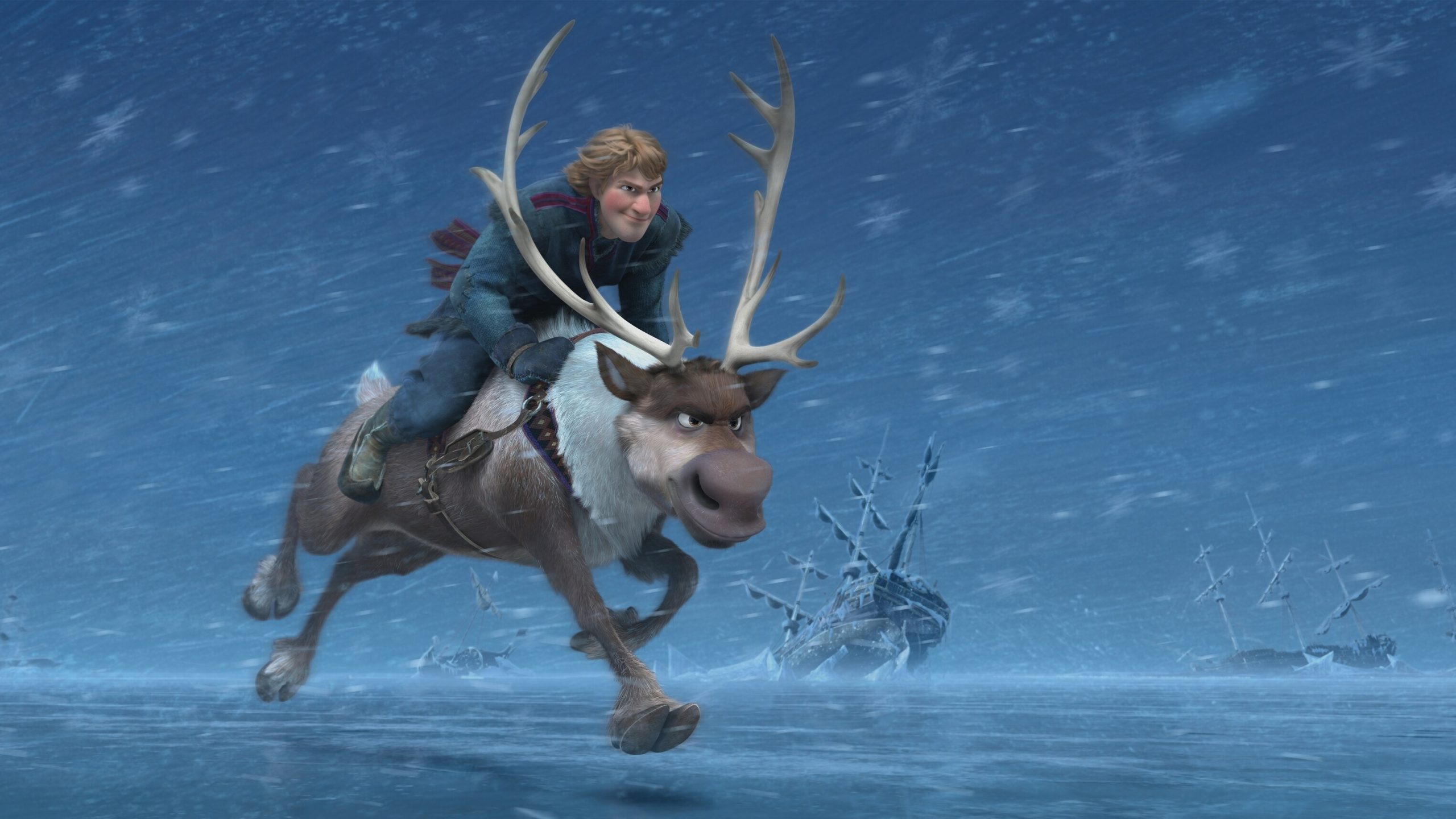
Frozen Character Profile · Ice Harvester · Reindeer Translator · Secure Boyfriend in Training
Kristoff
Labor, class, consent, masculinity, family, Sven, Anna, and the man who learned support does not mean fixing everything.
Profile
| Full name | Kristoff Bjorgman |
|---|---|
| Occupation | Ice harvester and official Arendelle Ice Master and Deliverer |
| Family | Sven, Bulda, and the troll community |
| Partner | Anna of Arendelle |
| Primary voice | Jonathan Groff |
| Child voice | Tyree Brown |
| First appearance | Frozen (2013) |
| Current status | Engaged to Queen Anna |
Bottom line first
Kristoff works because the franchise lets a romantic lead begin with labor. He knows ice as work, weather as risk, Sven as family, and royal problems as events that can destroy an ordinary person’s livelihood before the palace understands what happened.
Calling him the nice boyfriend is accurate and incomplete. His record includes adoption, class position, cultural borrowing, consent, insecurity, emotional expression, comic failure, and the challenge of supporting a woman whose family emergencies repeatedly swallow the future he is trying to build with her.
Profile and identity
Kristoff Bjorgman is an ice harvester raised by trolls after childhood separation from human family. Sven becomes companion, coworker, transport, emotional interpreter, and the relationship that predates every royal connection.
The films provide little information about his birth parents or the circumstances that left him working among adult harvesters. That absence belongs in the record. A complete profile separates verified history from guesses rather than turning a production gap into a tragic certainty.
Childhood at the ice harvest
Young Kristoff follows the ice workers and learns to cut, move, and sell frozen blocks. The opening places him inside dangerous labor while still a child, establishing class before romance enters the story.
The work requires knowledge of season, terrain, tools, bodies, animals, transport, storage, and market. Elsa’s winter does not create a charming adventure for him. The disaster collapses the value of the product that supports his life.
Adoption by the trolls
Bulda and the trolls take Kristoff in after noticing him with Sven. The family provides affection, community, advice, and aggressive interest in his romantic future.
The adoption is loving and narratively vague. The trolls do not appear to ask whether another human family exists, and Kristoff grows between communities without fully belonging to the palace or an ordinary town. The outsider position shapes his direct view of royal behavior.
Sven as family, not a prop
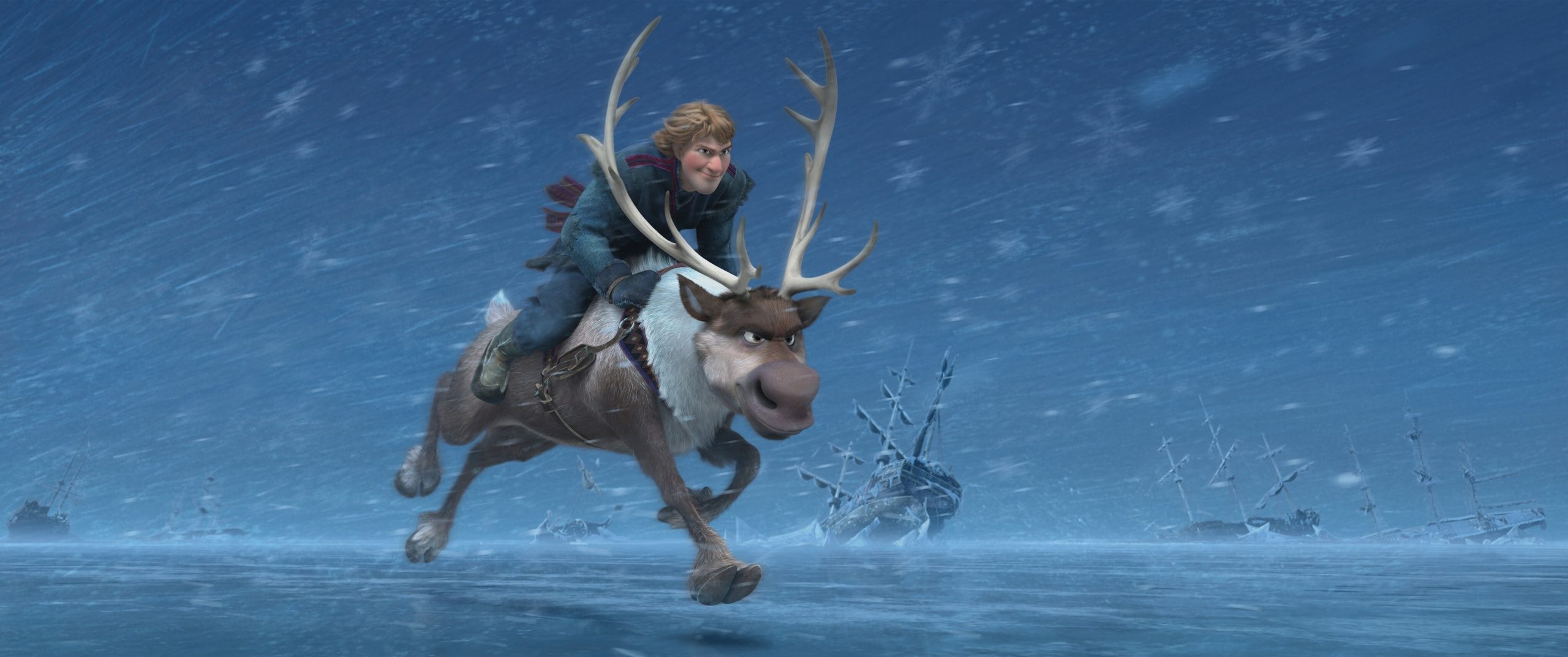
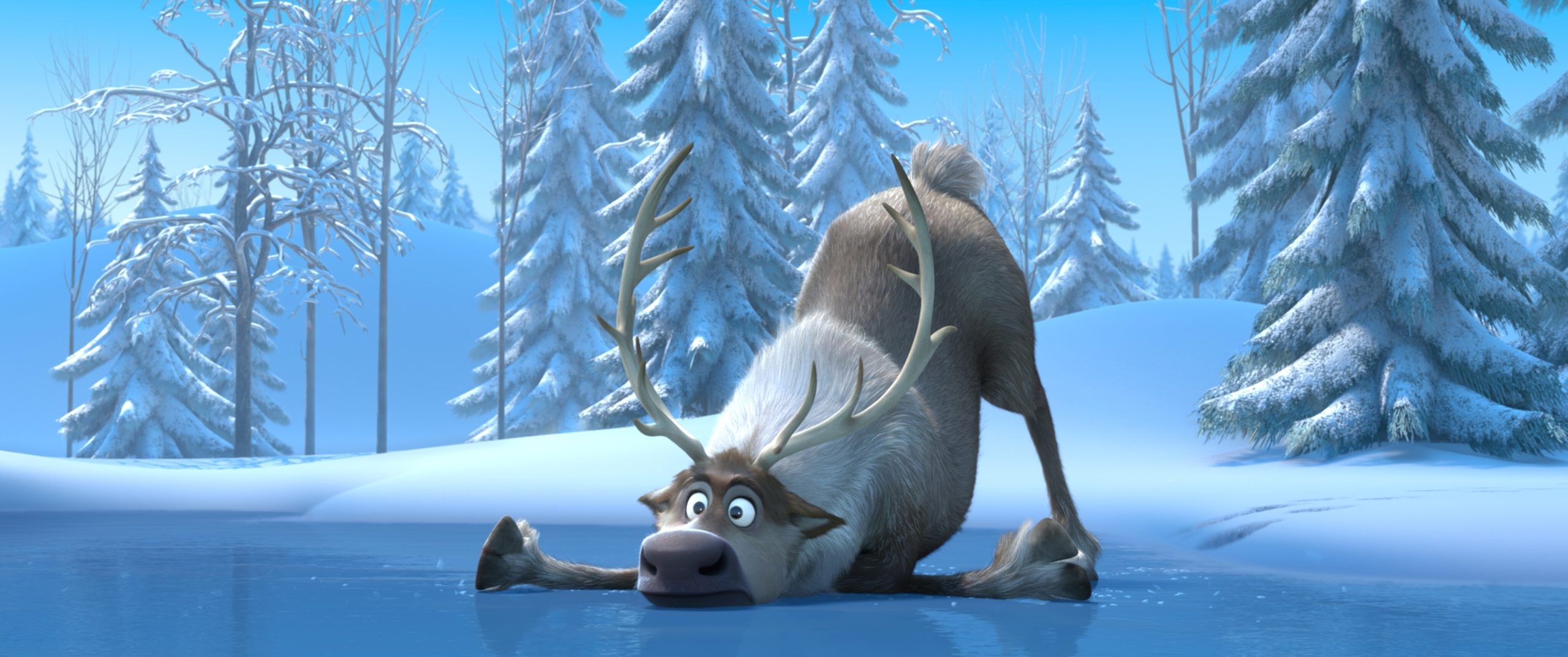
Kristoff speaks for Sven in a separate voice, but the device reveals Kristoff’s own private argument as often as the reindeer’s intention. Sven responds independently, refuses bad plans, notices danger, and influences decisions.
Their bond contains work, play, care, and mutual dependence. Kristoff’s imagined translations never erase Sven’s visible agency. The healthiest reading treats the voice as a shared comic language developed across years rather than proof that Sven has no mind outside Kristoff.
The winter destroys his market
Kristoff reaches Oaken’s store expecting supplies and discovers prices rising during the sudden winter. His frustration comes from material reality. Ice has become worthless at the same moment travel becomes harder and survival more expensive.
The scene gives Arendelle’s crisis an economic scale. Royal magic changes food, transport, trade, fuel, and labor. Kristoff enters the main plot because Anna needs a guide, but his own livelihood already gives him a stake.
Meeting Anna
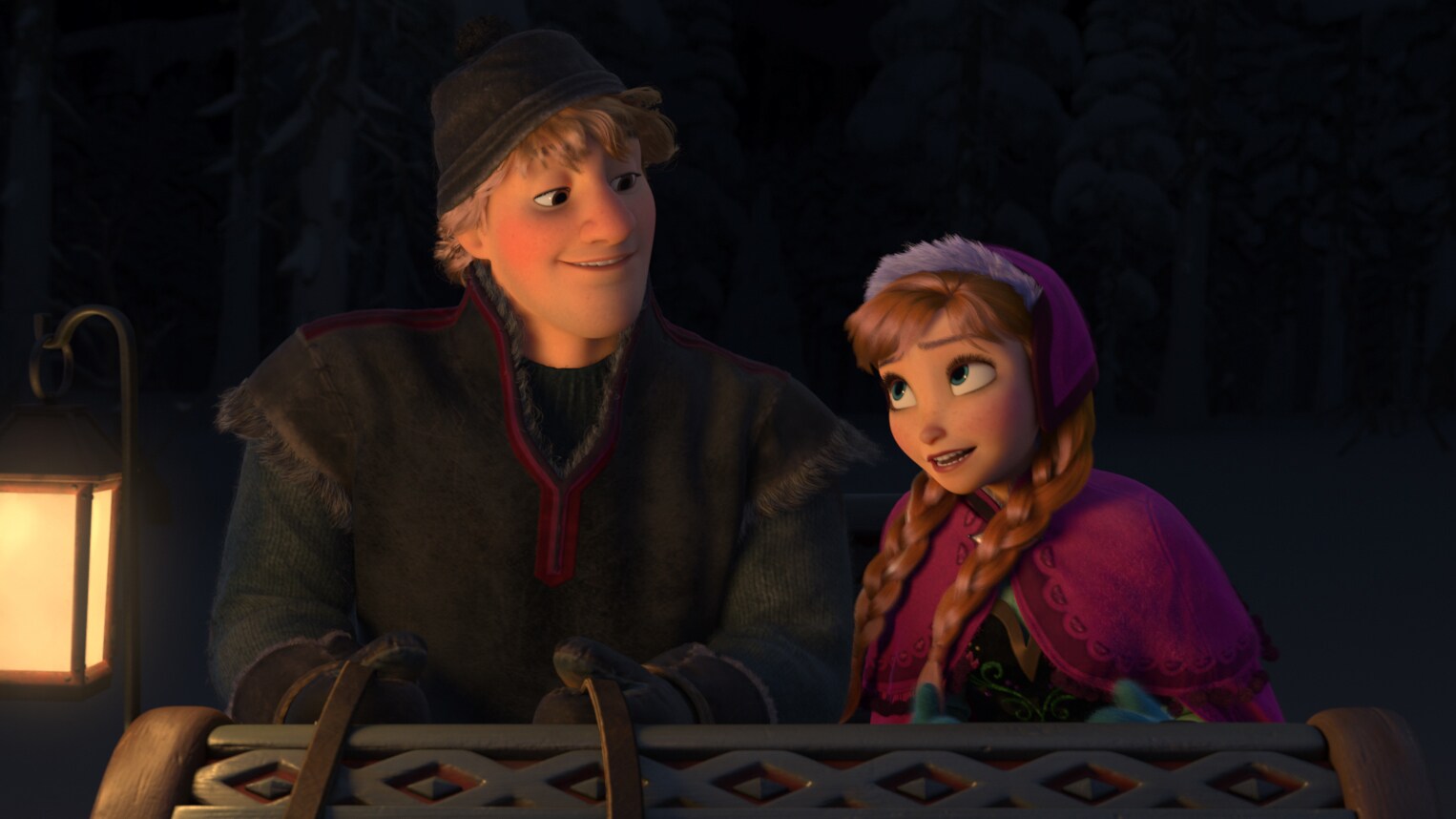
Anna damages his purchase, demands information, buys his supplies, and hires him. Their first connection is a negotiation shaped by unequal resources and mutual irritation.
Kristoff does not become impressed because she is a princess. He observes poor planning, questions the engagement, and still accepts the route after compensation and circumstance make the trip his problem too.
The sled, wolves, and competence
The mountain journey shows Kristoff reading terrain, controlling the sled, protecting Sven, responding to wolves, and grieving the destroyed equipment. His competence has a material source.
Anna participates rather than waiting for rescue. Their argument after the crash begins a pattern: both contribute, both cause trouble, and trust grows through correction instead of instant admiration.
The engagement argument
Kristoff’s questions about Hans sound rude because Anna has known him for hours. The questions are also the first practical test anyone gives the fantasy.
He does not use concern to claim Anna. He accepts that she is engaged and continues helping because the immediate crisis matters. The distinction keeps skepticism from becoming romantic ownership.
Meeting Olaf
Kristoff recognizes the impossibility of a living snowman and adapts quickly because survival leaves little time for metaphysical debate. Olaf’s openness irritates and amuses him.
The two become family through shared travel and Anna. Kristoff’s dry responses give Olaf’s questions a grounded partner without treating the snowman as less real.
The trolls and Fixer Upper
Kristoff brings Anna to the family who may heal her. The trolls respond by planning a marriage and listing flaws as proof the couple belongs together.
The song violates boundaries while trying to affirm imperfect people. Anna is dying, engaged elsewhere, and barely able to participate. Kristoff’s embarrassment is funny. The placement exposes an older romantic formula inside a film otherwise revising that formula.
Returning Anna to Hans
Kristoff believes an act of true love from Hans will save Anna. He delivers her to the palace and leaves despite his own feelings.
The choice matters because love does not become possession. He prioritizes the cure Anna believes she needs. Sven later challenges the retreat, but Kristoff does not sabotage the presumed relationship to create his chance.
The race back
Sven pushes Kristoff to recognize that leaving is not moral restraint when Anna remains in danger. They race toward the palace as the storm collapses visibility.
Kristoff arrives too late to become the cure, which protects the sisterhood climax. His return still proves willingness to act without certainty of reward.
After the thaw
Elsa replaces the destroyed sled and names Kristoff the official Arendelle Ice Master and Deliverer. The gesture recognizes loss and gives work public standing.
The title also ties him to royal patronage. A complete class analysis asks whether the role provides security, authority, workers, and a sustainable market or mainly functions as romantic reward with a funny name.

Consent and the kiss
Anna asks whether she may kiss Kristoff, then acts after receiving mutual enthusiasm. The scene became memorable because animated romance had long treated access as a prize.
Basic consent should not earn a medal in real life. The choice still matters inside genre history. Their relationship begins after the crisis with a moment that makes permission visible.
Frozen Fever
Kristoff participates in Anna’s birthday celebration, tries to support Elsa’s plan, and openly declares love at a volume nobody requested.
The short shows him inside the household rather than waiting outside the royal story. He contributes labor and comedy while Anna and Elsa remain the emotional center.
Olaf’s Frozen Adventure
Kristoff’s proposed tradition involves a large fungus stew, which gives his childhood household specific ritual and lets the special laugh without declaring the practice inferior.
He joins the search for Olaf and treats holiday repair as family work. Sven again carries a disproportionate share of the competence.
Frozen II and the proposal plan
Kristoff wants to propose and repeatedly chooses moments that collapse under danger, misunderstanding, or Anna’s focus on Elsa. The comic structure makes him appear detached from the historical crisis around them.
His desire is reasonable. The repetition becomes frustrating when the screenplay reduces his role to proposal management while Anna is confronting possible loss, national history, and the end of the household arrangement.
Lost in the Woods
The power ballad gives male romantic uncertainty full visual and musical commitment. Kristoff admits dependence, confusion, and fear without converting vulnerability into anger at Anna.
Jonathan Groff performs sincerity through parody rather than despite parody. The sequence laughs at music-video language while respecting the feeling. Kristoff can be lost because the relationship matters.
My love is not fragile
Kristoff returns during Anna’s dam plan and asks what she needs. He does not demand an explanation before helping or punish her for disappearing into crisis.
The line works because support becomes action rather than self-erasure. Healthy love can survive another person’s urgent duty while still requiring a later conversation about what happened.
The proposal and engagement
After the forest opens and the immediate danger ends, Kristoff proposes directly. Anna accepts with the history of their relationship behind the answer.
The engagement should begin another stage rather than close the file. Marriage connects labor, monarchy, class, home, public duty, children or no children, and the practical question of where the couple lives when Elsa no longer occupies the palace.
Relationship file: Anna
Anna challenges Kristoff’s isolation and gives him a relationship built through shared evidence. He challenges her speed and helps separate attention from trust.
Their strongest dynamic allows disagreement without humiliation. Future writing should give both people desire and work instead of making him permanent support staff for royal emergencies.
Relationship file: Sven
Sven is Kristoff’s oldest stable relationship. The bond includes communication rituals, shared labor, food, shelter, travel, and mutual correction.
Kristoff can project through the Sven voice, but Sven also refuses, pushes, rescues, and chooses. The profile treats both layers as character evidence.
Relationship file: the trolls
Bulda and the troll family raised Kristoff, supplied belonging, and shaped his comfort outside human institutions. They also invade romantic boundaries and reduce some problems to pairing.
His adulthood needs a fuller picture of contact, obligation, and cultural difference between troll family and royal household. The films use the family when exposition or comedy needs them, leaving daily relationship mostly offscreen.
Relationship file: Elsa and Olaf
Elsa becomes future family and employer, linking Kristoff’s livelihood to the person whose first magical crisis erased his market. He responds without visible resentment, which says something generous and leaves an economic conversation unexplored.
Olaf becomes sibling-like chaos inside the household. Kristoff grounds his philosophy, participates in rescue, and treats the created snowman as a person whose loss changes the family.
Class and monarchy
Kristoff moves from precarious worker to royal title-holder and future consort. The social jump should create pressure beyond clothing and etiquette.
A monarchy can reward one good man without changing conditions for other harvesters. The franchise needs labor, housing, wealth, and public perception if the class story is going to become more than rustic authenticity beside palace privilege.
Sámi-inspired design and responsibility
Kristoff’s occupation, clothing, reindeer relationship, and visual design use Sámi-inspired material. Disney artists visited a Sámi reindeer farm during research.
The Sámi are Indigenous peoples whose homelands span parts of Norway, Sweden, Finland, and Russia. Naming the influence prevents living culture from becoming generic snow fashion. The Northuldra consultation in the sequel adds accountability without turning fictional people into a substitute label.
Masculinity without the ownership script
Kristoff is practical, physically capable, emotionally awkward, tender with Sven, willing to sing fear, and able to support Anna without claiming control.
The profile should not praise minimum decency as a miracle. The genre context still matters. He offers a masculine lead whose strength includes care, retreat, correction, and visible dependence.
Skills and limitations
Kristoff harvests ice, handles tools, drives sleds, reads mountain terrain, cares for Sven, survives severe weather, climbs, fights when necessary, and improvises transport.
He lacks magical power, political training, and familiarity with royal life. The limitations keep competence specific. He is not automatically correct because he comes from outside the palace.
Jonathan Groff and the adult voice
Groff gives Kristoff rougher conversational rhythm and clear musical control. The Sven voice lets him externalize an argument while changing posture and tone.
The first film underuses his singing. The sequel answers with “Lost in the Woods,” allowing vocal range, comic commitment, and emotional seriousness to occupy the same performance.
Tyree Brown and childhood continuity
Tyree Brown voices young Kristoff, establishing curiosity, work, and attachment to Sven before Groff takes over.
The childhood credit matters because adoption and labor are not trivia before the romance. They explain how adult Kristoff understands family, money, and belonging.
Design evolution
Heavy layers, practical boots, tools, gloves, and travel clothing communicate work before status. Later formal wear shows the discomfort of entering royal ceremony.
Costume retains cultural influence and occupational identity while adapting to household life. The design should not become generic prince clothing simply because Kristoff marries a queen.
Broadway, publishing, games, and parks
The stage adaptation expands musical space and changes how a live performer balances Sven, comedy, and romance. Books, comics, games, and attractions add alternate situations under different continuity rules.
A reference profile labels each branch. Adaptation detail can illuminate the character without being passed off as film canon.
Reception and fandom
Audiences often value Kristoff as the healthy alternative to Hans and as a romantic lead who asks rather than assumes. The reading has real textual support.
Fandom can flatten him into a green-flag checklist. The more interesting character includes class, insecurity, family, labor, cultural borrowing, comedy, and the possibility that support also needs a life of its own.

Criticism
The sequel sidelines Kristoff from the political story and uses proposal failure as repeated structure. His connection to reindeer culture and the Northuldra could have given him a more relevant role.
The films also avoid sustained conflict between his worker identity and royal incorporation. A future story should let him make decisions not defined entirely by Anna’s location.
Frozen 3 and the future file
Disney schedules Frozen 3 for November 24, 2027. Verified production facts belong here, while promotional hints remain separate from canon.
Kristoff’s next chapter needs work, marriage planning, relationship with Queen Anna, connection to Sven and the trolls, and an answer to what royal status does to the independence he values.
Sources and reference floor
Primary sources include Disney and D23 film records, Disney UK Press material, Walt Disney Animation Studios production coverage, and the Into the Unknown documentary.
Major encyclopedic and specialist references supply a factual floor. This profile adds chronology, labor, relationships, performance, cultural context, criticism, and clearly labeled interpretation.
Name, age, and what canon actually confirms
Published reference material gives the full name Kristoff Bjorgman, while the films usually call him Kristoff. The first feature presents him as an adult ice harvester after showing him as a child in the opening. Exact birth dates, named birth parents, and a detailed human hometown are not established by the feature-film record. A responsible biography says so instead of converting fan estimates into official data.
His royal title after the thaw is Official Arendelle Ice Master and Deliverer, a phrase that confirms occupation and court recognition but does not automatically make him a prince. By the end of Frozen II, he is engaged to Anna after she becomes queen. Engagement places him near the monarchy. The films have not yet supplied the wedding, constitutional role, household arrangement, or public duties that fandom sometimes writes as completed fact.
How Kristoff was built
Directors Chris Buck and Jennifer Lee created Kristoff as the grounded counterweight to the polished prince story surrounding Hans. Hans arrives with rank, choreography, instant chemistry, and the romantic language Anna expects. Kristoff arrives through commerce, bad manners, wet supplies, and a job that the weather has made impossible. One man sells a perfect image. The other has to become knowable over time.
Lee has confirmed that Kristoff begins the story as an orphan. The filmmakers do not provide his missing family history, so this profile does not invent one. What the film shows is a child already following dangerous adult labor, a bond with a young reindeer, and adoption into a troll community. Those facts explain why his adult identity is built around practical competence and chosen family rather than inheritance.
Character animation and restraint
Supervising animator Tony Smeed described Kristoff as somebody who relates to animals more easily than people. That direction appears in pauses, guarded posture, and the way he lets Sven carry conversations he cannot comfortably have in his own voice. Animation has to show the feeling before Kristoff is willing to name it.
Head of story Paul Briggs described a tough exterior covering a soft heart. Kristoff does not prove tenderness by losing physical capability. He remains a skilled worker and mountain traveler. The films separate strength from emotional silence, allowing care, fear, embarrassment, loyalty, and romantic uncertainty to coexist with competence.
The Sven voice as an emotional instrument
Jennifer Lee connected Kristoff speaking for Sven to the ordinary habit of inventing a voice for a pet, and Chris Buck recognized the behavior from talking for his dog. Jonathan Groff called it a strange personality quirk. Within the story it becomes more than a joke because Kristoff uses the voice to stage arguments with himself. Sven can say the vulnerable or sensible thing Kristoff resists.
The device creates useful ambiguity. Kristoff knows Sven well enough to predict many reactions, but the reindeer also communicates through movement, expression, refusal, and action. When Kristoff guesses wrong, Sven corrects him. Their private language comes from years of attention, while the borrowed voice lets Kristoff hide self-knowledge inside a relationship he trusts.
Jonathan Groff in the recording booth
Kristoff was Jonathan Groff’s first voice role in an animated feature. Production accounts describe an extended process of returning to record as scenes changed, while animators studied video of his facial performance. Voice acting here is construction across revisions, with breath, hesitation, comic timing, and vocal texture later joined to an animated body.
Groff auditioned with dialogue and a Stephen Sondheim song while the filmmakers considered how his voice would work opposite Kristen Bell. His musical ability is almost comically underused in the first film, where Kristoff receives the brief “Reindeer(s) Are Better Than People.” That restriction made the sequel’s full power ballad feel like a release the franchise had stored for six years.
Why Lost in the Woods matters
Songwriters Kristen Anderson-Lopez and Robert Lopez had to solve a character problem before giving Kristoff a solo. A reserved man who processes emotion through a reindeer does not naturally stop the plot for a conventional Broadway confession. “Lost in the Woods” borrows the visual and musical grammar of an earnest 1980s rock video, letting parody create enough distance for sincerity.
The song expands what the franchise permits a male lead to feel. Kristoff is confused, lonely, dependent, and afraid that the relationship may be changing without him. He does not turn those feelings into punishment or a claim on Anna’s time. The presentation is funny, but the emotion is not dismissed, and Groff sings it without winking away the ache.
Every screen appearance in the file
Kristoff’s principal chronology runs through Frozen and Frozen II, with appearances in Frozen Fever, Olaf’s Frozen Adventure, and the retold chronology of Once Upon a Snowman. That short revisits Anna and Kristoff’s sled journey from Olaf’s point of view, adding connective comedy without replacing the events of the feature.
He also appears in LEGO Frozen Northern Lights, where the characters operate through a visibly different comic format. Alternate versions reveal which traits Disney considers portable, including Sven, bluntness, outdoor competence, and devotion to Anna. They belong in the record with clear continuity labels.
Games and interactive versions
Kristoff appears in Frozen Free Fall, Frozen Adventures, Kingdom Hearts III, and Disney Dreamlight Valley. Games change the job of characterization. Dialogue may repeat, friendship can become a progression system, and a supporting character may become a quest giver with tasks organized around resources and place.
Jonathan Groff reprised Kristoff in Kingdom Hearts III, while Matt Lowe voices him in Disney Dreamlight Valley. Recording the distinction matters because “the voice of Kristoff” is not one universal credit. Interactive versions can preserve his silhouette and relationships while changing performer, continuity, agency, and the role supplied by the player.
Stage adaptation and casting history
A stage adaptation cannot simply place film Kristoff onstage. A live performer must make the bond with Sven readable through blocking, singing, physical reaction, and theatrical design while an audience can look anywhere. The revised script and score also redistribute attention, changing the balance between the sisters’ story and the romantic subplot.
Jelani Alladin originated Kristoff in the Broadway production, followed by other actors in later companies and tours. They are not replacement voices for film canon. They are interpreters working in a different medium. Adaptation history shows how Kristoff changes when animation’s precise control gives way to live bodies, live timing, and nightly performance.
The encyclopedia floor and the CVM test
The factual floor includes creators, principal and childhood performers, occupation, adoptive family, relationship status, film and short appearances, design inspiration, character development, major chronology, games, stage adaptation, merchandise, and reception. Omitting those categories while calling a page complete would make it less useful than a general encyclopedia.
CVM Sekai has to go further after meeting that floor. The added value is interpretation tied to evidence: how labor shapes the first act, how the Sven voice functions, where consent changes romantic grammar, what royal incorporation does to class, why Sámi influence demands care, how adaptation redistributes agency, and where the sequel reduces him to a proposal machine.
Source trail and certainty
The primary trail includes both feature films and the animated shorts, official Disney film pages, Walt Disney Animation production material, D23’s Jonathan Groff record, Disney music coverage, Disney UK Press images, published credits, and Into the Unknown: Making Frozen II. These establish appearances, performers, production roles, music, and authorized imagery.
Major encyclopedic and specialist references are checked for omissions, then factual claims return to primary material where possible. Interpretation stays labeled. Unknown childhood details stay unknown. Future-film material remains production news until release. That method is how this profile can be broader than Wikipedia without becoming less reliable than it.
Frozen coverage
Return to the Frozen hub for reviews, Reacts, rants, characters, lore, and guides.