
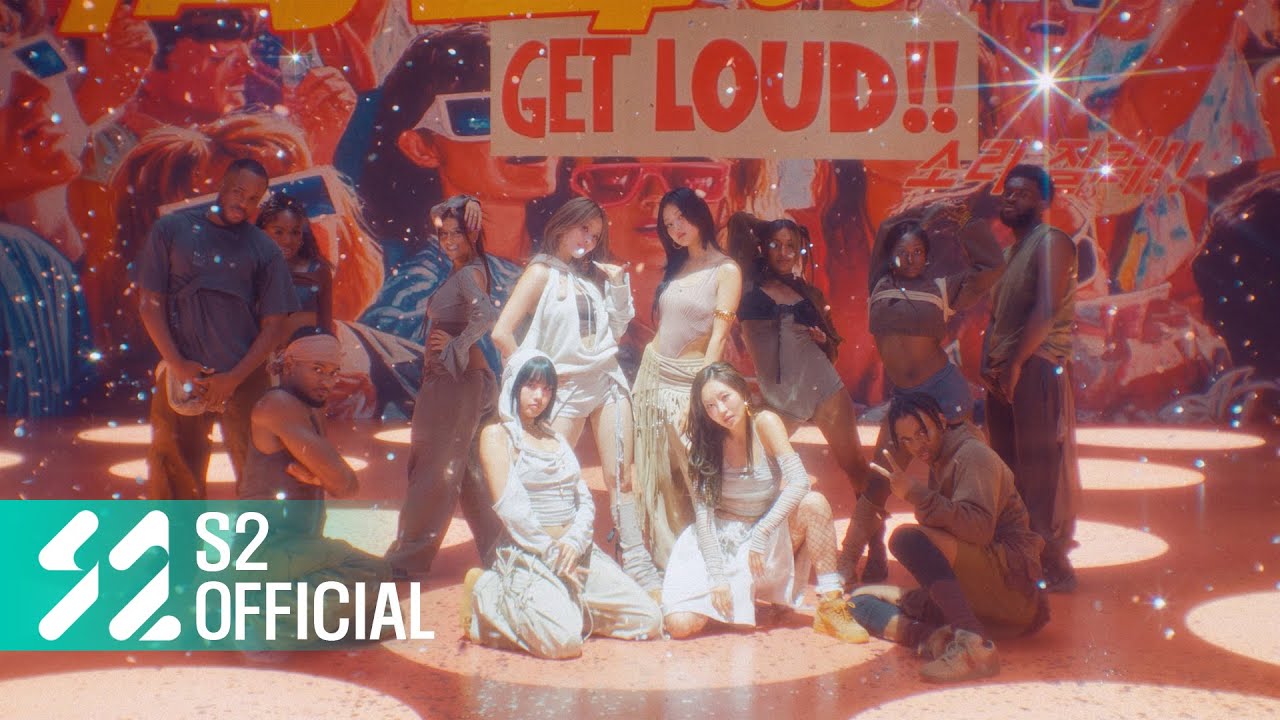
Get Loud: KISS OF LIFE Turned Individuality Into a Cha-Cha Fight Scene
Latin guitar, hip-hop weight and four women making self-expression sound much better when the bass can defend it.
Release file
Released: October 15, 2024
Runtime: 3:04
Artist / channel: KISS OF LIFE / KISS OF LIFE
Exact-file focus: The exact official Get Loud music video, not a stage, audio, short or fan upload.
Official MV deep dive · released October 15, 2024 · Lose Yourself
KISS OF LIFE built “Get Loud” from Latin guitar, hip-hop weight, pop-rock lift and the confidence of four women who had already learned that “be yourself” sounds much better when the bass can defend the argument. The video adds restaurants, stages, duplicate selves and enough choreographed confrontation to make personal freedom look like it requires reservations.
Bottom line
I like “Get Loud” because the production keeps changing who owns the room. Guitar creates heat, the beat gives Julie and Natty somewhere to sit, Belle turns the near-silence before the pre-chorus into a vocal weapon, and Haneul keeps the group color from becoming one long shout. The self-expression message is broad. The arrangement makes it specific.
The official file
Artist: KISS OF LIFE
Members: Julie, Natty, Belle and Haneul
Released: October 15, 2024
EP: Lose Yourself
Written by: Belle, Strawberrybananaclub, Taneisha Jackson, Ondine and Kim Jinsol
Core sound: Latin and flamenco-colored guitar, cha-cha movement, hip-hop beat and pop-rock scale
My actual first reaction
First thought: the guitar walked in wearing expensive shoes and the beat immediately checked whether everybody else had dressed correctly.
The moment I leaned in: the instrumental drops back for Belle. A singer with that much power becomes more dangerous when the production stops helping.
The side-eye: “keep doing the unusual thing” is excellent advice until somebody uses it to defend a terrible group-chat decision. Context remains employed.
Current status: replayed. The cha-cha has filed paperwork with Southern hip-hop and somehow the office is functioning.
The song’s freedom is physical
Belle explained the track as encouragement to embrace uniqueness and continue doing what you enjoy even when it looks unconventional. That message could have floated away as generic empowerment copy. The rhythm saves it. “Get Loud” makes freedom bodily: hips answer guitar, the bass expands, percussion turns release into a group action and the chorus asks for volume rather than approval.
Teen Vogue described the blend of Latin rhythm, cha-cha flair and hip-hop beat, while Weverse Magazine connected the guitar to Spanish flamenco color and the American pop sound of the 2000s and 2010s. The references do not sit in separate costume boxes. Guitar phrases create tension around the vocal line, then the low beat keeps the record from becoming a musical-theater Latin number.
Belle writes—and then has to perform the idea
Belle’s co-writing credit matters because her section demonstrates the concept. The pre-chorus strips away support and leaves her voice carrying anticipation. She does not simply sing the biggest note at the end of a committee-written staircase. The arrangement trusts personality, phrasing and control before giving her the expected vocal height.
That is the better use of Belle. KIOF sometimes deploy her upper range like emergency architecture: bridge missing, send high note. Here, coy phrasing and the pause before impact create as much authority as volume. Her character in the video also fits the song’s argument about an artist leaning into the thing that makes her unusual rather than sanding it down for easy group symmetry.
Julie, Natty and Haneul keep the record from becoming Belle featuring three witnesses
Julie’s lower attack gives the hip-hop pocket weight. She does not race the beat; she lets short phrases land. Natty uses rhythmic control the way she uses a camera, making the groove visible without decorating every count. Haneul’s clear tone resets the ear and helps the chorus feel like four voices choosing the same release rather than one vocalist collecting background support.
The line distribution is not perfectly democratic, and it does not need to be. Equality is not four identical pieces of cake cut with a ruler. The better test is whether every member changes the song when she enters. “Get Loud” mostly passes: Julie grounds, Natty moves, Belle lifts and Haneul clarifies.
The video fights fantasy with more fantasy
The music video places the members in high-control spaces—a restaurant, performance stage and other polished environments—then introduces alternate or competing versions of the women. The conflict reads less like a literal villain plot and more like the friction between a present self, an imagined self and the version other people expect to consume.
Choreography becomes the argument’s cleanest language. The group can face versions of itself because dance makes identity repeatable and contestable. Two bodies can hit the same count and still communicate different intention. That is what the song wants: freedom is not refusing structure. It is owning the reason you enter it.
The visual is glamorous enough to risk undermining the message. It is easy to tell viewers to ignore convention while standing inside a perfectly art-directed luxury room. The saving detail is conflict. The polish does not create peace; it becomes another arena where the members decide which version gets control.
The fair counterargument
A listener can call the hook blunt, the cultural blend calculated and the self-expression theme familiar. The video’s multiple-self logic also asks viewers to supply connections the narrative does not always clarify. If the guitar does not catch you, the chorus may sound like a slogan dressed for an arena.
My answer is that production and performance earn the broad lyric. The record’s sections do not merely repeat “be unique.” They demonstrate four different ways to occupy rhythm. The message becomes believable because the members refuse to deliver it in one interchangeable voice.
The choreography argues instead of decorating
The best movement choices follow the record’s internal debate. Cha-cha reference creates a social dance expectation—partner, response, measured step—while the hip-hop base asks the dancers to sit lower and hit with more individual weight. KIOF do not resolve those languages by making one disappear. The choreography lets precision and looseness take turns, which is the same negotiation happening in the production.
Member distinction survives the group shapes. Natty can stretch a transition and make the next count arrive late on purpose. Julie keeps her weight compact and authoritative. Belle uses upper-body line and face to carry the theatrical lift. Haneul’s cleaner shapes make busy formations readable. When the four lock together, the pleasure comes from seeing different physical accents agree on one endpoint.
Why Igloo did not erase the title track
“Igloo” became the longer viral story from Lose Yourself, and pretending otherwise would be fandom bookkeeping. Its minimal snap beat, winter styling and immediately repeatable choreography created a perfect short-form engine. “Get Loud” is busier and asks more from a first listen. That does not make it a failed title. It makes the two songs useful in different ways.
“Get Loud” introduces the project’s argument about immersion, creativity and refusing the expected route. “Igloo” proves how devastating KIOF can be when almost everything is removed. One expands; the other concentrates. The EP benefits from both, and the group’s identity is stronger because the audience did not have to choose only one official center.
What changed every time I replayed it
First play: guitar, bass and the chorus did the recruitment.
Second play: Belle’s quiet pre-chorus felt more decisive than the high note waiting later.
Third play: Julie and Natty’s restraint became the spine; neither wastes motion trying to prove confidence.
Fourth play: Haneul’s clean tone stopped sounding like support and started sounding like structural reset.
Video replay: the duplicate selves made the polished locations feel adversarial rather than merely expensive.
Replay verdict
Keep it loud. The empowerment language is not new, but KISS OF LIFE give it four bodies, a guitar with opinions and a beat that understands nobody finds freedom while standing perfectly still. “Igloo” may have stolen the longer afterlife from the EP. “Get Loud” still explains the project’s thesis.
Keep going
Use the KISS OF LIFE hub for the full member and era map. Then take the volume down without leaving Lose Yourself: “R.E.M” makes longing feel like a half-remembered dream.
Receipts
Verdict
KISS OF LIFE Get Loud review: Latin guitar, hip-hop weight, Belle’s writing, identity-versus-fantasy visuals, choreography and replay verdict.
Lyrics and meaning
The meaning is broad—keep doing the unusual thing and own what makes you distinct—but the arrangement keeps it from floating away as empowerment copy. Four different voices and physical accents negotiate one rhythm, proving that individuality does not require refusing structure; it requires owning why you enter it.
RaeRae verdict
Get Loud earns its self-expression slogan because KISS OF LIFE give the idea four bodies, a guitar with opinions and choreography that argues instead of decorating. Igloo may have won the longer viral afterlife. This title track still explains the project.