
RaeRae Reacts · KATSEYE
KATSEYE I’m Pretty React: Confidence Without Permission
“I’m Pretty” is six women hyping themselves and one another until the beauty standards outside the room lose voting privileges.
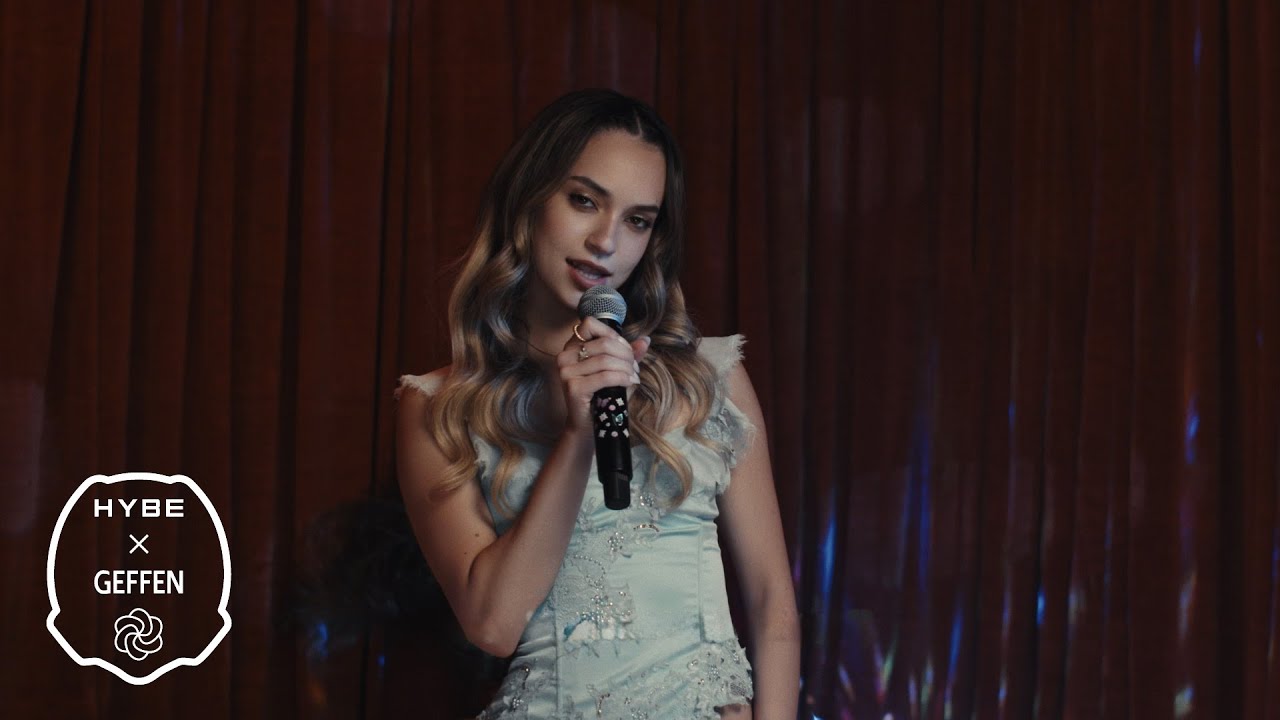
Bottom line: “I’m Pretty” works when it sounds like a group chat, not a campaign slogan. The song does not ask a committee to certify the members’ beauty. It treats prettiness as one obvious fact and spends the rest of its time having fun. That confidence is useful because KATSEYE entered public life through a system built around ranking, judgment, and constant comparison.
The track is light, funny, and short enough to feel like a confidence snack. Its strongest weapon is personality. Its weakness is that the production sometimes gives the members generic sparkle when their delivery is ready for something stranger.
My first reaction, before the confidence wore sensible shoes
A song called “I’m Pretty” can fail in several predictable ways. It can beg for approval while pretending not to care. It can sell empowerment with the emotional depth of a scented candle. It can turn beauty into a competition where another woman must lose. KATSEYE mostly dodges all three.
What changed every time I replayed it
The song is smarter when it refuses to be deep
Not every confidence song needs to explain the history of patriarchy before the chorus. “I’m Pretty” understands the value of saying the sentence without filing supporting documents. A woman can know she looks good and continue with her day.
That simplicity becomes meaningful because women are trained to soften self-recognition. Compliments are supposed to be deflected. Confidence must arrive wrapped in gratitude, humor, or proof that the speaker is secretly insecure. The members do use humor, but they do not use it to cancel the claim. They are joking because the confidence is fun, not because they need to apologize for it.
The song also avoids pretending beauty is the highest human achievement. Pretty is treated like one quality inside a larger social presence. The delivery says, “Yes, and?” That small shift keeps the track from turning into a beauty contest with nicer branding.
Six voices turn a slogan into a conversation
KATSEYE needs personality for this song to survive. A neutral performance would sound like six models reading product copy. The members sell it by making confidence social, teasing, and slightly unruly.
The arrangement does not give each voice a complete character arc, but the line handoffs create a social rhythm. One person makes a claim, another supports it, and the group turns individual confidence into shared evidence.
Beauty standards are hiding outside the group chat
KATSEYE is a multinational and multiracial group promoted inside an industry that makes appearance part of the job. The members arrived with different faces, bodies, cultures, accents, and relationships to beauty. That makes “I’m Pretty” more complicated than a generic self-esteem song, even when the lyric does not explain every layer.
Global pop loves diversity when diversity can be arranged into a clean campaign image. The harder question is whether each woman is allowed to remain specific. Representation means little if everybody is edited toward one safe, marketable face.
The song’s communal confidence offers a better model than competitive ranking. Sophia does not need Lara to be less beautiful. Manon does not need Yoonchae to disappear. Daniela and Megan do not have to represent one acceptable way to perform confidence. The group can hold different kinds of presence at once.
That does not erase the commercial system around them. Makeup, styling, cameras, training, and selection still shape what the audience sees. The song is not outside beauty culture. It is six women trying to speak inside it without giving the system total ownership of the sentence.
The lyric video knows the lines are going online
The official visual does not pretend to be a giant narrative music video. Typography, color, quick edits, and member imagery turn the words into captions ready for reposting. That fits the song because confidence spreads through repetition. A line becomes a joke, a mirror speech, a dance clip, or the thing a friend sends after somebody’s terrible date.
The danger is that shareability can flatten meaning. Once a line becomes a social-media sound, people may use it without hearing the song around it. “I’m Pretty” survives because the central idea is already compact. The lyric video does not need to protect a complicated plot.
I like that the design feels closer to a digital scrapbook than a luxury campaign. It keeps the confidence playful. The page looks like somebody has already decided every photo is the good photo and refuses further discussion.
I still wanted one visual disruption. Smudge the perfect type. Let a photo overlap badly. Break the layout when the boldest line arrives. Confidence is not always neat, and the video could have used one moment where personality defeated the template.
Confidence is relational, not solitary
Western self-help often treats confidence as a private battery. Charge yourself. Believe in yourself. Ignore everyone else. Real confidence is more social. People learn what they can risk through relationships. A friend can lend courage before someone learns to generate it alone.
That is the group-chat energy of “I’m Pretty.” The members are not isolated queens giving speeches to empty mirrors. They are bouncing confidence around until it becomes easier for everyone to hold.
From a Confucian relationship lens, identity develops through roles and relationships, not outside them. The healthy version is mutual recognition. A group should strengthen each member without demanding that she erase herself for harmony. The unhealthy version is pressure to perform one approved face.
From a Buddhist lens, beauty is temporary. Bodies change, trends change, and public attention moves with the cruelty of an algorithm. That does not make beauty worthless. It makes attachment to beauty as permanent identity dangerous. Enjoy the pretty day. Do not build the entire house on it.
My military-brain version is direct: confidence without competence becomes noise, but competence without visible confidence gets ignored. KATSEYE has trained hard. They are allowed to enter the room like they know it.
The industry loves confidence after approving it
Entertainment companies sell rebellion that has already passed several meetings. A song about self-definition still arrives through producers, executives, stylists, editors, and marketing plans. That contradiction does not automatically make the message fake. It does mean fans should notice who profits when confidence becomes a product.
KATSEYE’s public formation made judgment part of the origin story. Viewers watched trainees get ranked, criticized, selected, and removed. “I’m Pretty” lands differently after that process. The members are claiming a sentence inside a system that spent months evaluating whether they were ready, marketable, and likable enough.
The song cannot undo that pressure. It can give the members a moment where judgment sounds like their own voice instead of a panel’s decision.
What works and what stays too safe
The short runtime also limits the argument. I wanted a bridge where the confidence gets tested. What happens when the mirror, comment section, or industry disagrees? A stronger final section could have changed the beat or stripped the production until the voices had to carry the claim alone.
Instead, the song remains a snack. That is not an insult. Snacks keep people alive during poor planning. I simply know this group can eventually serve a full meal with the same attitude.
Facts, evidence, and RaeRae reading
| Verified release fact | “I’m Pretty” appears on KATSEYE’s 2024 EP SIS (Soft Is Strong). The official lyric video was released through HYBE LABELS. |
|---|---|
| Visible and audible evidence | The official video centers lyrics, typography, color, member imagery, playful editing, conversational delivery, bright pop production, and rapid line handoffs. |
| RaeRae reading | The group-chat structure turns individual self-praise into mutual recognition. The shareable design treats confidence as something fans can repeat and circulate. |
| Not claimed | I am not presenting the beauty-politics, Confucian, Buddhist, or industry readings as confirmed songwriter intent. They are interpretations supported by the lyric, group context, and official visual. |
The difference between confidence and superiority
The song stays likable because confidence does not require a victim. Superiority needs a ranking. Confidence can notice another person’s beauty without treating it as a threat. That distinction sounds obvious, but pop culture keeps selling women the opposite lesson. Somebody must be the prettiest, youngest, thinnest, most desired, or most effortless. A group song can interrupt that ladder by letting six different women occupy the same claim.
The hard part begins after the song ends. A fan cannot celebrate diversity in one video and then punish a member for gaining weight, changing her hair, aging, speaking with an accent, or refusing constant cheerfulness. If “I’m Pretty” has value beyond a caption, the audience has to stop making beauty conditional on obedience.
Final verdict
“I’m Pretty” is most convincing when it sounds like six friends refusing to let one another shrink. The song does not solve beauty culture. It does something smaller and more usable. It lets women state pleasure in themselves without turning that pleasure into a moral exam.
I wanted a stranger instrumental and a bridge with consequences. The members supply more character than the production dares to match. That imbalance is also proof of potential. KATSEYE already has the personalities. Future songs need to build rooms large enough for them.
For now, the verdict is simple. Pretty can be a fact, a joke, a mood, or a Tuesday. Nobody needs to submit supporting evidence.
Watch and keep digging
Watch the official “I’m Pretty” lyric videoDaily+16.9KTotal views11M. Continue with the KATSEYE group profile and KATSEYE discography.
Sources: KATSEYE’s official lyric video and official SIS (Soft Is Strong) release information. Interpretive sections are labeled as RaeRae readings.
Your turn
Which member sold the confidence for you, and what would you change if the production stopped playing safe for one verse?