
RaeRae Rants · i-dle · SOOJIN · Industry Accountability
K-pop Punished i-dle Before the Truth Arrived, and “We made” Still Carries the Empty Space
i-dle did not survive because the industry handled SOOJIN’s case carefully. They survived because six women had already built a friendship strong enough to become five women’s emergency architecture. COVID took their tour. A scandal took a member. Corporate risk management took the luxury of waiting for clarity. Then the group came back and made survival look so polished that people forgot how ugly the machinery had been.
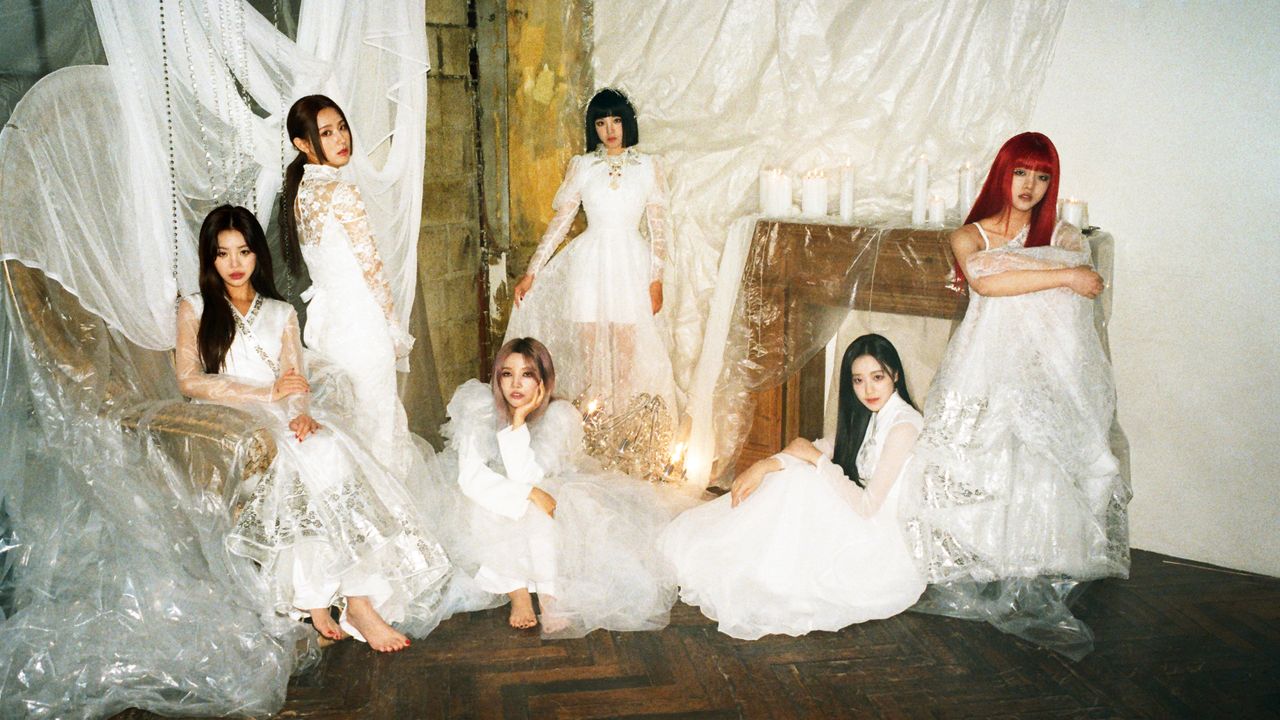
Rant map: Before the rupture · COVID · The industry reflex · Rebuilding as five · What the music carries · We made · Receipts
Before the internet turned SOOJIN into a case file, i-dle were six people learning how to hold one another
Read the group’s January 2021 interviews and the first thing that stands out is not scandal foreshadowing. It is intimacy. The members talked about living together, recognizing one another’s feelings, and translating private trust into the frozen emotional world of I Burn. That is not disposable “member chemistry” copy. It is the labor of six young women building a creative household while working in an industry that treats lineups like replaceable components.
They were already unusually self-directed. Their identity was not assembled only by executives handing them a concept deck. The members wrote, produced, interpreted, and argued their way toward a sound that belonged to them. That makes the later rupture more serious. Removing one person from a self-made creative system is not the same as changing a poster.
COVID had already stress-tested the friendship
Their planned 32-city world tour disappeared into the pandemic. They shifted to an online concert and kept working while the entire performance economy became a webcam, a rehearsal room, and a moving target. Korean and international interviews from that period describe a group adapting together rather than waiting passively for normal life to return.
This matters because the comeback story did not begin with the 2021 controversy. It began when the world closed and i-dle kept creating anyway. By the time the lineup crisis arrived, they had already learned that survival was not an inspirational slogan. It was scheduling, compromise, emotional patience, and the decision to make another thing while the previous plan burned.
Then K-pop did what K-pop always does: it treated speed as morality
The allegations against SOOJIN were serious. They deserved investigation, not fandom intimidation and not automatic dismissal. But seriousness should make an industry more careful, not more eager to confuse a commercial emergency with a factual verdict.
SOOJIN denied the central claims, admitted some unflattering school-age behavior, and pursued a defamation complaint. She paused activities and left the group before the legal process produced its final language. In 2022, police declined to forward the complaint because there was insufficient basis to establish that the accuser knowingly spread false information. Her lawyer also said the old events could not be conclusively established with the available evidence.
That is not proof that every allegation was false. It is also not proof that every allegation was true. The detailed timeline belongs in the companion Tea, “SOOJIN’s Case Closed Without a Verdict, but i-dle Had Already Lost a Member.”
the industry made an irreversible lineup decision while the evidence remained disputed and incomplete, then left the artists to absorb the creative and emotional consequences.
This is bigger than one group
K-pop repeatedly reaches for removal first because agencies are managing broadcasters, sponsors, advertisers, public sentiment, and shareable outrage all at once. LE SSERAFIM’s debut-era lineup change, the years of conflicting AOA allegations, and the damage done to T-ara’s public standing all show different versions of the same institutional weakness: controversy becomes a verdict long before a reliable record exists.
These cases are not identical, and flattening them would repeat the same mistake. The common problem is procedural. Labels sell intimacy and loyalty, but when crisis comes, their protection often lasts only as long as the first risk meeting.
i-dle came back as five and described it like debuting again
When the group discussed I Never Die, they did not pretend the hiatus had been a cute vacation. They talked about proving their value, sharpening their identity, and returning with the pressure of starting over. That is the emotional scale people erase when they summarize the era as “successful rebrand.”
Five members had to redistribute parts, rebuild choreography, rethink visual balance, face questions they could not answer freely, and walk onstage knowing every formation would be read as commentary on the missing person. They did it while protecting a group name that had suddenly become a public argument.
The triumph is real. So is the wound. Admiring how powerful i-dle became as five does not require rewriting the original lineup out of the family photograph.
The songs are not courtroom exhibits, but they are emotional receipts
I am not going to snatch a lyric out of context and announce that it is a secret confession about SOOJIN. That is fan fiction wearing a press badge. What I can do is listen to the officially released work alongside the history its creators survived.
“Crow”: survival without a neat landing
The official “Crow” React hears a song built around persistence, pressure, and forward motion. Its emotional vocabulary fits a group that had to keep flying after a formation changed midair. Apple’s editorial context places the writing in the period after the departure. That does not turn every line into biography, but it makes the survival reading more than random fandom projection.
“Gimme Dat Love”: togetherness as a present-tense decision
The official-video React for “Gimme Dat Love” belongs to the current group, not the lost lineup. Its value in this argument is the confidence of collective performance after years of being told that disruption should have ended them. The song does not need to explain the scandal. The five members standing inside a new era is already the answer.
SOOJIN’s “BADITUDE”: a second career is not an eraser
SOOJIN’s “BADITUDE” React documents her as a solo artist with her own present tense. Her return cannot retroactively settle the school dispute, and it should not be used as a weapon against the current five. It proves something simpler: she is not only the former member frozen inside a 2021 headline.
We made sounds like a title earned the hard way
The 2026 record is called We made. Official Japanese and Korean release materials frame it as a collective return, and interviews emphasize the members coming together as one. I cannot tell you that the album is secretly addressed to SOOJIN. The members have not publicly handed us that key.
But as a fan, I hear the title as cumulative. They made it through trainee uncertainty. They made a self-produced identity. They made it through COVID. They made it through a public rupture and a long restart. They made a five-member future without deleting the six-member past. “We made” is grammatically tiny and emotionally enormous.
That is why the newest work can feel complete and still contain an empty space. Absence does not always sound like a missing vocal line. Sometimes it sounds like five women singing with the control of people who know exactly what it costs to keep the name alive.
RaeRae’s final pour
I am tired of an industry that markets friendship as sacred and treats members as removable the second uncertainty becomes inconvenient. Protecting alleged victims matters. Due process matters. Those ideas are not enemies unless a company is too lazy or too frightened to hold both at once.
i-dle’s success does not vindicate the system. It indicts it. The members did the rebuilding. The members carried the scrutiny. The members wrote the return. Corporate K-pop gets to count the sales afterward and pretend the machine worked.
No. The women worked. The friendship worked. The art worked. The machine nearly broke them and then sold tickets to the recovery.
Receipts
- Teen Vogue: six-member friendship and the I Burn era
- South China Morning Post: i-dle on I Burn
- Aju Press: pandemic disruption and the online concert period
- NME: hiatus, identity, and I Never Die
- Soompi: the group on rebuilding for I Never Die
- Official Japanese discography: We made
- 2026 interview: i-dle on coming together for We made
Tracker history: Published July 8, 2026. Built from the 2021 six-member interviews, pandemic coverage, the 2022 comeback record, Korean and English legal reporting, and official 2026 We made materials. Song discussion is limited to official-video Reacts already published on CVM Sekai.
Bottom line
Bottom line: K-pop Punished i-dle Before the Truth Arrived, and “We made” Still Carries the Empty Space matters because the confirmed facts change how fans understand the people, work, and company decisions involved. The headline is the door; the consequences are the room.
RaeRae take
I do not need a company statement to become a bedtime story before I can read it. I need the confirmed action, the people carrying the consequences, and enough room to say when the official wording is technically clear but emotionally evasive. Fandom deserves accuracy without being ordered to stop having feelings.