
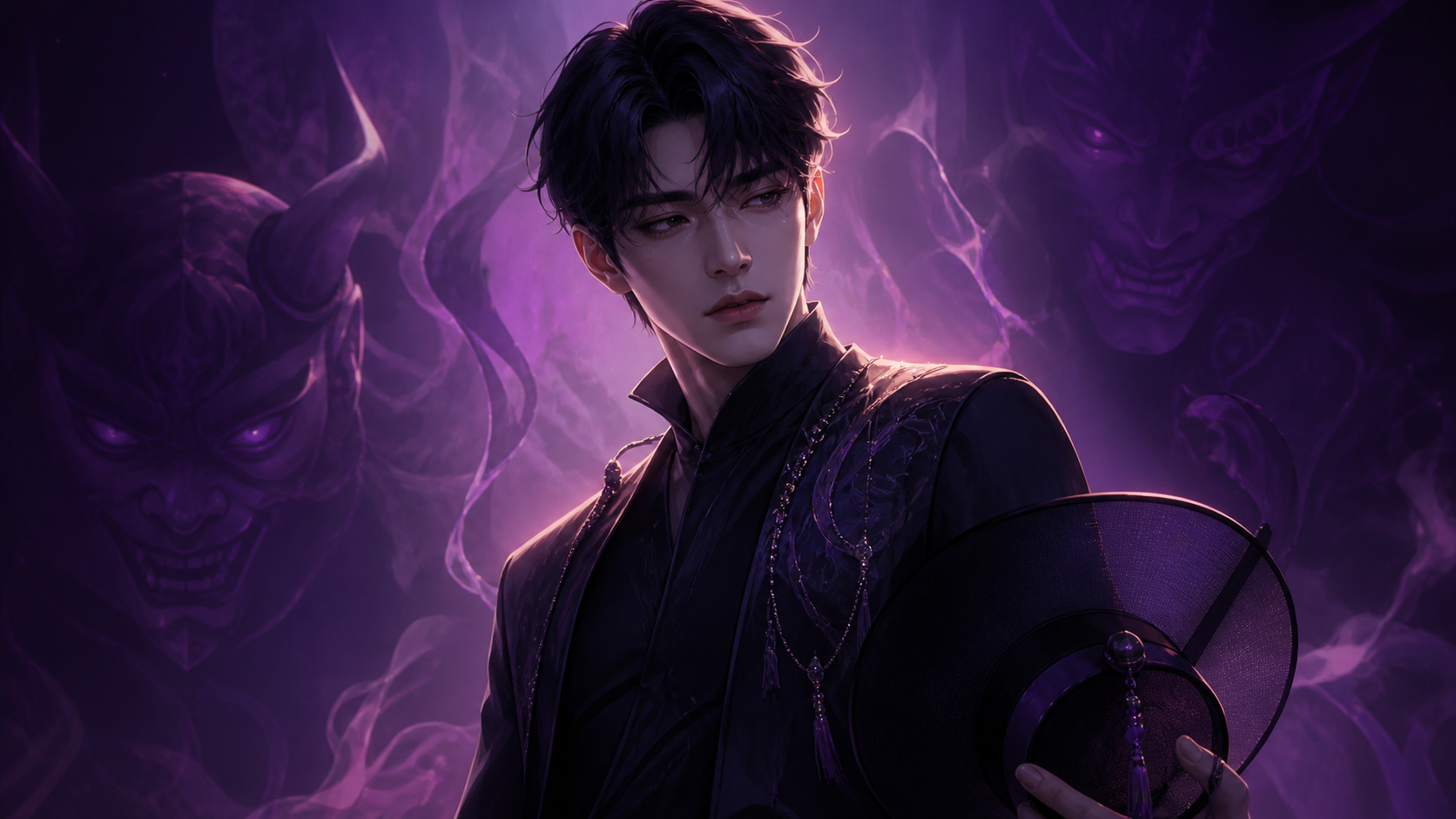
Jinu in KPop Demon Hunters
| Character file | Verified details |
|---|---|
| Name | Jinu |
| Group | Saja Boys |
| Position | Leader and lead singer |
| Origin | Human in Joseon-era Korea, later transformed into a demon |
| Age | More than four hundred years old |
| Allegiance | Gwi-Ma, under a soul contract he eventually rejects |
| Speaking voice | Ahn Hyo-seop |
| Singing voice | Andrew Choi |
| Main relationships | Rumi, Gwi-Ma, the Saja Boys, and the family he abandoned |
| Signature songs | Soda Pop, Your Idol, and Free |
| First appearance | In the demon realm, proposing the Saja Boys plan |
| Final appearance | Sacrificing himself to protect Rumi and returning his soul to her sword |
Jinu is what happens when a bad decision survives long enough to become a personality. He is handsome because the plan requires handsome. He is charming because charm gets him through doors violence would close. He is funny because a villain who only growls cannot get close enough to hear the secret that will ruin you. Every attractive part of his public identity does a job, and the movie becomes more interesting the moment we stop treating those parts as proof that he is secretly harmless.
He is not harmless. Jinu helps build a machine designed to steal fans from HUNTR/X and feed their souls to Gwi-Ma. He studies Rumi's fear, bargains around it, lies to her, and keeps moving after he understands exactly why she is vulnerable. The romance works because the film refuses to make that damage disappear. Recognition gives him a possible way out. It does not erase what he did while trapped inside the system.
That distinction matters because fandom has a bad habit of turning a beautiful antagonist into a misunderstood boyfriend before the story finishes its first sentence. Jinu deserves analysis deeper than pretty screenshots and a sad song. His character is about class shame, ambition, family abandonment, coercive contracts, performance, and the terrifying possibility that somebody can understand your wound while still using it against you.
The face is part of the plan
Jinu's human disguise uses every shortcut a pop audience recognizes. He gets the controlled hair, broad shoulders, soft gaze, expensive tailoring, and leader posture. He does not need to announce that he is the center. The other Saja Boys orbit him, the camera waits for him, and the group formation keeps returning the eye to his body. That visual confidence makes his entrance feel inevitable even though the group did not exist five minutes earlier.
The disguise is also too complete. Nothing about the public version of Jinu appears accidental, which becomes the warning. His smiles arrive on cue. His pauses create anticipation. Even his apparent awkwardness around HUNTR/X can be recalibrated into flirtation before anyone has time to distrust it. He performs approachability with the precision of somebody who has watched human desire for centuries.
Then the demon design removes the comforting surface without changing the person underneath. Blue skin, markings, sharp teeth, and predatory eyes reveal a condition, not a second personality. The same intelligence remains. The same shame remains. The movie does not give viewers a clean good face and bad face. It gives one man who has spent centuries deciding which face will obtain the result he wants.
Before the demon, there was a hungry son
Netflix's official character file places Jinu in Joseon-era Korea and says he sold his soul for fame and fortune. The film gives us the emotional shape of that history through fragmented memories rather than a tidy documentary. He came from poverty, wanted to change his family's circumstances, and made a choice that gave him status while separating him from the people he claimed to help.
That is the first ugly truth inside his tragedy. Jinu's ambition did not begin as cartoon greed. Wanting food, security, and relief from class humiliation is understandable. The danger appears when he decides that his intention should protect him from accountability for the method. He leaves his family behind. Whatever fantasy he had about returning as their savior collapses under the fact that he did not return when they needed him.
The film does not ask us to laugh at a poor person for wanting more. It asks what happens when a person accepts a system that converts hunger into obedience. Gwi-Ma gives Jinu access, talent, and immortality, then uses the shame attached to that choice as a chain. The contract succeeds because Jinu cannot bear to look directly at the people he failed.
Four hundred years is not the same as healing
Immortality sounds powerful until the movie shows what Jinu has done with it. He has not processed his guilt. He has repeated it. He has spent centuries serving the being who knows how to reopen the memory whenever obedience slips. Time did not make him wiser because time without freedom can become one long rehearsal of the same wound.
This explains his exhaustion without excusing his choices. Jinu knows how Gwi-Ma manipulates shame because he has experienced the technique for generations. He also helps reproduce it against Rumi. Victims can understand abuse and still pass its logic forward. The film earns its darkness by allowing both facts to exist at the same time.
His age also changes the romance. Rumi is a young adult facing the first public collapse of the identity built for her. Jinu approaches her with centuries of social observation and direct knowledge of demonic control. Their connection can be sincere while the power imbalance remains worth discussing. Chemistry does not cancel context.
Leader of a group built as bait
The Saja Boys are not friends who trained together and finally debuted. They are a tactical unit assembled to exploit fandom behavior. Jinu presents the concept to Gwi-Ma, leads the group in public, and controls the objective. That makes him more than one demon following orders. He becomes the creative director of the attack.
Each member carries a recognizable attraction category, but Jinu provides cohesion. Romance offers overt affection. Abby sells physical display. Mystery turns distance into desire. Baby weaponizes cuteness. Jinu supplies the emotional center that makes those separate fantasies feel like one group with a shared identity. He is the member audiences can imagine has hidden depth, which is exactly why his construction works.
Leadership here means managing appetite. He reads what fans want, distributes attention, and keeps the group legible enough to become immediately marketable. The frightening part is not that demons copied K-pop styling. The frightening part is how little they needed to invent. They simply removed every ethical boundary from techniques the entertainment industry already understands.
Gwi-Ma does not need a cage when shame works better
Gwi-Ma controls Jinu by threatening exposure and forcing him to relive the family he abandoned. The method is psychologically efficient. A physical prison might encourage escape. Shame convinces the prisoner that escape would only reveal what everybody should hate about him.
Jinu bargains for erased memories because he mistakes forgetting for freedom. He does not initially ask to repair the harm, honor his family, or stop serving the demon. He asks for relief from the feeling attached to what he did. That request is painfully human and morally inadequate. He wants the symptom removed while leaving the system intact.
Gwi-Ma understands this weakness. He offers Jinu a future in which the memory disappears, but every task required to earn that future produces more guilt. The bargain renews itself. Jinu keeps doing terrible work to escape the shame of earlier terrible work, which gives Gwi-Ma fresh material for the next round of control.
Rumi is a mirror before she becomes a love interest
Rumi matters to Jinu because she is the first person in centuries whose secret resembles his own. Both live behind successful public identities. Both carry demon marks. Both believe exposure will destroy the only relationships that give their lives meaning. Both have authority figures who taught them that concealment counts as protection.
Their resemblance creates intimacy faster than ordinary trust could. Jinu does not need Rumi to translate the terror of a changing body or a failing voice. He recognizes the panic. She does not need him to explain why shame can feel safer than confession. Their conversations gain weight because each hears a private language nobody else around them speaks.
But a mirror can be used as a weapon. Jinu identifies Rumi's wound and offers understanding while still serving the plan designed to break her group. His empathy is real enough to comfort her and incomplete enough to endanger her. That combination is why their relationship hurts. A stranger's manipulation would be easier to dismiss. Jinu gives her something she genuinely needs, then attaches betrayal to it.
The rooftop bargain is not clean consent
Jinu and Rumi negotiate because each thinks the other can provide a form of escape. She wants help understanding or removing the demon part of herself. He wants cooperation that can free him from Gwi-Ma's memory punishment. Their goals overlap, but neither enters the agreement with full information or equal freedom.
Jinu withholds the scale of the Saja Boys' purpose and the mechanics of Gwi-Ma's control. Rumi withholds the alliance from Mira and Zoey because she fears their rejection. Secrecy becomes the price of connection. The relationship grows in the exact space where accountability is least available.
That does not make every tender moment fake. It means tenderness occurs inside compromised conditions. The movie trusts viewers to handle emotional contradiction. Jinu can care for Rumi, enjoy her company, and still make decisions that place her friends and fans at risk. Love is not a disinfectant.
Soda Pop makes consumption sound adorable
Soda Pop introduces the Saja Boys through sweetness, bounce, and immediate accessibility. The song's language circles craving, taste, and the promise of something impossible to resist. On the surface, it behaves like a flirtatious debut single. Underneath, demons are advertising consumption to the people they intend to consume.
Jinu sells the contradiction. His vocal steadiness keeps the concept from tipping into obvious parody, while the group choreography distributes attention across the five archetypes. The number works because the audience understands the joke before the fans inside the film do. We can see the trap and still understand why the song lands.
His performance also proves that manipulation does not require a victim to be stupid. HUNTR/X recognizes a competitive threat. Zoey notices the attraction. Fans respond to a polished song and charismatic staging because those things are designed to produce response. Blaming the audience would let the architects of the campaign disappear from the analysis.
Your Idol removes the cute packaging
Your Idol turns the group's original promise inside out. The Saja Boys no longer need to act harmless because the Honmoon is failing and the crowd is already connected. Religious visual language, command, submission, and collective chanting replace the lighter debut energy. The appetite that Soda Pop hid becomes the entire stage picture.
Jinu stands at the center as the fantasy of an idol who demands everything and calls the demand devotion. This is not subtle, and it should not be. The movie pushes parasocial desire into horror by making the extraction literal. Fans give attention, identity, and finally souls to the figure promising that surrender will feel like belonging.
The sequence also implicates Jinu more deeply than his romance can soften. He is not standing offstage regretting the plan. He performs it. He uses the same voice that opened up to Rumi as an instrument for mass capture. Any honest character profile has to keep that image beside the sacrifice at the end.
Ahn Hyo-seop gives the dialogue its double edge
Ahn Hyo-seop voices Jinu's spoken performance in the English-language version. His work avoids turning the character into one continuous seductive murmur. Jinu can be dry, impatient, amused, defensive, and briefly young when an old memory slips past the control he built around it.
The restraint matters most in his scenes with Rumi. If every line arrived soaked in romance, the manipulation would become obvious and the connection would feel mechanically assigned. Ahn lets pauses and clipped answers suggest a person deciding how much truth he can tolerate in the room.
He also preserves Jinu's danger after vulnerability appears. Warmth does not replace calculation. The voice can soften while the character remains capable of redirecting the conversation, withholding information, or returning to the mission. That balance gives the animation room to show conflict without announcing it in every sentence.
Andrew Choi makes the singing feel like confession and strategy
Andrew Choi supplies Jinu's singing voice. The distinction belongs in the character file because the spoken and musical performances do different work. Ahn Hyo-seop builds the guarded man in conversation. Andrew Choi carries the version of Jinu who can say dangerous truths when melody gives him cover.
His lead vocals on Soda Pop and Your Idol support the Saja Boys' public attack, but Free asks for another texture. Jinu is no longer selling one fantasy to a crowd. He is trying to imagine a life with one person who sees the history he wants erased. The cleaner emotional line makes the duet feel exposed without pretending he has become innocent.
The split credit also reflects how animated musical characters are built. Jinu is not the work of one face or one voice. Writers, directors, animators, Ahn Hyo-seop, Andrew Choi, songwriters, producers, and the larger vocal ensemble assemble the performance. Respecting those parts makes the character more interesting, not less magical.
Free is a fantasy before it is a solution
Free gives Rumi and Jinu permission to imagine something beyond the roles controlling them. They sing about release, recognition, and a relationship in which neither has to hide. The scene feels hopeful because each person briefly believes another future is possible.
The hope is emotionally true and strategically premature. Their plan still depends on getting rid of the demon within rather than questioning why demon heritage or a demon contract must define the whole person. Rumi imagines purification. Jinu imagines forgetting. Both are trying to reach freedom through removal instead of integration and accountability.
That is why the duet works better as desire than as an answer. They see each other, but they do not yet know how to build the life they are describing. The song creates a destination. The rest of the film shows how much truth has to survive before either person could arrive there.
The hat carries history without becoming a lecture
Jinu's broad-brimmed hat connects his modern idol disguise to the Joseon history the film reveals later. It gives his silhouette instant authority and distinguishes him from the other Saja Boys, but it also keeps the past physically above him. The design turns history into something he wears even while pretending he has escaped it.
The hat should not be treated as a generic mystical accessory. Its cultural reference gains meaning from Jinu's specific origin and from a film created through Korean and Korean diasporic visual research. The strongest reading stays close to what the design does onscreen without flattening Korean dress history into demon decoration.
When Jinu removes or shifts that silhouette, he can look more exposed. The visual contrast helps the film move between leader, seducer, conspirator, and wounded former human without rebuilding his face for each function. Costume becomes character grammar.
His humor is another form of control
Jinu can be funny, especially when Rumi refuses to respond according to his expectations. The humor gives the romance oxygen and prevents every exchange from carrying the same tragic weight. It also shows that centuries of captivity did not erase his ability to enjoy another person's company.
Still, wit helps him manage power. A teasing answer can redirect a serious question. A dry observation can make Rumi feel seen while keeping his own history protected. Charm creates a pace he controls, and the film often lets us enjoy the line before asking what information slipped past during the laugh.
That double function is part of why audiences attach to him. Jinu feels more alive than a villain who only explains the plot. His humor suggests a self beyond Gwi-Ma, but it does not guarantee that the self will choose well. Personality creates possibility. Choice determines what he does with it.
Family guilt is not family love by default
Jinu remembers his family through regret, but regret can become self-centered if the lost people exist only as evidence of his pain. The film gives us limited access to their interior lives. We mostly see what their absence does to him. That choice fits his point of view, but an editorial reading should notice whose suffering receives the full song.
He wanted to escape poverty and appears to have imagined success as a way to protect them. Then ambition separated the intention from the people. The tragedy is not merely that he made a bargain and suffered. His family suffered consequences while he gained the status attached to the bargain.
His final sacrifice begins to move guilt toward love because he chooses another person's survival without demanding that she erase his past first. Even then, the act cannot travel backward and repair his family. Redemption becomes an ethical direction, not a receipt declaring every debt paid.
Betraying Rumi proves recognition is not enough
Jinu recognizes Rumi more clearly than Celine does during key parts of the story, which makes his betrayal especially painful. He knows shame is destroying her voice. He knows concealment has isolated her from Mira and Zoey. He knows Gwi-Ma will use exposure as punishment because that is how the demon has controlled him for centuries.
He proceeds anyway. The decision shows that empathy without courage can become another extraction tool. Jinu understands her feelings and uses that understanding to move closer. When the price of protecting her conflicts with his desire to escape his own memories, he initially protects himself.
The movie needs this failure. If he chose correctly as soon as he felt attraction, his centuries of complicity would shrink into a misunderstanding solved by romance. Instead, love confronts the limits of the person he has allowed himself to become.
Rumi does not owe him absolution
Rumi can mourn Jinu, carry the soul he returns, and recognize the truth of their connection without becoming responsible for declaring him completely redeemed. Her ending centers her restored voice and repaired bond with Mira and Zoey. Jinu contributes to that survival, but he does not become the owner of it.
This matters because stories often turn a woman's forgiveness into the final proof that a damaged man was good all along. KPop Demon Hunters chooses a more interesting image. Jinu gives something up. Rumi receives strength from that choice. The emotional exchange remains real even though the future they imagined in Free does not arrive.
If a sequel brings him back, Rumi should not be required to suspend every question because he sacrificed himself once. Trust after betrayal needs more than a resurrection and a duet reprise. She deserves room for grief, anger, affection, suspicion, and whatever boundary keeps her whole.
The Saja Boys are his responsibility too
Jinu leads five demons, but the film gives little evidence that he treats the other four as people with independent futures. They function as components of his plan and servants of Gwi-Ma. Their limited characterization may be deliberate pop archetype comedy, yet it exposes something about his leadership.
He seeks freedom for himself without building a route for Romance, Abby, Mystery, or Baby. Perhaps they are older demons committed to the work. Perhaps Gwi-Ma formed them differently. The film does not tell us enough to assign secret innocence. It does show that Jinu's awakening remains narrowly focused on Rumi and his own buried humanity.
A sequel could make this gap productive. If any Saja Boy survives or returns, Jinu should face what it meant to recruit or command them. Freedom that stops at the self can repeat the same hierarchy under a kinder face.
The sacrifice finally costs what the bargain protected
Jinu's original bargain protects his ambition and then traps his soul. His final act reverses that motion. Instead of taking power by abandoning others, he gives up his remaining existence so Rumi can survive. The choice costs the self he spent centuries trying to preserve from memory.
That reversal gives the sacrifice meaning without turning it into a mathematical cancellation. One brave act cannot equal four hundred years of service to Gwi-Ma. It can prove that Jinu is no longer making the same choice. Moral change often begins before repair is possible, especially in stories where death closes the available time.
The soul entering Rumi's sword also changes the usual romantic ending. He does not possess her, claim a reward, or receive public applause. His remaining power becomes part of the weapon she uses to protect people. The man who helped harvest souls finally gives his own without coercion.
Is Jinu dead, transformed, or waiting inside the sword?
The film presents the sacrifice as a final appearance, but fantasy stories know how to reopen a door. Jinu's soul does not simply vanish onscreen. It moves into Rumi's saingeom and strengthens the blue energy that helps defeat Gwi-Ma. That leaves several narrative possibilities without confirming any one of them.
He may be dead in the ordinary sense, with the soul image serving as emotional and magical transfer. He may retain some consciousness inside the weapon. The restored Honmoon may allow souls previously trapped by Gwi-Ma to exist differently. A sequel could choose resurrection, communication, memory, or complete finality.
The best next step would respect the sacrifice's cost. Bringing Jinu back with no consequence would turn the ending into a temporary costume change. Keeping him absent forever could work, but the sword imagery deliberately invites questions. Whatever answer arrives should deepen the contract and soul lore rather than using romance as an undo button.
What a sequel owes his human history
Jinu's Joseon past needs more than another five-second flashback if the franchise continues his story. Viewers need the shape of his family, the social conditions around his ambition, what Gwi-Ma offered, and what Jinu understood at the moment of agreement. Specificity would keep the history from functioning as generic sad-man wallpaper.
The story should also resist making poverty the cause of evil. Poverty creates pressure. Gwi-Ma exploits it. Jinu still chooses, and powerful systems around that choice matter. A careful sequel could examine how desperation narrows apparent options without pretending every person under the same pressure would abandon the people they love.
Most importantly, his family should become more than silent figures in his guilt. Names, relationships, needs, and their response to his departure would move the backstory outside Jinu's self-image. The people harmed by a choice deserve narrative existence beyond the chooser's regret.
What a sequel owes Rumi and Jinu
The relationship should not resume at full romance the moment Jinu appears. Rumi learned that secrecy could break her bond with Mira and Zoey. A returned Jinu would need to enter a life where those relationships matter and where private bargains cannot become the default route around disagreement.
He would also need to answer questions with no seductive shortcut. What did he know about the soul harvest? When did he decide Rumi was worth protecting? Why did that protection arrive only after the public trap had already begun? How does he understand the difference between being controlled and refusing responsibility?
Romance can survive those questions if the writing lets both characters remain complicated. The chemistry came from recognition, humor, conflict, and musical intimacy. None of that requires pretending betrayal was a cute obstacle between attractive people.
RaeRae's verdict
Jinu works because the movie lets beauty and damage occupy the same frame. He is not secretly good because his jawline survived four hundred years. He is not secretly empty because he carried out Gwi-Ma's plan. He is a person who allowed shame to become obedience, used performance to control other people, recognized himself in Rumi, failed her, and finally made one choice that broke the pattern.
I understand why fans want him back. Free is built to make that desire hurt, and the sacrifice leaves a piece of him inside Rumi's weapon. But I do not want a sequel that rewards us with the boyfriend version while skipping the man who helped build Your Idol. Give me the history. Give me the consequences. Give Rumi the right to love him and still demand the truth.
That is the reason Jinu deserves a full character file. He is not a side dish for shipping. He carries the film's argument about shame from the villain's system into the romance and back out through sacrifice. The pretty face gets viewers through the door. The moral bruise is why the character stays.
Official production sources
Netflix Tudum's official Jinu character file confirms his Saja Boys position, age of more than four hundred years, Joseon-era human origin, bargain with Gwi-Ma, speaking and singing credits, central relationships, and final sacrifice. Netflix's cast feature includes Ahn Hyo-seop's explanation that Jinu made his original choice while trying to protect his family and retained warmth, love, and curiosity about humanity.
Netflix's official soundtrack feature credits Andrew Choi on the Saja Boys songs and on Free, identifies the writers and producers, and explains how Soda Pop hides the demons' consumption language inside a bright pop song. It also describes Free as two guarded people sharing truths they have never shared elsewhere and imagining a route beyond the walls between them.
These sources establish credits and production facts. The analysis of class shame, coercive contracts, group leadership, family harm, consent, parasocial performance, sacrifice, and sequel responsibility is RaeRae editorial interpretation of the completed film.