
You & Me: JENNIE Put Privacy Under a Full Moon
One partner, one moon and one performer turning private fantasy into arena-scale geometry without pretending the cameras disappeared.
Release file
Released: October 6, 2023
Runtime: 3:05
Artist / channel: JENNIE / BLACKPINK
Exact-file focus: The exact official You & Me dance performance video, not a concert fancam, audio, short or fan edit.
Bottom line
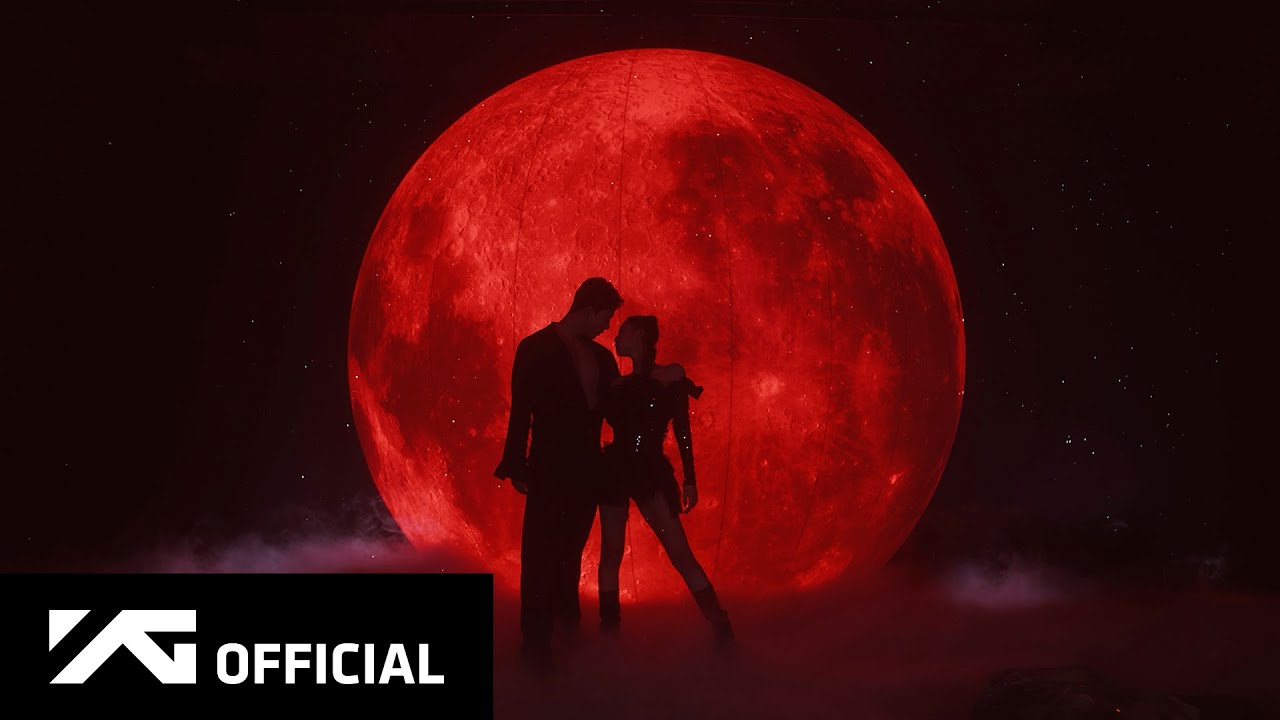
You & Me works because JENNIE turns exclusivity into stage geometry. The moon silhouette, partner choreography and restrained vocal do not describe a private relationship in detail; they create the sensation of two people briefly convincing themselves the rest of the world has disappeared.
What changed on replay
Replay one follows the bass and the way the vocal sits behind it. Replay two watches the partner work as negotiation rather than possession. Replay three tracks the moon image and notices how quickly intimacy becomes spectacle once thousands of phones capture it. Replay four hears the contradiction: the lyric says “you and me,” while the performance exists for everyone.
A concert song became an official file
The track lived through live stages before the dance performance video gave the choreography a canonical close reading. That history matters. Audience response helped shape expectations, but the official file is not merely documentation of a tour moment. Camera placement, costume, edit and sound present a deliberate final argument about the song.
The moon is simple enough to be dangerous
A backlit silhouette creates instant recognition and removes distracting detail. It can also reduce intimacy to an image designed for circulation. JENNIE’s performance keeps the symbol alive through timing. The famous shape matters less than the transition into and out of it—how a body becomes icon, then has to return to being a person.
Partner choreography and agency
The dance uses proximity without making the partner the center of JENNIE’s desire or the owner of her movement. She controls gaze, release and when contact becomes distance. That matters because sensual choreography can reproduce possession while pretending to celebrate confidence. Here the relationship reads as chosen performance, not capture.
Vocal restraint
JENNIE avoids turning the track into a power-vocal demonstration. The lighter delivery suits secrecy and lets rhythmic detail remain audible. Critics who want more projection are responding to a real tradeoff: intimacy can become underpowered in a large venue. The official video solves part of that problem by bringing the camera close enough for small choices to register.
The public-private contradiction
Pop stars regularly sell intimacy at industrial scale. You & Me does not escape that system; it makes the contradiction attractive. A private claim becomes choreography, lighting, merchandise memory and fan footage. The responsible reading can enjoy the illusion while recognizing the labor and audience infrastructure required to create it.
The counterargument
The song can feel slight because its emotional world is intentionally narrow. There is little narrative beyond exclusive attraction. That simplicity is not automatically elegance. The performance earns depth through body language and visual form, but a listener focused only on the recording may reasonably want more development.
What I would change
Give the final chorus a longer uninterrupted wide shot. The moon sequence became iconic because shape communicates. Rapid cutting after that moment only reduces the choreography’s authority. Let the bodies finish the sentence the lighting began.
How it fits JENNIE’s catalog
SOLO established independence, Mantra organized collective confidence, and Ruby multiplied personas and collaborators. You & Me occupies a smaller room: sensual control without a large narrative apparatus. That scale keeps the catalog from confusing ambition with constant maximalism.
Replay verdict
The performance succeeds because every element agrees on focus. Bass, moon, gaze and partner spacing keep narrowing the world toward two people, even as the audience grows. The irony is not a flaw. It is the reason the song lasts: thousands join a fantasy whose entire premise is that nobody else is there.
Canonical profiles
Official video
 JENNIE — You & Me Dance Performance VideoDaily+59.6KTotal views264.4M
Receipts
The exact official BLACKPINK/JENNIE performance video is the primary choreography and visual record.
Desire staged as a duet with the camera
The partner is essential, but the lens is the third participant. JENNIE repeatedly shifts attention between the other body and the audience, allowing viewers to witness intimacy without pretending they are the desired person. That distinction protects the choreography from collapsing into generic fan service. We are invited to watch control, not told the performance secretly belongs to each individual viewer.
The silhouette removes identity and intensifies it
Backlighting reduces faces and clothing to shape, making the image broadly readable. Paradoxically, the posture remains recognizable as JENNIE because gesture, timing and hair movement carry identity after detail disappears. The sequence demonstrates what star image means technically: a performer can remain identifiable when the usual evidence has been removed.
Tour memory and canon
Fans encountered the song through live performance before the official dance video, so the release arrived with an archive of reactions and alternate angles already attached. The canonical file does not erase that history. It provides a stable source for image, choreography and tracker relationships while fan memories explain why the moon silhouette carried emotional weight before upload day.
Sensuality without apology
The performance does not frame desire as a scandal requiring a rebellious press release. JENNIE’s adult sensuality is treated as choreography and tone. That ordinary confidence matters because women idols are often asked to remain available as fantasy while being punished for visible agency. The video cannot solve that double standard, but it refuses to stage her as surprised by her own body.
The music leaves room for the body
A denser arrangement would compete with partner spacing and the slower burn of gaze. Bass and rhythm provide a clear floor while melodic elements remain light enough for movement to supply detail. This is one reason the recording can feel slight without the video and complete with it. The work was designed as audiovisual performance, and criticism should evaluate that integration while still naming the audio limitation.
The counterargument to intimacy
Some viewers will see manufactured closeness built for circulation, and they are correct about the production machinery. Manufactured does not mean emotionally empty. Theater, film and dance all construct situations so audiences can feel something real through planned action. The ethical question is whether performance is mistaken for access to the performer’s private relationships. The art gives us a scene, not ownership.
Final assessment
You & Me turns controlled limitation into identity. One partner, one moon, one bass-led world and a performer skilled enough to make small changes carry the arc. It does not need a more complicated story. It needs the audience to respect the boundary between a convincing private fantasy and the very public labor that made it visible.
Micro-expression is part of the choreography
The official file brings viewers close enough to see expression change between counts. JENNIE can release eye contact just before physical distance grows, then restore it when the partner returns. Those decisions make the relationship legible without dialogue. They are also why a static screenshot cannot explain the performance; intimacy exists in timing between images, not in the famous silhouette alone.
Partner trust is visible in weight, approach and retreat. Neither dancer appears to be waiting for permission after the count arrives. That fluency allows the sequence to look private even though every transition has been rehearsed for public safety and repeatability. The romance is constructed, but the physical listening required to construct it is real.
The song’s modest ambition
You & Me does not attempt a social thesis, autobiographical confession or vocal reinvention. It creates a sensual concert centerpiece and executes the frame with precision. Calling that modest is not an insult. Catalogs need rooms of different size. A performer who can make one moonlit idea hold an arena has demonstrated craft even when the lyric fits on a small page.
Verdict
JENNIE You & Me React examining the moon choreography, partner work, vocal restraint, public intimacy, replay changes and verdict.
What changed every time I replayed it
The second replay follows the bass and how JENNIE lets the vocal sit behind it. The third watches partner work as negotiation rather than possession. The fourth tracks the moon silhouette from icon back into a moving person, and the fifth hears the contradiction clearly: the lyric says two people are alone while an industrial-scale audience watches.
Lyrics and meaning
The lyric narrows desire to a private pair, but the performance makes privacy into public craft. That contradiction is the point, not a mistake. JENNIE does not offer biographical evidence about a relationship; she uses gaze, spacing, touch and withdrawal to construct the sensation of exclusivity for an audience that knows it is watching labor.
RaeRae verdict
You & Me lasts because limitation becomes identity. The bass, moon, gaze and partner spacing keep narrowing the world toward two people even as the audience grows. JENNIE makes the fantasy convincing without confusing choreography for a confession.