
Volume 5 · Plot · Full spoilers
The route down becomes the only route out.
Every turn from the first tremor through the Black Goliath and Apollo’s arrival.
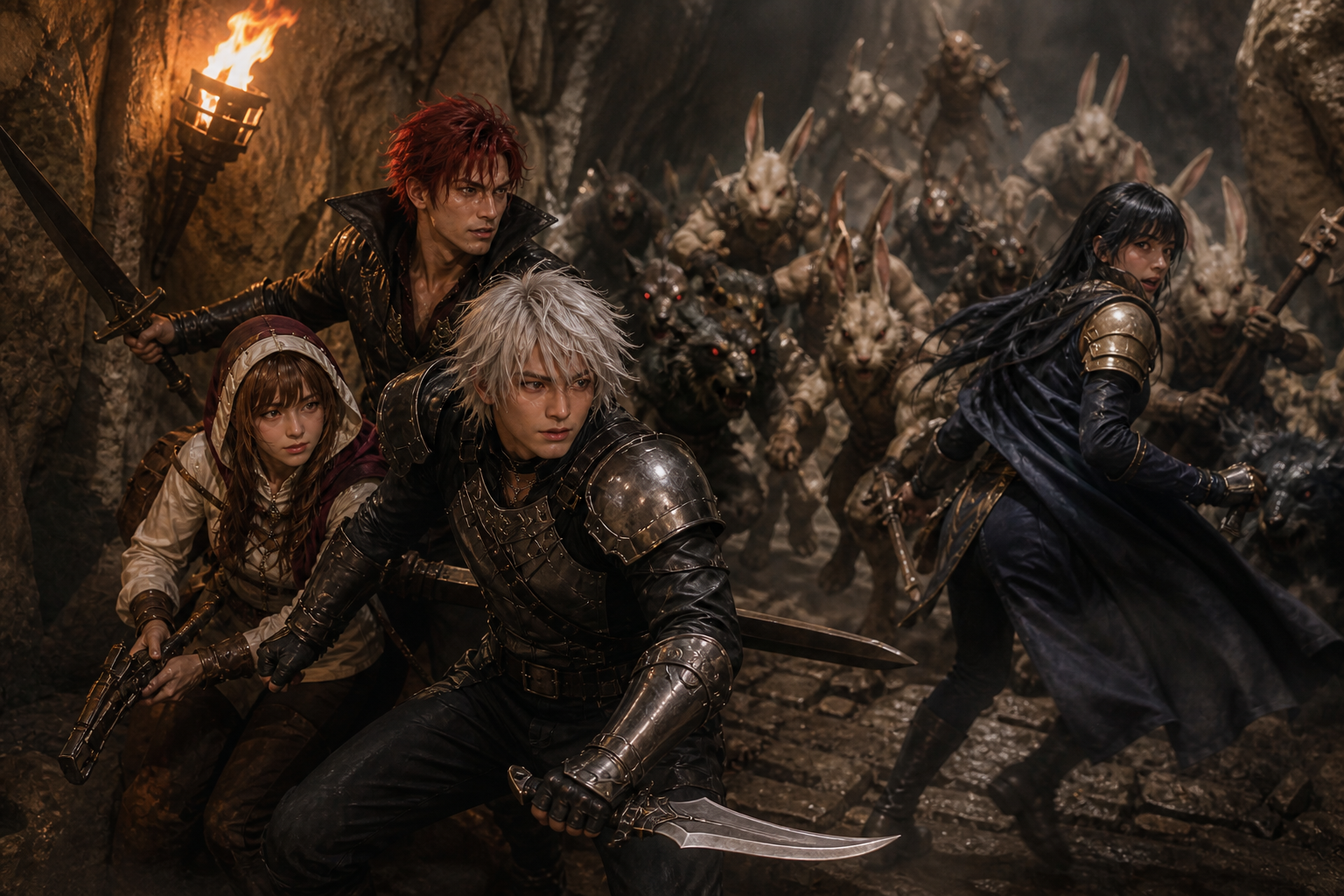
The complete plot in twelve pictured turns
Turn 1
The quakes
Loki and Hephaistos feel the Dungeon move while Hermes returns to Orario already interested in Bell.
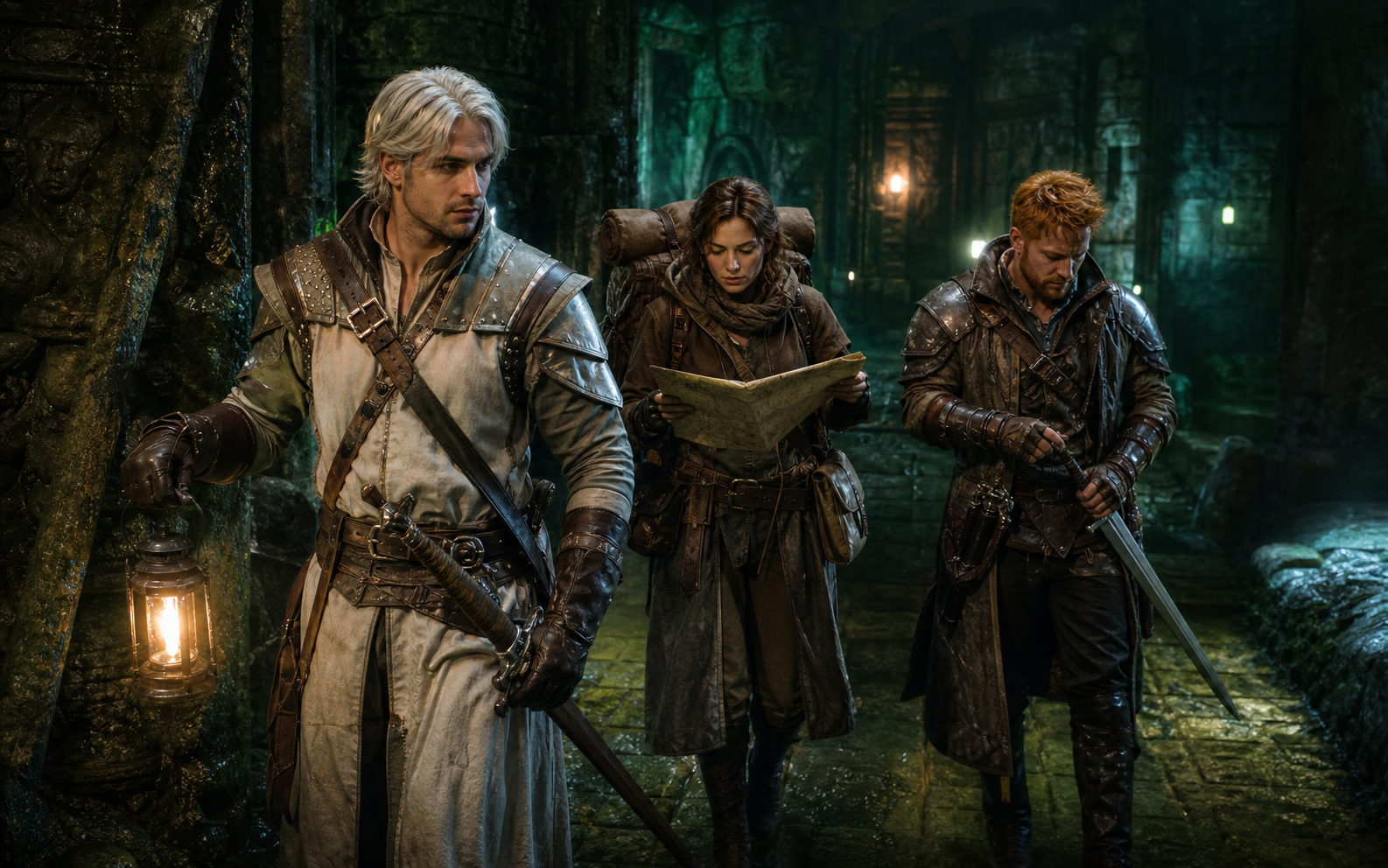
Turn 2
The first middle-floor run
Bell, Lilly and Welf descend with a working plan, salamander wool and exactly enough confidence to tempt disaster.
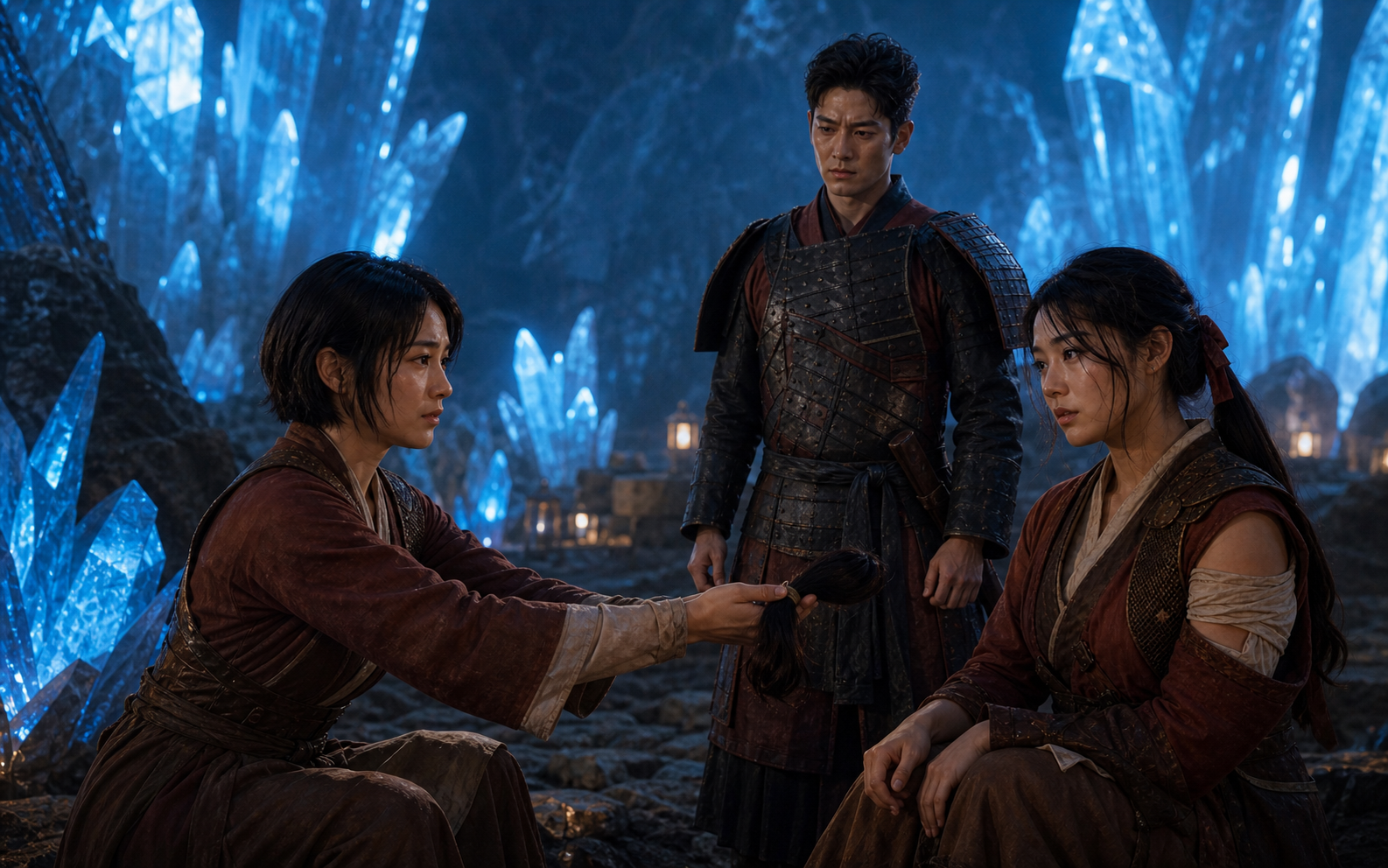
Turn 3
The pass parade
Ouka and Takemikazuchi Familia redirect their pursuing monsters to protect wounded Chigusa. Bell’s party pays the immediate price.
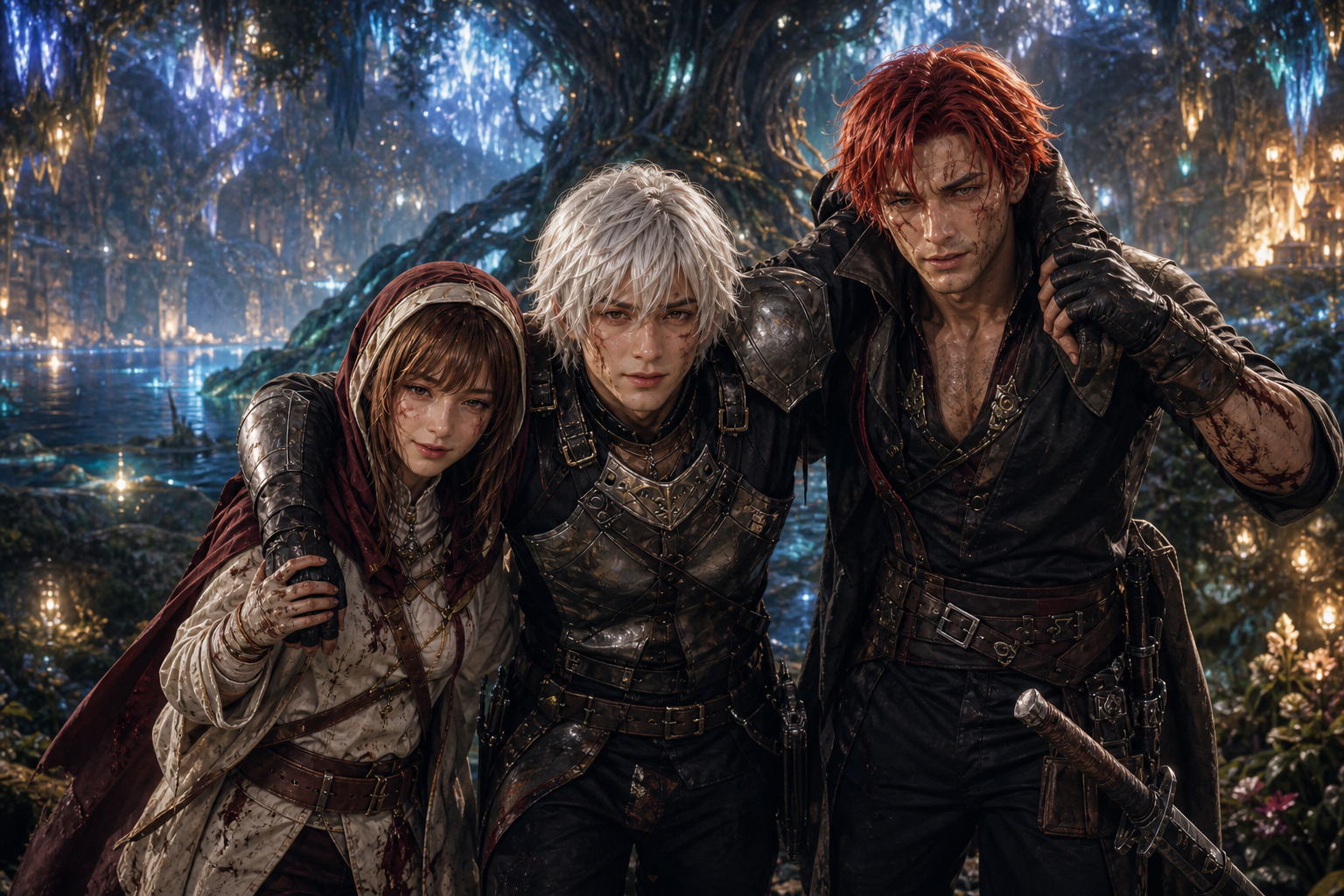
Turn 4
The fall
Retreat routes fail and the party is driven down instead of up, losing supplies while every floor becomes less forgiving.
Turn 5
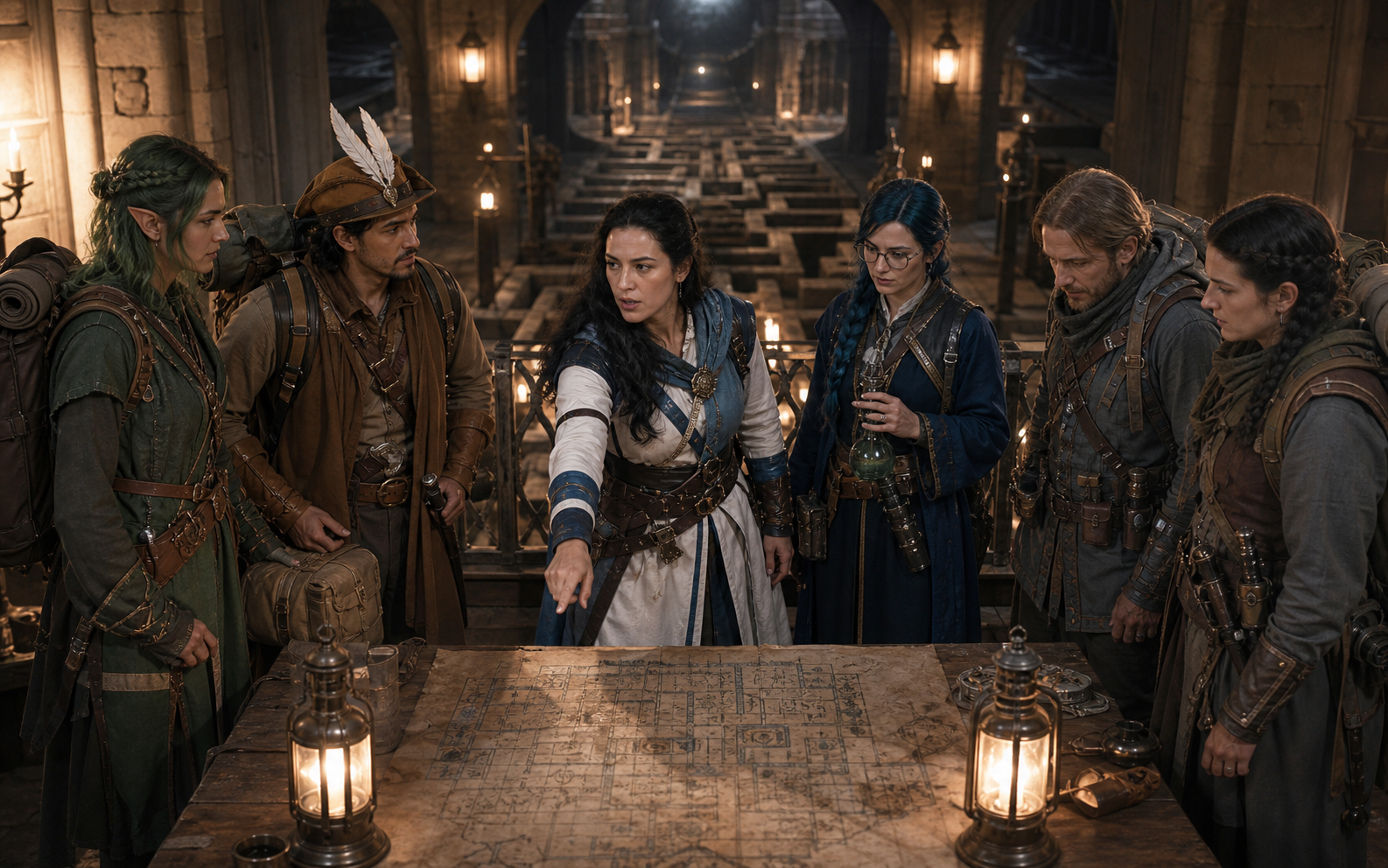
The rescue decision
Hestia refuses the Guild timetable. Lyu, Hermes, Asfi, Mikoto, Ouka and Chigusa descend with her.
Turn 6
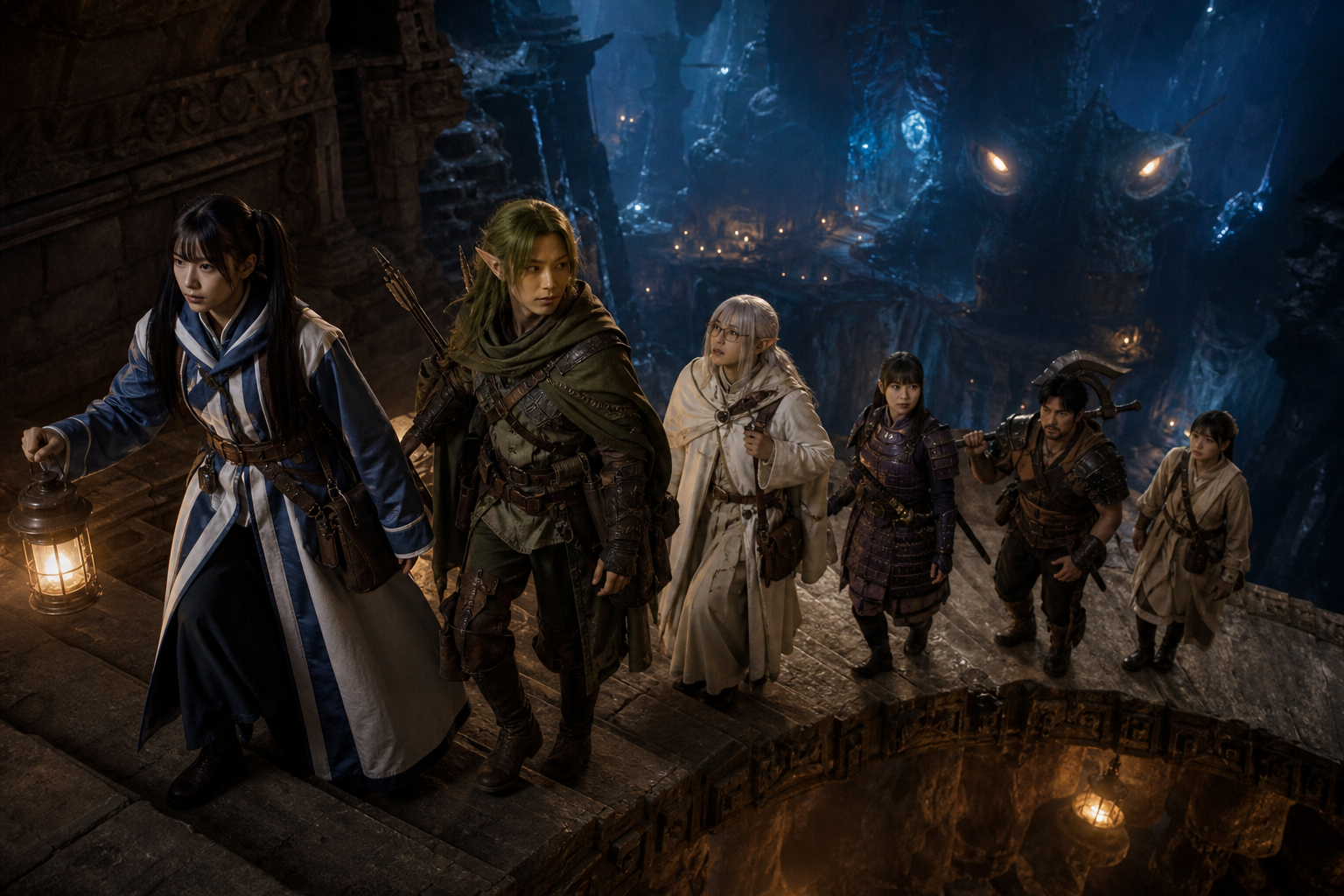
The Goliath crossing
The floor boss appears at the worst possible time, forcing both groups to gamble on timing and speed.
Turn 7
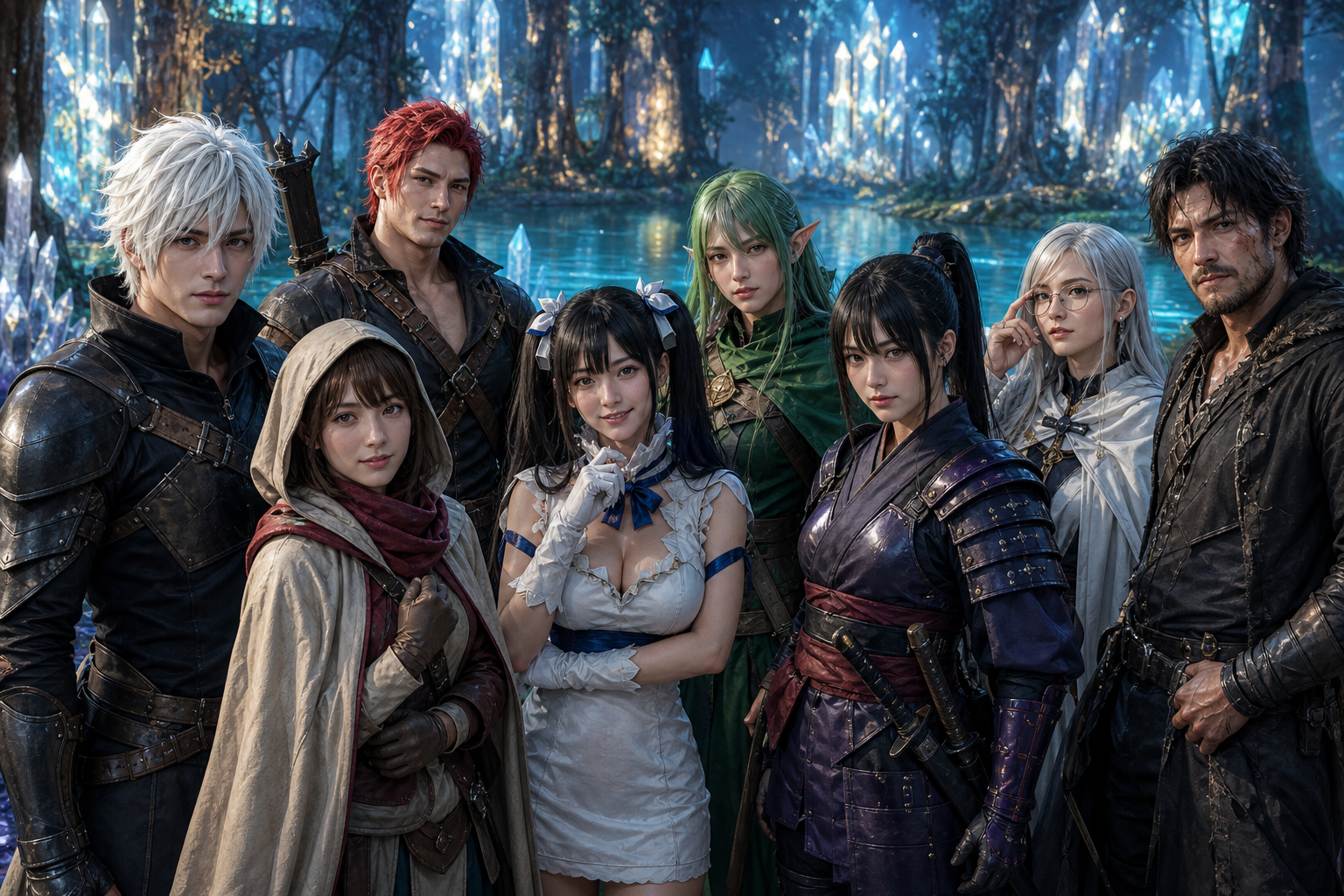
The safe point
Aiz and Loki Familia find the exhausted party on Floor 18. Rivira provides shelter, commerce and new problems.
Turn 8
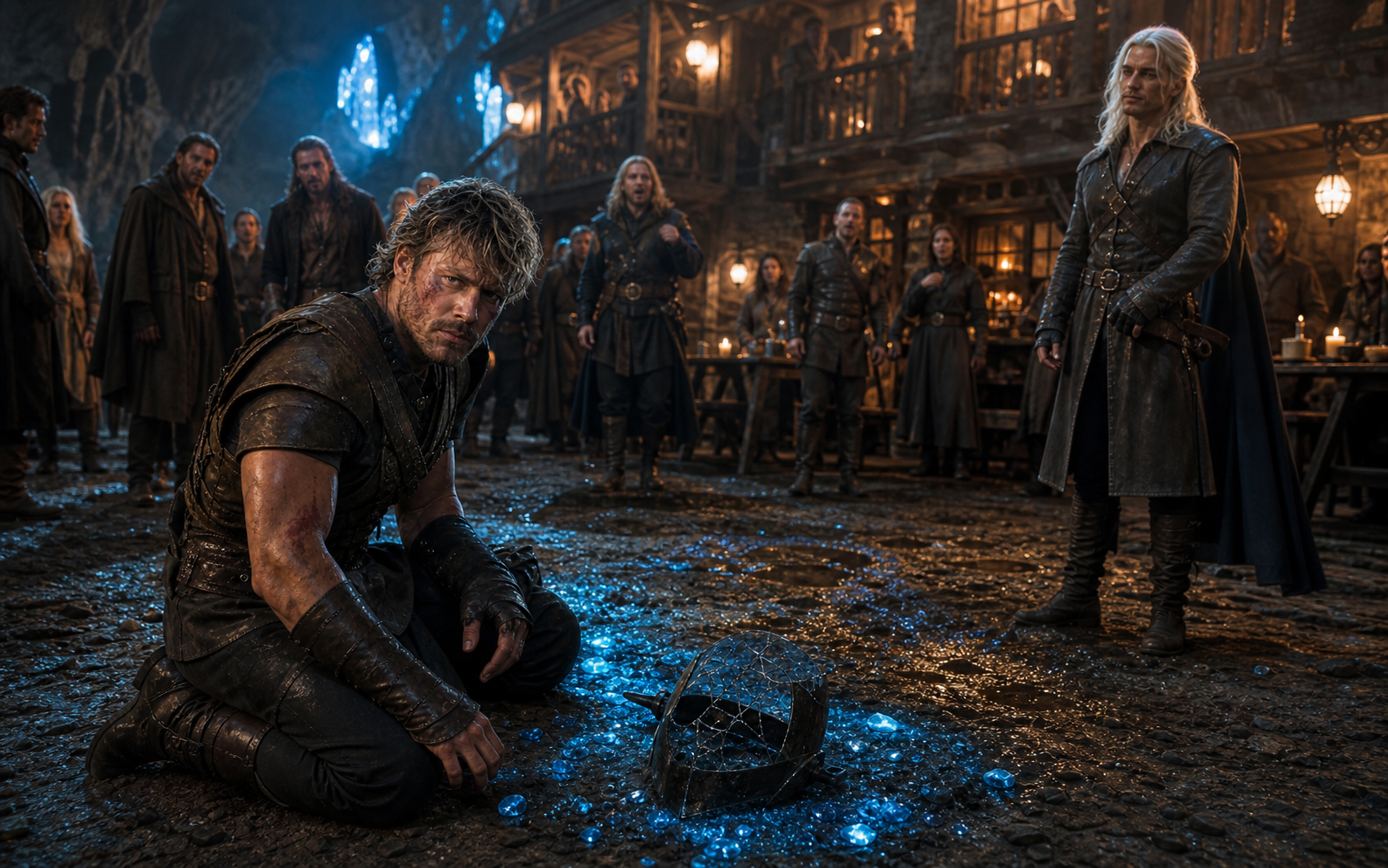
Mord’s trap
Hermes nudges resentment into action; Mord uses the Hades Head to abduct Hestia and force Bell into a public fight.
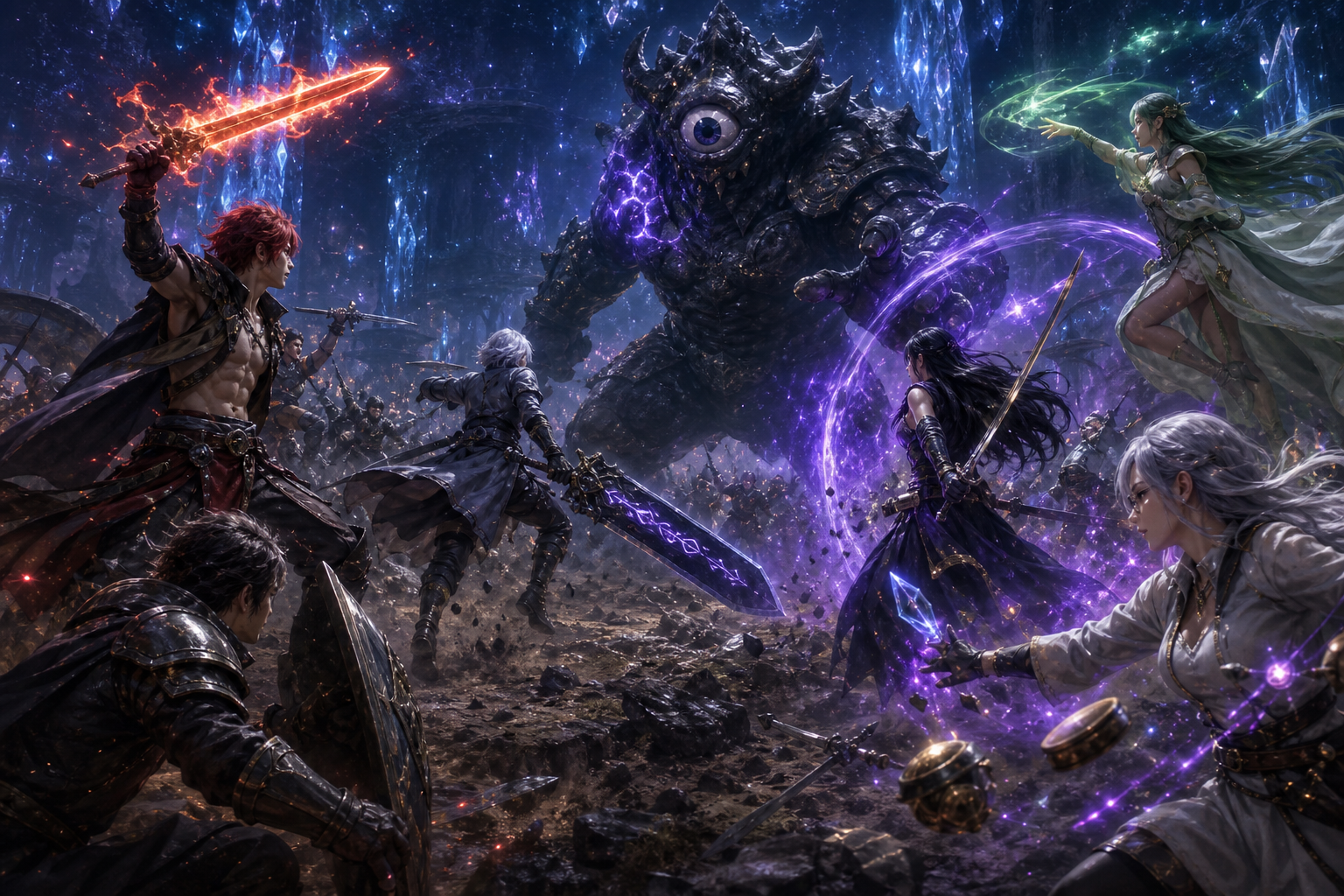
Turn 9
Divinity underground
Hestia releases divine power. The Dungeon answers by birthing a Black Goliath outside the normal rules.
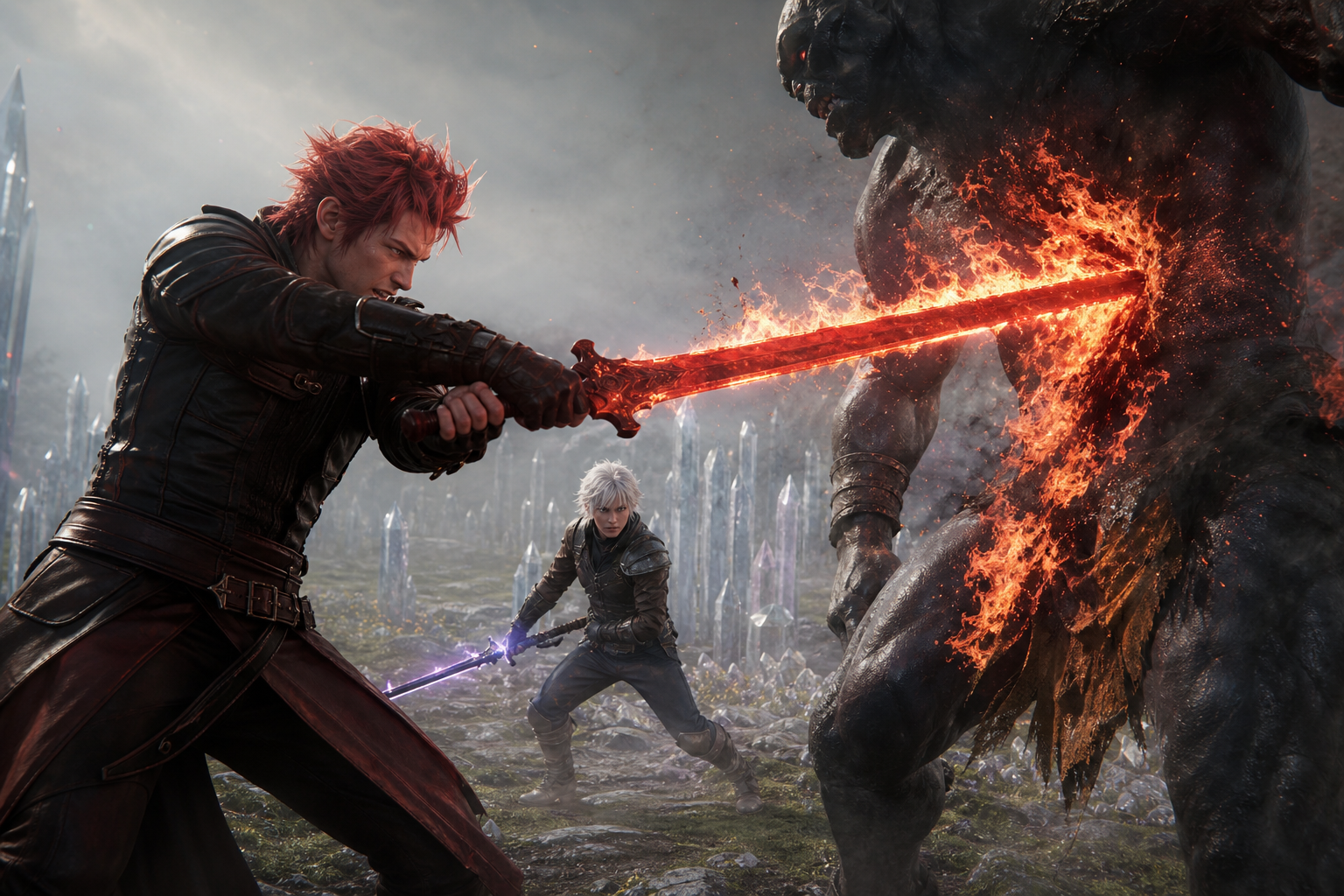
Turn 10
The floor fights together
Lyu, Asfi, Mikoto, Welf, Ouka, Mord and Rivira’s adventurers wear the monster down. Bell’s Argonaut strike finishes collective labor.
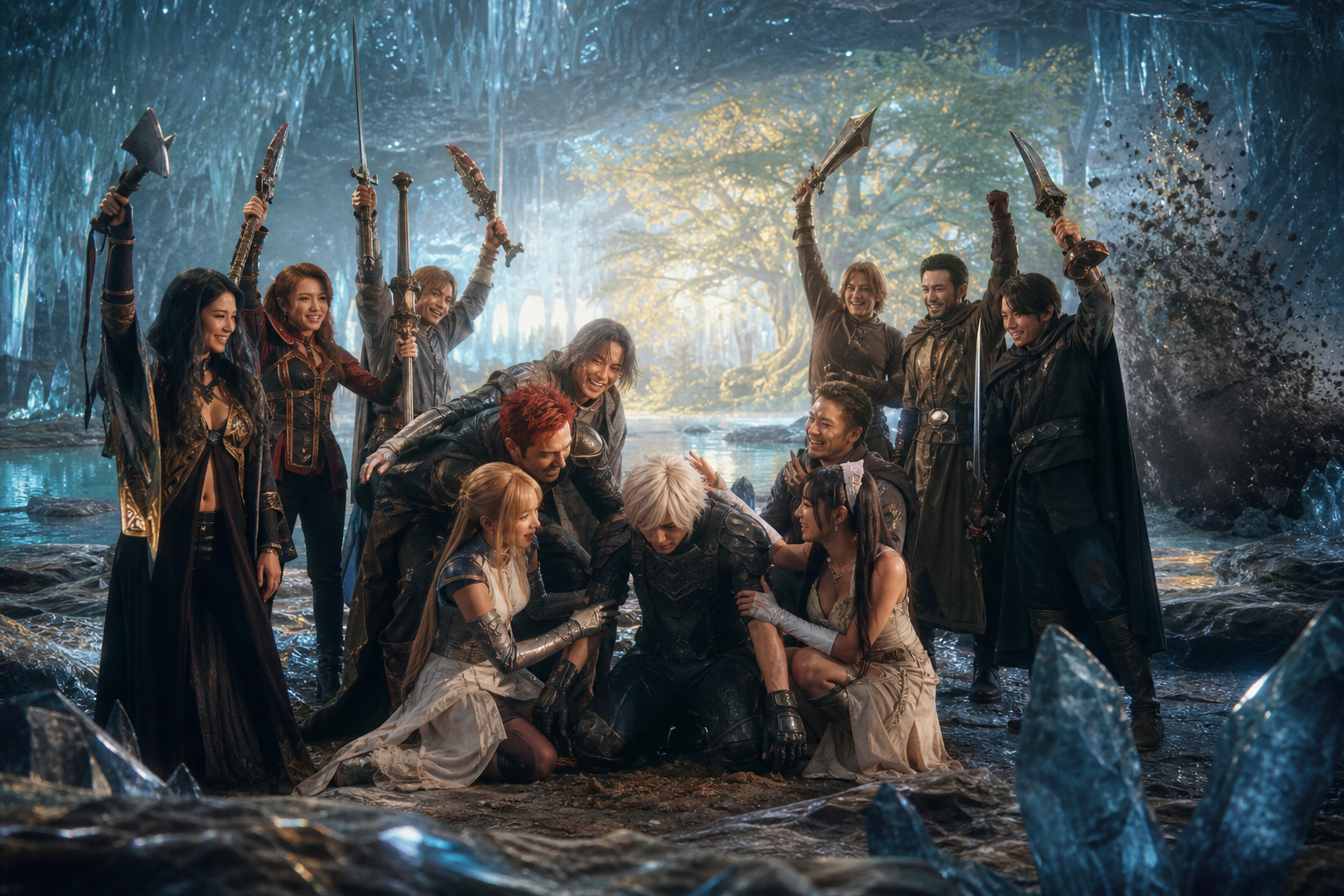
Turn 11
The cover-up
The Guild classifies the event as a Calamity and orders silence, protecting the city from the implications.
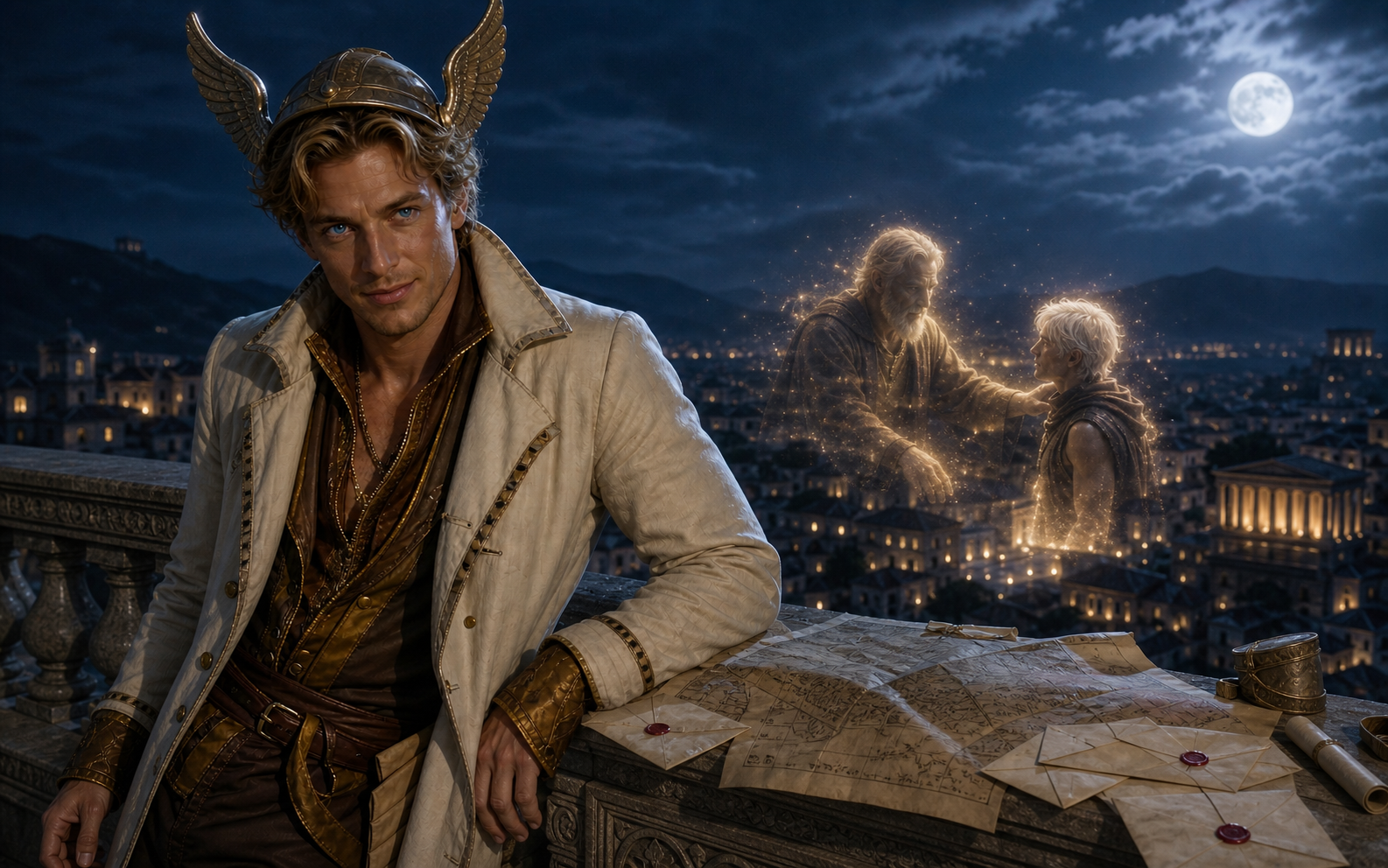
Turn 12
The bloodline and the next threat
Hermes names Bell as Zeus’s grandson. Apollo and Hyacinthus step into the next problem before the dust settles.
RaeRae’s connective tissue · the full descent
The party enters the middle floors prepared. The Dungeon answers with other people’s choices.
Volume 4 assembles Bell, Lilly and Welf. Volume 5 immediately tests whether the new formation can survive a disaster none of them started. Salamander wool, supplies and planning matter; so do the decisions of adventurers who redirect danger to save one of their own. The pass parade turns a routine descent into a moral chain reaction, and the only survivable direction becomes deeper.
Phase one · confidence
The first middle-floor run begins like a competence test
Bell’s Level Two strength changes the party’s ceiling, but Lilly and Welf keep the descent from becoming a victory lap. They prepare for heat, manage supplies and approach the middle floors as terrain with rules. The early success is earned. That matters because the disaster cannot be dismissed as three amateurs wandering somewhere they were warned not to go.
Phase two · transferred danger
Ouka saves Chigusa and makes Bell’s party pay
Takemikazuchi Familia is being pursued while Chigusa is wounded. Ouka chooses a pass parade: redirect the monsters toward another party to create an escape. His reason is immediate and human. The cost is equally human. Bell, Lilly and Welf inherit a threat they did not consent to, proving that Dungeon ethics are often written under a countdown.
Phase three · down is out
The retreat route collapses one floor at a time
Going back up becomes impossible. Supplies disappear, injuries accumulate and every lower floor asks more from a formation that has never operated under this pressure. Bell’s strength keeps openings available. Lilly’s route knowledge and Welf’s equipment judgment keep those openings from becoming suicide. Floor 18 becomes the only realistic refuge.
Above them, Hestia rejects waiting
The Guild has a timetable. Hestia has a child missing underground.
Hestia will not accept procedure as care. Lyu, Hermes, Asfi, Mikoto, Ouka and Chigusa join the rescue descent for different reasons: loyalty, guilt, curiosity, debt and the refusal to let Bell’s party vanish inside a bureaucratic delay. The group must cross the Goliath’s schedule at the worst possible moment, turning timing itself into a floor boss.
The rescue matters even before it succeeds because it shows how wide Bell’s network has become. He began the franchise unable to join a Familia. Now his disappearance mobilizes gods, veteran adventurers and the very people whose decision helped create the crisis.
Floor 18 · relief
A safe point is still a city with teeth
Aiz and Loki Familia find Bell’s exhausted group, and Rivira offers shelter, commerce and the temporary illusion that danger has ended. Floor 18 is beautiful because the Dungeon allows beauty where adventurers expect hostility. It is dangerous because people bring hierarchy, resentment, money and manipulation into every refuge they build.
Floor 18 · provocation
Hermes turns jealousy into an experiment
Mord resents Bell’s sudden fame and uses the Hades Head to abduct Hestia and force a fight. Hermes does not invent that resentment, but he encourages the conditions that let it become spectacle. Bell defeats the challenge without needing to become cruel, while the watching crowd receives another public performance of the person Hermes is trying to expose.
Floor 18 · violation
Divinity touches the Dungeon and the Dungeon answers
Hestia releases divine power underground. The response is not a lecture or a warning. The Dungeon births a Black Goliath outside the ordinary cycle, an emergency organism created to eliminate the violation. The safe point stops being safe because a goddess briefly made herself recognizable to something that hates gods.
The Black Goliath battle
Bell delivers the final strike. The entire floor makes that strike possible.
The monster’s regeneration prevents a simple replay of the Minotaur duel. Individual brilliance can create damage without creating victory. Lyu, Asfi, Mikoto, Ouka, Mord, Welf and Rivira’s adventurers take different parts of the problem: mobility, restraint, firepower, positioning, sacrifice and the ugly work of keeping pressure on something that refuses to stay wounded.
Welf’s Burning Moon is especially important. His refusal to make magic swords has never meant he lacks the ability. Using one here becomes a chosen answer to collective need, not a surrender to the Crozzo marketplace. The weapon contributes to a plan rather than replacing everybody inside it.
Bell’s Argonaut strike finishes accumulated labor. That distinction protects the scene from turning him into a hero who absorbs everyone else’s achievement. He is the point of impact, not the only reason impact becomes possible.
Aftermath · classification
The Guild calls it a Calamity and orders silence
The official response protects Orario from panic and protects the institution from the implications of divine power provoking the Dungeon. Classification becomes narrative control. The people who fought know what happened; the public receives a safer word. Survival is followed immediately by management of the truth.
Aftermath · inheritance
Hermes names Zeus—and Bell’s past gets larger
Hermes reveals that Bell is Zeus’s grandson, reframing his arrival in Orario without erasing what Bell has earned. Bloodline supplies context, not replacement authorship. Bell still trained, froze, chose, failed and fought. The reveal explains why Hermes is watching and opens a family-sized question Bell does not yet know to ask.
Aftermath · next predator
Apollo enters before anybody finishes breathing
Apollo and Hyacinthus appear at the edge of the victory, converting Bell’s growing fame into a new form of threat. The Dungeon is not the only system that reacts when a small Familia becomes visible. Gods collect beautiful things, talented people and stories they believe should belong to them. Bell has survived the floor; now Orario itself is preparing an attack.
The route down becomes the route out because the book understands collective heroism: one party is endangered by another party’s choice, rescued by a network, and saved by a floor full of people whose work converges in Bell’s final blow.