
RAERAE REACTS · i-dle · JAPAN FIRST EP
Where Do We Go MV React: i-dle Found the Dream Island and Asked Why It Felt Empty
i-dle sail toward the place childhood promised would fix everything, arrive, look around and discover that “having it all” can feel suspiciously like having nothing. “Where Do We Go” wraps that adult panic in bright Japanese pop, blue water and an adventure video cheerful enough to smuggle in an existential crisis without declaring customs.
Release file
Released: October 3, 2025
Runtime: 03:50
Artist: i-dle — Soyeon, Miyeon, Minnie, Yuqi and Shuhua
Project: Japan first EP i-dle
Label / channel trail: CUBE Entertainment · i-dle official Japanese release route
Exact-video distinction: Japanese official MV DcxiggTs_q4, not a Korean version, performance upload or behind-the-scenes episode
Sound: Bright pop-rock and electronic travel music with a buoyant chorus, rhythmic rap insert and an uneasy question hiding beneath the sunshine
Credits: Composed by Soyeon, Pop Time, Daily and HAJU; lyrics by Soyeon, Futoshi and Jamil Kazmi; arranged by Pop Time, Daily, HAJU and Soyeon
Sources: Exact official upload, description, lyrics and creditsDaily+2.4KTotal views26.4M · official Japan EP route.
First reaction: congratulations, the dream has no furniture
The song opens with childhood wonder and a blue world, then keeps moving like the boat is certain the destination exists. When the group arrives, abundance and emptiness occupy the same island. That is a rude little adult revelation inside very friendly music.
The chorus does not solve it. “What should we do?” remains a real question, not a cute slogan before the next vacation montage.
The island is success after the confetti crew leaves
A promised place containing everything but somehow nothing is an unusually honest image for ambition. Goals can organize years of effort, then fail to provide a personality once achieved.
i-dle have enough career history for that question to feel earned. The video never needs to announce an industry allegory; the gap between arrival and satisfaction already carries it.
Soyeon writes motion and doubt into the same frame
The composition keeps pushing forward while the lyric questions where forward is. That tension is more interesting than sad music under sad words. The boat moves because stopping would not answer anything either.
Her rap section searches up, down, left and right, then insists the stars still shine. It is determination without fake certainty.
Miyeon makes the horizon sound reachable
Miyeon’s clear tone gives the melodic line distance and light. She sounds like the person who can still see the blue through the empty bottle, even after the island disappoints.
That does not make her the optimism mascot. Her steadiness lets the question remain open without collapsing into panic.
Minnie lets wonder become strange
Minnie’s softer, more shaded color makes the bright world feel dreamlike rather than merely sunny. She is useful whenever a concept needs beauty with a loose floorboard underneath it.
Her phrases make the island seem possible and suspicious at once, which is exactly where the song lives.
Yuqi gives the voyage physical weight
Yuqi’s lower tone keeps the track from floating away with its own blue-sky imagery. She sounds grounded enough to ask whether the destination was ever the point.
Her energy also keeps the group sections playful. Existential uncertainty should not require everybody to stop having a good time on the boat.
Shuhua understands the power of looking unconvinced
Shuhua can turn a small reaction into a useful crack in the fantasy. A glance that says “is this it?” does more for the island premise than another wide shot of pretty water.
The video benefits when the five respond differently. Shared travel does not require synchronized emotional conclusions.
Japanese phrasing changes the song’s bounce
The repeated “doushiyokkana” has a conversational, almost sing-song quality that keeps the central uncertainty from becoming a grand speech. It sounds like a question said aloud while still moving.
That casualness is the hook’s strength. Adult confusion often arrives between practical tasks, not with an orchestra waiting nearby.
The music video chooses adventure grammar over luxury tourism
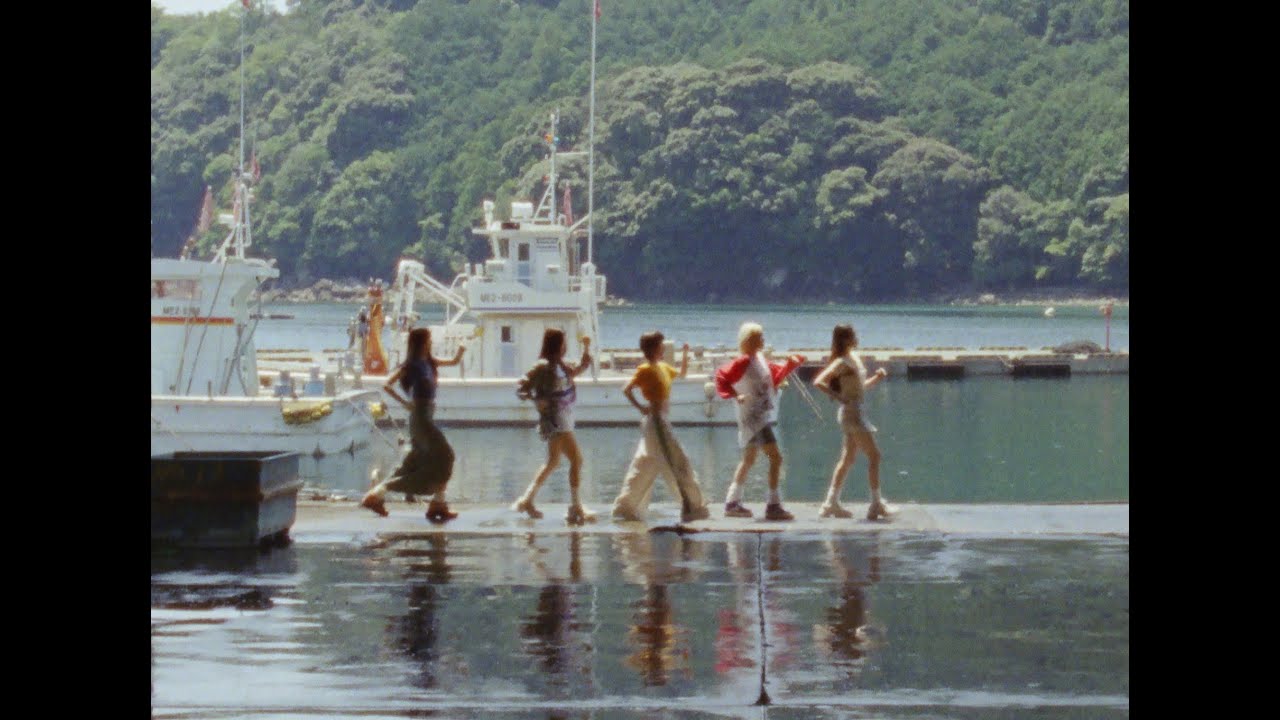
Props, movement and group interaction sell a journey rather than a destination advertisement. The women look like participants in the search, not models who have been transported to a scenic background.
The best shots preserve mess, curiosity and response. The least useful ones are the expected beauty inserts that pause the voyage to remind us a camera can find cheekbones.
What changed every time I replayed it
At first I heard bright travel music. The second watch made the emptiness line impossible to ignore. By the third, the bottle and blue-sky image felt like the song’s real answer: the dream survives as a way of seeing, not a place that can be owned.
That answer is not tidy. They may keep sailing. The point is that disappointment does not prove the childhood dream was foolish; it proves destinations cannot perform all the emotional labor assigned to them.
Where the song plays too safely
The arrangement rarely lets the uncertainty disturb its bright surface. One harmonic wrong turn or stripped-back moment could have made arrival feel stranger.
The consistency is pleasant and replayable, but the lyric contains a hole the production mostly decorates instead of stepping near.
The empty bottle holds the smartest image
Looking at blue sky through an empty bottle turns a discarded object into a tiny lens. The dream is still visible, but it has been narrowed, framed and separated from the body holding it. That is adulthood in one inexpensive prop: beauty remains available, yet access now arrives through the evidence of something already consumed.
The image also resists the idea that happiness belongs permanently to a special place. Blue exists over the island, over the sea and inside the bottle’s frame. The next destination may matter, but the ability to notice cannot be outsourced to geography.
Five women make uncertainty social instead of solitary
The group setting changes the emotional math. They are not one lonely traveler discovering the dream was false. They can compare reactions, disagree about whether to stay and keep moving together without requiring the same answer. Friendship does not solve the existential question; it prevents the question from becoming isolation.
That is where the video is warmer than the lyric’s emptiness. The island may not provide meaning, but the other people remain real. A journey can fail as a destination and succeed as shared history.
What I kept replaying
- The chorus cheerfully admitting the perfect island feels empty.
- Soyeon searching every direction while refusing to lose the stars.
- Miyeon keeping the horizon audible.
- Minnie making the blue world feel slightly unreal.
- Five different reactions to arriving somewhere that was supposed to be enough.
RaeRae verdict
“Where Do We Go” is bright enough for a travel playlist and thoughtful enough to make the destination uncomfortable. i-dle turn a dream island into a question about achievement, happiness and what remains after arrival.
The production could allow more disruption, but the conversational Japanese hook is exactly right. Nobody delivers a lecture. Five women keep moving and admit the map did not include an emotional guarantee.
Bottom line
i-dle found the dream island and asked why it felt empty. “Where Do We Go” works because its bright voyage never pretends arrival can do the living for you.