
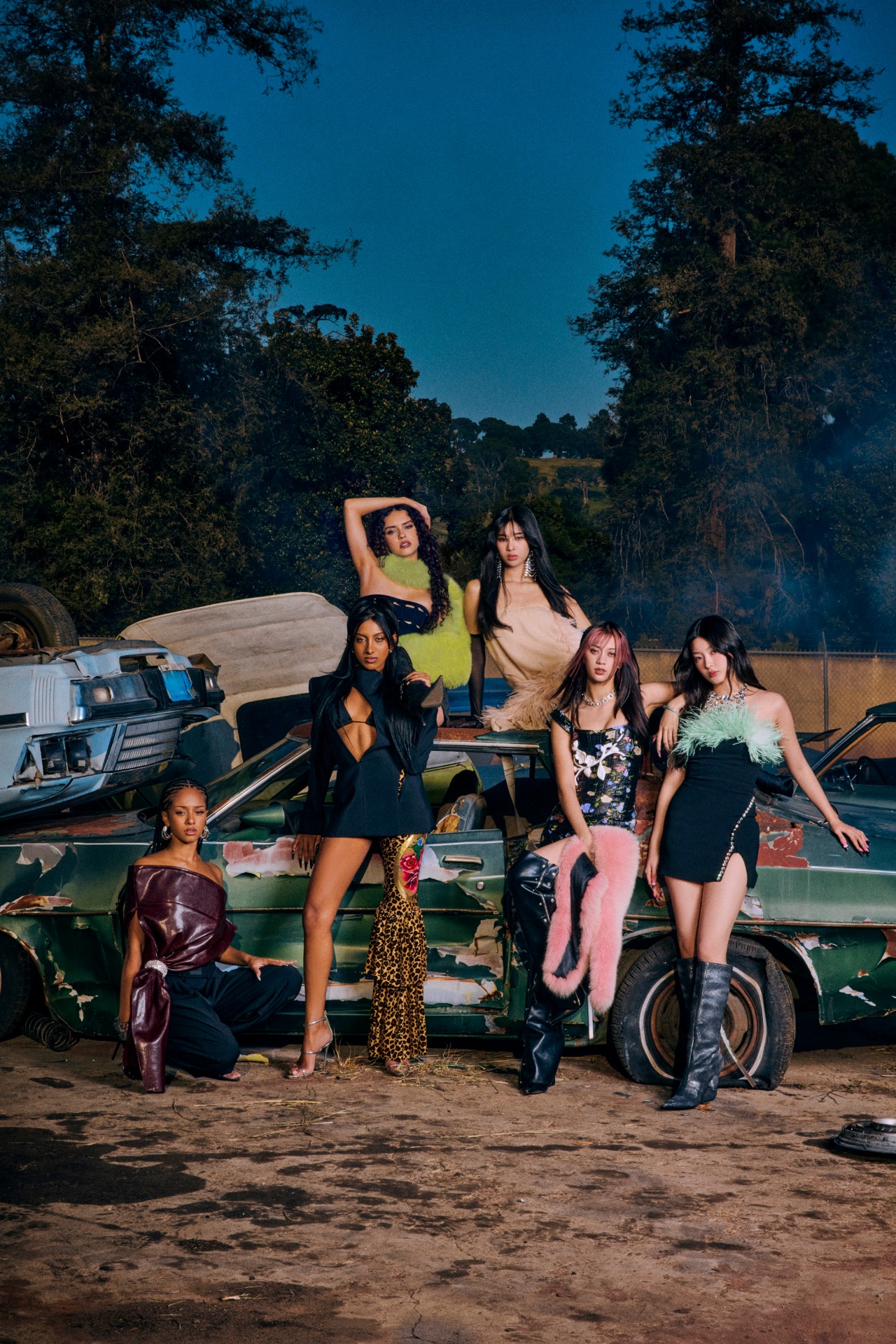
Let KATSEYE Have Fun
RaeRae Rants · KATSEYE
You can dislike “Hootie Frutti.” You can call the hook annoying, the styling loud, or the whole thing a sugar rush you never want to hear again. What you cannot do is turn six adult women having fun into a moral emergency because they stepped outside the neat little box the internet built for them.
The “Hootie Frutti” backlash
KATSEYE
era
Fun is not misconduct
I already handled the song and video on their own terms in my “Hootie Frutti” React. This Rant is about the reaction around it, because the response stopped being music criticism somewhere between “that chorus is not for me” and “these grown women need to behave according to the version of them I prefer.” Those are not the same complaint. One is taste. The other is ownership wearing a concerned-fan costume.
The complaint is not one complaint
Some listeners simply hate the song. Fair enough. “Hootie Frutti” has a hook designed to crawl into the brain, knock over a chair, and refuse to leave. The production is busy. The styling is playful and deliberately excessive. If somebody says the chorus gives them a headache, I am not sending the fandom police to their house. A song can be fun and still get on your nerves.
The problem starts when criticism jumps tracks. Suddenly the discussion is not about melody, rhythm, arrangement, lyrics, or whether the joke lands. It becomes a trial about KATSEYE’s bodies, maturity, personalities, and supposed duty to protect a fan’s preferred image of them. People start using words like “concern” while speaking over the women they claim to protect. That is not better criticism. It is control with nicer stationery.
What the hate gets right
Let us be honest before anybody accuses me of joining a group chat where criticism is illegal. The song is aggressive in its silliness. It repeats itself because repetition is the engine. The visual concept stacks color, movement, attitude, and jokes until the screen feels crowded. The line between camp and irritation is thin, and “Hootie Frutti” tap-dances on it in platform shoes.
That gives critics plenty to discuss. Does the hook earn all those repetitions? Does the production leave enough room for each voice? Does the video show personality or just keep throwing props at the camera? Does the marketing understand the difference between playful confidence and trying too hard to manufacture a viral moment? Those are real questions. They treat the work like work and the performers like professionals.
I would rather hear somebody explain why the beat loses them than watch another thread turn a dance move into evidence for a fictional criminal case. If the music is bad to your ears, say that with your whole chest and bring examples. Taste does not need a purity test.
What the hate gets wrong
KATSEYE are not children, and adulthood does not disappear because part of the audience met them when they were younger or prefers a softer concept. Fans do not get permanent custody of an artist’s image. The members can be funny, sexy, awkward, loud, unserious, elegant, or all five before lunch. Growing into a wider range is not betrayal. It is what people do when nobody freezes them inside a debut photo.
Agency still matters even inside a tightly managed pop system. Labels choose songs, budgets, schedules, and visual boundaries. That power deserves scrutiny. But label power is not proof that every wink, joke, outfit, or bit of choreography was forced. If there is evidence of coercion, mistreatment, or unsafe conditions, bring it. If the evidence is only “I would not have chosen this for them,” then the sentence needs to end there.
Concern without evidence can become its own form of disrespect. It tells adult performers that strangers understand their comfort, bodies, careers, and choices better than they do. That is a serious claim. It should require more than a screenshot and a bad feeling.
The double standard is doing cardio again
Male idols can grind into the floor, rip open a shirt, flirt with the camera, and build an entire comeback around dangerous temptation. Fans call it growth, charisma, or artistic maturity. Women show a little more personality and suddenly the internet opens an emergency committee meeting about lost innocence. The rule is not modesty. The rule is that women are allowed to change only when everybody watching feels comfortable with the change.
That double standard also punishes humor. A man being ridiculous on purpose is confident. A woman being ridiculous on purpose is accused of embarrassment, desperation, or losing class. KATSEYE’s strength has always included the fact that the members do not share one personality. Flattening them into six tasteful dolls would make them easier to market to anxious people, but it would also make them boring.
K-pop and American pop are sharing the same kitchen
KATSEYE sit inside more than one pop tradition. The group uses K-pop training, precision, rollout habits, and fandom systems while also moving through American pop’s louder relationship with humor, sexuality, individuality, and public mess. Fans arrive with different cultural rulebooks. One viewer reads playful confidence. Another reads a violation of the modesty expected from an idol. A third does not care about either debate and just wants the chorus to stop following them into the grocery store.
Those differences are worth talking about because globalization does not erase local expectations. It piles them on top of one another. East Asian ideas about public responsibility, group harmony, reputation, and respectability can collide with American ideas about self-expression and personal autonomy. Neither side becomes automatically wise just because it can name a value. Values still need context, proportion, and respect for the person living under them.
The MRT lesson nobody asked for
From my MRT, Confucian, and Buddhist-influenced lens, the useful question is not whether fans have preferences. Of course we do. The question is what happens when attachment to a preferred image turns into a demand. You can love a version of an artist without treating that version like property. Attachment becomes suffering when reality refuses to stay arranged around the picture in your head.
Relationships also come with accountability in both directions. Artists should not use “authenticity” as a shield against fair criticism. Fans should not use “care” as a shield for control. Respect does not mean constant agreement. It means remembering that the person on the screen is not a character built solely to stabilize your emotions.
Fun is allowed to be the point
Not every song needs to heal a childhood wound, expose capitalism, or arrive with a twelve-page mythology packet. Sometimes a pop song wants to make a room louder. Sometimes the artistic choice is excess. Sometimes the members want to be weird together and let their chemistry carry a concept that would collapse in less committed hands.
That kind of play has value. It reveals timing, confidence, group chemistry, and who is willing to commit to a ridiculous idea without looking embarrassed by it. A polished performance can show skill. A playful performance can show personality. Fans claim they want both until personality refuses to arrive in the exact color they ordered.
The cost of turning every release into a morality trial
Outrage trains companies to become cautious. Cautious companies make safer songs, flatter concepts, and fewer decisions that reveal anything unpredictable about the performers. Then fans complain that every comeback feels manufactured. We cannot demand personality and punish the artists every time that personality produces something messy, loud, sexual, goofy, or divisive.
The loudest backlash also buries useful criticism. Questions about the song’s structure, vocal distribution, choreography, marketing, and visual direction get swallowed by arguments about whether adult women are permitted to act like adults. Everybody loses. The company learns nothing about the craft, the members get reduced to symbols, and listeners spend three days fighting over a moral scandal that never existed.
The Cardi B defense made the scale obvious
When Cardi B publicly defended the song and described her family listening and dancing to it, that did not magically prove every critic wrong. Celebrity approval is not a substitute for taste. It did show how far the online response had drifted from the actual object. A family heard a silly pop song and had fun. The internet heard the same song and built a courtroom.
That gap is the story. “Hootie Frutti” did not need unanimous praise. It needed enough room to be judged as a song and performance before strangers turned the members into evidence for whatever argument they were already having about women, sexuality, K-pop, America, or the collapse of civilization before lunch.
RaeRae’s verdict
Hate the song if you hate it. Roast the hook. Drag the styling. Explain why the production feels crowded or why the joke dies on the third repetition. That is fandom doing criticism instead of worship.
Leave KATSEYE’s adulthood, bodies, and right to have fun out of the prosecution file. Six women did not owe the internet a purity ritual before releasing a playful song. The chorus may be guilty of overstaying its welcome. The members are not guilty of growing up where fans can see them.
Bottom line
Bottom line: Let KATSEYE Have Fun matters because the confirmed facts change how fans understand the people, work, and company decisions involved. The headline is the door; the consequences are the room.
RaeRae take
I do not need a company statement to become a bedtime story before I can read it. I need the confirmed action, the people carrying the consequences, and enough room to say when the official wording is technically clear but emotionally evasive. Fandom deserves accuracy without being ordered to stop having feelings.