
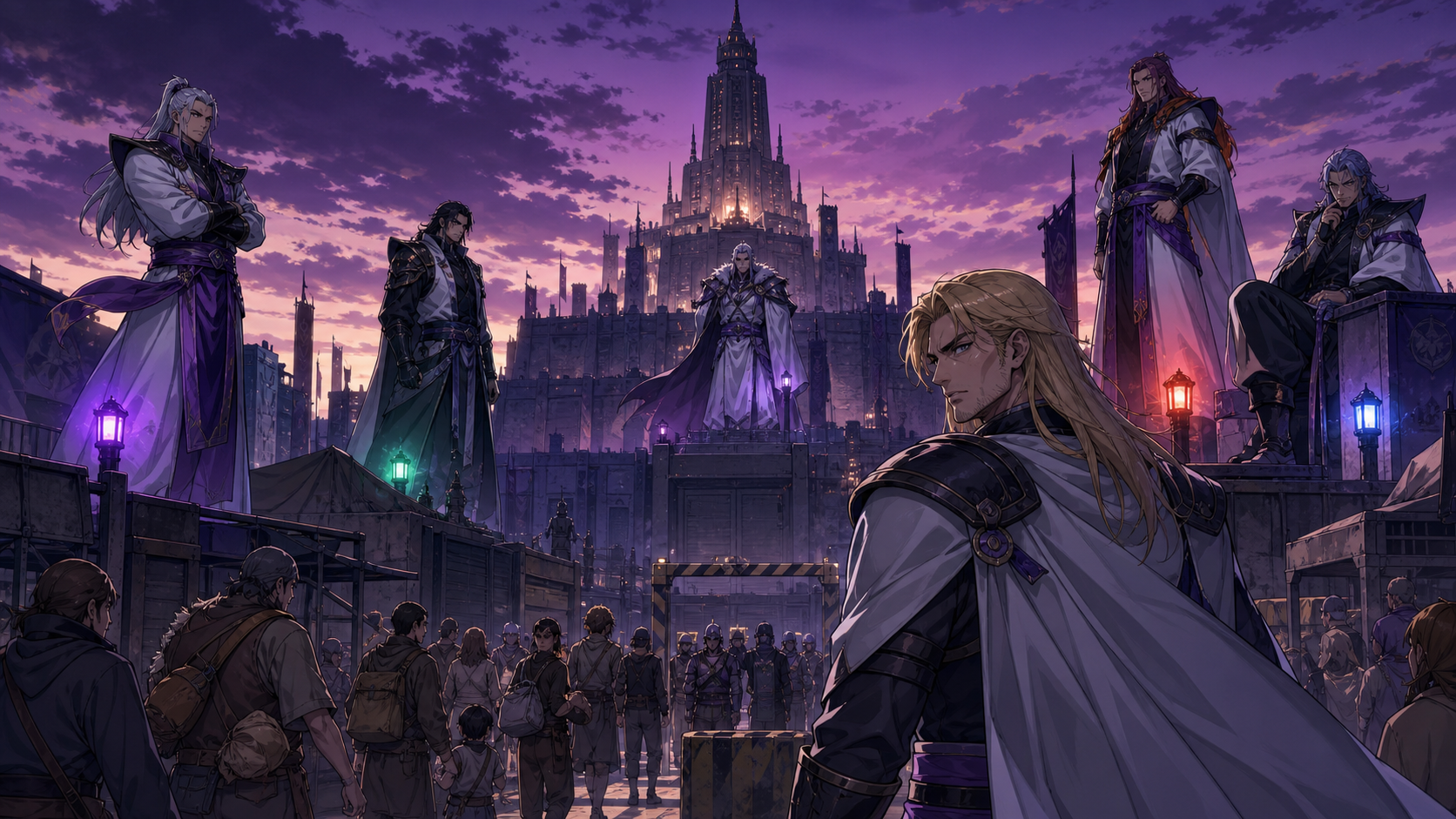
Gento Koken and the Celestial Emperor: Loyalty, Color, and State Power
Gento Koken binds five powerful guardians to the Celestial Emperor. The real conflict begins when sacred loyalty, manipulated orders, and civilian safety stop agreeing.
What Gento Koken Is
Gento Koken is the martial tradition sworn to protect the Celestial Emperor. Its practitioners weaponize destructive energy and associate themselves with distinct colors and stars, but the institution matters more than the visual classification.
The art binds extraordinary force to an office. That means every technique carries a political question: is the fighter serving a person, an idea, a bureaucracy, or the civilians whose lives justify the office?
The Celestial Emperor as Legitimacy
The emperor functions as sacred legitimacy in a world where ordinary government has collapsed. Competing factions can claim authority by controlling access to the imperial figure or the information surrounding that figure.
Sacred symbolism can unite people, but it can also insulate decisions from scrutiny. If loyalty to the emperor prevents questions about what officials do in the emperor’s name, devotion becomes a shield for abuse.
The Five Generals Are Not Interchangeable Colors
The Gento generals bring different temperaments, techniques, loyalties, and thresholds for obedience. Color coding helps viewers read the system quickly, but character appears in how each person responds when duty and evidence diverge.
A hierarchy becomes morally interesting when its members can recognize unlawful orders. Uniformity of technique does not require uniformity of conscience.
Falco and the Burden of Compromised Duty
Falco embodies the tragedy of a decent person serving a structure captured by coercion. His loyalty to the imperial order is sincere, yet sincerity can make manipulation more effective because he believes desertion will endanger the people the institution protects.
The hard question is when staying preserves life and when staying lends legitimacy to harm. There is no clean answer once civilians have been made hostages to institutional continuity.
Jakoh Governs Through Access
Jakoh’s power depends on controlling information, proximity, and fear around the imperial center. He does not need to equal the generals in martial ability if he can decide what they know and whom they believe they are protecting.
This is bureaucratic violence: the command chain turns misinformation into action while distributing responsibility across loyal hands.
Loyalty Is Not the Same as Obedience
Loyalty can require refusing an order that betrays the institution’s stated purpose. Obedience asks only whether a command came from the recognized channel.
Gento’s tragedy grows when guardians treat procedure as moral proof. A responsible protector needs evidence, proportionality, and a way to challenge authority before civilians become the cost of discipline.
Why Civilians Appear at the Checkpoint
Imperial conflict determines movement, food, work, family separation, and access to safety. Ordinary people experience doctrine as a gate, a ration line, a patrol, or a missing relative.
The guide’s artwork keeps families and workers in the foreground because government must be judged at the point where policy meets a body.
Gento Versus Hokuto Is Also a Jurisdiction Fight
When Gento and Hokuto collide, the conflict is not merely which style hits harder. Each tradition claims a form of legitimate responsibility. Hokuto centers a successor; Gento centers protection of an imperial office.
Both systems concentrate power. Their moral value depends on whether practitioners can protect people without treating tradition as permission to rule them.
The Celestial Capital Cannot Be the Whole Country
A fortified capital attracts resources, information, soldiers, and symbolic attention. Rural settlements may pay for that concentration while remaining vulnerable.
Imperial protection becomes credible only when it reaches people outside the palace’s visual field. A bright tower above a hungry road is not successful governance.
RaeRae’s Verdict
Gento Koken is fascinating because its fighters cannot pretend power is private. Their art arrives with an oath, a chain of command, and civilians affected by every interpretation of duty.
The lesson is not that loyalty is foolish. It is that loyalty without accountability gives the most conscientious people to the least conscientious officials.