
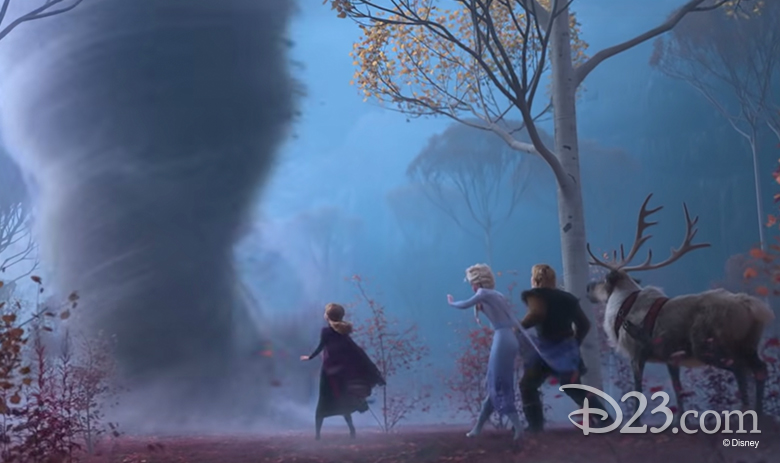
Frozen Character Profile · Air Spirit · Invisible Character · Leaves, Memory, Movement
Gale
Invisibility, object language, evacuation, play, Iduna’s rescue, air ethics, and a character performed through everything else.
Profile
| Name | Gale |
|---|---|
| Nature | Air or wind spirit |
| Form | Invisible; made visible through leaves, mist, fabric, snow, and objects |
| Home | Enchanted Forest and connected air currents |
| First appearance | Frozen II (2019) |
| Communication | Movement, arrangement, pressure, play, and delivered objects |
| Key memory | Reveals Iduna rescuing Agnarr |
| Canon boundary | Intelligent spirit, not Elsa’s commanded wind spell |
Bottom line first
Gale has no face, no stable body, and no spoken language, yet the spirit may be the most conversational element in Frozen II. Air lifts leaves into pictures, catches objects, plays with hair, pushes bodies, carries messages, reconstructs a rescue, and turns the invisible into a vocabulary everyone can see.
That playfulness should not make the force harmless. Gale helps drive Arendelle’s population from the kingdom, can lift people off the ground, and participates in a crisis rooted in historical violence. The character works because breeze and storm belong to the same being without being treated as two moral personalities.
Profile and identity
Gale is the wind or air spirit associated with the Enchanted Forest in Frozen II. The spirit has no fixed visible body and becomes legible through leaves, mist, snow, flowers, cloth, hair, sound, and objects carried in moving air. Official materials use the name Gale.
The film does not assign a voice actor, biological sex, conventional age, permanent pronouns, or a single physical location. Some official descriptions use feminine pronouns, while screen dialogue and subtitles may vary by language. The profile uses the name when pronoun certainty is unnecessary.
Dashboard: confirmed and unknown
Confirmed: Gale embodies air, helps evacuate Arendelle, pulls Elsa and the others into the forest, plays and communicates through objects, reconstructs the image of Iduna rescuing Agnarr, carries Olaf’s message, and calms after the historical wrong is repaired.
Unknown: whether Gale can read thoughts, travel anywhere in the atmosphere, speak directly to other spirits, remember every event carried by air, or choose a stable form. The spirit shows intelligence and selective communication without a published power ceiling.

The first spirit to touch Arendelle
Air changes before the other elements become visible. Wind removes fire, moves water, shakes buildings, and pushes people toward evacuation. Gale’s action makes the natural crisis immediate inside streets and homes rather than confining magic to the distant forest.
The sequence is frightening but organized enough to move citizens out rather than trap them. Whether the spirits intend protection or simply force displacement is not explained. Consequence and rescue can overlap without a human-style plan.
Evacuation as violence and protection
Being pushed from home by elemental force is traumatic. Arendelle’s people lose shelter, certainty, and control. At the same time, the evacuation removes them before deeper crisis unfolds. Gale’s action may prevent casualties while making displacement unavoidable.
The ambiguity reflects real disaster. Wind can warn, destroy, clear smoke, spread fire, and carry weather. Calling every force benevolent would deny harm. Calling every force hostile would deny the lives protected by movement.
Why air is difficult to personify
Fire can become a salamander, water a horse, and earth a giant body. Air resists a fixed outline because visibility would make the element seem like an object moving through space rather than the moving medium itself. The film chooses traces instead of anatomy.
That decision requires audiences to infer character from timing. A leaf pauses, a cloak lifts, a braid moves, and an object lands in the right hand. Intention appears through choreography rather than eyes.
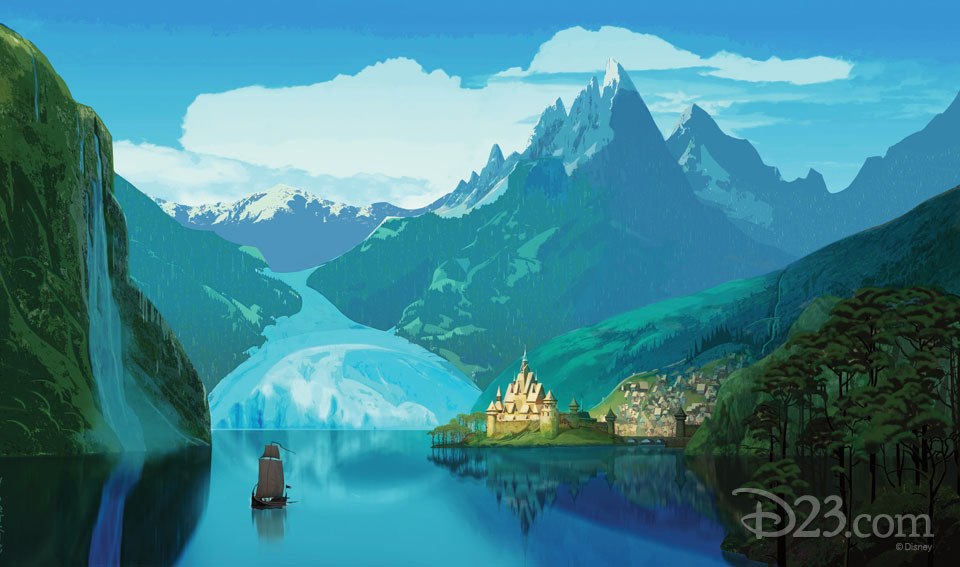
Leaves as a visible body
Copper leaves collect inside Gale’s currents, creating spirals, arrows, outlines, and playful bursts. They allow the camera to frame direction and scale while preserving the spirit’s invisibility. The body is temporary and made from whatever the air can carry.
Leaves do not become Gale in a biological sense. They are evidence of movement and a shared visual tool. When they fall, the spirit does not die. Form remains event rather than container.
Object language
Gale communicates by selecting, lifting, arranging, and delivering objects. Iduna’s scarf, family figures made from snow or leaves, and Olaf’s message gain meaning through placement. The spirit turns material context into syntax without speaking human words.
Object language is powerful and risky. Meaning depends on interpretation. A viewer can mistake coincidence for intention or reduce a complex event to one symbolic arrangement. Gale’s intelligence becomes clearest when repeated responsive timing rules out random breeze.
Relationship file: Elsa
Gale challenges Elsa at the forest entrance, lifts and spins the group, then shifts into playful interaction after she uses ice to reveal patterns. Elsa learns to make the invisible visible without trapping it permanently. Their magic becomes a shared drawing surface.
The spirit later helps uncover family history and remains near Elsa after balance returns. Friendship is plausible, but ownership is not. Air touches everyone and cannot be assigned to one queen’s shoulder.
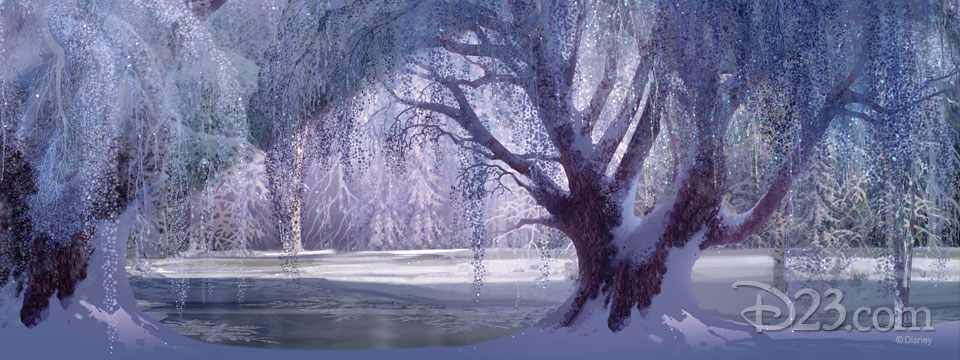
The ice sculptures in the wind
Elsa freezes fragments of Gale’s moving currents into temporary sculptures that capture figures from the past. The technique externalizes memory stored or carried within the enchanted environment. Ice gives still form to motion long enough for humans to examine it.
This is collaboration only if freezing does not harm the spirit. The film frames Gale as engaged rather than trapped, but the exact mechanism is never explained. Elsa’s power functions as translation, not a cage, because air continues moving around the frozen evidence.
Relationship file: Anna
Anna experiences Gale first as destabilizing force and later as playful guide. The spirit interacts with her body, hair, clothing, and family memory without granting the direct elemental bond Elsa receives. Anna still reads the clues and acts on the truth they help reveal.
After becoming queen, she governs a kingdom whose air spirit cannot be legislated like weather equipment. Policy must respect nonhuman agency even when no treaty can be signed in ink.
Relationship file: Olaf
Olaf’s talkative curiosity gives Gale a responsive playmate. The spirit can rearrange him, carry his voice or message, and answer physical comedy without needing dialogue. Both characters make invisible ideas visible through unusual bodies.
Gale later delivers Olaf’s message to Elsa or participates in its movement, showing communication across distance and crisis. The spirit becomes messenger without becoming servant. Carrying one message does not imply permanent postal duty.

Relationship file: Kristoff
Kristoff is swept into the forest encounter with everyone else and receives less focused interaction from Gale. His practical response centers protecting people and understanding direction rather than interpreting elemental identity.
The limited relationship is meaningful evidence against overclaiming. Not every main character becomes close to every spirit. Shared adventure does not automatically create a personal bond.
Relationship file: Sven
Moving air affects Sven as weather, scent, sound, and physical force. The film does not give Gale and Sven a documented friendship, but a reindeer’s sensory world may perceive wind differently from human characters.
That possibility remains inference. A profile can identify the sensory connection without writing private animal-spirit dialogue the screen never supplies.
Relationship file: Iduna
Gale reconstructs or helps reveal the moment young Iduna uses air, cover, and courage to save Agnarr during the battle. The spirit’s relationship to that rescue is visually intimate. It carries the children away from danger and preserves evidence of who acted.
The feature does not fully specify whether Iduna commands Gale, receives spontaneous help, or works with a spirit already choosing rescue. The moment supports connection without proving she possessed elemental power like Elsa.

The rescue memory
Elsa and Anna learn that their mother was the Northuldra girl who saved their father. Gale’s reconstruction gives a hidden family event public form. The clue changes Iduna from silent royal mother into active child inside the historical conflict.
Memory through air differs from Ahtohallan’s water archive. Gale offers an image sufficient for recognition, not a complete transcript. The sisters still need other evidence to understand Runeard and the dam.
Relationship file: Agnarr
Young Agnarr is unconscious or disoriented during his rescue and grows up without knowing Iduna’s identity. Gale carries the event that his own memory cannot. Air becomes witness where the surviving human lacks access.
The spirit does not correct Arendelle’s history during Agnarr’s reign, at least not in a way the film shows. Witness alone does not guarantee institutions will listen. Evidence needs conditions in which it can be received.
Relationship file: the Northuldra
Northuldra people recognize air as one of the four spirits and live with the signs of Gale’s movement. The feature does not identify one human owner, priest, or controller. Cultural knowledge operates through coexistence and interpretation.
Gale’s playful response to Elsa should not erase decades of Northuldra relationship. The protagonist discovers a spirit inside a community’s world, not an unclaimed magical friend waiting for royalty.
Relationship file: Bruni
Air can spread or shape fire, making Gale and Bruni ecologically connected. During crisis, both become active and dangerous. The film does not show a detailed coordinated attack or canon hierarchy between them.
Their connection demonstrates why elemental systems cannot be analyzed as separate character boxes only. Wind changes flame behavior, while fire changes air through heat and smoke. Relationship exists even without conversation.
Relationship file: the Nokk
Air drives waves and weather over the Dark Sea, while the Nokk embodies water. The feature focuses the sea encounter on Elsa and the water spirit rather than showing Gale traveling with her. Each threshold retains distinct agency.
Absence matters. Gale begins the journey and helps reveal family truth, but does not provide safe passage to Ahtohallan. One trusted spirit cannot grant authority over another.
Relationship file: the earth giants
Wind moves around the enormous stone bodies and can carry sound or scent toward them, but the film gives no direct personal exchange. Both forces wake within the same unresolved crisis and later calm after repair.
Scale contrast reinforces Gale’s design. Earth occupies mass; air occupies every gap around mass. Invisibility is not lesser power.
Play as communication
Gale tosses leaves, touches hair, spins objects, and engages with Olaf in ways that read as play. Play establishes curiosity and responsiveness without requiring human language. It also lets characters test whether the spirit remains hostile after the entrance conflict.
Play should not be mistaken for permanent harmlessness. The same air can lift bodies and force evacuation. Emotional range belongs to nature without moral contradiction.
The danger of being lifted
During the forest confrontation, characters lose footing and bodily control. Falling objects, branches, panic, and separation create real risk even when the sequence resolves through spectacle. Gale’s force is not gentle simply because leaves make it beautiful.
A spirit can intend communication and still endanger bodies more fragile than air. Elsa’s ice helps create structure inside motion, turning uncontrolled exposure into something readable.
Pronouns and the invisible character
Official materials have sometimes described Gale with feminine language, while the name and screen presence do not establish human gender. Fans use she, he, they, or the name according to source and preference. Translation adds further variation.
The responsible approach is transparency. Using “Gale” avoids unnecessary certainty, and noting official usage prevents the page from pretending ambiguity does not exist. Invisibility should not become an excuse to assign whatever identity best fits a stereotype about wind.
The name Gale
A gale is a strong wind, making the official name descriptive in English. It provides personality and searchability while preserving the absence of a face. The film does not stage a self-naming scene or explain whether Northuldra people have used the term for generations.
A descriptive name can still function personally when characters address and recognize a consistent intelligence. Language meets the spirit halfway without claiming complete translation.
Messenger without servant status
Gale carries information between separated characters, including objects or fragments of communication associated with Olaf. The ability makes the spirit useful to the plot, but usefulness should not define permanent role.
Air moves messages because movement is part of its nature, not because Arendelle established a delivery service. Future stories should show refusal, redirection, and self-initiated communication so messenger does not become magical labor assignment.
The parents’ shipwreck clues
Gale helps move the group toward evidence tied to Agnarr and Iduna’s final voyage, though water memory and physical wreckage supply much of the discovery. Air participates by guiding, uncovering, or carrying objects through the environment.
The film distributes investigation across elements. No single spirit narrates the answer. The sisters assemble truth from movement, wreckage, water images, scarf, and Ahtohallan.

Air as witness
The idea that air remembers stretches ordinary physics into fairy-tale archive. Breath, sound, weather, and movement pass through every event, making wind an evocative witness even when it cannot preserve a human-style recording.
The film does not publish a rule that Gale remembers everything everywhere. Selective evidence appears within enchanted space. A profile should resist turning poetic memory into unlimited surveillance.
Privacy and omnipresence
An air spirit capable of entering rooms and carrying sound raises privacy questions the film never addresses. Invisibility and movement could make Gale an ideal spy if human rulers tried to assign that function. Nothing onscreen suggests the spirit accepts such use.
The ethical boundary is important after Elsa and Anna gain trust. Relationship should not become access to everyone’s breath, speech, or home. Nature’s presence is not royal permission to surveil.
Air pollution and harm
The sequel centers a dam rather than smoke, industrial pollution, or respiratory illness, but personifying air invites those connections. Human systems can burden atmosphere far beyond what one spirit can playfully rearrange. Clean air is shared necessity rather than scenic luxury.
Gale should not be treated as magical cleanup for future development. The bridge ethic requires humans to change harmful practices instead of expecting spirits to absorb consequences.
Storm, weather, and climate readings
Wind responds to pressure, temperature, terrain, and larger atmospheric systems. Gale’s activity during imbalance can support climate readings without making the film a literal meteorological model. The spirit expresses disrupted relationship through weather-scale force.
Contemporary audiences recognize evacuation, extreme wind, wildfire spread, and infrastructure failure. Editorial analysis can name that resonance while keeping Runeard’s specific crime and the fantasy system visible.
Breath and life
Air is the element every human body needs continuously, making an air spirit both intimate and impossible to possess. Characters cannot stand outside Gale’s domain even when the spirit is not visibly active. Breath turns elemental balance into bodily dependence.
The film uses motion more than respiration imagery, but the association deepens the politics. A kingdom can wall land and dam water, yet no border fully contains air. Interdependence defeats fantasies of sealed sovereignty.
Wind, music, and the call
The sequel begins with a melodic call only Elsa hears clearly, while wind and movement pull her toward a history beyond the castle. Gale is not identified as the singer, and the film later connects the voice to Ahtohallan and Iduna. Air still carries every heard note between source and listener.
That distinction prevents an easy mistake. The spirit can transport sound without originating it, just as a messenger can carry words without authoring them. Music makes air emotionally present while keeping separate the identities of Gale, the call, and the memory guiding Elsa.
Seeds, pollen, and futures beyond the frame
Wind moves more than dramatic leaves. It carries seeds, pollen, moisture, scent, spores, heat, and the conditions through which forests reproduce. The film does not turn Gale into a botanical lecture, but the elemental role extends naturally from spectacle into continuity of life.
Post-dam recovery would depend on that quiet movement. Water returns, soil shifts, plants recolonize, and air connects damaged spaces. A future story could show Gale participating in restoration without reducing the spirit to magical cleanup ordered by humans.
Human names for forces that predate humans
“Gale” is useful because characters and audiences need a stable word for a recurring intelligence. The force itself predates Elsa’s investigation and may predate every human institution in the story. A convenient English noun should not imply humans created the identity they named.
The same humility applies to analysis. Naming lets us discuss relationship, not finish translation. Gale can remain partly unknowable without becoming empty. Mystery is clearly a boundary around human certainty, not a substitute for evidence.
Animation without a body
Animators build Gale through secondary motion: leaves, fabric, hair, snow, dust, petals, branches, mist, and character reactions. Timing must establish a consistent intelligence when no face can supply eye line or expression. Every moved object becomes performance.
The technical challenge turns absence into style. A visible humanoid would be easier to stage and less faithful to air. Character design resides in choreography rather than model sheet anatomy.
Sound without a voice actor
Wind tone, whistles, rustle, impact, silence, and music create Gale’s audible presence. The spirit can feel playful or threatening through sound density and direction. No single credited vocal performance owns the character.
Like the Nokk, Gale emerges from collaboration among effects, Foley, score, animation, editing, and actors responding to empty space. Performance is distributed across departments.
Merchandising an invisible spirit
Gale is harder to turn into a plush toy than Bruni or the Nokk. Products use leaf swirls, symbols, translucent stands, printed graphics, or accessories. Commercial visibility therefore favors spirits with stable cute bodies.
That imbalance can shape fan memory more than screen importance. Gale initiates major plot movement and reveals family history, yet may receive less shelf space. A directory profile restores narrative weight that merchandising cannot easily package.
Games and mechanical visibility
Games often need a selectable icon, spell effect, summon animation, or fixed ability. Gale may become a gust power, leaf vortex, movement boost, or environmental puzzle. Mechanics turn relational ambiguity into repeatable control.
Those adaptations can be fun while changing agency. A button-triggered wind effect is not proof that Elsa canonically commands Gale at will. Medium rules belong to their branch.
What the film gets right
The film refuses to give air a convenient face, makes invisible action readable, allows play and danger to coexist, and uses object language to reveal emotionally important history. Gale feels like a character without becoming a human in transparent clothing.
The spirit also makes Elsa’s magic interpretive. Ice can hold a moment long enough to see, while wind remains free to move on. Translation does not require permanent capture.
What the film leaves unfinished
Gale receives no origin, no independent goal after repair, limited direct Northuldra relationships, and no clear boundary around message carrying or memory. Invisibility makes it easy for the screenplay to deploy the spirit whenever movement is needed without accounting for choice.
A continuation should let Gale initiate a message, reject a request, or communicate something humans misread. Character grows when translation can fail.
What Wikipedia has that this page must exceed
The encyclopedic floor includes air-spirit identity, invisibility, leaf and object manifestation, Arendelle evacuation, forest encounter, Iduna rescue reconstruction, message carrying, and continued peace after the dam falls. Official name and pronoun usage require source care.
CVM Sekai adds embodiment theory, object language, consent, privacy, air pollution, climate resonance, distributed performance, merchandising difficulty, adaptation mechanics, and the distinction between messenger partnership and assigned magical labor.
Future file
Gale should receive a story where air communicates something nobody can reduce to a picture immediately. Misinterpretation would force Elsa, Anna, and Northuldra characters to listen across different knowledge systems rather than assuming every leaf arrangement exists for royal clarity.
The spirit also deserves ordinary play beyond plot service. Seasonal migration, seeds, scent, music, weather, and community ritual can reveal why air belongs in life after crisis.
Artwork responsibility
The featured artwork is original CVM Sekai fan art designed for a wide hero and directory crop. It shows Gale only through lavender mist, copper leaves, petals, and bent trees under moonlight, preserving invisibility rather than inventing a face or humanoid body.
Local metadata records generation source, alt text, rights note, and lack of Disney endorsement. The same attachment serves featured image, hero, and future card, giving an invisible character a consistent visual signature without falsely fixing anatomy.
Sources and certainty
Primary evidence includes Frozen II, official Disney character material, published credits, and attributable production sources about elemental design and effects. Environmental context should come from reliable scientific references when used beyond interpretation.
Pronoun, privacy, climate, and agency discussions remain transparent analysis. The profile does not claim omnipresence, mind reading, a fixed body, or unlimited memory because the film never demonstrates those powers.
The final read
Gale proves that a character does not need a face to have timing, humor, danger, preference, memory, and relationship. Air becomes visible only through what it touches, which makes every interaction an argument against isolation. Nobody moves alone when the atmosphere moves too.
The leaf swirls are charming. The evacuation is not. The spirit carries both meanings without apology. Elsa’s task is not to catch the wind. It is to learn when movement is warning, play, evidence, or invitation, and to keep listening after the leaves fall.
Frozen coverage
Return to the Frozen hub for every character, review, React, rant, and guide.