
RAERAE REACTS · BABYMONSTER · DANCE PERFORMANCE
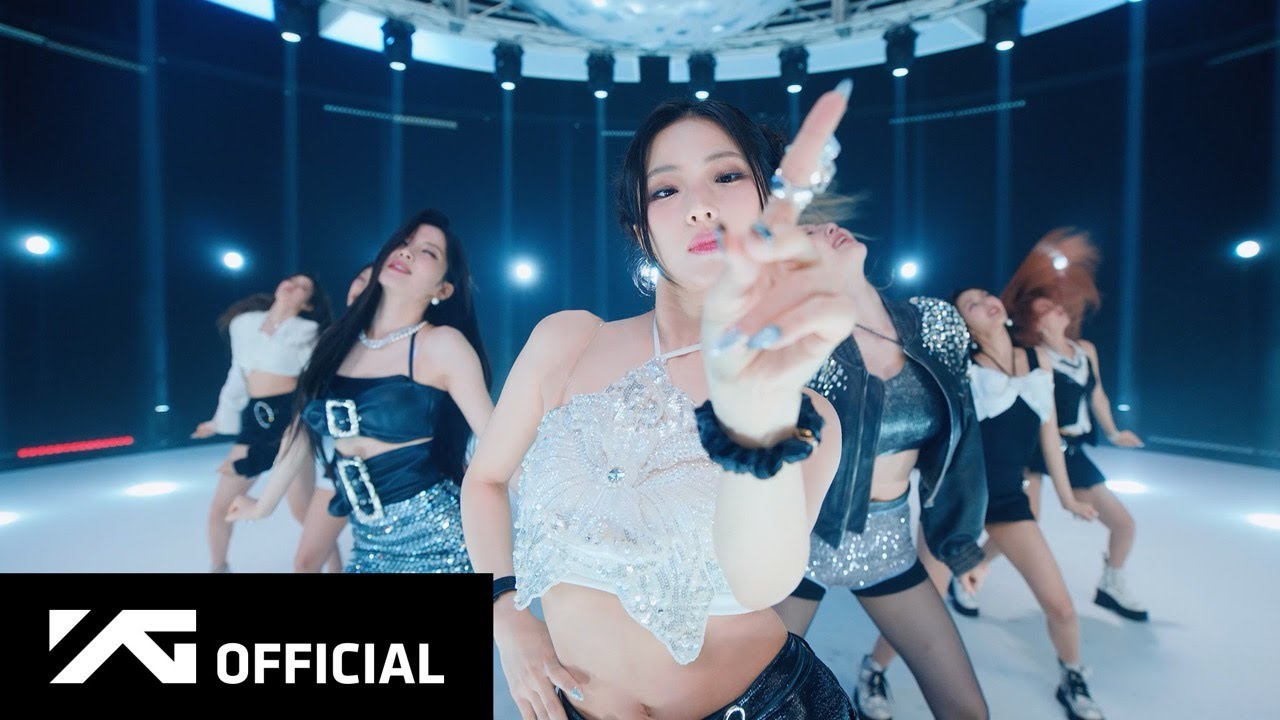
BABYMONSTER FOREVER Dance React: Keep the Moon, Clear the Runway
Bottom line: The “FOREVER” dance-performance video proves the main music video was hiding the song’s full body behind boutiques, hotel rooms, wire rigs, and a very committed moon prop. Once the runway clears, seven different dancers turn bright synth-pop into lanes, handoffs, open shapes, grounded breaks, and one CHIQUITA section that changes the room temperature. The camera occasionally becomes an eighth member nobody invited, but the choreography survives it.
BABYMONSTER
July 5, 2024
FOREVER
All seven members
tDt7X6coxvs
Moon retained. Camera gently reprimanded.
Watch first
My first watch
First thought: Keeping the moon was correct. Every other prop was delaying the runway from becoming a launch strip.
First formation I noticed: Seven members create long lanes, split into smaller units, then reassemble without making the center look glued to one person.
First member moment: CHIQUITA reaches the dance break and the sunny song remembers “monster” is still half the group name.
First technical note: Broad arm lines make the chorus feel larger while lower, percussive movement gives the break its necessary weight.
Immediate side-eye: The camera and lighting are active enough to request their own photocards. I need both to sit down long enough for me to count feet.
Replay status: I watched again for RAMI’s center control, the ASA-to-CHIQUITA handoff, and the small corrections that keep seven bodies from becoming traffic.
What changed every time I replayed it
The first replay made the chorus readable. In the main music video, location changes and close-ups sell the release’s luxury fantasy. Here, the wider runway reveals how the chorus actually travels. The members use extended arms and open shapes that reach beyond the torso. The title promises endless motion, so the choreography avoids folding inward. Even when feet remain planted, upper bodies keep sending energy toward the edges of the frame.
The second replay belonged to the transitions. Seven-member choreography can look balanced in a screenshot and chaotic two counts later. “FOREVER” keeps building lanes, breaking them, and returning to a group picture. Members pass through center rather than owning it permanently. The routine uses walking as choreography because the runway concept makes a directional change feel intentional instead of like somebody rushing to her next mark.
The third replay made the ASA-to-CHIQUITA handoff the structural hinge. ASA’s rap sharpens the rhythm, then CHIQUITA receives that stored energy in the dance break. The performance does not reset between their moments. One member’s phrasing launches another member’s body. That choice is smarter than cutting every member’s killing part into a separate highlight clip.
By the fourth replay, RAMI became the quiet center of the group picture. She is not always framed as the loudest dancer, but her weight stays controlled and her pathways remain clean. The making material shows her monitoring group positions. Once you know that, the finished performance reads differently. Her contribution includes the dance she performs and the formation she helps everybody else protect.
Why the runway earns a separate React
A performance video should not exist merely because labels know fans will stream another upload. It should reveal information the music video withholds. This one does. The main video shows fashion, attitude, wire work, hotel chemistry, and visual access. The dance film clears most of that away while preserving the moon and runway, then lets spacing, posture, timing, and member relationships explain the song.
The runway is useful because it already contains choreographic rules. Walk, claim the center, turn, release the space, and leave without looking dismissed. Fashion presentation teaches the audience to track confidence through posture. The routine converts those rules into group movement. Individual members step forward, establish a texture, and return to the formation without shrinking.
Black outfits give the opening more severity, while the colorful second system releases the song’s summer mood. Lighting changes make the same set feel like a fashion hall, nightclub, and outdoor night stage. The production is not neutral, but it stays connected to the choreography instead of inventing an unrelated concept.
The chorus and dance break speak different body languages
The chorus uses broad arm extensions, open chests, and shapes that send energy outward. It feels expansive. That matches lyrics about refusing to stop and pursuing a self-directed future. The body does not protect itself. It occupies more room.
The dance break pulls energy lower. Movement becomes more percussive, weight drops, and the rhythm feels closer to the floor. Instead of reaching for a distant horizon, the dancers turn their bodies into the beat. The shift prevents “FOREVER” from becoming one long pleasant runway walk.
BABYMONSTER needs sweetness and threat to coexist. The chorus carries the baby. The break lets the monster check the lighting. That contrast is not a joke pasted onto the group name. It is the routine’s most important design choice. Bright pop remains interesting because the choreography remembers where friction lives.
How seven dancers carry the same song differently
Grounded steps and relaxed shoulders keep the rap transitions from looking pasted onto a bright pop routine.
Long, clean lines suit the runway while her controlled finish prevents elegance from becoming passivity.
Small rhythmic details stay sharp. Her section creates the launch point for CHIQUITA rather than hoarding attention.
Torso attack and facial pressure give the glossy arrangement enough weight to avoid floating away.
Centered movement and formation awareness. She performs the picture and helps maintain it.
Smooth transitions and uncluttered lines let the melody breathe through the choreography.
The dance-break contrast belongs to her. Fear existed in rehearsal; the finished body refuses to confess.
The best group choreography does not force seven people to look identical. It gives them one timing system and allows different weights, textures, and expressions inside it. RUKA’s grounded ease should not look like PHARITA’s extension. ASA’s rhythmic precision should not look like AHYEON’s attack. RORA’s smoothness should not be judged by CHIQUITA’s sharpness. Unity means shared intention, not copied personality.
This is where fandom conversation often gets lazy. People rank dancers by counting who hits hardest, bends lowest, or occupies center longest. Hardness is one tool. A formation also needs people who smooth pathways, maintain distance, finish lines, absorb transitions, and adjust without broadcasting the correction. Group performance is a relationship problem before it is a solo competition.
The formation mechanics underneath the fantasy
The runway allows forward motion to read as concept rather than repositioning.
Attention moves with the song section instead of becoming one member’s permanent property.
Arms and chests send energy outward to match the song’s forward-looking claim.
Lower weight and sharper rhythm create contrast without changing the set.
Seven bodies become readable in pieces before the whole formation returns.
One member’s rhythm launches the next member’s spotlight, especially ASA into CHIQUITA.
The spacing is more demanding than the glamorous set suggests. A long horizontal environment exposes unequal gaps. If one person travels half a step too far, the group picture leans. If a center handoff starts late, the next member looks as if she is invading rather than arriving. The routine keeps those risks visible enough to respect the labor.
Because the members vary in height, line length, and movement weight, symmetry cannot depend on identical silhouettes. The choreography uses intention and timing to create balance. This is why position checks matter. A formation can be mathematically correct and still look uneven if bodies finish shapes at different emotional volumes.
The camera helps until it does not
The lighting and moving camera add scale. A performance film should feel like a film, not security footage from dance practice. Close-ups also protect member identity and let facial performance remain part of the analysis. The problem begins when the edit interrupts a formation before the audience understands it.
Wide shots provide information: spacing, synchronization, pathways, level changes, and who is supporting the center. Close shots provide intensity: eyes, expressions, hand detail, and relationship to the lens. “FOREVER” occasionally chooses intensity too early. We feel energy but lose the exact mechanism producing it.
That is why I am filing a polite complaint. The camera does not need to become motionless. It needs to recognize when choreography has made a complete sentence. Let the sentence finish, then cut. A viewer can admire a face and still deserve to know where everybody’s feet went.
Rehearsal labor is the real behind-the-scenes story
YG’s performance-making report shows members monitoring positions, exchanging feedback, and encouraging difficult sections. RAMI checked formation details. CHIQUITA worried about the dance break. The finished video hides both facts because confidence is the product.
I do not read CHIQUITA’s worry as evidence that she was unprepared. Worry means she understood the responsibility. A dance break isolates the body at the moment the song expects escalation. If it looks timid, the whole routine loses its final contrast. Member encouragement helped her complete the section, and the final film gives no evidence of fear.
That is the interpersonal story the polished video cannot show. Confidence is not always generated inside one person. Sometimes a group lends it. People check your spacing, tell you the section works, repeat the count, and remain beside you until your body stops arguing. The final fearless image belongs partly to that relationship.
What the choreography says about freedom
The song frames freedom as forward motion. The routine makes that idea collective. Nobody escapes alone. Seven people travel, split, reunite, release center, and preserve enough space for the next person. Individual confidence works because the group keeps the pathway open.
That matters from a relational and Confucian lens. Western pop often sells freedom as independence from everybody. A group performance demonstrates another possibility: autonomy inside responsibility. Each member must own her movement while honoring timing, distance, and shared form. The collective does not have to erase the individual. It can create the conditions that make individual risk possible.
A Buddhist lens makes the runway useful too. Center is temporary. Every member enters it and leaves it. Clinging to the spotlight would break the choreography. The routine works because attention moves. Nobody owns the center permanently, and release is part of the performance rather than proof of defeat.
My military brain recognizes the formation logic. Shared timing, clear lanes, rehearsed handoffs, and position checks create freedom of movement. Discipline is not the enemy of freedom when the discipline serves a shared purpose and adapts to actual bodies. The dangerous version demands uniformity for its own sake. This routine needs coordination, not erasure.
What I love
I love that the performance keeps visual continuity with the main video instead of dumping the members into an unrelated practice box. I love the moon because it is ridiculous, recognizable, and useful. I love the open chorus shapes, the lower break, the shifting center, and the way ASA’s rhythm launches CHIQUITA.
I especially love the evidence of members helping one another. RAMI’s formation monitoring is less flashy than the dance break, but it is one reason the break can arrive inside a coherent group picture. Performance culture often celebrates the person at center and ignores the people protecting the frame around her. This video rewards both if you know where to look.
What I side-eye
The moving camera sometimes hides the very choreography the upload exists to display. A performance video should not force viewers to find a fixed-cam version before understanding the formation. Production value and readable movement can coexist.
The routine also relies on broad confidence gestures that appear in many idol performances. Extended arms, runway walks, direct stares, and center claims work, but they are not automatically specific to “FOREVER.” The dance break and member handoffs provide the release’s strongest identity. More motif development around the moon, endless travel, or looping pathways could have made the choreography even more song-specific.
I also want longer uninterrupted attention on PHARITA and RORA. Smooth dancers often look less dramatic because their work removes friction. The edit rewards attack more easily than control. A wider held frame would make their contribution clearer.
Facts, credits, and interpretation boundaries
| Artist | BABYMONSTER |
|---|---|
| Original song | FOREVER |
| Performance video | July 5, 2024 |
| Choreography | Jo Nine, Chae Dasom, Bada Lee, Kyle Hanagami, and collaborators |
| Lyrics | BLVSH, CHOICE37, Sonny, LIL G, LP, MASTA WU |
| Composition | CHOICE37, LP, BLVSH, Sonny, LIL G |
| Arrangement | CHOICE37, LP, YG |
Verified fact: The official dance-performance video was released on July 5, 2024 with all seven members. YG’s reports document the full-dance release, performance production, member position checks, and encouragement around the dance break.
Visible evidence: The film uses the moonlit runway set, two major outfit systems, traveling formations, open chorus shapes, member handoffs, and a lower, sharper dance break.
RaeRae reading: I interpret the runway as a structure for passing center and the choreography as collective freedom built through shared discipline. Those conclusions come from movement and rehearsal evidence. They are not claims that the choreographers published one official symbolic explanation.
The verdict
This performance video adds the one thing the main music video deliberately withholds: the full body of the song. The moon and runway preserve the fantasy, but the cleared space shows how much contrast the routine needs to keep bright dance pop from becoming wallpaper.
CHIQUITA’s break is the obvious replay. RAMI checking positions is the quieter reason the full picture works. RUKA, PHARITA, ASA, AHYEON, RAMI, RORA, and CHIQUITA do not dance “FOREVER” with identical weight, and the routine is better because of it.
Keep the moon. Clear the runway. Ask the camera to hold the wide shot for eight more counts.
Keep digging
BABYMONSTER profile · FOREVER main React · More RaeRae Reacts
Sources
 BABYMONSTER: “FOREVER” dance-performance videoDaily+23.9KTotal views76M
YG Entertainment: full-dance announcement
YG Entertainment: performance-video release report
YG Entertainment: performance-making report