
Fairy Tail Story Arcs
Fairy Tail is not one endless brawl with friendship speeches sprinkled on top. Each route changes what the guild thinks it owes its members, its city, and the people hurt by its mess.
Finished arc guides appear as static image cards with Read More. Unfinished routes stay non-clickable until their full pages pass QA.
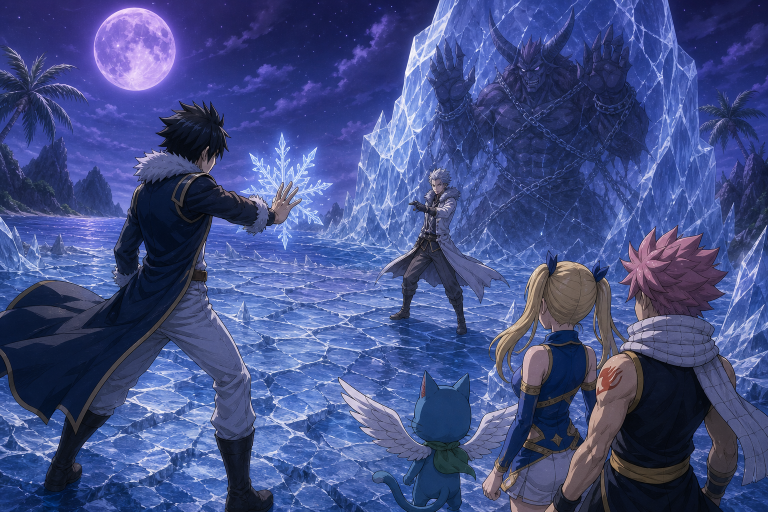
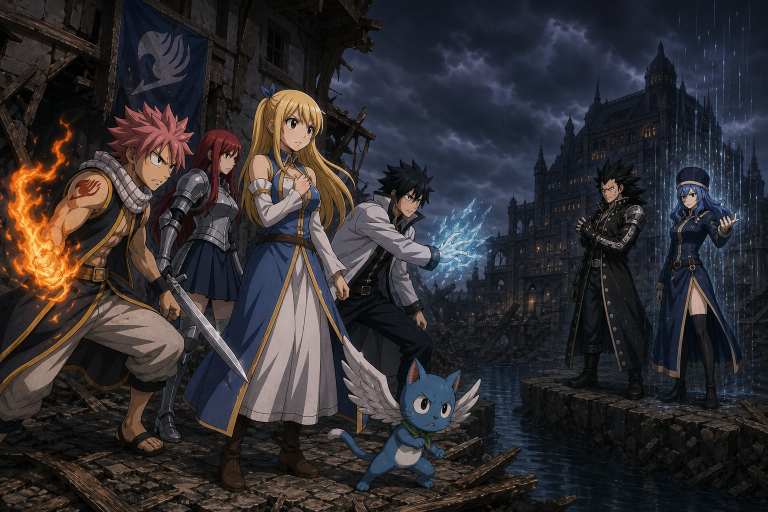
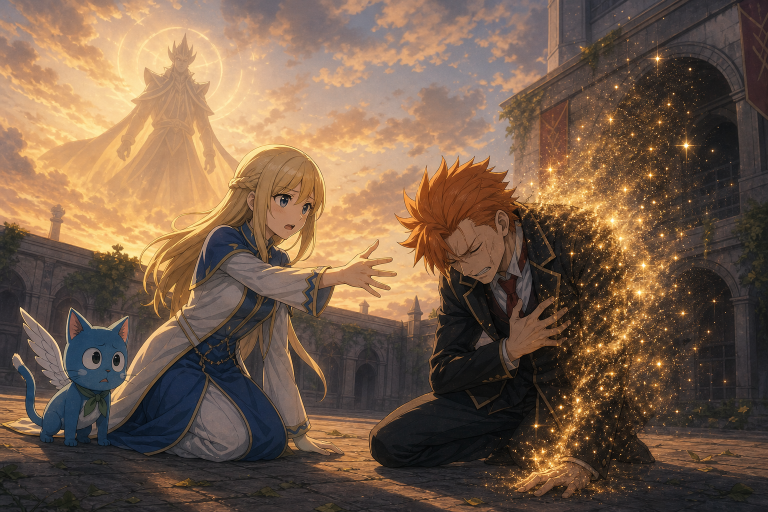
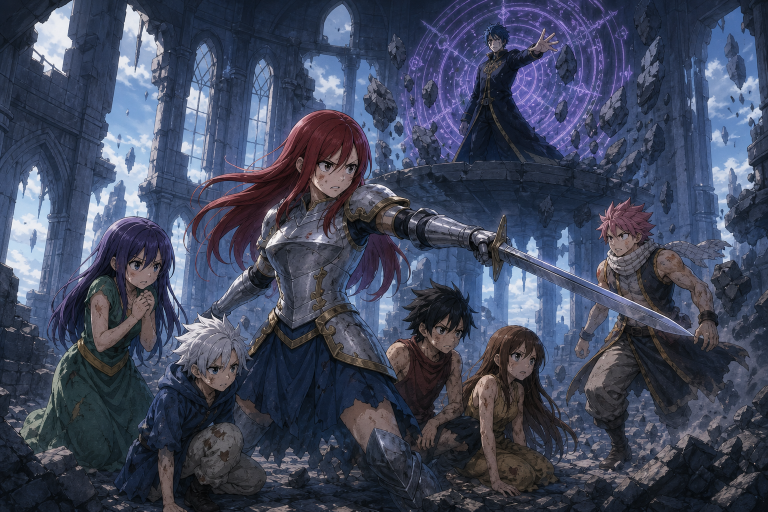
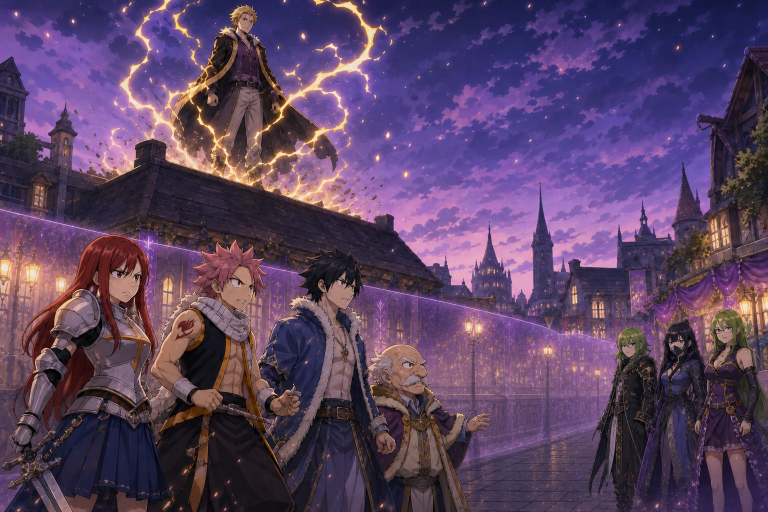
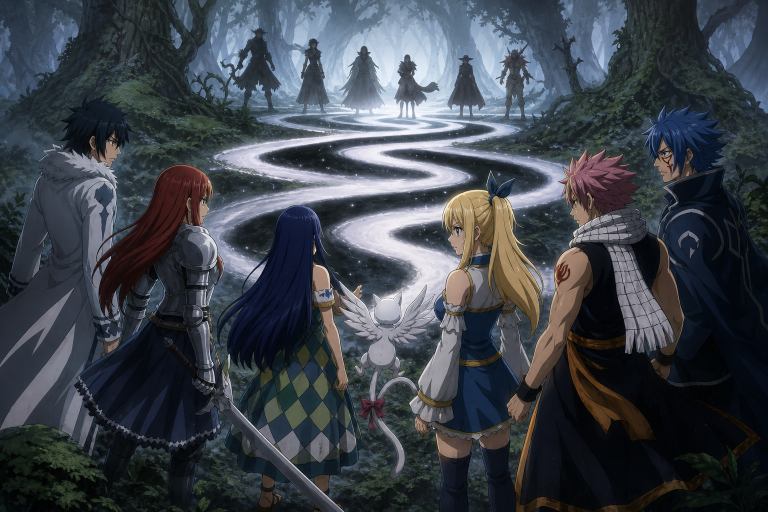
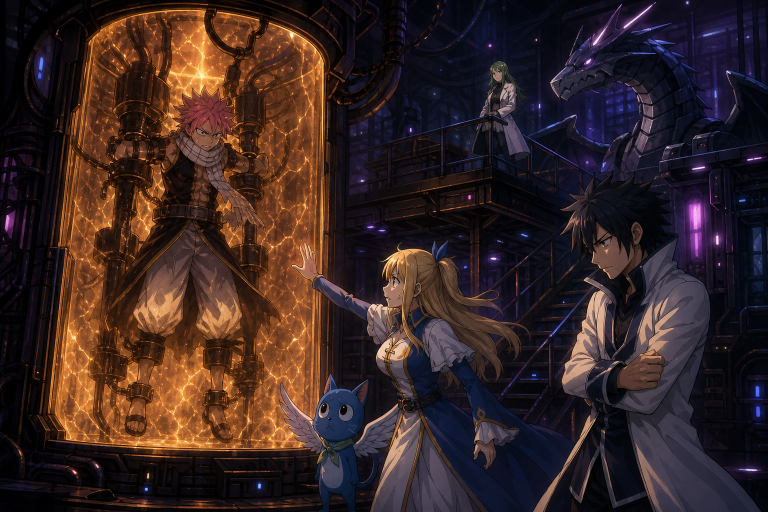
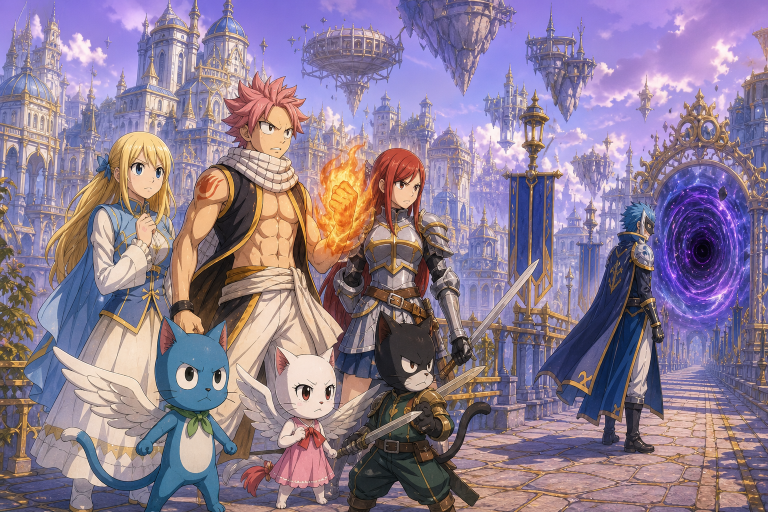
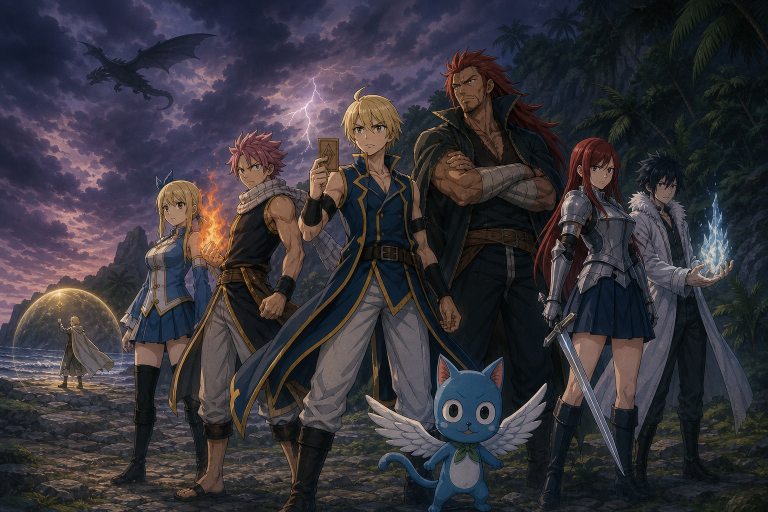
Separate continuity routes in production
The main 2009–2019 anime arc route is complete. The remaining sequel, film, OVA, and special destinations will become clickable only after their full pages and canonical media pass QA.
- 100 Years Quest, separate sequel route
- Phoenix Priestess and Dragon Cry, film coverage
- OVAs and television specials, continuity-labeled coverage
How Fairy Tail builds an arc
Fairy Tail arcs rarely begin with a neutral mission and end with only a defeated villain. They begin by placing a relationship under pressure: Lucy’s right to choose her family, Gray’s frozen grief, Erza’s survival guilt, Wendy’s need for a real guild, or Natsu’s terror that home can disappear without warning. The fights are the visible machinery. The arc works when every escalation forces a character to revise what loyalty, strength, or belonging means.
That is why this guide organizes the story around emotional movement as well as broadcast order. An arc boundary helps navigation, but the consequences keep traveling. Phantom Lord changes Lucy’s relationship with Fairy Tail. Tower of Heaven follows Erza into later decisions. Tenrou’s missing seven years reshape every return. Tartaros does not stop when the enemy falls because Igneel, Aquarius, Gray, and the dissolved guild continue living inside the characters.
The early guild and the cost of belonging
The opening missions establish Fairy Tail as chaotic refuge. Macao, Daybreak, Eisenwald, Galuna Island, and Phantom Lord teach the audience how this family operates before the mythology becomes enormous. Lucy discovers that guild membership is active mutual care, not simply employment. Gray confronts a childhood sacrifice he has converted into self-punishment. Natsu proves that loyalty can be immediate and sincere while still being reckless enough to destroy the room it is protecting.
Phantom Lord is the first major institutional test. Jose treats Lucy as property with a valuable surname and attacks Fairy Tail to prove dominance. Makarov and the guild answer that belonging cannot be bought back by a parent or ranked by magical prestige. The victory is emotionally satisfying because Lucy states her choice. Rescue matters, but her own declaration prevents the arc from reducing her to the object around which men fight.
Erza, Laxus, and internal judgment
Tower of Heaven turns Erza’s history into a conflict over who gets to define survival. Jellal weaponizes shared trauma and an imagined paradise, while Erza has built competence around never letting the frightened child become visible. Her friends do not save her by denying what happened. They interrupt the belief that surviving requires permanent self-sacrifice.
Battle of Fairy Tail moves the threat inside the guild. Laxus loves Fairy Tail and still harms it because he confuses inheritance, strength, and entitlement. The arc asks whether family loyalty excuses coercion; its answer is no. His expulsion matters precisely because affection remains. Makarov sets a boundary without pretending the relationship never existed, and Laxus’s later return must be earned through conduct rather than applause.
World expansion: Oración Seis through Edolas
The Oración Seis alliance expands Fairy Tail beyond its own guild hall. Wendy and Carla enter through Cait Shelter, a home whose truth is both loving and devastating. Nirvana literalizes moral reversal, but the more interesting question concerns people whose loyalties have already been manipulated by isolation. Cooperation between guilds becomes practice for later continental conflicts, though the series remains strongest when the alliance is attached to specific trust rather than head counts.
Edolas strips familiar magic away and remixes personalities without making the alternate world a simple joke. Mystogan’s responsibility, Panther Lily’s divided duty, and the Exceeds’ manufactured theology make the arc a study in systems maintained by fear. Earth-land Fairy Tail wins partly because its members can improvise when their usual power is unavailable. The return also restores Lisanna, turning a comic adventure into a complicated encounter with grief that had already shaped the guild.
Tenrou, time loss, and the Grand Magic Games
Tenrou Island combines the S-Class trial, Grimoire Heart, Zeref, and Acnologia into a hinge for the whole series. Personal ambition becomes collective survival. Cana’s secret about Gildarts, Ultear’s history, and Mavis’s protection ensure that the arc is not only a ladder of stronger opponents. Fairy Sphere saves the core group by removing seven years from their lives, a miracle that is also a loss they cannot recover.
The Grand Magic Games responds to that absence with public humiliation and spectacle. Fairy Tail has fallen in rank while its missing members remained unchanged. Tournament victories restore reputation, but the Eclipse crisis complicates triumph by bringing future Lucy, dragons, and time itself into the arena. The arc is at its best when cheers collide with grief: the guild can reclaim a name without reclaiming the years everyone else lived.
Tartaros, Alvarez, and the meaning of an ending
Tartaros attacks magic, bodies, and identity. Face threatens the world’s magical infrastructure; demons turn inherited trauma into weapons; Gray receives Silver’s impossible legacy; Lucy sacrifices Aquarius’s key; and Igneel finally emerges only to die fighting Acnologia. The guild survives the battle and then dissolves, proving that victory cannot guarantee continuity. Natsu leaves to train, Lucy tracks the scattered family, and silence becomes its own wound.
Alvarez gathers the longest-running questions around Zeref, Mavis, E.N.D., the Spriggan forces, and Acnologia. Its scale sometimes outruns its consequences, yet its emotional thesis remains legible: no single prodigy wins the future. Lucy rewrites, the guild coordinates, the Dragon Slayers combine power, and a continent contributes to Fairy Sphere. The ending does not make Fairy Tail orderly. It makes the mess chosen again.
100 Years Quest and reading forward
Fairy Tail: 100 Years Quest is not merely an extra season after a completed ending. It tests whether Team Natsu can carry old habits into unfamiliar geography without repeating every answer. The Dragon Gods raise the scale, but the useful questions remain intimate: can Natsu pursue power without accepting Ignia’s philosophy, can Lucy’s growth remain visible beside escalating magic, and can the team protect one another without treating separation as betrayal?
Use the linked arc routes as maps, not substitutes for the episodes and chapters. A good arc guide tells you where a movement begins, what emotional promise it makes, and what later material inherits its consequences. It should never flatten hundreds of episodes into a list of villains. Fairy Tail is a story about the repeated construction of home; each arc reveals what that home can withstand and what it still needs to learn.
Why arc boundaries stay flexible
Broadcast guides, manga readers, and streaming platforms sometimes divide transitional episodes differently. This library names the most useful story movement while preserving episode order, so a disputed boundary never causes an episode to disappear. When a prologue resolves one conflict and introduces the next, the episode summary explains both jobs rather than pretending the transition is perfectly clean.