Powered by vibes, caffeine, and questionable life choices. 💀

EVANGELION REBUILD CONTINUITY

Four movies that refuse to stay a remake

The opening looks familiar because familiarity is the trap. Each film moves farther from the animated series until Evangelion reaches a different world, a different ending, and a different answer to Shinji’s oldest fear.

BOTTOM LINE

Rebuild is a separate continuity, not a shorter substitute

The first movie repeats enough of the animated series to make the route look like a polished remake. The second changes relationships, adds Mari, and starts bending familiar battles toward different emotional choices. The third destroys any remaining illusion that viewers are watching the same timeline. The fourth finally answers the damage created by the new route instead of returning everyone to the old one.

Watch the original animated series and 1997 ending first when possible. Rebuild becomes richer when the audience can feel what has changed, what has been repeated, and why the final movie treats repetition as part of the problem. New viewers can still follow the four films alone, but the route assumes that images, names, and emotional patterns already carry weight.

REBUILD ROAD

The four movies in chronological order

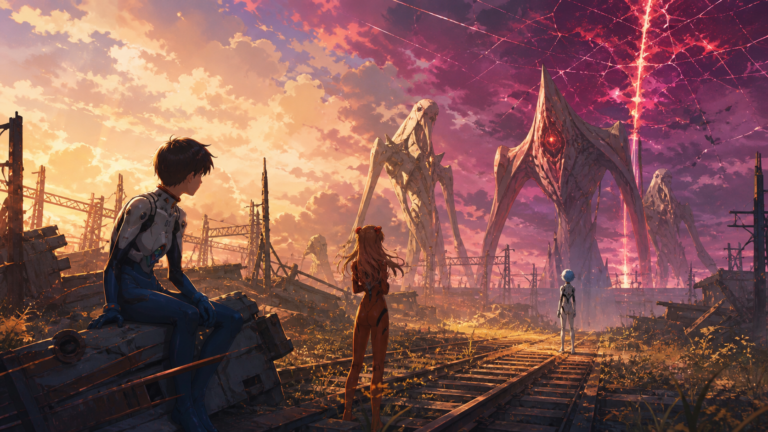
Original fan art for Evangelion 1.0 You Are Not Alone

REBUILD CONTINUITY • 2007

Evangelion: 1.0 You Are (Not) Alone

The familiar opening with a different pressure underneath

Shinji arrives in Tokyo-3, meets Misato, and is ordered into Unit-01 while an Angel attacks. The route follows early television events closely, but the city, the machines, and NERV’s hidden basement carry new details that become important later.

The movie compresses without turning the story into a clip show. Operation Yashima becomes the emotional center because Shinji’s first real connection with Rei gives the battles a human cost that spectacle alone cannot supply.

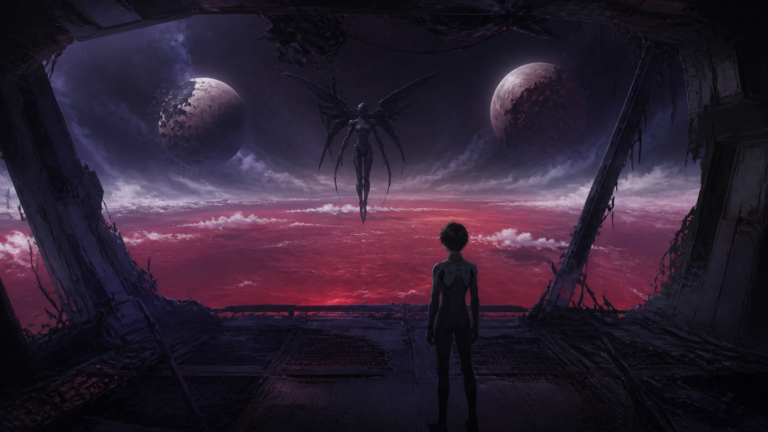
Original fan art for Evangelion 2.0 You Can Not Advance

REBUILD CONTINUITY • 2009

Evangelion: 2.0 You Can (Not) Advance

The point where the new route stops asking permission

Asuka and Mari enter a story already changing around them. Meals, tests, rivalries, and romantic tension suggest that the pilots might build a life outside NERV, which makes the institution’s willingness to sacrifice them feel even uglier.

Shinji’s attempt to save Rei looks like the heroic decision a conventional blockbuster would reward. The movie lets that desire feel sincere, then makes the scale of the result impossible to ignore.

Original fan art for Evangelion 3.0 You Can Not Redo

REBUILD CONTINUITY • 2012

Evangelion: 3.0 You Can (Not) Redo

Fourteen missing years and one boy denied the explanation he needs

Shinji wakes in a future where former allies treat him as a disaster waiting to happen. WILLE has turned against NERV, the planet has changed, and Rei is no longer the person Shinji believes he saved.

Kaworu offers patience, music, and a plan to repair the world. The plan fails because loneliness makes certainty attractive and because every adult organization keeps controlling information instead of helping a traumatized child understand the consequences around him.

Original fan art for Evangelion 3.0 plus 1.0 Thrice Upon a Time

REBUILD CONTINUITY • 2021

Evangelion: 3.0+1.0 Thrice Upon a Time

The ending that gives ordinary life enough room to matter

Village-3 pauses the machinery long enough for Shinji, Asuka, and Rei to see people surviving through farming, meals, work, grief, and mutual care. The quiet material is not a delay before the real ending. The village shows what every Impact threatens to erase.

The final conflict returns to Gendo, Instrumentality, and the stage where Evangelion keeps repeating its pain. Shinji’s last choice matters because he stops trying to solve loneliness by remaking everyone else.

WATCH ORDER

Keep the four-film route together

Recommended Rebuild route: 1.0 or 1.11, then 2.0 or 2.22, then 3.0 or 3.33, then 3.0+1.0 or 3.0+1.01. Home-video numbers identify revised versions of the same four movies, not extra sequels. The official Evangelion version guide documents the changes and master versions.

Return to the Evangelion hub for the animated series, original continuity, characters, reviews, voice actors, rants, and lore.

RECEIPTS

Primary references

Leave a Reply