
Frozen Collective Profile · Earth Spirits · Living Geology · The Force That Breaks the Dam
The Earth Giants
Sleep, territory, collective agency, Anna’s manipulation, living geology, dam destruction, and the ethics left after repair.
Profile
| Name | The Earth Giants |
|---|---|
| Nature | Collective earth spirits |
| Form | Colossal living stone, soil, roots, moss, and vegetation |
| Home | Enchanted Forest mountain and valley terrain |
| First appearance | Frozen II (2019) |
| Communication | Movement, targeting, sleep, pursuit, impact, and calm |
| Central action | Throw boulders that destroy Runeard’s dam |
| Canon boundary | Multiple beings; no named individual leader established |
Bottom line first
The Earth Giants spend much of Frozen II asleep and still become the force that breaks Runeard’s dam. Anna does not command them through a magical bond. She wakes them, enters danger, uses their predictable response, and redirects thrown stone toward the structure that has been harming the forest for decades.
That distinction makes the climax morally complicated and effective. Anna manipulates nonhuman power without consent, but she does so while risking her own life and aligning the force with removal of an existing ecological weapon. The giants are neither obedient allies nor mindless construction equipment. They remain dangerous agents whose movement reshapes every human plan nearby.
Profile and collective identity
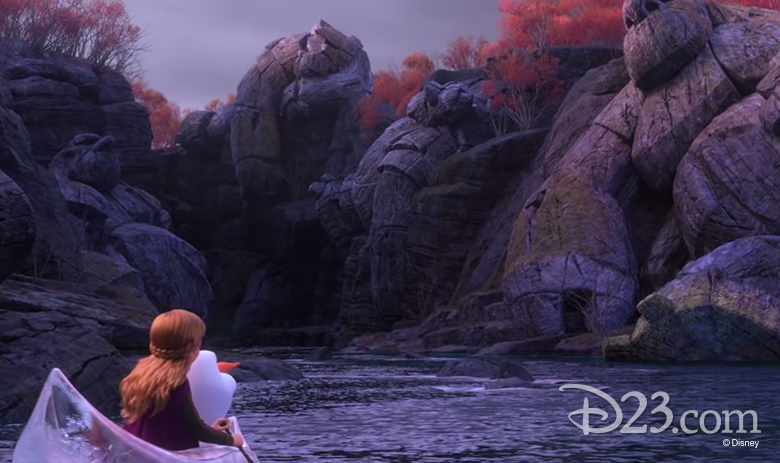
The Earth Giants are colossal stone-bodied spirits associated with the earth element in the Enchanted Forest. The film presents several beings with similar scale and behavior rather than naming one central individual. They sleep in mountainous terrain, wake during disturbance, throw boulders, pursue Anna, and destroy the dam.
No voice performers are credited for conventional speech because communication occurs through movement, rumble, breath, impact, and landscape response. The feature does not establish individual names, ages, family roles, sex, hierarchy, exact population, or whether every giant shares one consciousness.
Dashboard: confirmed and unknown
Confirmed: multiple Earth Giants exist, their bodies resemble living rock and vegetation, they sleep as part of the landscape, awaken during elemental imbalance, react aggressively to disturbance, throw stone with enormous force, follow Anna’s provocation, and help break the dam.
Unknown: whether they understand Runeard’s history, knowingly choose the dam as target, communicate privately, reproduce, remember individual humans, or can travel beyond the forest. The climax demonstrates action and consequence without translating motive into human language.

Why a collective profile
The film does not provide enough distinguishing behavior to support separate biographies for each giant. Assigning invented personalities, family trees, or leadership ranks would convert visual variation into false canon. A collective profile respects what the story actually presents.
Collective treatment does not mean the beings are interchangeable. It means available evidence supports shared elemental role more strongly than individual identity. Future material could name and distinguish them, at which point separate profiles would become appropriate.
Sleeping as landscape
When Earth Giants sleep, rock, moss, roots, trees, and body become difficult to separate. A shoulder can resemble a hillside and a hand a stone formation. The design makes landscape literally alive without requiring every mountain to possess consciousness.
Sleep also changes human responsibility. Walking through terrain may mean walking across another being. The forest is not empty space awaiting use. Perception determines whether humans recognize a neighbor or treat a body as ground.
Geological time and character time
Earth implies duration larger than human reigns. Runeard’s crime, thirty-four years of mist, and one royal generation can feel immediate to people while remaining a brief disturbance against stone. The giants embody that difference in temporal scale.
Slow existence should not be mistaken for indifference. When they wake, response is overwhelming. Geological patience can coexist with sudden landslide-scale consequence.
The first sleeping encounter
Anna, Elsa, Kristoff, Olaf, and Sven navigate the forest aware that the giants can wake. Silence and careful movement become survival tools. The sleeping bodies create suspense through restraint rather than attack.
The scene teaches a rule before the climax: humans must move around earth’s existing presence. Later, Anna intentionally breaks that rule because no safer force can destroy the dam in time.
Territory and disturbance
The giants react to noise, proximity, and intrusion within their area. The film does not label that response cruelty. A body disturbed during sleep and a territory entered by strangers can produce defense without a villain motive.
Human characters experience the reaction as disproportionate because one thrown rock can kill them. Scale difference means ordinary irritation for a giant can become catastrophe for a person. Ethics must account for vulnerability on both sides.
Boulders as projectiles
Earth Giants throw enormous stones with accuracy sufficient to threaten moving targets and later damage the dam. The action demonstrates perception, targeting, and repeated response, though not necessarily understanding of the target’s political meaning.
The same material forms their bodies, environment, and weapons. Earth is not ammunition stored separately. Landscape becomes force through their movement.
Relationship file: Anna
Anna lacks Elsa’s elemental power and cannot communicate with the giants through magic. She studies what they do, exposes herself as a moving target, and leads their thrown rocks toward the dam. Her intelligence converts danger into possibility.
The relationship remains asymmetric. She needs their force and withholds the full plan because no shared language is available. Heroism does not erase manipulation. It includes accepting personal risk and responsibility for the consequence she triggers.
Anna’s grief before the plan
Anna believes Elsa and Olaf are gone when she decides the dam must fall. Grief removes the future she expected but does not remove moral obligation. She acts from a low place where hope means doing the next right thing without guarantee of reward.
The giants give that choice physical scale. Her body is tiny beside theirs, yet moral clarity lets her influence the direction of a landscape. The scene never claims grief grants command. It shows action continuing inside grief.
“Do the next right thing”
Anna’s song narrows decision-making to one step at a time. Reaching the giants, waking them, surviving, crossing the dam, and drawing fire become separate tasks. The earth element answers persistence rather than a sudden magical transformation.
That structure protects the climax from making courage abstract. Every step has terrain, timing, breath, and danger. Anna’s ordinary body remains central.
Manipulation without shared consent
Anna deliberately provokes the giants so they will throw stones where she wants. They do not agree to a political plan in language the audience understands. Their force is redirected through behavior rather than invited through explicit consent.
The ethical discomfort should stay visible. The plan may be necessary, and the dam’s destruction aligns with restoration, but necessity does not turn instrumentalization into partnership. Future relationship should include better forms of communication.
Why the plan is not Runeard’s control repeated
Runeard builds the dam secretly to weaken a community and dominate nature while presenting harm as a gift. Anna exposes herself openly, aims at the harmful structure, and accepts that her own kingdom may pay the price. Their uses of infrastructure and force have opposite moral direction.
Still, both act without elemental consent. The difference lies in purpose, risk, truth, and what happens afterward. Anna’s act should begin a more reciprocal order rather than become proof that good rulers may always use spirits when intentions feel pure.
Relationship file: Mattias
Mattias recognizes Anna’s plan and helps redirect Arendellian soldiers toward destroying the dam their king built. His participation gives human political meaning to the elemental force. The giants supply impact; the soldiers stop defending the inherited structure.
The alliance is indirect. Mattias does not command the giants. He chooses not to stand between consequence and its target, reversing decades of loyalty to a false history.
Relationship file: Elsa
Elsa encounters the giants within the broader spirit system but does not lead the final dam attack. Her absence forces the climax away from magical centrality. The earth element responds to Anna’s strategy rather than waiting for the fifth spirit.
After balance returns, Elsa’s role should include learning how the giants experience the event. Bridgehood is incomplete if only the spirits she can ride or hold receive sustained relationship.
Relationship file: Olaf
Olaf experiences the giants as overwhelming physical danger and a source of factual wonder. His small snow body is especially vulnerable to impact, yet the film does not develop a personal bond between them.
The contrast carries visual comedy and mortality. A living snowman assembled from light pieces exists beside living mountains whose smallest gesture can scatter him. Both are magical persons with radically different scales.
Relationship file: Kristoff and Sven
Kristoff and Sven help Anna survive and move through the climax while the giants pursue. Reindeer speed, mountain knowledge, and human coordination operate inside a landscape controlled by much larger bodies.
Neither man nor animal receives a special earth bond. Their contribution is practical support, showing that elemental stories still depend on ordinary skill and trust.
Relationship file: the Northuldra
Northuldra people know the Earth Giants as part of the forest’s elemental order and understand the danger of waking them. The feature does not show ownership, worship hierarchy, or routine command. Knowledge takes the form of caution and coexistence.
That relationship predates Anna’s crisis plan. The giants are not unclaimed forces discovered by Arendelle. They belong within a world Northuldra communities have navigated across generations.
Relationship file: Gale
Air moves around stone and can carry the sounds that wake sleeping bodies. The film does not show Gale commanding the giants, but elemental actions intersect through atmosphere, vibration, and terrain.
The contrast clarifies embodiment. Gale leaves traces while remaining invisible. Earth Giants are almost nothing but visible mass. Both communicate through consequence rather than dialogue.
Relationship file: Bruni
Fire can alter vegetation and heat rock, while earth contains fuel, mineral, and habitat. Bruni’s small mobile flame and the giants’ enormous slow bodies represent opposite scales inside the same system.
No canon friendship or rivalry is established. Elemental symbolism can connect them without turning the spirits into a superhero team with assigned interpersonal dynamics.
Relationship file: the Nokk
The giants break the dam, releasing water through which the Nokk later carries Elsa. Earth changes water’s path, and water threatens Arendelle until ice redirects it. The climax depends on interaction among elements rather than one dominant power.
The film does not show the spirits coordinating through a shared spoken plan. Systemic alignment emerges through consequence after humans correct the dam.
The dam as stone against living earth
Runeard’s dam is also made from earth materials, but it represents stone extracted, engineered, and fixed for control. The giants embody stone as living agency. Their bodies destroy a structure built from matter stripped of consent and ecological relationship.
The contrast prevents “nature versus technology” from becoming too simple. Engineering is not evil by definition. Hidden purpose, imposed control, and ecological harm make this structure unjust. Living earth becomes the force that ends the false gift.
Breaking the dam
Repeated boulder impacts crack and collapse the dam. The sequence is loud, dangerous, and irreversible. Once the structure fails, trapped water moves immediately toward Arendelle. Repair begins through destruction because the harmful system cannot be gently rebranded.
The giants’ force is sufficient where human tools and time are not. The film turns monumental architecture into temporary obstruction before geological power.
Did the giants know the target
The film does not show the giants examining plans, recognizing Runeard’s symbol, or agreeing that the dam must fall. They throw at Anna and strike the structure because she positions herself there. Political understanding remains unconfirmed.
Outcome can align with justice without every agent sharing human reasoning. That distinction protects the giants from becoming wise judges retroactively credited with a decision the screen gives Anna.
After the collapse
Once the dam falls and balance begins returning, the giants calm rather than continuing to destroy indiscriminately. The crisis response ends when the underlying structure is removed. Their behavior supports connection between agitation and unresolved harm.
Calm is not domestication. They remain enormous beings with territory, sleep, and force. Humans must adapt to coexistence rather than expecting permanent availability for reconstruction work.
The flood and distributed consequence
Dam failure releases water toward Arendelle, showing that correcting injustice can carry real cost. Anna accepts that possibility. The Nokk and Elsa later prevent mass destruction without rebuilding the dam or denying why it fell.
Earth initiates the release, water carries it, ice redirects it, and air surrounds the movement. Elemental cooperation emerges as a chain of consequence rather than coordinated spectacle.

Are they violent
The giants throw rocks capable of killing people and pursue a deliberately provoking target. Violence is visible regardless of motive. Describing them as peaceful guardians would ignore bodies placed at risk.
Describing them as evil monsters would ignore disturbance, imbalance, territory, and Anna’s manipulation. Elemental violence operates outside the moral simplification humans use to justify domination.
Are they asleep or dormant
The film frames their stillness as sleep, with body posture and awakening cues. “Dormant” may fit geological metaphor, but it can imply inanimate machinery waiting for activation. Sleep better preserves personhood.
Even sleep remains interpreted through human analogy. The exact internal state of a stone spirit is unknowable. The visible fact is cyclical stillness responsive to disturbance.
Bodies as habitat
Trees, moss, soil, and smaller life appear on or around giant bodies. If those organisms live there over long periods, waking movement becomes ecological disturbance as well as personal action. One body can function as landscape for other lives.
The film does not explore whether the vegetation is part of the spirit, passenger, or ordinary growth. The ambiguity makes personhood ecological rather than neatly bounded by skin.
Earth, extraction, and resource politics
Runeard’s project treats land and water as materials available for royal strategy. The giants insist that earth is not passive inventory. Mining, quarrying, roads, foundations, and dams all involve places whose value exceeds extracted units.
The fantasy should not be converted into a claim that every real rock has a face. It offers an ethical lens: material decisions affect systems and communities even when those affected cannot enter a royal meeting.
Geological hazard readings
Landslides, rockfall, earthquakes, erosion, and slope failure can transform human settlement without intent. The giants give such hazard a body and direction. Anna’s ability to lead projectiles creates narrative agency inside geological danger.
Real disaster risk depends on planning, land use, climate, construction, and inequality as well as natural force. Blaming the giant alone would reproduce the mistake of treating hazard as separate from human choices.
Climate and permafrost resonance
Northern landscapes are changing through warming, thaw, rainfall shifts, and erosion. The film does not make the Earth Giants a literal permafrost allegory, yet sleeping ground that wakes with destructive consequence resonates with contemporary anxiety.
Editorial interpretation can name that connection without rewriting production intent. The stronger link remains the movie’s explicit argument that human infrastructure can destabilize relationships among land, water, and communities.
Scale and empathy
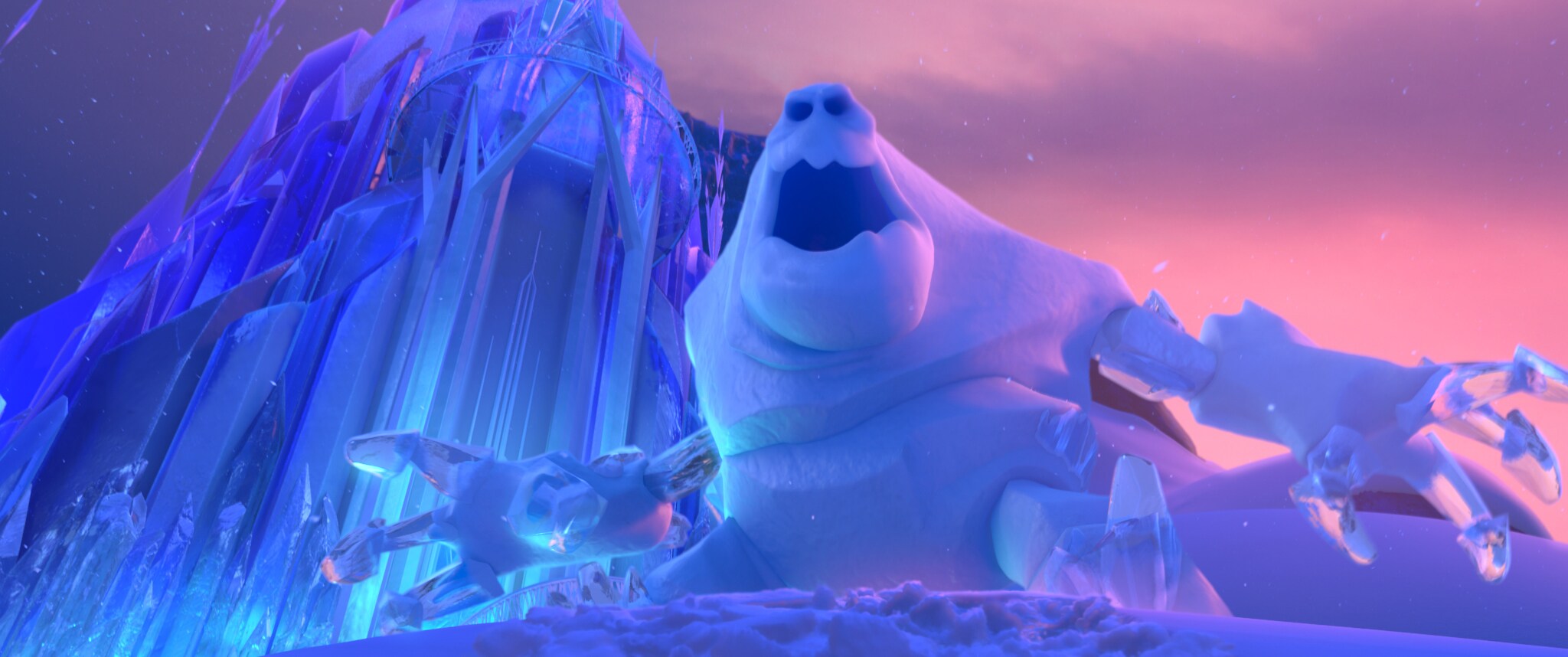
Human faces invite empathy through eyes and speech. Giant scale can reduce beings to obstacles because the camera frames feet, fists, and falling stone before interior life. Slow movement and sleep provide the few available cues of vulnerability.
A collective profile restores attention without inventing emotions. The giants deserve ethical consideration because they act, rest, react, and persist, not because audiences receive a close-up tear.
No spoken language does not mean no intelligence
Targeting, pursuit, awakening, cessation, and territorial response demonstrate perception. The film does not show abstract human conversation, but intelligence need not resemble court dialogue to exist.
Anna reads behavior accurately enough to create a plan. That success depends on patterned response, not random gravity. Translation remains incomplete and still operational.
Collective agency
Several giants act within similar patterns, but the film does not reveal whether they decide independently, follow one leader, or respond through a shared elemental consciousness. Collective agency can exist without a single commander.
Human storytelling often searches for one face to negotiate with. The giants resist that convenience. Relationship may require engaging a group, territory, or system rather than finding a chief who can speak for earth.
Human maps cannot contain sleeping bodies
A map can label mountain, valley, road, border, and resource while missing that the apparent terrain is a resting person. The giants expose the political arrogance hidden in that omission. Surveying land does not guarantee understanding what or whom the lines cross.
After the forest opens, Arendelle will be tempted to map routes for trade, visitors, and administration. Northuldra knowledge and elemental behavior must shape those routes before convenience does. A road planned across a sleeping giant is not development delayed by superstition. It is a failure to recognize an existing resident whose rest, movement, and safety existed before any royal surveyor arrived with paper, measurements, and authority.
Design and living geology
The designs combine humanoid posture with cliff faces, boulders, soil, roots, and vegetation. At rest, silhouette merges with mountain. In motion, joints and facial planes emerge slowly enough that landscape appears to stand up.
This transformation sells weight better than constant action. Every step must displace atmosphere and ground. Animation turns scale into a character trait rather than a measurement.
Sound and vibration
Rumble, stone grind, impact, breath-like resonance, and low-frequency sound create presence without conventional speech. Audiences feel the giants through vibration as much as melody. Their audio belongs to geology while retaining rhythm that reads as response.
No single voice performer owns the role. Sound design, effects, animation, editing, and human reactions distribute performance across departments.
Merchandising a collective
The Earth Giants are less cuddly and harder to miniaturize emotionally than Bruni or the Nokk. Toys and figures may isolate one representative giant, which can accidentally imply a named central character the film never establishes.
Commercial simplification should not rewrite canon. A product can represent the collective while the directory remains clear that multiple beings participate.
Games and boss mechanics
Games naturally turn giant bodies into bosses, summons, hazards, or destructible-environment mechanics. Those systems emphasize attack patterns and player control. They may assign health, weakness, or names absent from the film.
Mechanical clarity is not film lore. Each game belongs in its own branch, especially when a collective elemental presence becomes one repeatable enemy unit.
What the film gets right
The film lets earth remain enormous, slow, dangerous, and necessary. It gives Anna a climax built on observation and courage rather than sudden magic, and it uses the giants’ force to destroy the material structure at the center of historical harm.
It also refuses easy domestication. No one rides, pets, or commands them afterward. Calm coexistence is enough.
What the film leaves unfinished
The giants receive no individual names, direct Northuldra relationship scenes, post-dam perspective, or clarified understanding of the climax. Collective mystery preserves scale but limits interiority.
A future story could distinguish individuals through movement, territory, preference, and response without forcing human speech. Difference can emerge inside the collective while retaining geological otherness.
What Wikipedia has that this page must exceed
The encyclopedic floor includes earth-spirit identity, giant stone bodies, sleep in the forest, dangerous awakening, pursuit of Anna, boulder throwing, and destruction of Runeard’s dam. Multiple beings and collective status must remain explicit.
CVM Sekai adds consent, manipulation, collective agency, geology, extraction, bodies as habitat, disaster-risk readings, climate resonance, distributed performance, merchandising distortion, and the moral difference between domination and redirected consequence.
Future file
The Earth Giants need a post-crisis encounter where humans approach without requiring demolition. Elsa, Anna, Yelena, and Northuldra knowledge holders can establish distance, signals, routes, and seasonal respect while accepting that full translation may never occur.
One giant could also display a preference distinct from the group through where it sleeps, what wakes it, or how it responds. Individuality need not shrink the collective into human family roles.
Artwork responsibility
The featured artwork is original CVM Sekai fan art designed for a wide hero and directory crop. It presents three distinct ancient stone-and-moss beings waking within a moonlit northern valley, preserving collective identity without copying official animated models.
Local metadata records generation source, alt text, rights note, and lack of Disney endorsement. The same attachment serves featured image, hero, and future card, keeping the collective visually consistent across the Frozen ecosystem.
Sources and certainty
Primary evidence includes Frozen II, official Disney character material, published credits, and attributable production sources about elemental design. Geological and environmental context should rely on scientific references when developed beyond cinematic interpretation.
Consent, collective mind, climate, and political analysis remains labeled. The profile does not invent names, hierarchy, sex, reproduction, or complete knowledge of the dam because the film never supplies those facts.
The final read
The Earth Giants are not Anna’s weapons waiting for a righteous target. They are sleeping landscape made dangerous by disturbance, then redirected through a plan that risks the planner’s life. Their stones break the dam because Anna understands behavior, not because monarchy finally found a better command word.
The result is justice with an ethical remainder. The structure falls, water returns, and earth calms. A real bridge must now build relationship with the beings whose force made repair possible without assuming they owe the next favor, demolition, rescue, shortcut, or act of obedience whenever a human plan becomes urgent ever again without consent.
Frozen coverage
Return to the Frozen hub for every character, review, React, rant, and guide.