
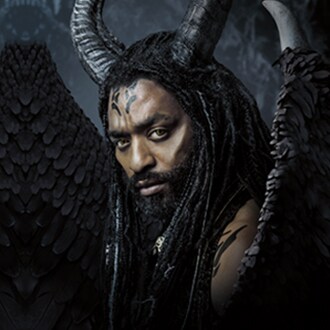
CHARACTER PROFILE · DARK FEY · JIN FROM BTS DEPTH
Conall and Borra Character Profile
One leader protects the possibility of peace. One leader protects the right to fight back. Both are arguing from a people pushed underground long before Maleficent learns she belongs to them.
Bottom line
Conall and Borra are not the gentle leader and angry leader waiting for Maleficent to choose the correct one. They are two survival strategies formed inside persecution. Conall protects relationship because a people trapped in permanent war can disappear even when some battles are won. Borra protects resistance because peace offered by a dominant kingdom can become the pause used to build a better weapon.
Chiwetel Ejiofor and Ed Skrein give the disagreement dignity. Conall’s patience never feels like cowardice. Borra’s rage never feels like unexplained savagery. The screenplay eventually favors Conall’s moral direction, but Queen Ingrith’s extermination plan proves Borra read the immediate threat accurately. My receipt is uncomfortable on purpose: one man knows what their future needs, and the other knows what the present is about to do to them.
Fast facts
Names: Conall and Borra. Species: Dark Fey. Home: a hidden cavern sanctuary sheltering winged communities displaced from their original environments. Connection to Maleficent: Conall rescues her after Ingrith’s attack, while both leaders interpret her phoenix ancestry and public power as central to their people’s future. Primary disagreement: diplomacy and coexistence versus militant resistance.
Performers: Chiwetel Ejiofor as Conall and Ed Skrein as Borra. Film: Maleficent: Mistress of Evil. Conall dies after shielding Maleficent during a human attack. Borra survives the final battle and witnesses Maleficent’s transformation, Ingrith’s defeat, and the possibility of a new relationship between the Dark Fey, the Moors, and human kingdoms.
A people living underground
The Dark Fey sanctuary is beautiful, enormous, and still a refuge created by loss. Communities associated with different climates and regions gather underground because human expansion, fear, and violence pushed them away from ancestral homes. Diversity survives, but survival has required concealment. The cavern is homeland only in the complicated sense that displaced people can build life where safety remains possible.
Conall and Borra lead inside that contradiction. Protecting the sanctuary means preserving culture, bodies, memory, and children. Remaining hidden also allows the surface world to imagine Dark Fey have vanished or never possessed land. Every strategic choice carries risk: visibility invites attack, invisibility can turn erasure into accepted history.
Maleficent falls into their world
Maleficent enters the sanctuary wounded by an iron bullet fired during Ingrith’s frame. She does not discover ancestry through a peaceful search. Violence knocks her out of one identity and into another community. Conall saves her life before demanding allegiance, giving care priority over political usefulness.
Her arrival destabilizes existing debates because she has lived openly, rules the Moors, loves a human daughter, and carries powers linked to the phoenix. To Conall, she may connect worlds. To Borra, she may become the force capable of ending retreat. Neither interpretation fully sees the woman still trying to understand what belonging means.
Conall’s first act is rescue
Conall finds Maleficent falling and brings her to safety. The rescue establishes his leadership through responsibility rather than command. He recognizes an unknown member of his species as worthy of care before knowing what she can provide. That ethic later shapes his insistence that survival must remain connected to values worth surviving for.
Care does not make him politically naive. Conall knows humans drove Dark Fey into exile. He knows iron kills. He understands why Borra expects war. His choice is not denial of history. He refuses to let oppression decide that every future relationship must reproduce the violence of the past.
Borra’s first instinct is assessment
Borra looks at Maleficent and sees military possibility. Her public history, strength, and phoenix connection could rally a population tired of hiding. He does not greet her with easy trust because human proximity has repeatedly produced danger. A leader responsible for displaced people cannot treat symbolic hope as a security plan.
His suspicion also protects against hero worship. Maleficent has lived apart from Dark Fey history and remains emotionally tied to Aurora. Borra asks whether she will choose people who share her body and persecution when human family demands compromise. The question is harsh, but nobody else can answer on her behalf.
Conall’s politics of coexistence
Conall believes humans and magical beings can share a future. His belief is grounded partly in Maleficent’s love for Aurora, living proof that intimacy can cross the boundary. He treats relationship as political evidence. If one family can refuse inherited hatred, larger communities may build structures around the same refusal.
The weakness in his position is scale. A loving daughter does not control Ingrith’s army, laboratory, church, or propaganda. Personal connection can inspire policy but cannot substitute for disarmament and accountability. Conall offers the moral destination. The film gives him too little time to explain the institutions required to reach that destination safely.
Borra’s politics of resistance
Borra believes humans understand force and will exploit restraint. The sanctuary itself supports his argument. Dark Fey did not move underground because diplomacy worked. Their scattered cultures carry evidence that survival has already demanded retreat. Asking for another peaceful gesture can sound like asking the targeted population to absorb one more attack politely.
His weakness is the assumption that collective human guilt makes broad retaliation legitimate. Ingrith’s forces are responsible for planned extermination. Aurora, Philip, John, and many humans oppose the campaign. Resistance needs target, purpose, and limits or liberation can inherit the same logic that made every fairy a target.
The argument neither man can win alone
Conall cannot build peace without protection against actors who use negotiation as cover. Borra cannot build freedom if every human becomes permanent enemy. Their positions need each other’s warning. Coexistence without defense invites another Ingrith. Defense without political horizon turns emergency into identity and makes children inherit war as the only imaginable culture.
A stronger sequel would let them develop a shared doctrine: defend civilians, preserve the sanctuary, expose the human plot, create alliances with dissenting humans, demand restitution, and negotiate from organized strength. The film instead compresses debate into temperament, then uses Conall’s death to move Borra toward restraint.
Phoenix ancestry and the danger of destiny
Conall identifies Maleficent as descended from the phoenix, an ancestor associated with exceptional power and renewal. The revelation gives her a history larger than personal trauma. The Dark Fey see possibility in somebody who can survive destruction and return transformed. Myth can unite a scattered people when ordinary institutions have failed them.
Destiny also risks transferring collective responsibility onto one woman. Maleficent did not grow up in the sanctuary, study every community, or consent to become a national symbol. Powers do not automatically create political wisdom. Conall’s hope and Borra’s military expectation both ask her to carry futures their people must shape together.
Conall and Maleficent
Conall approaches Maleficent with patience. He offers history, shows the sanctuary, and allows recognition to emerge. He does not demand that she reject Aurora to prove Dark Fey loyalty. That openness matters because identity discovered in adulthood can feel like both homecoming and accusation about everything previously unknown.
He sees her capacity for love as strength rather than contamination. Maleficent’s human bond becomes evidence that peace is possible without erasing Dark Fey identity. Conall’s trust helps her integrate rather than choose between mother, ruler, fairy, and phoenix. His leadership expands belonging instead of policing purity.
Borra and Maleficent
Borra challenges Maleficent because her divided loyalty affects everybody’s safety. He sees a powerful figure who has lived above ground while others hid. Her relationship with Aurora may look exceptional from her perspective and dangerously unrepresentative from his. One good human cannot erase centuries of displacement.
He also projects collective need onto her power. If Maleficent fights, perhaps the Dark Fey can stop retreating. That hope makes her refusal feel like betrayal before she has accepted leadership. Borra respects strength, yet true respect would include her right to decide what kind of leader, fighter, and mother she will become.
Conall and Borra as colleagues
The men disagree without treating each other as foreign enemies. Their conflict carries history, familiarity, and shared responsibility. Borra listens enough for Conall’s death to change him later. Conall acknowledges anger rather than expelling the militant faction from political life. The sanctuary appears to contain debate, not one unquestioned throne.
That relationship suggests leadership distributed across competing needs. Conall may hold moral authority and Borra military authority. Avela and other elders likely carry additional responsibilities the film barely explores. Shared governance would fit a displaced federation better than expecting one symbolic phoenix to decide everything.
The attack on the sanctuary
Human forces invade the Dark Fey refuge using iron and red dust. The attack proves concealment no longer guarantees safety. Ingrith has located the community, studied vulnerabilities, and brought industrial violence into a space built for survival. Borra’s warning becomes immediate reality.
Conall still protects life rather than converting the invasion into proof that every future must be war. He shields Maleficent and absorbs a fatal strike. Sacrifice preserves the person he believes can carry peace forward, but the choice also leaves his people without the leader best able to articulate conditions for that peace.
Conall’s death
Conall dies after protecting Maleficent from an attack. The scene gives his pacifism physical courage. He does not ask others to take risks while remaining safe. He places his body between violence and another person because care is the principle he has defended throughout the sanctuary debate.
His death can still be criticized as a narrative pattern where a Black mentor dies to activate another protagonist’s destiny. Conall possesses history, political thought, community ties, and a future worth exploring. Killing him creates emotional force and narrows the sequel’s most interesting political voice when that voice is needed for reconstruction.
Borra after Conall
Borra inherits grief alongside the threat he predicted. The easy arc would make Conall’s death prove peace was foolish. Instead, Borra eventually learns that rage cannot determine every target. He fights human forces and watches Maleficent choose protection, transformation, and reunion rather than extermination.
Change does not require him to admit every warning was wrong. Ingrith planned genocide. The Dark Fey needed defense. His growth concerns scope and future: resisting a genocidal regime is necessary, while treating all human life as the regime would reproduce collective punishment. Conall’s influence survives when Borra holds both truths.
The assault on Ulstead
Borra leads Dark Fey toward Ulstead because the wedding conceals an attack and their people face annihilation. The battle is not symmetrical warfare between equally secure kingdoms. One side possesses established walls, iron technology, chemical weapons, and state legitimacy. The other arrives from exile under immediate survival pressure.
The film’s spectacle sometimes blurs that imbalance by showing winged fighters descending like an invading army. Context remains essential. Borra chooses confrontation, but Ingrith prepared the extermination campaign before they take flight. His strategic errors should be judged without rewriting who built the trap.
The church victims
While fighters clash outside, magical civilians are locked inside the church. The separation reveals why Borra’s military focus is insufficient alone. A battlefield response cannot protect people already concentrated through deception. Intelligence, evacuation planning, human allies, and internal resistance matter as much as aerial strength.
The small fairies disrupt Gerda’s attack from inside, proving agency does not belong only to powerful warriors. Any future Dark Fey strategy should learn from that rescue. Communities survive through networks containing fighters, caregivers, scouts, diplomats, technicians, elders, and people whose courage appears far from the central battle.
Chiwetel Ejiofor’s performance
Ejiofor gives Conall gravity without turning peace into saintly softness. His voice carries someone accustomed to listening before speaking because leadership inside a traumatized community cannot survive careless promises. Warmth appears alongside exhaustion. He believes in coexistence and knows belief has cost.
The performance makes rescue, teaching, disagreement, and sacrifice feel connected rather than separate heroic beats. Conall’s calm is active discipline. Viewers can sense anger managed toward purpose. That distinction keeps the character from becoming a convenient moral lecture delivered to Maleficent.
Ed Skrein’s performance
Skrein gives Borra physical readiness and emotional compression. His body seems prepared for an attack before conversation begins, which fits a leader whose history taught that warning time is short. Anger sits near the surface, but loyalty to the Dark Fey grounds the aggression in responsibility rather than appetite.
He also allows uncertainty to appear as events challenge a simple war framework. Borra does not suddenly become gentle. His gaze and posture retain vigilance. Growth appears as a wider calculation of whom to protect and what victory should produce. The performance preserves militancy while making room for learning.
Visual design and cultural range
The Dark Fey display wings, features, markings, clothing, and environmental associations reflecting global and ecological range. Conall’s earth-toned design suggests grounded authority. Borra’s darker, sharper silhouette signals readiness and conflict. The designs communicate position quickly, though visual coding risks making peace look natural and militancy look inherently dangerous.
Original CVM art should keep both men equally dignified. Conall cannot be softened into harmless elder, and Borra cannot be monster-coded. Their argument gains value when both faces remain readable, both bodies carry authority, and the sanctuary appears like a living community rather than exotic backdrop.
Masculinity without royal entitlement
Conall and Borra offer male leadership outside the human crown structure. Neither claims a woman through marriage, inheritance, or rescue. Their relationship with Maleficent concerns community, power, ancestry, and strategy. Disagreement can become intense without either man reducing her to romantic prize.
Their masculinity still differs. Conall models protection through patience and sacrifice. Borra models protection through readiness and confrontation. The film asks both to move beyond a binary where care is passive and force is strength. Conall fights when necessary. Borra learns restraint can protect futures force cannot build.
Strengths: Conall
Conall is compassionate, perceptive, historically aware, courageous, patient, and able to imagine coalition across trauma. He recognizes Maleficent’s identity without demanding immediate performance. His rescue instincts and political hope make him a leader people can approach during crisis.
His greatest strength is refusing to let persecutors define the Dark Fey’s moral limits. Humans have committed terrible violence, yet he still believes his people can choose values larger than reaction. That refusal protects internal freedom even when external freedom remains threatened.
Limits: Conall
Conall may underestimate how peace language can be exploited by a government already preparing genocide. Relationship evidence from Aurora and John does not neutralize Ingrith’s infrastructure. His vision needs intelligence, defense, accountability, and clear red lines or vulnerable people carry the risk of his optimism.
The film also links his hope too heavily to Maleficent. A sustainable movement cannot depend on one phoenix figure. Conall should help build councils, alliances, archives, and succession before sacrifice removes him. Leadership includes preparing people to continue without the leader.
Strengths: Borra
Borra is brave, loyal, decisive, alert, physically formidable, and unwilling to normalize exile. He names violence other characters hope diplomacy can avoid. His refusal to accept disappearance protects collective dignity. Survival sometimes requires a person willing to say the threat is already here.
He also adapts. Conall’s influence, Maleficent’s choices, Aurora’s courage, and the battle’s reality alter his understanding. A rigid zealot would interpret every event as support for total war. Borra eventually allows new evidence to change the future he will support.
Limits: Borra
Borra’s anger can compress human difference into one enemy category. Collective punishment would endanger allies, civilians, and children while strengthening propaganda that calls Dark Fey inherently violent. Resistance loses moral and strategic clarity when target expands beyond the people organizing harm.
He also risks turning strength into the condition of belonging. Maleficent should not need spectacular power to qualify as Dark Fey. Injured, elderly, young, peaceful, frightened, and noncombatant members are equally the people he claims to defend. A liberation politics must make room for lives that cannot or will not fight.
What peace would require
Peace requires public exposure of Ingrith’s operation, dismantling red-dust production, restricting iron weapons, returning stolen Tomb Bloom resources, recognizing Dark Fey communities, protecting ancestral lands, and establishing representation in cross-border decisions. A wedding and handshake cannot carry that work alone.
Conall’s values should shape the goal, while Borra’s caution should shape enforcement. Trust can grow through verified action: inspections, shared councils, survivor authority, safe travel, ecological restoration, and consequences for renewed violence. Peace becomes credible when vulnerable communities do not have to bet existence on royal goodwill.
Avela and the leadership the film sidelines
Avela appears among the Dark Fey leadership and represents another perspective the film barely develops. Her presence confirms Conall and Borra are not the only people capable of interpreting danger, ancestry, or peace. A community containing several ecological lineages should have women, elders, caregivers, and regional representatives shaping decisions beyond the two men most attached to the central ideological split.
A fuller profile of their leadership must therefore resist treating the paired argument as the entire government. Conall and Borra matter because the screenplay gives them language, not because everybody else lacks political thought. Avela’s missing voice exposes the film’s habit of revealing a civilization visually while narrowing authority to a few characters who can guide Maleficent’s arc.
Refugee governance under pressure
Running a hidden sanctuary requires food distribution, water, health care, education, defense, conflict resolution, burial practices, arrival protocols, and decisions about scarce space. Conall’s compassion and Borra’s vigilance likely touch every system. Their political disagreement is therefore not abstract. Resources move differently depending on whether leaders expect another generation underground or imminent return to the surface.
Borra may prioritize training, patrols, and weapons. Conall may prioritize diplomacy, cultural continuity, and external contacts. Both budgets protect life in different time horizons. The film never shows a council allocating anything, but the cavern’s scale proves organized labor exists. Leadership should be judged through that ordinary work as well as battlefield speeches.
Memory, history, and who records exile
Displacement can scatter records along with people. The Dark Fey need archives holding the names of lost homes, routes of expulsion, human treaties, massacres, family lines, ecological knowledge, and cultural changes made in refuge. Conall speaks from history, while Borra speaks from wounds that remain politically active. Neither approach can survive if memory depends only on individual leaders.
Maleficent’s arrival makes archival work urgent because she carries an ancestry she never learned. Teaching her should involve records and community testimony rather than prophecy alone. Phoenix identity becomes richer when connected to people who remembered, preserved, and debated the past. Otherwise myth replaces history and places another impossible burden on bloodline.
Ceasefire is not repair
The final battle stops, Ingrith loses power, and a wedding symbolizes union. A ceasefire prevents the next immediate death. Repair addresses why the Dark Fey were displaced, how the sanctuary was found, who manufactured red dust, where stolen Tomb Bloom remains, and whether human institutions recognize magical sovereignty. Conall’s dream cannot end at everybody sharing one ceremony.
Borra’s continued vigilance may be valuable during that transition. Peace processes often pressure harmed communities to disarm faster than aggressor institutions dismantle capacity. His role could shift from total-war advocate to accountable defense leader working under shared civilian authority. Growth does not require forgetting the danger he correctly identified. Growth requires protecting people without letting emergency power become permanent rule.
What their people deserve
Dark Fey deserve more than permission to leave the cavern after helping Maleficent win. They deserve histories, names, homes, languages, kinship, disagreements, art, food, ritual, and politics beyond one battle. The sequel reveals a civilization and then uses most residents as visual scale. Future stories should return the camera to daily life.
They also deserve the right to choose different futures. Some may return to ancestral regions. Some may remain in the sanctuary. Some may join the Moors or build human alliances. Freedom means no single leader, phoenix, marriage, or peace treaty decides one path for every community.
Final verdict
Conall and Borra work because neither man can be dismissed without losing part of the truth. Conall knows survival without relationship becomes endless siege. Borra knows relationship without power can become another invitation to a trap. Their argument belongs to a persecuted people deciding how to remain alive without letting persecution write every value.
My final receipt is Conall’s rescue followed by Borra’s warning. Care saves Maleficent’s life, and suspicion correctly identifies the attack coming next. The future needs both acts transformed into policy: rescue people first, believe the evidence of danger, defend without becoming indiscriminate, and build peace strong enough that nobody has to hide underground for another generation.
Sources and continuity note
Character facts and credits are checked against Maleficent: Mistress of Evil, official Disney film materials, and credited cast records. Conall and Borra belong to the live-action continuity and have no direct 1959 animated counterparts. Editorial conclusions remain RaeRae’s reading.
Keep exploring
Return to the Sleeping Beauty hub for films, reviews, characters, rants, and guides.
Two answers to a people under siege
Conall and Borra are not interchangeable representatives. Conall believes survival requires a future that does not repeat the violence already endured. Borra believes restraint has become another name for accepting extinction. The film compresses their politics, but the disagreement still matters because both men are responding to real loss. Their profiles belong together only if the differences remain visible: patience is not passivity, anger is not irrationality, and neither strategy is free of consequence.
Conall and Borra are not two moods assigned to one people
Conall’s restraint and Borra’s militancy grow from different readings of survival under persecution. Treating one as wisdom and the other as anger flattens the historical pressure both men carry. Their disagreement concerns timing, trust, evidence, and what repeated violence teaches a displaced community about promised peace.